Farmworker Activist Abused Girls, Reporters Find
Trump’s Targeting of Media Is Linked to Attacks on Democracy
2 College Magazines, Scuttled Over DEI, Reboot
Save the Date: March 24 for Roundtable on Student Journalists of Color (Notices 3-13-26, updated 3-18-26)
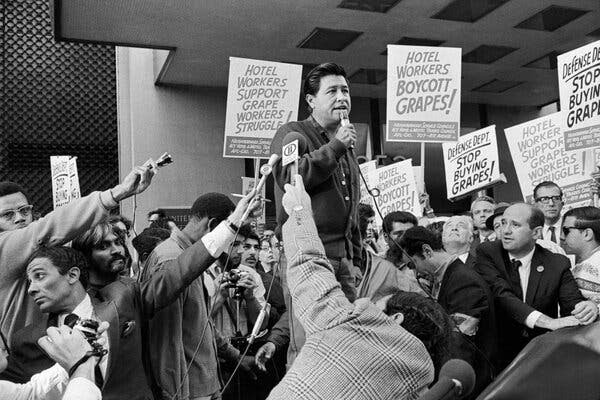
Cesar Chavez during a demonstration in New York in 1969. (Credit: John Sotomayor/New York Times)
Farmworker Activist Abused Girls, Reporters Find
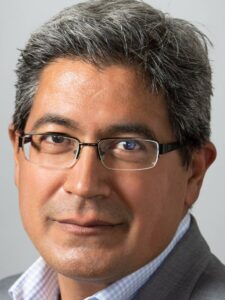 “Back in 2021, The Times received a tip about Cesar Chavez’s past,” Manny Fernandez (pictured), California editor at large for The New York Times, told readers Wednesday. “My colleague, Sarah Hurtes, and I have investigated aspects of this story for nearly five years now. After gaining the trust of several women who told us their stories, we discovered disturbing allegations that Chavez sexually abused and assaulted teenage girls and adult women. We are publishing our findings today, and welcome your questions and reactions.”
There were more than 1,100 online comments to the Times story by early evening.
One that was not in the Times was this from William Drummond, veteran journalist and professor at the University of California at Berkeley. He wrote on Facebook, “The disturbing revelations about Cesar E. Chavez raise questions about the numerous news stories and biographies written about the farm workers leader over the years. How could they have missed this? We need journalistic accountability. They all but called him a saint.”
An editor’s note adds to the Times story, “More than 60 other people, including Cesar Chavez’s top aides and relatives. The reporters also reviewed hundreds of pages of union records, confidential emails, photographs and other material.”
What followed was a nearly 5,000-word bombshell announced by the Times at 10 a.m. By early afternoon, other media outlets were carrying the story — some adding local angles — and several jurisdictions were weighing whether to follow Chavez’s United Farm Workers in cancelling celebrations honoring Chavez.
“The legacy of Chavez, who was 66 when he died in 1993, typically is commemorated on March 31, which in 2014 was dubbed Cesar Chavez Day, a federal commemorative holiday,” as the Daily News in New York noted.
In Denver, “Council President Amanda Sandoval said Wednesday morning that the organizer of Denver’s annual march and celebration of Chávez, the César Chávez Peace and Justice Committee of Denver, planned to cancel this year’s April 11 event. The committee confirmed the decision in an afternoon announcement,” Elliott Wenzler, Lauren Penington, Elizabeth Hernandez and Nick Coltrain reported for the Denver Post.
They Denver reporters added, “Several César Chávez celebrations in San Francisco, Texas and Chavez’s home state of Arizona were canceled at the request of the César Chávez Foundation, which also has said it’s become aware of disturbing allegations about Chavez during his time as president of the union.
“Denver has recognized César Chávez Day as a city holiday since 2002, and it renamed Alcott Park after him in 2005. In 2015, a statue of the activist was installed.”
View this post on Instagram
If no image is visible, please consider changing browsers.
In an Instagram post, Chavez’s most prominent female ally in the farm workers movement, Dolores Huerta, now 95, confirmed the Times’ report that Chavez sexually assaulted her.
Huerta said for the last 60 years she had kept this secret because, “I believed that exposing the truth would hurt the farmworker movement I have spent my entire life fighting for.”
Huerta said she experienced two separate sexual encounters with Chavez. The first time she was “manipulated and pressured into having sex with him,” she said, and felt she couldn’t say anything because he was her boss and the leader “of the movement I had already devoted years of my life to.”
“The second time I was forced, against my will, and in an environment where I felt trapped,” her statement said. “I had experienced abuse and sexual violence before, and I convinced myself these were incidents that I had to endure alone and in secret.”
The Times said, “Huerta became pregnant from both sexual encounters and later arranged for the children to be raised by other families.”
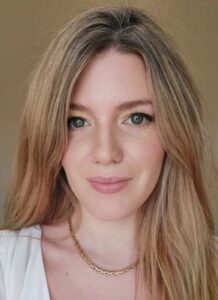 Fernandez and Hurtes (pictured), a Times reporter working on international investigations from Brussels, continued, “The New York Times’ investigation found Chavez fathered four children out of wedlock with three women and that there had been ‘whispers within the movement’ for decades about his conduct.
The reporters’ story began, “Ana Murguia remembers the day the man she had regarded as a hero called her house and summoned her to see him. She walked along a dirt trail, entered the rundown building, passed his secretary and stepped into his office.
“He locked the door, as he always did when he called her, and told her how lonely he had been. He brought her onto the yoga mat that he often used in his office for meditation, kissed her and pulled her pants down. ‘Don’t tell anyone,’ he told her afterward. ‘They’d get jealous.’
“The man, Cesar Chavez, one of the most revered figures in the Latino civil rights movement, was 45. She was 13. Ms. Murguia said she was summoned for sexual encounters with him dozens of times over the next four years.
“Recently, more than 50 years later, Ms. Murguia learned that a street near her home in the Central California city of Bakersfield was in the process of being renamed. City officials want to name it in honor of her abuser.
“Cesar Chavez Boulevard.
“Ms. Murguia and another woman, Debra Rojas, say that Mr. Chavez sexually abused them for years when they were girls, from around 1972 to 1977. He was in his 40s and had become a powerful, charismatic figure who captured global attention as a champion of farmworker rights.
“The two women have not shared their stories publicly before, and an investigation by The New York Times has uncovered extensive evidence to support their accusations and those raised by several other women against Mr. Chavez, the United Farm Workers co-founder . . .
“The questions raised by The Times about Mr. Chavez, one of the most consequential figures in Mexican American history, immediately prompted organizations with ties to him to try to distance themselves. Even before this article was published, upon learning of the reporters’ inquiries, the U.F.W. canceled its annual celebrations honoring Mr. Chavez, a response to what the union he once led called ‘profoundly shocking’ accusations.
“Ms. Murguia and Ms. Rojas, both of whom are now 66, were the daughters of longtime organizers who had marched in rallies alongside Mr. Chavez. He used the privacy of his California office to frequently molest Ms. Murguia, she said. He had known her since she was 8 years old. She became so traumatized that she attempted to end her life multiple times by the age of 15. . . .”
- Laurel Rosenhall, New York Times: Who Is Dolores Huerta, the Activist Accusing Chavez?
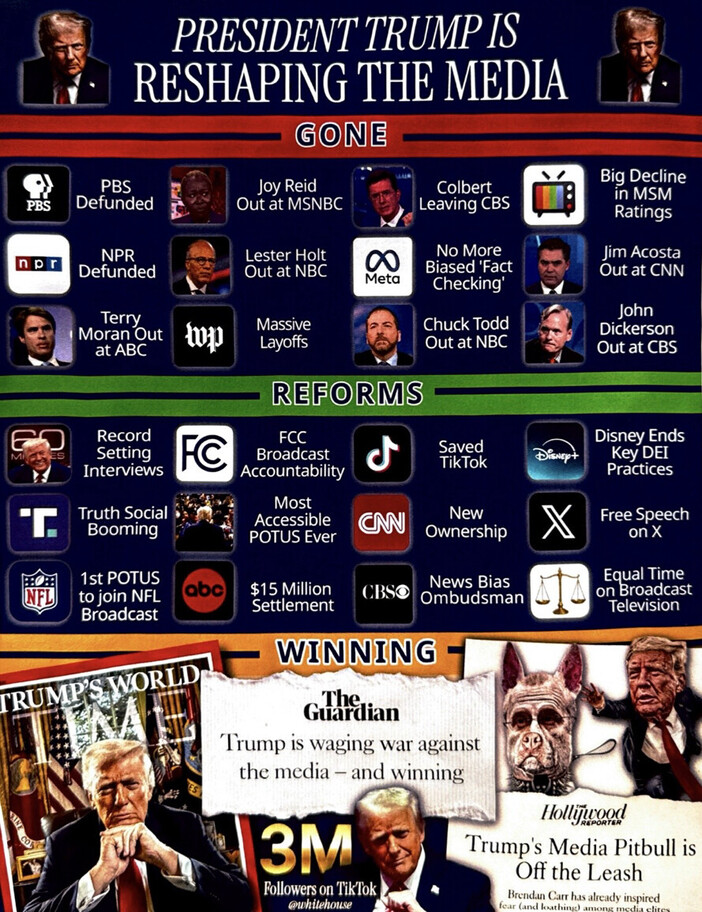
President Trump’s weekend Truth Social post.
Trump’s Targeting of Media Is Linked to Attacks on Democracy
President Trump’s recent attacks on the media, which he celebrated over the weekend with a graphic on his Truth Social internet outlet, are part of the reason the news media should pay attention to the National Urban League’s new “civic education resource, America 250: A Guide for Defending Democracy,” according to Urban League CEO Marc Morial.
Morial spoke Wednesday after a news conference in Washington touting release of the report during its annual legislative conference, saying the guide was intended “to help Americans navigate an era of profound democratic challenges.” It can be downloaded from the Urban League website.
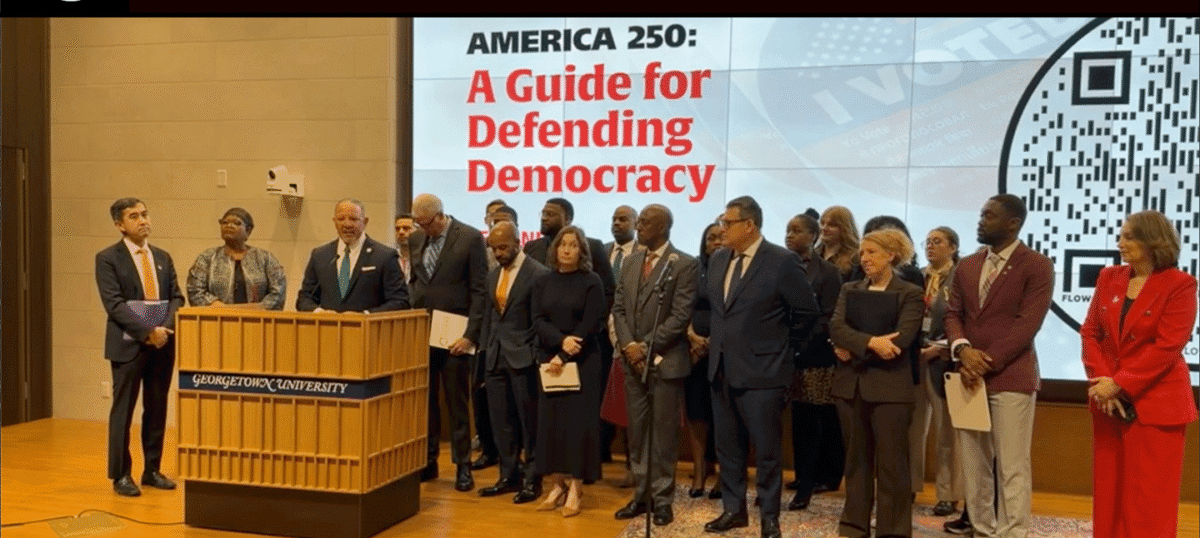
Marc Morial told the news conference, “Americans need clear, consistent guidelines that help them evaluate public officials and candidates based on constitutional principles — not political affiliation. This project is rooted in a simple belief: when people understand how systems work, they are more confident in using their voices.” (Credit: National Urban League)
The CEO told Journal-isms that attacks on the media were of a piece with other violations of the Constitution pursued by the Trump administration, some of which are before the courts.
On Sunday, Trump endorsed Federal Communications Commission Chairman Brendan Carr’s threat to revoke broadcast licenses over news coverage of the U.S.-Israeli war in Iran, calling media organizations “Corrupt and Highly Unpatriotic” in a Truth Social post.
Gavin Newsom, the Democratic governor of California, responded on X, “If Trump doesn’t like your coverage of the war, his FCC will pull your broadcast license. That is flagrantly unconstitutional.”
Morial agreed. “The nonpartisan guide equips voters, community leaders, and civic organizations with values‑based and action‑oriented questions designed to illuminate how public officials and candidates understand their constitutional responsibilities,” a news release says of the report, which he urged the media to publicize.
Trump’s social media chart explicitly categorized “massive layoffs” at The Washington Post as a success of his administration’s pressure on traditional media.
Media organizations such as the National Association of Black Journalists, the Asian American Journalists Association and the National Newspaper Publishers Association were part of the Demand Diversity Roundtable’s January session, but were not present Wednesday.
- Craig Aaron, Free Press: The Trump Regime’s Wartime Response: Target the Media
A 2024 video from Nineteen Fifty-Six Magazine discusses Greek organizations at the University of Alabama. (Credit: YouTube)
2 College Magazines, Scuttled Over DEI, Reboot
Two student-run magazines are relaunching under new names this spring after the University of Alabama cut funding to both after a memo from U.S. Attorney General Pam Bondi on anti-discrimination laws and diversity, equity and inclusion (DEI) policies.
“The memo followed executive orders from the Trump administration that targeted ending DEI practices in the public and private sectors, specifically places that receive federal funding, which later affected both publications because Alice was geared toward women and Nineteen Fifty-Six focused on highlighting people of color,” Ryan Lovell reported March 9 for WVTM in Birmingham, Ala.
“An independent alumni organization, MASTHEAD (Media Alumni Seeking to Highlight Equity and Diversity), later stepped up to fundraise to help publish the publications independently of the university, an effort that proved successful.
“The two publications later resurfaced as Sixty-Three (formerly Nineteen Fifty-Six) and Selene (formerly Alice), both keeping the missions they held when they were university-sponsored.”
Kendal Wright, editor of Nineteen Fifty-Six, plans to be part of the Journal-isms Roundtable next Tuesday on issues facing student journalists of color.
“Both organizations released statements in recent days after resurfacing,” Lovell continued.
“Sixty-Three said, in part, ‘Sixty-Three stands on the shoulders of giants. In 1956, Autherine Lucy was the first Black student to attend the University of Alabama and seven years later, in 1963, Vivian Malone and James Hood were the first Black students to enroll at the university. Just as 1963 could not have happened without 1956; Sixty-Three would not have been possible without Nineteen Fifty-Six.”
“Selene, getting its name from the mythological Greek goddess of the moon, also said:
” ‘While having been founded by and for college-aged women, Selene welcomes all readers into her audience regardless of gender, and her staff finds it imperative to the magazine’s mission that we uplift marginalized voices and stories. Selene is for everyone as we all deserve a place in journalism despite what administrations and the wider culture may say, and she will always hold true to progressive values.’ ”
Micaiah Bilger reported March 10 for the College Fix, “The two magazines also have editorial teams exclusive to their audiences: Sixty-Three’s is all black, and Selene’s is all women, according to staff photos posted on their Instagram pages.”
Save the Date: March 24 for Roundtable on Student Journalists of Color (Notices 3-13-26, updated 3-18-26)
Updated March 18 (new items in boldface)
Save the Date: March 24 for Roundtable on Student Journalists of Color (Notices 3-13-26)
Ibram Kendi Arrives at Howard U. with ‘The Emancipator’
Sunshine Week — for Open Records, Gov’t — Starts March 15
March 18: Media Briefing on Defending Constitution
March 19: Can Media Survive Trump and Billionaire Owners?
March 23: RTDNA Webinar on Reclaiming Your Career
March 23: Where Entertainment Meets Journalism
March 23: Deadline for SPJ Ethics Award Nominations
March 24: Safety Training for Journalists
March 26: Progress on African Health Programs
March 26: Nonprofit Local News: Careers, Pathways, Possibilities
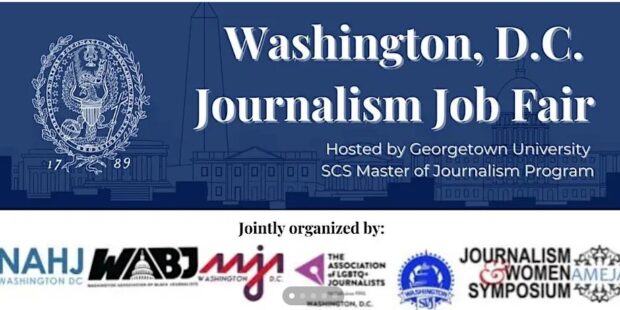
Reminder for March 28: D.C.’s Journalism Job Fair
April 3: Deadline to Apply for Rosalynn Carter Fellowships
April 9: Webinar on ‘Big Beautiful Bill’ Impact on Black Households
From New York: Media Watch
From Zita Arocha: July 2026: Writing Your Life, Writing to Heal
JOBS
From these journalist organizations
National Association of Hispanic Journalists
National Association of Black Journalists
Asian American Journalists Association
Poynter Institute
Society of Professional Journalists
Public Media Jobs.
Online News Association
Rebecca Aguilar’s Journalism Job Openings: The March List” (March 18)
From Washington Association of Black Journalists
From the Uproot Project (March 17)
From Committee to Protect Journalists
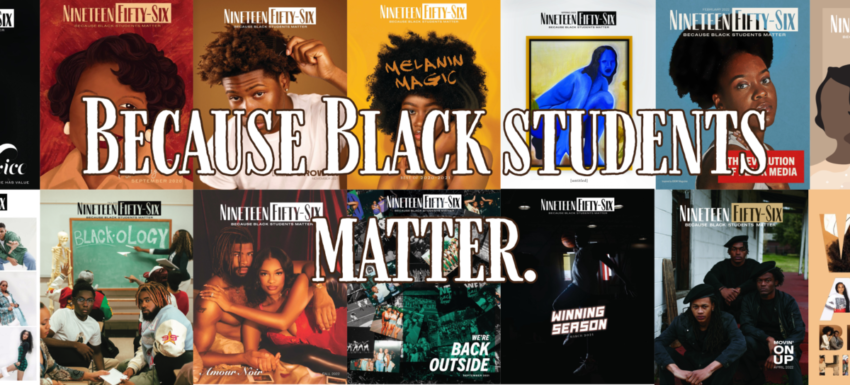
The University of Alabama stopped Nineteen Fifty-Six, named after the year the first Black student, Autherine Lucy Foster, was allowed to enroll at the university. (Credit: Nineteen Fifty-Six)
Hello, all,
Our next Journal-isms Roundtable, by Zoom, will be held Tuesday, March 24, at 7 p.m. Eastern by Zoom. The subject: Student journalists of color in these times of anti-immigration and anti-DEI actions by federal, state and local authorities.
Also up for discussion: Other aspects of life for this next generation of professional journalists of color.
What problems are they having? Are they receiving enough help? What do the rest of us need to know?
This was published earlier in the week:
Howard Students Are Rethinking Their Future In Journalism:
Black Journalists Are Under Attack, And Howard Students Are Rethinking Their Future In The Industry
And many will recall the case of Tufts University doctoral student Rümeysa Öztürk, who was detained by the Trump administration for more than a month last year after she wrote an op-ed piece in the student newspaper advocating for Palestinians.
The Miami Herald reported last week: “The secretary of Miami-Dade County’s Republican Party started a group chat primarily for conservative students last fall — and within three weeks it was filled with racist slurs, someone wrote dozens of ways of violently killing Black people and the chat was renamed after what one member described as ‘Nazi heaven’ ”
Moreover, an observer says bluntly, “The state of Black college media right now is really, really bad.”
Organizations such as the Freedom of the Press Foundation and the Student Press Law Center are coming to the aid of affected students, and we hope to benefit from their expertise.
 With us will be Kendal Wright (pictured), editor of Nineteen Fifty-Six at the University of Alabama, who with the editor of Alice magazine, which focuses on women’s issues, was informed in December that the university was stopping the magazines immediately. A university official cited July guidance from Attorney General Pamela Bondi on what the Trump administration considered unlawful discrimination at institutions that receive federal funding, according to one of the editors.
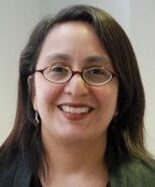 Likewise, Teresa Puente (pictured), who teaches at California State University, Long Beach. She says, “So far, my students haven’t faced any problems (thankfully) but I’m happy to talk about how I train them to cover immigration and other issues facing the Latinx community. We’ve also held Know Your Rights Trainings on campus. And I can talk about the impact of raids on the community at large. But also how we have to cover Latinos beyond immigration since more than 80% of us are U.S. citizens.”
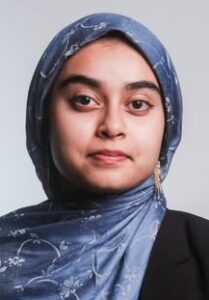 We’re also expecting Nazeefa Ahmed (pictured), a current scholarship recipient from the South Asian Journalists Association who has been reporting both in Canada and the United States.
Also in the room:
- Daarel Burnette, senior editor at the Chronicle of Higher Education
- Shirley Carswell, executive director at Dow Jones News Fund
- Charlayne Hunter-Gault, who with Hamilton Holmes integrated the University of Georgia in 1961.
- Seth Stern, director of advocacy at Freedom of the Press Foundation
Who’s in? You can RSVP by hitting “reply” to this message or emailing jroundtable5 (at) gmail.com
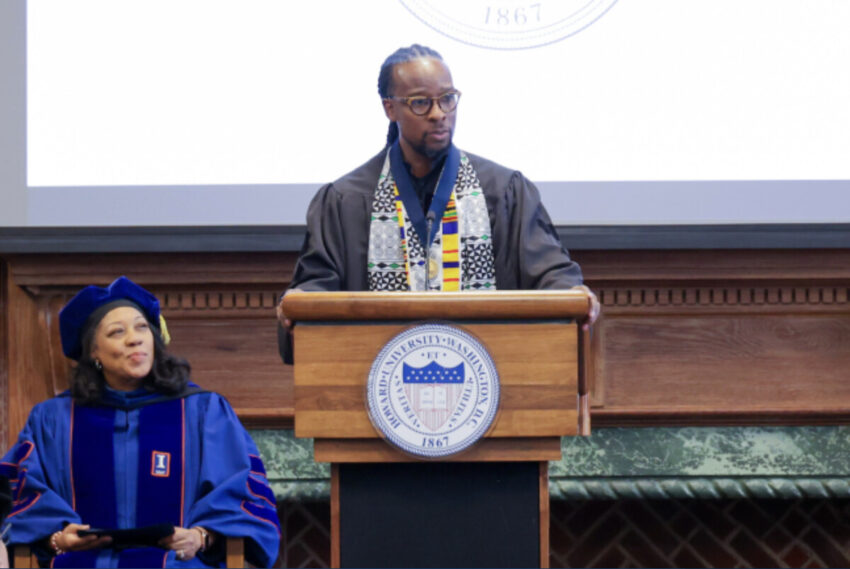
Inaugural Carter G. Woodson Endowed Chair Ibram X. Kendi officially accepting his Howard University position after the conferral. (Credit: Howard University News Service)
Ibram Kendi Arrives at Howard U. with ‘The Emancipator’
One year after Ibram X. Kendi’s hiring at Howard University was announced in January 2025, “a move that reportedly shocked faculty and drew national attention, Kendi was formally installed as the inaugural Carter G. Woodson Endowed Chair in the College of Arts and Sciences,” Zoe Cummings reported March 2 for the Howard University News Service.
“The bestselling author of ‘How to Be an Antiracist’ rose to be a leading voice during the 2020 racial justice movement sparked after the murder of George Floyd. Since then, his scholarship has inspired both praise and criticism, becoming shorthand in political debates over what opponents call ‘woke’ ideology. Now, his work finds a home at Howard, a move that Kendi hopes will bring donors, researchers and a renewed focus on history and scholarship. . . .
“His appointment coincides with the launch of Howard University’s Institute for Advanced Study, which he will direct. The institute will house a residential fellowship program aimed at supporting scholars and creators engaged in race-based research. In addition to mentoring fellows, Kendi plans to teach graduate courses, host campus-wide events and coordinate content for The Emancipator, a digital platform he co-founded that, as he describes it, ‘seeks to cover the scourge of racism and the anti-racist efforts to ameliorate it.’ [Kendi took up journalism as a Florida A&M University student].
“Together, the roles signal Howard’s investment not only in Kendi as a scholar, but also in the broader infrastructure of antiracist research and public scholarship.
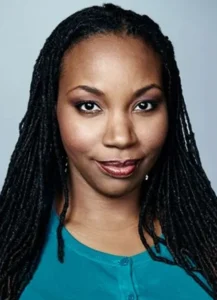 “Halimah ‘Lima’ Abdullah (pictured), managing editor at The Emancipator who has been involved in the magazine’s transition to Howard, described the work as grounded in historical framing.
“ ‘We’re looking forward to doing the first wrap of history, which I consider the to be the news with a through line towards history. That’s how we best understand what’s happening now,’ she stated, adding gleefully,
“ ‘We are so excited.’ ”
Sunshine Week — for Open Records, Gov’t — Starts March 15
We’re counting down to #SunshineWeek 2026, March 15-21. Together, we champion #OpenRecords and #OpenGovernment nationwide March 15-21. #FOIA #transparency.
Free resources: sunshineweek.org (From National Society of Newspaper Columnists).

March 19: Can Media Survive Trump and Billionaire Owners?
From Canadian Journalists for Free Expression:

March 23: RTDNA Webinar on Reclaiming Your Career

|
Join RTDNA for an upcoming webinar focused on helping journalists navigate today’s evolving media landscape. “Reframe Your Story, Reclaim Your Career: Translating Skills for Today’s Media Ecosystem” will help media professionals identify how their existing skills translate across new roles and opportunities in the industry.
The session will be led by Bridget Thoreson of Hearken and creator of MyCareerRiver.com. Thoreson will guide participants through mapping their career paths, positioning their skills and finding direction in a rapidly changing media environment. The webinar will take place Monday, March 23 from 2 to 3 p.m. EDT. Registration is free for RTDNA members and $25 for nonmembers. |

|
|
|
March 23: Where Entertainment Meets Journalism |
A Virtual Panel Presented By Merrill College’s Journalism Alumni Network |
Monday, March 23, 2026, 7-8:30 p.m |
|
The Oscars just wrapped. Now get the real industry inside scoop. Join the Journalism Alumni Network (JAN) for a candid conversation about entertainment journalism and lessons on how to succeed in the industry today.
We’ll pull back the curtain on working in entertainment media, tackle the biggest shifts reshaping the field (such as the Oscars streaming on YouTube in 2029!) and share unfiltered truths on how to build a career in an industry where change is constant.
A Zoom link will be shared via your registration.
Featuring our star-studded alumni panel: Kathy Park ’07 – National Correspondent, NBC News (Moderator) Jason Fraley ’08 – Film and Journalism Professor, Hood College; Host, Beyond the Fame Shoshana Medney ’14 – Broadway Reporter and Content Creator Mya Green ’17 – Producer, Good Morning America Hannah Yasharoff ’19 – Food, Arts and Culture Reporter, The Banner Montgomery Please reach out with any questions to journalism@umd.edu or jouralumnetwork@umd.edu. We hope to see you there! |
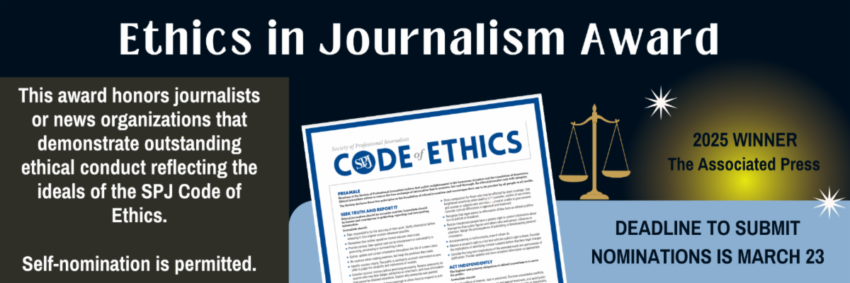
March 23: Deadline for SPJ Ethics Award Nominations
SUBMIT NOMINATIONS FOR ETHICS IN JOURNALISM AWARD:  Strong ethics build strong journalism. Celebrate those who lead by example by submitting a nomination for the Ethics in Journalism Award. Strong ethics build strong journalism. Celebrate those who lead by example by submitting a nomination for the Ethics in Journalism Award.
The award honors journalists or news organizations that exemplify the highest ethical standards, as outlined in the SPJ Code of Ethics. It also recognizes those who make exceptional efforts to educate the public about ethical journalism or hold journalists accountable for their actions. Last year, The Associated Press received the award for standing firm against White House pressure while continuing to report accurately and ethically on the Trump administration, even after being denied access to presidential events. Nominations are due March 23. Self-nominations are welcome. |

March 24: Safety Training for Journalists
|
|
|
|
|
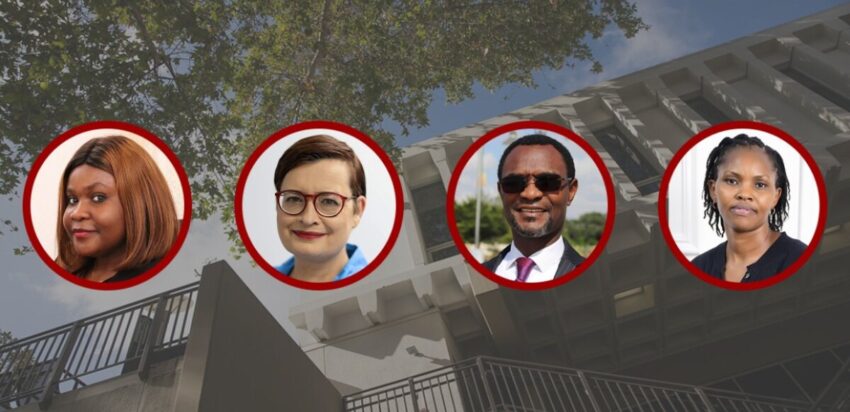
USC Senior Fellows in Global Health Communication Leadership will present progress reports on their projects, which are going forward in Ethiopia, Kenya, Malawi and South Africa. The Fellows include a Malawian MP, a Kenyan researcher in HIV and Aging, the editor-in-chief of Bhekisisa, and the OneHealth lead for the Africa CDC. (Credit: USC)
March 26: Progress on African Health Programs
From Adam Powell:
You and all of our Journal-isms friends are invited
If you can join us in Washington DC or online:
You are invited to join us on Thursday, March 26, at 9 am EDT, for a forum with the 2025-26 USC Africa Fellows, in person in Washington DC, their first stop in the US. The Fellows will present progress reports on their projects in Ethiopia, Kenya, Malawi and South Africa.
To RSVP to join in person at George Washington University, 1957 E Street NW in Washington DC, please email Judy Kang at junghwak (at) usc.edu
To RSVP for the Zoom link, please go to https://annenberg.usc.edu/events/cclp/africaus-forum-global-health-public-diplomacy-and-international-collaboration-featuring
If you can join us in Los Angeles, we will have two public programs:
Monday 3/30 3-5 pm PDT. Same program as 3/26. Details and RSVP: https://annenberg.usc.edu/events/cclp/meet-2025-2026-usc-african-senior-fellows-global-health-communication-leadership
Tuesday 3/31 1-5 pm PDT. USC Global Health Symposium. Details and RSVP: https://globalhealth.usc.edu/iigh-event/save-the-date-2026-usc-global-health-symposium/
More details on the fellowship program at https://communicationleadership.usc.edu/2025/09/29/university-of-southern-california-welcomes-inaugural-cohort-of-african-senior-fellows-in-global-health-communication-leadership/
We look forward to hearing from you and hope to see you in Washington, Los Angeles and/or on line.
Regards,
Adam
Adam Clayton Powell III
Executive Director, USC Election Cybersecurity Initiative
USC Annenberg Center on Communication Leadership and Policy
University of Southern California, and
Co-Host, “White House Chronicle” weekly on PBS, SiriusXM and https://whchronicle.com/
email acpowell (at) usc.edu
email apowell (at) alum.mit.edu
March 26: Nonprofit Local News: Careers, Pathways, Possibilities
Inside Nonprofit Local News: Careers, Pathways, and Possibilities
Reminder for March 28: D.C.’s Journalism Job Fair
From: Society of Professional Journalists — D.C. Chapter
SPJ’s DC chapter is teaming up with seven journalism organizations In the DMV to host its annual job fair. The fair will be at Georgetown University’s Capitol Campus, 111 Massachusetts Ave. NW, Saturday, March 28 from 10 am- 2 pm.
Georgetown University’s Master of Professional Studies in Journalism program is hosting the event. It is being organized in conjunction with the Washington, D.C., chapters of the National Association of Hispanic Journalists, the National Association of Black Journalists, the Asian American Journalists Association, NLGJA: Association of LGBTQ Journalists, the Journalism & Women Symposium and the Arab and Middle Eastern Journalists Association.
Recruiters from Axios, Politico, DC News Now, Bloomberg, NPR, States Newsroom,, Fox Television Stations, Report for America, and NBC Universal will be among those prospective employers on hand to meet interested job candidates.
This is a ticket only event. If you are a member of one of the sponsoring journalism groups, such as the SPJ DC chapter, tickets are $10. Otherwise, it is $25.
If you would like to volunteer or are currently jobless, admission is free, but you must contact the SPJ chapter president to get the discount code. Celia Wexler’s email is cvwexler (at) gmail.com
Each chapter has a limited number of free tickets to distribute, so it makes sense to register soon.
Deadline for ticket purchase is March 26.
Book your tickets HERE. [From Doris Truong, formerly Poynter Institute, former Asian American Journalists Association president, now independent consultant: “Admission is waived for anyone who has been laid off in the past year.”]
April 3: Deadline to Apply for Rosalynn Carter Fellowships

April 9: Webinar on ‘Big Beautiful Bill’ Impact on Black Households
We invite you to join the Joint Center for Political and Economic Studies on Thurs. April 9, 2026, at 11:30 AM – 12:30 PM for the Taxing Consumption and Work: The Cost to Black Households webinar.
The One Big Beautiful Bill Act (H.R.1) makes major changes to the federal tax code with implications that extend well beyond Washington. As federal revenue shifts and intergovernmental fiscal pressures intensify, states are likely to face renewed budget constraints which often lead to greater reliance on consumption taxes, fees, and other regressive revenue tools.
This cost shift translates into higher everyday expenses, from sales taxes and transportation costs to utility fees and local property tax pressures. Black households are particularly exposed to these shifts due to longstanding disparities in income and wealth and because state and local tax structures rely heavily on taxing work and consumption rather than accumulated wealth. . . . (From Joint Center for Political and Economic Studies)
From New York: Media Watch
Air date: 16 March 2026 Hosts: Robert Anthony, Alan Singer, PhD, and Eric V Tait, Jr:
Subject: 1) Background re the illegal War with Iran
2) Fallout and Blow-back from the Iran War
3) Israeli censorship re Iran War coverage
4) US assault on a Free Press in general and particular individual journalists, now reflected in our dismally low ranking as a nation with a free, unfettered Press.
5) Govt use of “Classified Briefings” for the Congress so they can’t then brief their constituents on the status of the War.
Tag with Rev Jesse Jackson’s Homegoing Service coverage and tRUMPs disrespect for our returning Military slain in the Iran War.
From Zita Arocha: July 2026: Writing Your Life, Writing to Heal
Writing Your Life, Writing to Heal weeklong memoir writing and restorative yoga retreat at the beautiful Blue Spirit Retreat Center in Guanacaste, Costa Rica, July 25–August 1, 2026. Cost is $3,000 per person.
For those of you who are interested in memoir writing and writing as a healing practice, this is an amazing opportunity. You’ll have space and time to slow down, connect with your voice, and deepen your writing practice. Over the six retreat days, you can clarify your memoir’s themes and overall structure, explore restorative and therapeutic yoga and mindfulness practices to support your creative process, enjoy nature walks, ocean time, an infinity pool, and deep rest, and draft 20–25 new pages in your memoir.
You’ll be guided by award-winning author and journalist Zita Arocha in writing workshops throughout the week, and by yoga therapist Lorelei Alvarez in daily restorative, trauma-informed movement and mindfulness practices. , , ,
JOBS
From these journalist organizations
Rebecca Aguilar’s Journalism Job Openings: The March List” (March 18)
From Washington Association of Black Journalists (March 4)
- CityCast DC is hiring a reporter.
- Semafor is seeking a communications and media advisor.
- The Baltimore Banner is expanding into Prince George’s County.
- WETA has several jobs open.
- New Republic is hiring a staff writer.
-
Bloomberg Government is seeking a financial reporter from Capitol Hill.
- Applications are open for ProPublica’s Investigative Editor Training Program.
- NPR is hiring senior manager for communications.
- The Council on Foundations is looking for a storytelling consultant.
- American Express is looking for a director of social media.
- Kotaku is hiring a staff reporter.
-
Chesapeake Associated Press Broadcasters Association scholarship deadline is March 20th.
- TIME is hiring a weekend news desk editor.
- USA TODAY is hiring for several positions.
- WABJ’s Yolanda McCutchen is hiring a marketing consultant.
- The Hill is looking for an editorial intern for the summer.
- The 19th is recruiting for its 2026-2027 cohort – Frances Ellen Watkins Harper Fellowship.
- In These Times has opened applications for its internship.
- Forbes is hiring an education reporter.
- Reuters has several editorial jobs open. They’re also looking for a social media editor.
- Apply for the National Press Club Journalism Awards.
- The IRE Conference at the National Harbor is accepting calls for ideas.
- Cheddar is looking to hire a Freelance Multimedia Journalist based in Washington.
- Ars Technica is hiring an arts reporter.
- Washington City Paper is seeking a Loose Lips Reporter and a News Reporter.
From the Uproot Project (March 17)
Job Opportunities
- Mississippi River Basin Ag & Water Desk, Assistant Editorial Director
- Nature, Reporter
- The Guardian, Senior Reporter, Climate Justice
- ProPublica, Data Reporter
- NYT, Assistant Editor, Climate
- Mountain State Spotlight, Environment and Energy Reporter
- Sentient, Investigative Reporter, Iowa Reporting Project
- Scientific American, News Intern (deadline March 26)
- Springer Nature, Audience Engagement Intern (deadline March 27)
- Adirondack Explorer, Digital Editor
- VTDigger, Environmental Reporter & UVM Community News Service Mentor
- WIRED, Senior Editor, Science
- The Bulletin of the Atomic Scientists, Assistant Multimedia Editor
- Quanta Magazine, Senior Staff Editor
Fellowships & Grants
- Renews Project, DEI Beat Grant (deadline May 31)
- The 19th, News Fellowship (deadline March 20)
- Fire Newsroom, Greenlight Grants (deadline April 27th)
- Sloan Foundation, YouTube and TikTok program
Other resources
- Spirit Rock, Holding Ground: Inner Resilience for Environmental Changemakers (A Free 5-Month Resilience Intensive for Climate and Justice Leaders)
- NPR, Next Gen Radio
- Calendar for paid internships & fellowships (courtesy of Mandy Hofmockel’s substack for journalism jobs)
- National Press Photographers Foundation, Grants & Scholarships
- Pitching Science Friday
- ProPublica, Freelance Pitch Form
Webinars & events
- Friday, March 27, 1pm-4:30pm | DCEFF CivicEarth – Media Forum
- 10 Steps to Resilience & Empowerment in a Chaotic Climate – Good Grief Network
From Committee to Protect Journalists: