
Notices for Sept. 17, 2025
Save the Date: Sept. 29 on ‘ICE and the Press’:
Notices for Sept. 17, 2025
Karen Attiah at Busboys to Be Simulcast on YouTube
Nominations Open for J-Educator Promoting Diversity
Services for Ron Harris Planned Friday in D.C., 27th in Memphis
Photos from July 27 on Blacks Worldwide Are on Facebook
(In depth: Linguistic shapeshifting across the diaspora)
Sept. 18: Stanley Nelson Documentary on Black Health
Sept. 20: AI Panel and Tour of NBC4 in D.C.
Sept. 21: Remembering Gwen Ifill on Her 70th
Sept. 25: How to Know If It’s Really ‘Unprecedented’
Sept. 27: Ishmael Reed at D.C.’s Busboys and Poets
Sept. 29: The Future of Africa
From WABJ: A Guide to Reporting on Black and MIssing
From New York: Media Watch
A Month of Non-Violence
Applications Open for Dow Jones 2026 Summer Internships
JOBS
From these journalist organizations
From National Society of Newspaper Columnists
From State Affairs (Aug. 26)
From the Uproot Project
From the Online News Association
From WPFW, Washington, D.C.
(more jobs to come)
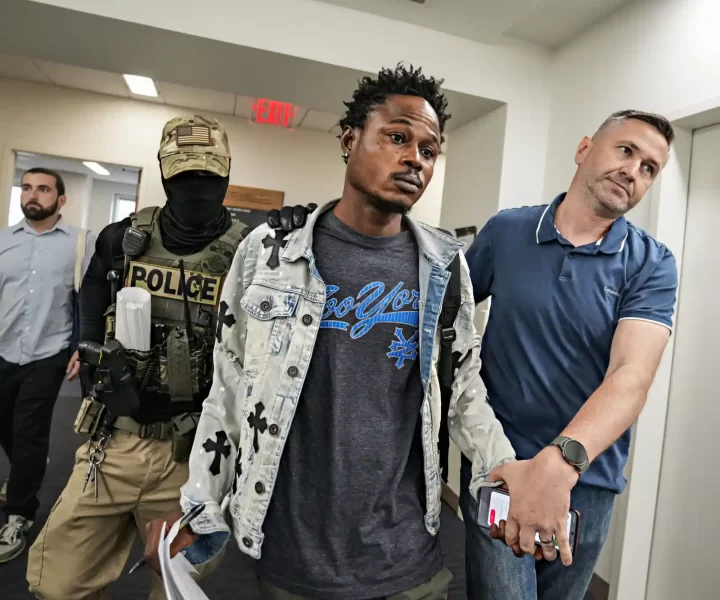
ICE ramped up its immigration enforcement in Lower Manhattan on June 20, both in terms of physicality and what many are calling a blatant disregard for the law. (Credit: Dean Moses/amNY)
Update:
Lead story in the Friday, Sept. 19, Washington Post print edition:
ICE seeks hundreds of new offices across U.S. as agency expands
Officials are looking for new sites to support plans to hire thousands of new deportation officers and lawyers.
By Hannah Natanson and Robert Klemko
Immigration and Customs Enforcement is seeking new office spaces in hundreds of locations across the United States to support plans to hire thousands of lawyers and immigration enforcement officers, according to six federal officials familiar with the matter and records obtained by The Washington Post. .
——————————-
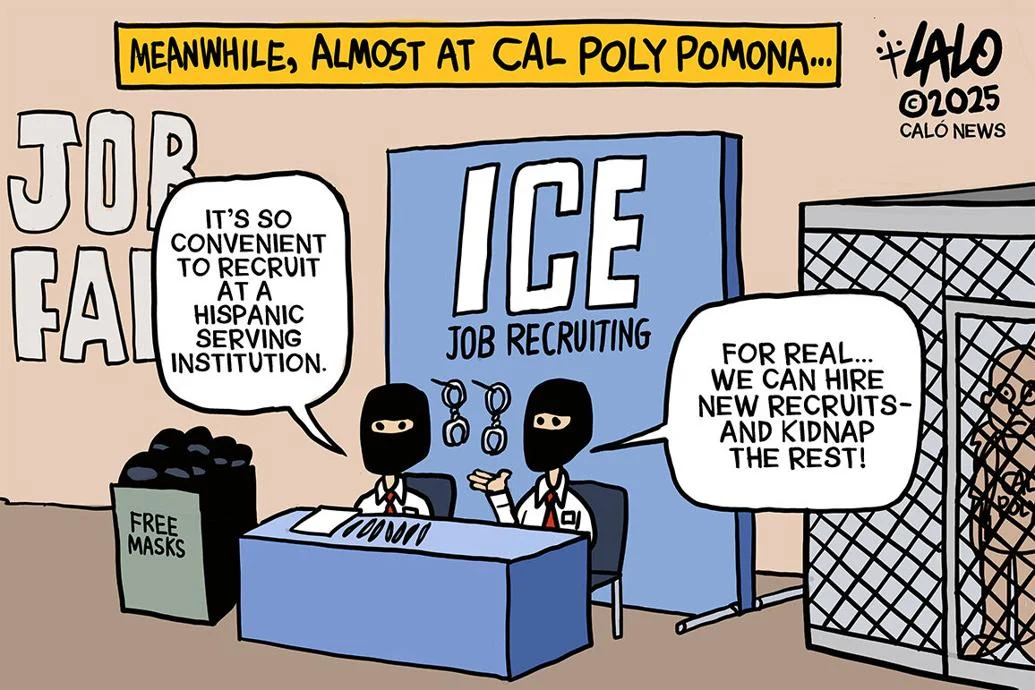
With arrests and abuses by U.S. Immigration and Customs Enforcement (ICE) and pushback by some localities and civil liberties groups, this seems like an opportune time to discuss “ICE and the Press.”
It’s also a good time for us to remember Ron Harris, and to meet again in person.
Our next Journal-isms Roundtable is scheduled for Monday, Sept. 29, at 7 p.m. Eastern. It will be in person as well as by Zoom if there is enough interest, so please respond to this message ASAP if you would like to be with us in person in downtown Washington, D.C. You may hit “reply” or email <jroundtable5 (at) gmail.com >.
As reported in the Journal-isms column:
“On June 26, amNewYork reported on federal agents using intimidation tactics inside 290 Broadway as photojournalists documented ICE detainments. The report detailed threats made against media members observing agents arresting immigrants. Agents also photographed reporters’ city-issued press credentials and sought to prohibit photographers from accessing public areas,” Moses reported July 23.
And while many think of this issue as mainly affecting Latinos, Haitians and Africans are also affected, and an AI summary of the effect on Black journalists says, “while there isn’t evidence of ICE explicitly targeting Black journalists, broader issues of potential harassment, intimidation, and the marginalization of diverse voices in immigration reporting remain concerns within the journalistic community.”
Consider:
- Christina Carrega, Capital B: Chicago’s Black Immigrants Face New Wave of ICE Arrests and Uncertainty
- Kaitlyn Ross, Mike Nicolas, WXIA-TV, Atlanta: Recently engaged, beloved barber arrested by ICE | How his immigration story is questioning the system [Also: Newsweek story])
So far, our panelists are:
- Syra Ortiz Blanes, Miami Herald immigration reporter
- Giovanni Diaz, attorney for Salvadorian reporter Mario Guevara has been imprisoned for more than 50 days, “the only journalist in the U.S. to have been held in ICE custody after being arrested in relation to his work
- Seth Stern, director of advocacy, Freedom of the Press Foundation, who is quoted in the Journal-isms piece.
- Ray Suarez, veteran journalist and broadcaster an author who last year published “We Are Home: Becoming American in the 21st Century—an Oral History:”
Also in the room:
Mickey H. Osterreicher, Esq., general counsel, National Press Photographers Association (NPPA)
- Dave Levinthal, investigative reporter, author of “ICE May Be Breaking the Law to Stonewall Reporters” (Columbia Journalism Review)
We also want to take time to remember Ron Harris, for whom services are this coming Friday (see item below).
Who’s In?
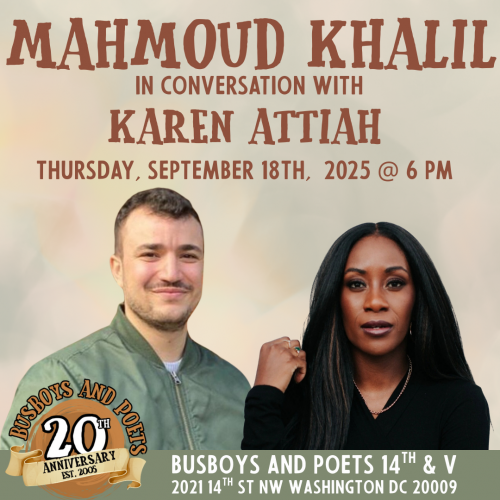
Karen Attiah at Busboys to Be Simulcast on YouTube
Karen Attiah, who announced this week that she has been fired as a Washington Post columnist, had been scheduled to appear at Busboys and Poets on Thursday, and she still intends to be there, according to a spokesperson for Busboys.
The restaurant has exceeded its capacity for RSVPs, the spokesperson said, but you can still attend in person if you arrive early. Seating will be first-come, first-served.
The session will be streamed on the Busboys and Poets YouTube channel.
Julian Rodriguez of the University of Texas, Arlington, accepts the Barry Bingham Sr. Fellowship award in 2015 at the Association of Opinion Journalists Symposium, held at the Poynter Institute. (Credit: John McClelland/YouTube)
Nominations Open for J-Educator Promoting Diversity
Beginning in 1990, the Association of Opinion Journalists annually granted a Barry Bingham Sr. Fellowship — actually an award — “in recognition of an educator’s outstanding efforts to encourage minority students in the field of journalism.”
Journal-isms assumed stewardship of the award last year, handed the baton from the News Leaders Association, which absorbed the now-defunct Association of Opinion Journalists but in 2024, itself dissolved.
Since 2000, the recipient had been awarded an honorarium of $1,000 to be used to “further work in progress or begin a new project.”
This will be the first such award under the new affiliation.
Past winners include James Hawkins, Florida A&M University (1990); Larry Kaggwa, Howard University (1992); Ben Holman, University of Maryland (1996); Linda Jones, Roosevelt University, Chicago (1998); Ramon Chavez, University of Colorado, Boulder (1999); Erna Smith, San Francisco State (2000); Joseph Selden, Penn State University (2001); Cheryl Smith, Paul Quinn College (2002); Rose Richard, Marquette University (2003).
Also, Leara D. Rhodes, University of Georgia (2004); Denny McAuliffe, University of Montana (2005); Pearl Stewart, Black College Wire (2006); Valerie White, Florida A&M University (2007); Phillip Dixon, Howard University (2008); Bruce DePyssler, North Carolina Central University (2009); Sree Sreenivasan, Columbia University (2010); Yvonne Latty, New York University (2011); Michelle Johnson, Boston University (2012); Vanessa Shelton, University of Iowa (2013); William Drummond, University of California at Berkeley (2014); Julian Rodriguez of the University of Texas at Arlington (2015); David G. Armstrong, Georgia State University (2016); Gerald Jordan, University of Arkansas (2017), Bill Celis, University of Southern California (2018); Laura Castañeda, University of Southern California (2019); Mei-Ling Hopgood, Northwestern University (2020); Wayne Dawkins, Morgan State University (2021); Marquita Smith of the University of Mississippi (2022), and Rachel Swarns of New York University (2023).
Nominations may be emailed to Richard Prince, who chairs the awards committee, at richardprince (at) hotmail.com. The deadline is Oct. 15. Please use that address only for Bingham fellowship matters.
Feel free to urge others to write supporting letters for your nominee, especially if they are students or former students of the person you favor.
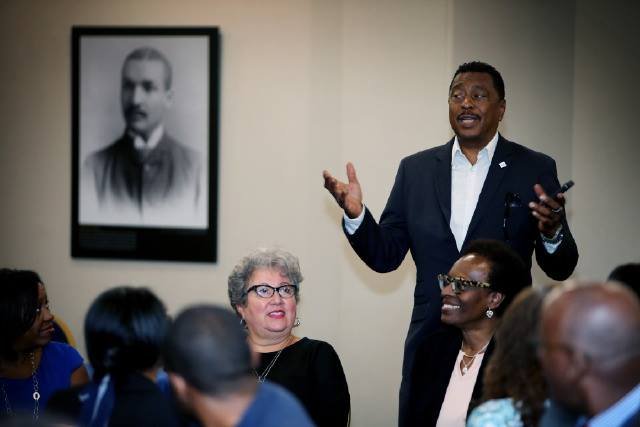
Ron Harris at our September 2017 Roundtable at Howard University. Our guests were Paul Butler, the Georgetown University law professor who has published “Chokehold: Policing Black Men,” and best-selling author and award-winning historian Ibram X. Kendi. (Credit: Sharon Farmer)
Services for Ron Harris Planned Friday in D.C., 27th in Memphis
Services for Ronald J. Harris, the journalist and sailor whose body was found Aug 20 off the coast of Georgia, are planned for Saturday, Sept. 27, in his hometown of Memphis, Tenn., and Sept. 19 in Washington, D.C., where Harris spent much of his career, according to the family. More here.
A Zoom link for the D.C. service is available by hitting “reply” to this notice and asking for it.
Separately, members of the Black Sailors group plan to meet for a marine tribute on Sunday, Sept. 21. It is scheduled at Anchorage marina clubhouse at Baltimore Harbor from 5 p.m. to 8 p.m., organizer Lemart Presley told Journal-isms. “I’m available if they wish to go sailing,” he added.
Harris, 73, was a local reporter, editor, national correspondent, columnist, foreign correspondent, editorial writer and congressional reporter for the Los Angeles Times and St. Louis Post-Dispatch, as well as a public relations professional at Howard University..
The Georgia Bureau of Investigation Medical Examiner’s office said Sept. 11 that an autopsy was underway.
- Yanick Rice Lamb, Ph.D., professor, Howard University: In Memoriam – Ronald J. Harris (Sept. 12)

Photos from July 27 on Blacks Worldwide Are on Facebook
< https://tinyurl.com/4a37aesv >
https://www.facebook.com/
Part 2:
https://www.facebook.com/
In depth: Linguistic shapeshifting across the diaspora
 |
 Changing dials and dialects … learning a foreign language via broadcast media can shape accents. (Photograph: Tsvangirayi Mukwazhi/AP)
In the launch edition of The Long Wave, I wrote about how when I was growing up I consumed all my world news and cultural influences through the radio, and so my accent is a direct reflection of that. It is a little bit Voice of America, a little bit Christian Science Monitor and a whole lot of BBC. Add to that my British schooling in parts of Africa where there were still some stubborn colonial tendencies that focused on elocution and even inflection (never intone upwards when asking a question, we were taught, to maintain status in a conversation). The outcome has been a weirdly anachronistic British accent, one that was then undercut by consumption of American pop culture. The final result is a transatlantic mishmash.
A lot of people I meet for the first time give up on trying to identify my accent and straight-up ask me where it’s from, a sort of frequency scrambling that underlines how important accents are in helping us place who we’re speaking to. What I never quite realised until our Long Wave chat is how much of that accent is not just an organic mixture of influences but a way of expression unconsciously adjusted in certain situations.
You are what you speak
 |
From Patois to ‘posh’ … the boxer Chris Eubank perfected his cut-glass accent by watching English period dramas. (Photograph: Robert Doyle/OSD/Rex)An accent is an identifier, especially when you’re from an ethnic minority. And particularly in Britain, where accents fall along class lines, how one sounds can be a way to signal authority and credibility. There’s a phenomenon called “phone voice” in which we sound more “cut glass” and formal than we would in person, and that is because of its fundamentally remote nature. Phone voice accents become the load-bearing of our efforts to assert ourselves. It is, in effect, an attempt to ward off any bias or discrimination, to neutralise identity and its associated prejudices.
Broadly, what became apparent during our conversation is that these are accents that choose us, rather than us choosing them. Different ways of speaking often present themselves involuntarily – clipped and sort of broadcast-y in work scenarios; softer and, in my case, more American among friends and loved ones yet downright Victorian when dealing with bureaucracies. I had come to think of my changing accent as related to the fact that English is not my first language, and so a clear and uniform accent had never fully bedded in – it was still malleable and easily influenced. But the truth is that it changes because there is a lurking sense of not quite belonging.
Severing the mother tongue
 |
‘I’ve been working here for seven years and no one, absolutely no one, knows I’m Black. And I’d like to keep it that way’ … Little Miss Jocelyn. (Photograph: BBC)All sorts of things bear down on our accents, regardless of race. In England, the southern accent is considered the neutral and aspirational default, and research shows that when people with regional accents move to the south of the country and do not sand away their original speaking identity, they are sometimes subject to accent discrimination, which affects their professional and academic experiences due to a hierarchy of accent prestige.
But race and immigrant extraction bring their own legacies to Black people’s expression. The Long Wave production editor, Janise Elie, said: “Many Caribbean people, including some family members, were forbidden from speaking or learning their ‘mother’ tongue and dialect in case it diluted their English accent. As a result, an important link to our roots and identity has been lost.” She is now teaching herself that mother tongue, Dominican Kwéyòl.
I grew up speaking Arabic but English was privileged in our household, for reasons that were never explained. It was assumed that it was the key to unlocking aspirations in an English-dominated world, and I suppose perfecting it was a way to erase or dilute our identity, as if perfectly enunciated English would somehow disguise our Blackness. It’s a preposterous notion but draws on awareness of the risks of being too “other” and thus unfamiliar, and maybe even evoking suspicion. It reminds me of a sketch from the British TV show Little Miss Jocelyn (so good, too short-lived), where a Black character working in an office of white people panics when a new Black colleague joins the team, and furiously warns him not to be overly familiar, because no one knows she’s Black.
Shame and acceptance
 |
Shared experience … many of us are navigating systemic forces beyond our control. (Photograph: MTreasure/Getty/iStockphoto)What struck me about our accent conversation was that rush of familiarity; that sense of having something that had always been lurking in the back of your mind being given expression. There was something a bit giddy about the “Oh my God, same!” aspect of it. And I think that was because there was, perhaps, a little knot of shame or embarrassment about our changing accents; one that dissolved among the self-recognition, self-deprecation and universalism of our experiences.
Our changing accents were simply a testament to how racialised minorities from all over the world instinctively pick up the same threads. We were all merely navigating gigantic social, class and racial forces that were beyond our control. And so, over the course of a spontaneous team conversation, something that was gnawingly cringe transformed into a warm, enveloping comfort.
Sept. 18: Stanley Nelson Documentary on Black Health
From Yanick Rice Lamb at Howard University: A documentary directed by filmmaker and former Howard faculty member Stanley Nelson will be the focus of a program at the hospital’s towers auditorium: “Critical Condition: Health in Black America”
Sept. 20: AI Panel and Tour of NBC4 in D.C.
 From Washington Association of Black Journalists: WABJ will host a panel discussion centered around Artificial Intelligence for journalists, along with a studio tour of NBC4 on Saturday, Sept. 20th from 9:30 am to 11 am.
This is an opportunity for journalists to learn more about the AI landscape.
There is limited seating. If you would like to attend, please email info@wabjdc.org.
Refreshments will be served.
Sept. 21: Remembering Gwen Ifill on Her 70th
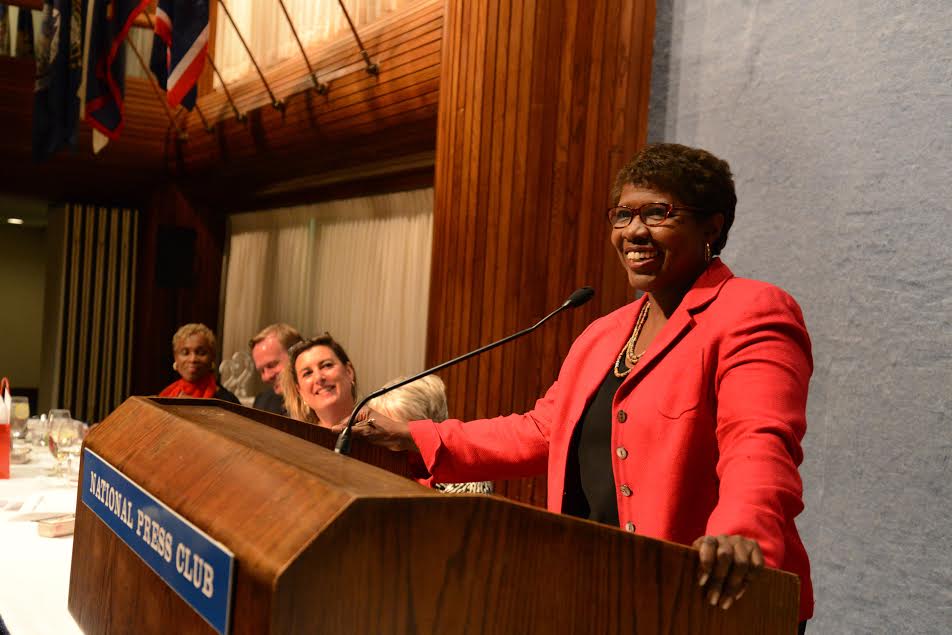
From Metropolitan AME Church in Washington, where Gwen was a parishioner and where her celebraton of life was held:
Remembering Gwen Ifill, 1955-2016
Please Join the Metropolitan AME Family as we remember our friend and member
Sunday September 21, 2025, Metropolitan African Methodist Episcopal Church, 1518 M Street, NW
Washington, DC 20005. 10 AM, Metropolitanamec.org
From Nov. 14, 2016
FOR IMMEDIATE RELEASE Contact: Dakarai I Aarons Dakarai.aarons@gmail.com
Metropolitan A.M.E. Church Comments on the Passing of Member and Noted Journalist Gwen Ifill
Washington, D.C.—the following is the statement of Rev. William H. Lamar, IV, Pastor of Metropolitan A.M.E. Church on the passing of journalist Gwen Ifill, a longtime member of Metropolitan.
“Metropolitan A.M.E. Church mourns the passing of our dear sister Gwen Ifill, a member since 1989. Gwen, the co-anchor and managing editor of the PBS NewsHour, was a lifelong AME, a woman of deep faith and a trailblazing journalist. Despite her busy schedule, she could be found in worship on Sundays when she was not traveling. She engaged visitors and members who approached her about career or who just wanted to take a picture and she found time to speak when asked or narrate a special program like the church’s presentation of Handel’s Messiah.
Working first for newspapers and later on television, Gwen brought a still all-too-rare sight into the homes of all Americans: a black woman delivering the news and sharp insight on our nation’s political process. Gwen covered more than a half-dozen presidential campaigns and her success inspired us all, inspiring a generation of aspiring young black journalists and young female journalists to follow the path she boldly blazed forward, no matter how many racist and sexist attacks she faced. She used her platform to mentor countless young people and her fame to give back to her beloved church and community. When Gwen published the 2009 best-selling The Breakthrough: Politics and Race in the Age of Obama, she donated some of the proceeds to help restore Metropolitan’s historic building.
Gwen has been awarded some of the journalism industry’s highest honors, including most recently the John Chancellor Award for Excellence in Journalism from Columbia University and the First Amendment Award from the National Press Club. But may she be remembered most for being unbought and unbossed and using her platform to improve the lives of others. While Gwen is no longer among us and has gone to be with the Father, her legacy of service, deeply rooted in her Christian faith, will live on.”
Sept. 27: Ishmael Reed at D.C.’s Busboys and Poets

Sept. 25: How to Know If It’s Really ‘Unprecedented’
Dear journalists,
These days, it’s easy to overuse the term “unprecedented” in our reporting. In 2022, politicians used it to describe migration to Chicago. In 2020, it dominated headlines about COVID – and was even named Word of the Year by Dictionary.com. But too often, “unprecedented” oversimplifies events, exaggerate fears or lets leaders sidestep responsibility.
That’s where history helps. This WBEZ article shows that migration to Chicago was even higher at the turn of the century. A Nature headline — “COVID-19: unprecedented but expected” — illustrates how framing events in historical context can bring nuance and calm to public discourse.
Our upcoming virtual training on Sept. 25 will explore how to do just that. Archival researchers and veteran journalists will share practical techniques for quickly finding and integrating historical context into your reporting — so you can avoid the pitfalls of covering today’s stories without historical perspective.
We hope you can join us!
— Wendy Wei, Training Coordinator
When: 1-2 p.m. CST
Thursday, Sept. 25
Where: Virtual over Zoom
Presented by Logan Jaffe (ProPublica) and Laura Kebede-Twumasi (formerly Institute for Public Service Reporting at University of Memphis), participants will learn how incorporating historical archives and context can enrich racial equity reporting, and how to fight against harmful narratives that describe symptoms of systemic issues as “unprecedented.”
Through this training, we will:
Understand the value of historical context in journalism
Identify practical entry points for historical research
Explore local historical archives
Sept. 29: The Future of Africa
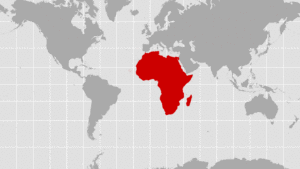 You and all of our Journal-isms friends are invited to join us on Monday, September 29, at 9:00 am EDT (afternoon in Africa), when we welcome the inaugural USC Fellows in Global Health Communications Leadership from across Africa. This will be part of our forum on “The Future of Africa – U.S. Health Diplomacy: Perspectives from the Continent, Part 3: How Africa Is Responding to Reduced Medical and Public Health Assistance.”