

‘It’s Possible That He Slipped and Fell Overboard’
What We Know, and Don’t Know, About the Tragedy (Added Aug. 21)
Homepage photo: Ron Harris at June 18, 2019, Journal-isms Roundtable. Credit: Bonita Bing
#Update @USCG Sector #Charleston crews suspended the search for a missing mariner, Tuesday, pending new information.#USCG Southeast District crews searched by air and sea, covering more than 233 square miles. pic.twitter.com/urM3tYCW6w
— U.S. Coast Guard Southeast (@USCGSoutheast) August 20, 2025
(If the image is not visible, please consider using another browser.)
Ronald J. Harris, the veteran journalist whose sailing avocation led him to a fateful journey off the coast of Georgia, has been found dead, a Coast Guard spokesperson said Wednesday night.
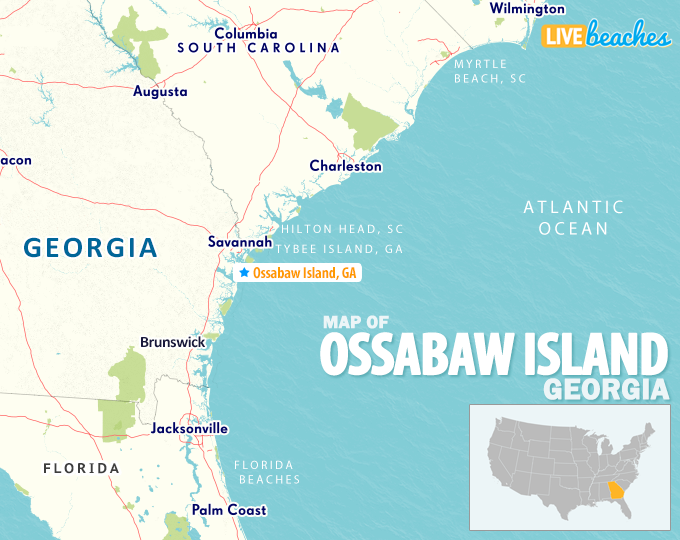
The Georgia Department of Natural Resources recovered the body from the southern portion of Ossabaw Island, Georgia’s third largest barrier island, near Savannah, and notified the family after the search was suspended, Ryan Dickinson, petty officer first class, told Journal-isms.
#Update On Wednesday afternoon, a @GaDNRLE patrol located a body matching the description of the missing man on the southern portion of Ossabaw Island. The body was recovered by #Georgia DNR personnel and transferred to the @GaChatham Coroner’s Office.
— U.S. Coast Guard Southeast (@USCGSoutheast) August 20, 2025
Spokespeople for the Department of Natural Resources and the Chatham County Coroner’s office were not immediately available. “I’m told that there is no information that we can provide right now,” said a man who identified himself Wednesday night as “Operator 2” in the coroner’s office.
The search for Harris, 73, was suspended Tuesday night, with a message posted on X, formerly known as Twitter, at 11:01 AM Eastern time on Wednesday. However, Harris was not identified as the mariner in question. Dickinson said the Coast Guard had exhausted its search efforts, and made its decision after weighing many factors, including the probability that Harris had survived.
 “
“
“At approximately 26,000 acres, Ossabaw Island is Georgia’s third largest barrier island,” according to the Ossabaw Island Foundation. “Nearly 9,000 acres are high ground; the remainder is tidal wetlands. The island is roughly 10 miles long and 7 miles wide at its widest point.” Several dozen species of sharks can be found in Georgia’s coastal waters, including the area around this island. (Credit: www.livebeaches.com/)
‘It’s Possible That He Slipped and Fell Overboard’
What We Know, and Don’t Know, About the Tragedy
Capt. Chris Hodge of the Georgia Department of Natural Resources led the response to the call for help from a friend of Ron Harris. He spoke with Journal-isms Thursday morning about what took place after that appeal. This is an edited account of the conversation, which began with these words from Hodge:
“We probably won’t ever know exactly what happened.”
On Monday, the Coast Guard was notified by a friend that he and Harris spoke at about 11 a.m. and that Harris was having trouble with the anchor on his boat. He was 2 to 2 1/2 miles off Ossabaw Island. The Georgia Department of Natural Resources was notified late in the evening, about 11 p.m., but “the sea conditions were so bad that night that we couldn’t get out there.”
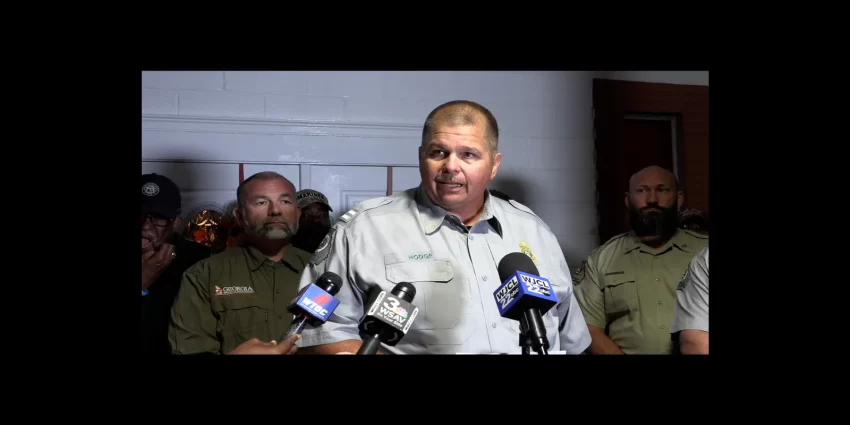 Capt. Chris Hodge, regional supervisor from Brunswick Region, Department of Natural Resources, law enforcement division, at a 2024 news conference. (Credit: Savannah Morning News)
A Coast Guard helicopter was deployed, “and they sent a large patrol boat,” Hodge said. “We responded early Tuesday morning. We spoke with the Coast Guard the next morning and they indicated that they were going to continue with searches utilizing a helicopter and patrol boats as well. We were covering the inland portion of the sound and patrolled by boat until late Tuesday evening.
“On Tuesday morning, first thing, the Coast Guard sent its largest patrol boat, an 87-foot cutter, out. The Coast Guard boarded the sailboat again and found what appeared to be some sort of tether line on the front deck of the sailboat. This could have been a line that he was using to secure himself to the boat and it possibly broke. But that is all speculation at this point.”
On Tuesday evening, members of the Coast Guard suspended their search.
“On Wednesday morning, with calmer seas, Georgia DNR continued to search. We launched a helicopter from St. Simons Island, along with a patrol boat from the Chatham County area.
“Around 1 p.m. on Wednesday, the Georgia DNR helicopter located Mr. Harris’ body on the south end of Ossabaw Island on the beach. Game wardens recovered Mr. Harris using the helicopter and transported him to a location to meet with the Chatham County Coroner.”
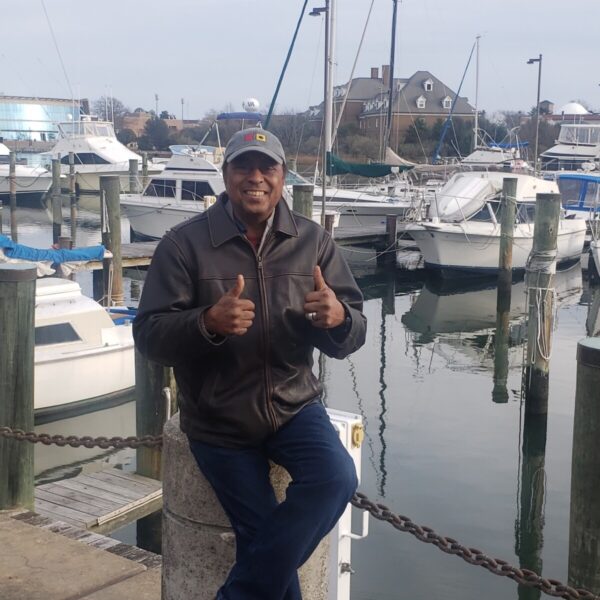 “Mr. Harris was not wearing any type of flotation when he was found and there was no tether, or any type of rope, attached to him,” Hodge continued, in answer to a question. “According to the Coast Guard personnel who boarded Mr. Harris’ vessel, there was a rope attached to the boat, not sure of the location, that appeared to be severed. This may, or may not, have anything to do with how or why he ended up in the water.’ (Photo credit: Karen DeWitt)
Hodge said he had reviewed many cases like this, and it appeared that Harris had been in the water for a day or two.
“We assume he went up on the bow of the boat trying to do something with his anchor. It is possible that he slipped and fell overboard, but clearly that’s speculation based on my training and the facts surrounding the case.” He could have been ‘knocked over by a big wave.’ “
Could this have been a suicide? “That would be something that the coroner and/or medical examiner would need to answer. We do not have any evidence that indicates Mr. Harris did anything intentional to end up in the water.”
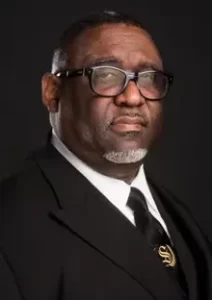 David Campbell (pictured), Chatham County coroner, told Journal-isms Thursday that the body has not been positively identified and that an autopsy would be conducted.
A fellow journalist and sailor asked this: “I’m guessing that the body came ashore along with assorted detritus from Hurricane Erin.
“But the vessel, once it snapped free from its anchor line, had a different drift pattern. That may or may not be significant — although there’s an old sailor’s dictum to always stay with the boat because chances are that, if still floating, it’ll be found long before a survivor in the water will be found. That may redound to why/how Ron happened to get separated from the boat.
“Did he slip and fall overboard? Did he abandon ship with or without a life vest and try to swim ashore?”
Hodge responded: “The only explanation as to why the boat drifted in a different direction could be that once Mr. Harris entered the water, he was either on the surface or beneath the surface for that time.
“The location in which he was taken would be totally dependent upon the current(s). The vessel, as you know, was a rather large 40 + foot sailing vessel that would be directly affected not only by the current, but mostly by the wind direction.
“If my memory is correct, the winds were predominately from the north and northeast on Monday and Tuesday which makes perfect sense as to why his boat ended up to the southwest on St. Catherine’s Island beach. Again, we have no way to determine how he ended up in the water or if he had a flotation device on or with him at the time he entered the water.” (Added Aug. 21)
-
Destini Ambus, Savannah Morning News: Body of man believed to be missing boater found on south end of Ossabaw Island
- Quametra Wilborn, WREG-TV, Memphis: Memphis native found dead off GA coast a month after mother’s killer was arrested
Previously:
Journalist, Sailor Ron Harris Missing at Sea
Aug. 19, 2025
The @USCG is searching for a 71y/o male who was reported to be aboard a 42ft sailboat approx. 3 miles off Ossabaw Island, #Georgia.
An Air Station #Savannah rescue swimmer was lowered to the vessel & found no one aboard. Anyone with info should call the #USCG at 843-740-7050. pic.twitter.com/S13Vgmts4W — U.S. Coast Guard Southeast (@USCGSoutheast) August 19, 2025
If you cannot see an image, please consider using another browser.
Veteran journalist Ron Harris is missing at sea, the Coast Guard said Tuesday, his sailing vessel discovered off Ossabaw Island, Georgia’s third largest barrier island.
The circumstance is unrelated to weather conditions, a Coast Guard spokesperson said, as Harris’ is the only such case reported.
The Coast Guard located the boat and found no one aboard after being notified about 11 a.m. Monday that a friend had not heard from him.
A helicopter and a Coast Guard cutter are searching for him, said spokesperson Ryan Dickinson, petty officer first class. Dickinson urged those interested in updates to consult the Coast Guard’s X/Twitter page: https://x.com/USCGSoutheast
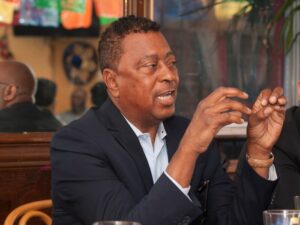 Harris, 73, was sailing alone, said his friend Baxter Smith. “Everyone should understand that neither him nor his body have yet been found. And that there are a million questions,” Smith said.
“Ron had plans to sell the boat and re-locate to Panama — or maybe even sail the boat to Panama eventually and live aboard it there.” (2019 Journal-isms Roundtable photo by Bonita Bing)
He was sailing an Endeavor 42, meaning it was 42 feet long, Smith said.
“Ron had been sailing the boat by himself and had left Beaufort, S.C., bound for St. Mary’s, Ga. He had been in touch via cellphone with another sailing buddy, Lemart Presley, in Baltimore who reports last hearing from him yesterday around noonish.
“When Lemart did not hear anything from Ron all afternoon, he called the Coast Guard around 7 p.m., and the CG later found Ron’s boat anchored and without Ron aboard.”
Presley wrote Tuesday to Facebook friends, “Yesterday I had to report to the Coast Guard that my friend Ron Harris is missing at sea and not responding to calls. I had his last known location off the coast of Ossabaw Island, Ga. on the Atlantic Sunday evening. The Coast Guard deployed a helicopter and swimmer to the sailboat where it was still at anchor and no one was aboard the vessel.
“I’m in touch with his family but if you hear from him please call me or the Coast Guard Tybee Station. If you know anyone in the area have them search local marinas. Let’s hope and pray for the best.”
Harris was reportedly living in Atlanta and at one time lived on a boat in Baltimore. The Memphis native has worked at Howard University, the St. Louis Post-Dispatch, Ebony and the Los Angeles Times, including time as an embedded reporter in Iraq.
In the last year, Harris had been active in seeking justice in the January 2024 killing of his mother, Geraldine Harris, 93, a retired schoolteacher, in her South Memphis home.
The suspect, Derrion Taylor, 17 at the time of the killing, was arrested July 24.
“On one hand you feel a sense of relief, but you still, you still can’t exhale,” Harris told Martin Staunton of WHBQ-TV, known as Fox13.
“It’s just another step in the process. The arrest was made, which we have to follow this all the way to the end. We have to constantly stay on top of this, because after the police have done their job and will submit their evidence, we have to make sure the courts do their job,” he said.
In 2019, Harris co-authored “The Black and The Blue: A Cop Reveals the Crimes, Racism and Injustice in America’s Law Enforcement,” written with former police officer Matthew Horace.
In 2022, he led a team of student reporters working at the University of Maryland on the “Printing Hate” project, which won multiple awards for exploring the historic role of newspapers in fueling racial hate and violence. After that, he worked with former U.S. Capitol police officer Harry Dunn on “Standing My Ground: A Capitol Police Officer’s Fight for Accountability and Good Trouble.”
[Author and former Bloomberg writer Melita M. Garza wrote Wednesday on LinkedIn:
[“The dynamic Ron Harris was my first newspaper editor. To this day I remember the advice he gave me when I was a reporter trainee at the Los Angeles Times: “If you’ve used everything in your notebook for your story, you didn’t do enough reporting.” Ron was the first editor I saw shape a pile of reporter’s notes and make them sing. He saw not how far you had to go, but how far you had the potential to go. And these are all part of what makes a great editor.
[“I’m hoping for this story to have a happy ending.”]
Kimbriell Kelly to Lead Chicago Public Media
Aug. 14, 2025 Who Says There Is No Life After a Layoff?
What Blacks Worldwide Have in Common:
Strength Gained From Surviving Oppression
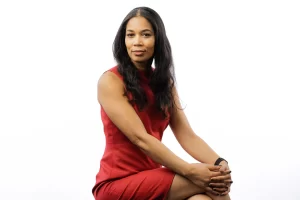 (Credit: Kirk McKoy/Los Angeles Times)
Who Says There Is No Life After a Layoff?
A year and a half ago, Kimbriell Kelly was laid off as Washington Bureau chief of the Los Angeles Times, part of purge that claimed at least 115 Times staffers.
On Thursday, Kelly, 49, was named editor-in-chief of Chicago Public Media, “overseeing our work at WBEZ, Vocalo and Chicago Sun-Times,” Chicago Public Media announced.
“Kimbriell is a Pulitzer Prize-winning investigative journalist and a respected newsroom leader with deep roots in Chicago (her first radio interview ever was with Steve Edwards on WBEZ!). She’ll lead our integrated newsroom and help ensure we’re truly delivering a transformative public media company – especially at a moment when it is needed more than ever,” the public media company announced.
Kelly wrote on Facebook, “I grew up reading the Sun-Times and Tribune and later on, when I became a full-fledged journalist, hosted a community-based radio show through WBEZ. So it feels full circle to return to these amazing institutions and Chicago, a city that has profoundly shaped every aspect of my life and career.”
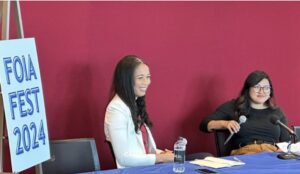
 The announcement continued, “Kelly succeeds Jennifer Kho (pictured), formerly the executive editor of the Chicago Sun-Times, who served as interim editor-in-chief during the integration of the two newsrooms and will be stepping back from her role on September 12.
“Kho’s compassionate, steady leadership has guided the organization through a highly complex integration. Her contributions over the past six months of transformation have been invaluable. And Kho won’t be going far: she will be starting a partnership with Chicago Public Media on a project about the future of public media in the new year after some much deserved time off.”
When Kho was named to the Sun-Times editorship in 2022, she became the first woman and first person of color to lead the paper’s newsroom in its 178-year history. She is of Indonesian background and was president of Journalism and Women’s Symposium, known as JAWS. as well as a member of the Asian American Journalists Association.
“I’m sad to announce that I’m leaving the Sun-Times next month, which was an unexpected heartbreak. But there’s no shame in losing out to the fabulous Kimbriell Kelly,” Kho wrote on LinkedIn. “I truly believe in the newsroom and its potential, and I’m proud of the impactful, award-winning work we’ve done together and the incredible transformation we’ve achieved under challenging circumstances. I’m grateful for our time together. “I wish Chicago Public Media nothing but the best. I’ll be partnering on a project with the organization next year while looking for new opportunities.”
Kelly is believed to be the first Black journalist to head the Sun-Times newsroom, but as with the L.A. Times, Chicago Public Media has its own financial issues.
The company announced a reorganization earlier this year after “buyouts offered to help plug what reportedly is a multimillion dollar operational deficit at our tabloid rival,” the Chicago Tribune wrote in a March 21 editorial. “The Sun-Times, now part of a joint nonprofit venture with the WBEZ radio station, an NPR affiliate, gets to save a little more than $4 million and avoid involuntary layoffs.”
The same month, Chicago Public Media announced a reorganization that included naming a chief partnerships officer, Tracy Brown, who “will lead our efforts to develop creative, collaborative approaches that extend our editorial impact.’ Her duties will include building partnerships with other newsrooms, corporate sponsors and community organizations, as well as cultivating new relationships with supporters of independent journalism.”
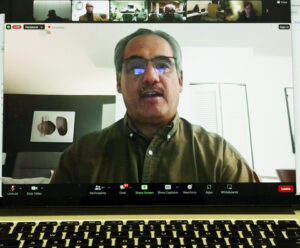
The Sun-Times has burnished its image as a scrappy tabloid with a multicultural outlook to accompany its multiethnic management team. In April Chicago Public Media published a bilingual immigrant resource guide. Veteran editor Gilbert Bailon (pictured, by Sharon Farmer), a former president of the National Association of Hispanic Journalists, is executive editor, news platforms.
“Kelly began her journalism career in the Chicago area reporting for the Daily Herald, hosting a public affairs program on WFLD, and producing a weekly radio show on WBEZ. She went on to national prominence as an investigative reporter at The Washington Post, where she contributed to Pulitzer-winning work, later serving as the Washington Bureau Chief for the Los Angeles Times and teaching at Howard and Princeton Universities,” Thursday’s announcement said.
“Kimbriell has the deep Chicago roots, journalistic excellence, and forward-looking vision to help shape the future of our integrated newsroom,” said Melissa Bell, CEO of Chicago Public Media. “She understands both the tradition of great reporting and the need to innovate for our audiences.”
The L.A. Times said on her 2022 appointment, “Kelly led the bureau’s coverage of the Jan. 6 insurrection at the Capitol, the 2020 Trump election challenge and, in her first year as bureau chief, launched three successful series, the ‘United States of California,’ ‘Covering Kamala Harris‘ and ‘Extreme Heat.’ She is the first person of color to lead the bureau since it started operating in Washington in the 1940s, and only the second woman to hold that post for The Times.
 “Since joining The Times in Washington in 2019 as deputy editor for enterprise and investigations, Kelly edited the immigration coverage that led to the bureau’s first Pulitzer Prize in 17 years. She also led investigations into whether Stephen K. Bannon had lied to lawmakers; that showed why the failure to release $35 million in Pentagon aid to Ukraine was at the center of the impeachment inquiry; and that made public the FBI’s service of a search warrant on prominent Republican Sen. Richard M. Burr seeking information about controversial stock trades, prompting Burr to announce a day later that he would step down as chair of the Intelligence Committee.
“Kelly is credited with scouting the Times’ first TikTok host and launching the company’s inaugural one-year fellowship program in Washington, D.C.
“Prior to joining The Times, Kelly was an investigative reporter at the Washington Post, where she was part of the team that won the 2016 Pulitzer Prize for national reporting for the series ‘Fatal Force,’ uncovering the FBI’s undercounting of fatal officer-involved shootings. She was a 2019 Pulitzer finalist for explanatory reporting for ‘Murder with Impunity,’ a year-long examination of unsolved homicides across major cities in America. She is also the winner of the Polk Award for national reporting, Sigma Delta Chi for public service, among other awards, and was a finalist for the Goldsmith Prize and Selden Ring.”
After leaving the L.A. Times, Kelly became Interim Investigations Editor of the Chicago-based Investigative Project on Race and Equity and joined the Steering Committee of the Reporters Committee for Freedom of the Press (March 2022), and became inaugural visiting professor at the the Center for Journalism & Democracy at Howard University, led by Nikole Hannah-Jones, its founder.
What Blacks Worldwide Have in Common
Strength Gained From Surviving Oppression
Journal-isms Roundtable images by Jeanine L. Cummins
” ‘Black Like Me?’ What Black People Worldwide Have in Common, and Don’t,” attracted about 53 people to the Zoom, and 121 had watched the video by Aug. 13. Fifty-seven watched a separate, extended video interview with Matthew Vari, digital director of South Pacific Post Ltd., which publishes Papua New Guinea’s oldest daily newspaper, the Post-Courier.
Strength Gained From Surviving Oppression
By a Journal-isms contributor
When Francia Márquez made history as Colombia’s first Black vice president in 2022, she had to survive an assassination attempt and vicious racist attacks. Yet even from inside the presidential palace, she still faces the same racism that has plagued Black Colombians for generations. The violence targeting her continued even after taking office.
“It doesn’t matter if you are in the power… doesn’t matter if you are the vice president,” said Edna Liliana Valencia Murillo during a virtual Journal-isms Roundtable. “At the end, she’s still suffering oppression, she’s still suffering racism inside the government. And she’s part of it.”
 In the United States, the pattern held for Barack Obama’s presidency, as Lori Montenegro (pictured), Telemundo’s Washington bureau chief, explained: “I was still a reporter covering the Hill, the White House — and I would hear the comments.
“This was a nation that elected its first Black president, but in many ways it was not prepared to allow a Black president to really govern.”
From Bogotá to Washington, from Papua New Guinea’s newsrooms to Ireland’s government offices, the same dire reality emerged during the discussion connecting Black voices from around the world. As Valencia Murillo put it: “The door to Black people is formally open, but it’s really closed.”
And yet, the obstacles have produced a commonality that many say should be celebrated.
 “You can see the resilience, the drive, the push,” said Dr. Ebun Joseph (pictured), founder of the first Black Studies program in Ireland. “You know, somebody said hunger, and that’s one of the things I think we have in common everywhere. We’re hungry. We’re hungry to not be at the bottom. We’re hungry to push . . . .
“You know, the road kept keeps getting blocked here and there, like, ‘oh, you can’t do this’, ‘you can’t be that.’ But I think Black people everywhere don’t take the words ‘you can’t.’ You know, I think ‘you can’t’ [has] been removed” said Joseph, a native of Nigeria who is also special rapporteur, Racial Equality and Racism Ireland and founder and CEO of the Institute Of Antiracism and Black Studies in Dublin.
 Added Dion Rabouin (pictured), a financial journalist then running for president of the National Association of Black Journalists, “Colonialism has affected and impacted us historically, and also the way that we’ve fought back against and rose against colonialism. And the way that a lot of those same things . . . within our food, within our culture, our dance, are similar across global cultures . . .
“What I think is beautiful about Black culture globally, and I’ve been fortunate enough and blessed enough to be able to travel and be able to have lots of conversations with folks, is just the way that there is a spirit of brotherhood everywhere you go.
“When Black folks see you. They see you, and they want to talk with you, they want to learn more about where you’re from, and they want to learn more about what your culture is like, and they want to know, hey, are these things I see on TV,. Is that the truth, or am I just, you know, seeing things?”
The Roundtable, held via Zoom on July 27, was titled ‘Black Like Me?’ What Black People Worldwide Have in Common, and Don’t.” Two news pegs helped set the stage: December’s United Nations formal declaration of the Second International Decade for People of African Descent, and last fall’s launch by Britain’s Guardian newspaper of a weekly newsletter on the African diaspora, “The Long Wave.” It is part of recompense after the news organization discovered through its own investigation that its founder was a slave trader (scroll down).
The discussion took place during online balloting for the NABJ elections that concluded Friday.
 Errin Haines (pictured) editor-at-large for the 19th, said at one point, “This was such a robust conversation and I look forward to continuing it — with NABJ as a partner if I’m our next president.”
She is now that president.
 The then-leader, Ken Lemon (pictured), said that when he assumed the office in 2023, he wanted “a real pan-African exchange, a cultural exchange.” But Lemon went on to announce that the United States was blocking journalists from Sierra Leone in West Africa from coming to the following week’s NABJ convention in Cleveland.
China and the virtues of technology stepped in to allow those journalists to participate last Saturday (scroll down).
The session “was informative because it was honest,” Roll Call columnist Mary C. Curtis said afterward. “The panel brought up a variety of issues, but one theme that has always remained was the lack of nuance in coverage of people, places and challenges.”
Charles Ray, a former U.S. ambassador said, “This has been a fantastic program.” Adam Powell III, who is director of the Annenberg Center Washington Programs and moderates a monthly forum on Africa, called it “a terrific discussion.”
Dera Tompkins, who regularly connects with musicians globally from her base in Washington, saw another bonus: “Despite different perspectives in identity, I think that a huge plus is that we know more about each other throughout the Diaspora than ever before in history. We are also traveling more and connecting the dots,” she messaged.
“We are also more interconnected through music and culture than ever in our history. There was a time when only whites knew about and attended African artists in concert. Through hip hop, rap, R&B, reggae, Afrobeats we are all connected, understanding each other, speaking the same language and singing the same song.”
Still, the conversation revealed how formal progress often masks persistent, systemic exclusion.
Two Forms of Racism, Same Result
Journal-isms’ Richard Prince and John Yearwood, editorial director for diversity & culture at Politico, opened with excerpts from a recorded interview with Matthew Vari, digital director of South Pacific Post Ltd., which publishes Papua New Guinea’s oldest daily newspaper, the Post-Courier. Vari illuminated how colonialism’s legacy persists in unexpected ways, even in the South Pacific. (Full interview here)
“If you’re in a press conference, and there are 10 journalists sitting there, and the prime minister is talking, only one or two journalists will be asking him questions,” Vari explained. The silence reflects what he called “the Big Man mentality,” an unwarranted deference to authority.
Before the Roundtable, a U.N. official identified for Journal-isms two qualities about the African diaspora: Black Americans were prouder of their nation than others were of theirs and that with the wider adoption of braids, dreadlocks, cornrows, buns and coils, one can no longer identify a Black person’s nationality from appearances alone.
Jean-Francis Varre and his band Sahel at the Kennedy Center in 2022. “See examples of Sahel performing interpretations of music ranging from Senegalese Mbalax, Salsa, Cape Verdean Morna, Samba & more!” says the caption for this promotional video. (Credit: YouTube)
Jean-Francis Varre, a Washington, D.C., musician whose band Sahel performs across the African diaspora in six languages, elaborated on the observation about pride.
“America (like South Africa, Australia etc..) were settler rather than just extraction colonies, which inevitably intensified the control of and conflict between indigenous/enslaved and Europeans,” Varre explained via email and again at the Roundtable. “Also, the average ratio of white to Black in the US was on average 10 to 1 when that ratio was almost reversed in the majority of the diaspora during most of the slave trade centuries — at least until the ‘Blanquiamiento/Branquiamento’ – the deliberate whitening of Spanish and Portuguese colonies in the Americas at the turn of the 19th century.
“As a result of these factors and America being a global leader of Nationalism and Industry at the time, African Americans have developed a unique consciousness that became the blueprint for Black Nationalism and pride globally. This is why Marcus Garvey had to leave Jamaica in order to get political traction in Harlem.”
Varre also said Anglophone cultures developed explicit exclusion through Jim Crow, “which was so stringently honest in its racism,” while Latin cultures created “hidden racism” that promotes mixing while maintaining hierarchies.
 A book by Valencia Murillo (pictured), the Colombian journalist, examines racism across 10 countries. “Here in Colombia, society tries to [deny] that there’s . . . racism. . . . And that’s why Black people, we have been in the same schools, in the same universities, in the same enterprises, just spending our money in the white pockets,” she explains in “La Diaspora Perdida.”
The Afro-Latina journalist and author drew a contrast with the United States, where legal segregation inadvertently created separate Black institutions (historically Black colleges and universities, organizations such as NABJ) that don’t exist in supposedly integrated Latin societies.
The Universal Drive
Across continents, participants identified shared characteristics that transcend geography. Vari captured it through a rugby player who defined his life in one word: hunger.
“You’re hungry to try and prove yourself. You’re hungry to try and beat the system. And you’re hungry, trying to achieve the best in life for your kids.”
He added that one thing “we share . . . as Black people living across the world is, there are a big bunch of us who have also given up hope, too, as well.
“That they’re just trying to pass through life and its existence, so… I think the onus on anyone that’s watching is, is we all need to lift our people up together.
“And that starts by educating the brother next to you, or the sister next to you.”
Cultural Connections Across Barriers
Despite linguistic barriers imposed by different colonizers, participants found unexpected cultural connections. Varre traced African rhythmic patterns from Brazil to New York, explaining how enslaved Africans preserved knowledge through music even when other forms of cultural transmission were forbidden.
“Our cultures before coming to the Americas were overwhelmingly, not completely, but overwhelmingly oral,” he said. “Most of our knowledge was passed through oral culture and music. That commonality within the diaspora is something that has not died.”
Even humor serves as a universal connector. Vari described Papua New Guineans bonding with African American experiences through widely distributed American cultural programming, including sitcoms: “Everything we get in terms of the connections between us and African Americans is through the media and movies. Most of the sitcoms that are being produced and sent, from Madea to…Dave Chappelle.“
Discovering Hidden Connections
The Roundtable revealed how Black communities worldwide are rediscovering ties that were always there. Montenegro pointed to a critical gap: “As a global Black community, we really don’t know each other’s stories.”
During her travels across Africa, Valencia Murillo found that while people would acknowledge Black populations in the United States and Brazil, they remain unaware of significant communities in Colombia, Peru or Bolivia. “We are still that part of the diaspora that doesn’t exist enough,” she said.
 Olive Vassell (pictured) co-editor of “Mapping Black Europe,” described how European Black communities remained unknown to each other until recently. However, her book covering eight European capitals revealed shared experiences across borders. It represented “the first time that Black Europeans had gotten together to write their own first-hand account.”
The 2020 Black Lives Matter protests demonstrated how quickly these hidden connections could activate. Research shows that more than 200,000 people participated in more than 80 rallies across Germany alone, with similar mobilizations in Denmark, Italy and other European countries. “The Black Lives Matter movement was really strong in every European country,” Vassell noted.
The Media’s Representation Problem
The conversation revealed how superficial diversity pervades newsrooms globally. Montenegro observed that representation doesn’t equal control: “I still believe that we may be on top, but we are not in control.”
Murillo described what she called the “tokenism” in Latin American media: hiring “one Black anchor, or one Black journalist, just to appear that they are not racist.”
The former TransAfrica organizer Cecelie Counts reminded participants that previous generations achieved remarkable results through strategic media engagement. During the anti-apartheid movement, “Black journalists made a profound difference” by using their positions to influence U.S. foreign policy, she said.
 Kenneth J. Cooper (pictured), who wrote about African connections in South Asia for the Washington Post, offered a different framework for understanding global Black unity. Cooper argued for recognizing deeper cultural connections that transcend colonial boundaries rather than defining commonalities through shared oppression.
Varre reinforced this perspective: “In order to fight our differences, we have to actually focus on our commonalities that have been obscured. They were obscured on purpose.”
Those commonalities, Varre explained, can be traced through “rhythm, through our body movement, through our food.” These are cultural patterns so deep they’re recognizable across continents, he explained. Cooper described identifying a dark-skinned Indian man from afar simply from the way he moved, illustrating how African cultural DNA persists in unexpected places.
Melanie Eversley, who edits NABJ’s “Black News & Views,” said, “When you travel to Africa you really get to see where ‘we’ are really from. I’ve noticed that every Black culture in the world has a dish with a dark green leafy vegetable combined with a meat/fish, whether it’s callaloo and sailfish, kontomire with fish, or collard greens with smoked turkey.”
The conversation itself proved Cooper’s point. By connecting across continents and languages, participants demonstrated that these deeper connections persist despite centuries of separation.
- Ace: Black Asian Indigenous Tribe In Thailand : Unveiling the Maniq People (YouTube video)
- Ace: The Black Tribe of The Philippines : Aeta Trib (YouTube video)
- Karen Juanita Carrillo and Jesús Chucho Garcia, New York Amsterdam News: Activists look for changes with U.N.’s second International Decade for People of African Descent (Jan. 16)
- Columbia University: Columbia Launches PhD Program in African American and African Diaspora Studies (video)
- Kenneth Cooper, Washington Post: Within South Asia, a Little Touch of Africa (April 12, 1999)
- Dorothy Davis, LinkedIn: “Product of the U.S. Government: Reflections of a Pioneer African American USAID Foreign Service Female Child”
- EducArte, local Brazilian arts nonprofit: Upcoming Sept. 5 evening in D.C. with Ilê Aiyê, legendary Afro-bloco that redefined Brazil’s cultural landscape and was instrumental in promoting Black consciousness in Brazil.
- Guest contributor, GlobalVoices.org: Moving to Africa? Check your privilege at the gate
- Human Rights Watch: Africans and People of African Descent Call on Europe to Reckon with Their Colonial Legacies (Nov. 18, 2024)
- Megan Janetsky, Associated Press: Afro-Mexican communities devastated by Hurricane Erick call for emergency aid (June 26)
- Journal-isms: ‘We Are, as Latinos, Quite African’ (June 27)
- Journal-isms: Press Freedom Is for Black-Run Countries, Too (Sept. 6, 2024)
- Journal-isms: Worldwide, Do Media Have a Racism Problem? (Aug. 10, 2021)
- Rawiya Kameir, The Outline: How African med students created a new genre of Cuban music (May 30, 2017)
- Melissa Noel, Essence: Are Black People Any Closer To The Goals Of The International Decade For People Of African Descent In Its Final Year? (Feb. 24, 2024)
- Publishers Weekly: “The Second Emancipation: Nkrumah, Pan-Africanism, and Global Blackness at High Tide” by Howard W. French. (August 2025 publication)
- Damaso Reyes, The Root: Black Lives in Germany: A Multigenerational Struggle for Acceptance (April 4, 2016)
- Zadi Zokou, YouTube: Relationships African Americans/African immigrants: Documentary project presentation (2013)
