

Poll Shows Less Public Support for Diversity
Capehart Cites Bezos Edict in Washington Post Exit
What Did That Ad Mean by ‘Great Jeans’?
Trump Calls Charlamagne Tha God ‘Racist Sleazebag’ (Aug. 3 update)
Short Takes: foreign media need U.S. funds; women journalists face continued digital harassment; threats to journalists in Gaza; Hulk Hogan’s racism
Homepage photo: Illustration by Jean Wei/Nieman Lab
Photos of NABJ presidential candidates by Jeanine L. Cummins
FCC Chair Brendan Carr said on the “PBS News Hour, “there’s versions of DEI, not all DEI, but there’s versions of DEI that amount to invidious forms of discrimination.” Therefore, his agency has “authority to make sure that we have nondiscrimination across regulated entities.” (Credit: PBS News Hour/YouTube)
Poll Shows Less Public Support for Diversity
“Slightly less than half of U.S. adults believe that Black people face ‘a great deal’ or ‘quite a bit’ of discrimination in the United States, according to a poll,” Terry Tang and Amelia Thomson-Deveaux reported Thursday for the Associated Press. “That’s a decline from the solid majority, 60%, who thought Black Americans faced high levels of discrimination in the spring of 2021, months after racial reckoning protests in response to the police killing of George Floyd.
“Significant numbers of Americans also think diversity, equity and inclusion efforts, also known as DEI, are backfiring against the groups they’re intended to help, according to the survey from The Associated Press-NORC Center for Public Affairs Research, including many people who belong to those groups.
“The findings suggest Americans’ views on racial discrimination have shifted substantially since four years ago, when many companies launched efforts to promote diversity within their workforces and the products they sold. . . .”
Journal-isms asked the candidates for president of the National Association of Black Journalists two questions:
What role do journalists play in creating or debunking these impressions?
Does NABJ have a role?
Here are their responses:
KEN LEMON
 The George Floyd video is pivotal in this question. It hit home differently because we were all home, socially distancing or working from home because of COVID. The usual daily distractions were gone, and nothing could pull us away from the reality in living color.
That video brought more exposure to the Ahmaud Arbery and Breonna Taylor cases. Both happened before Floyd, but Floyd shook the world’s consciousness.
The Floyd video opened the door for a series of “while Black” stories. Stories, often with video, about bad things happening to Black people doing everyday things that lead to abnormal reactions because they are spaces that other people think Black people shouldn’t occupy.
Cell phone videos haven’t vanished, as Dr. Rashad Richey’s work has shown us. The distractions are back, and focus has shifted. I believe that is what we see in the changing numbers. Journalists’ job is to show the impactful truth regardless of who follows. Those stories document our world.
The world didn’t see the stories of Arbery and Taylor when they were initially reported, but they were documented and easier to follow after Floyd’s case. The world didn’t follow the work of Ida B. Wells in process, but it’s documented and unavoidable.
Black journalists play a huge role in sharing the facts in cases like this because our lived experience brings us closer to the story. These stories reveal why diversity policies are needed.
People can easily imagine a marginalized community when they see, hear, and read the plain facts, regardless of clicks or views. Journalists must document these things as agencies move away from tracking stats and incidents important to the Black community.
Pushback on policies that help marginalized people is easier when no one reveals another side. The work is as important now as it has ever been. It gives voice to the voiceless and it elevates concerns with real life or death consequences.
ERRIN HAINES
 Any student of American history knows there is always a backlash to racial progress. This represents a significant narrative shift shaped by our politics and, in some cases, reinforced by media.
NABJ absolutely has a role to play in making the case for how journalism can and should bring clarity and honesty to the conversation about DEI. As the largest and oldest advocacy organization for journalists of color, we are uniquely positioned and mission obligated to confront attacks on the value of representation.
For all journalists to tell the truth about the reality of the progress and work left to do in our country around inequality is to continue to reckon with the unfinished business of our democracy and to leave a more honest and accurate record of who and where we are as a nation.
DION RABOUIN
 I see this poll as a sign that the media isn’t serving its role as a truth teller and presenter of facts. That’s largely because many people are finding other sources of information, many of them are not factual or based on real information. American audiences are largely tuning journalists out, in favor of influencers and entertainers.
Media has to start meeting people where they are. That means finding innovative new ways to deliver content and engage audiences. That doesn’t just mean start a TikTok channel and put your TV or print content there. It means study TikTok, find out why audiences are flocking there and understand what those audiences want and how to translate your information on those platforms. It means investing in people and technology (specifically people who understand the technology).
Short answer: Journalists can play a huge role in countering these misguided opinions. But we aren’t.
This is the raison d’etre of my company The Black Press. Black-owned publications are well-suited for this moment, in terms of the content they’re creating. The problem is, it isn’t getting in front of the audiences that need to see it.
Does NABJ have a role?
Yes. I believe this is part of the reason Black News & Views exists. But similarly, its audience is limited by the investment put into it by NABJ. NABJ is made up of Black journalists who know the truth about discrimination and know how to educate audiences about this. We need to take this effort on in a real way.
This, too, calls for investment. NABJ doesn’t seem to realize the seriousness of the moment we’re in. We should be fully engaging our deep financial resources to counter this narrative in every way possible — making public appearances, hiring experts to develop and craft messaging, engaging social media, partnering with other like-minded journalism organizations to leverage our influence and talking with media and content creators about the truth.
We should also be fundraising with organizations like the Knight Foundation, American Journalism Project, Local Media Association and Google News Initiative to raise millions of dollars for these efforts. Instead, we’re arguing with our partners and fighting amongst ourselves.
Journal-isms also posed the question of the other journalists-of-color organizations.
The National Association of Hispanic Journalists responded, favoring a less activist approach.
“The role of journalism is to inform public opinion, not to shape it. The more a newsroom resembles the community it serves, the more likely it is to produce full and accurate coverage and avoid stereotypes,” said Andrew Sherry, senior director of communications.
 Executive Director Yaneth Guillen-diaz (pictured) told Editor & Publisher for a story published Friday, “NAHJ’s role is simple: We want our members to be the best qualified, for any job that opens, regardless of race or ethnicity,” she said.
Neither group spoke up about the move to claw back federal funding for public broadcasting, however, though many journalists of color work there, or became involved with the lawsuits against Gannett Co. and other media companies that claimed white, straight men were being discriminated against. That white men benefit from the exposure to diverse groups of co-workers similarly has been missing from most coverage of the issue.
The Corporation for Public Broadcasting, a cornerstone of American culture for three generations, announced Friday it would take steps toward its own closure after being defunded by Congress. The defunding particularly affects media serving marginalized, rural and Indigenous communities.
If Marc Morial, CEO of the National Urban League, is any indication, civil rights organizations favor a more activist approach.
In 2013, Paul Cheung was the new president of the Asian American Journalists Association. He visited the NABJ convention then, and told Journal-isms at the time that he found motivation there. “I could really see the civil rights origins” of NABJ, Cheung said. “For AAJA and the other groups, we didn’t come into development” until later. “NABJ led the movement, and to see it was inspiring.”

Marc Morial, president and CEO of the National Urban League, and colleagues address the need for diversity, equity and inclusion at the group’s Legislative Policy conference in Washington on May 15. (Credit: Richard Prince)
Morial said in May, “Journalists are storytellers. And in this moment, also, our journalists in our community are truth-sayers. And it is so important in this moment that all of us find ways to lift our voices. Individuals can do it through social media. Those that have the pen in their hand, the proverbial pen in their hand, can write about this moment.
“See, I think the headlines have grabbed those companies that have retreated. There needs to be attention on those that have not.
“Because those that have not — now some of them don’t want a lot of attention. But we want to shine a light on it because it is a mixed result.
“I’m disappointed with anyone that would walk away, because some that have walked away have whispered to me privately, ‘You know I’m only doing this because of the threat. So I’ve got to do this only because of the threat.’ And this is a commentary on the erosion of American democracy.
“When a government in power can use its power, can intimidate people into going back to the days of discrimination, and then to create a smokescreen and a cover story that diversity, equity and inclusion is, in and of itself, a discriminatory practice. Nothing turns my stomach — this twisted and evil logic. Because it’s twisted.
“So we welcome what you write (as long as you write it truthful.) As long as you quote our reports. . . . We’ve been having a lot of discussions about the appropriate way to include journalists — organizations of journalists . . . into this conversation about diversity. . . . “
Morial said that his coalition of 20 or so groups fighting to continue diversity, equity and inclusion policies is “trying to figure out a way to include” the National Association of Black Journalists and the trade group for Black-press publishers, the National Newspaper Publishers Association. Neither group has responded to a question from Journal-isms about a response to Morial.
“First of all, let’s keep in mind that this administration has been the one that has been sowing distrust in the media for the last decade,” FCC Commissioner Anna Gomez said on the “PBS News Hour.” “And so to use this alleged distrust in the media as the reason why the FCC needs to step in and regulate is, I think, disingenuous.” (Credit: PBS News Hour/YouTube)
Meanwhile, Brendan Carr, Trump-appointed chairman of the Federal Communications Commission, said on the “PBS News Hour” Thursday that his agency is trying to course-correct broadcast outlets that he believes are practicing DEI.
“So, for instance, during the last administration, there was a transaction before where a company came in and made commitments in the record to advance DEI initiatives,” he told questioner Geoff Bennett. “And those were accepted by the FCC in its decisional document. Here, we’re doing the same type of the thing, but moving in the opposite direction, which is, there’s versions of DEI, not all DEI, but there’s versions of DEI that amount to invidious forms of discrimination.
“And the FCC has long had rules on our books, EEO regulations, that prohibit broadcasters and others from engaging in those forms of discrimination. And so the commitments made here by CBS was to get rid of any of those invidious forms of discrimination. And I think overall that’s a good thing and, again, sort of consistent with our authority to make sure that we have nondiscrimination across regulated entities.”
On the same program on Tuesday, FCC Commissioner Anna Gomez, the only Democrat on the panel, said, “The First Amendment prohibits the government from censoring broadcasters. That is entirely what the freedom of press is all about. And so if a complaint comes to the FCC, and the FCC determines that the content needs to be further censored, it’s directly violating both the First Amendment and the Communications Act, which prohibits us from censoring broadcasters.”
- Kevin Abourezk, ICT News: Radio silence? Public media braces for impact of federal budget cuts
- Camila Gomez, Chronicle of Higher Education: A Decades-Old Government Program That Supports Hispanic Students Is Under Fresh Scrutiny
- National Association of Hispanic Journalists: NAHJ releases updated Cultural Competence Handbook (July 11)
- Rodney Ho, Atlanta Journal-Constitution: Jazz station 91.9 WCLK hopes donations will make up for federal cuts. The Corporation for Public Broadcasting supports music stations as well as news/talk stations
- Tyler Falk, Current: American Public Media Group plans layoffs amid $6M deficit
- JAWS: Journalism & Women Symposium (JAWS) Stands in Strong Support of Continuing Diversity, Equity and Inclusion Efforts (March 17)
- Justice Department: Justice Department Releases Guidance for Recipients of Federal Funding Regarding Unlawful Discrimination
- Multiple authors, Fast Company: Why workplaces should be doubling down on DEI (July 17)
- Native Public Media: Statement On the Defunding of the Corporation for Public Brvoadcasting
- Scott Nover and Aaron Gregg, Washington Post: Public broadcasters game out a future without federal funding
- Akemi Tamanaha, AsAmNews: Report finds 48% of AAPI adults in California experienced hate
On Thursday, MSNBC’s Jonathan Capehart explains his decision to leave his job at The Washington Post in response to an edict to “communicate with optimism” about the country and the future, when Capehart believes “we’re living in the here-and-now where American democracy is in peril.” (Credit: YouTube)
Capehart Cites Bezos Edict in Washington Post Exit
The buyout offer that has helped drain the Washington Post newsroom of some of its best-known names came to an end Thursday, with opinion writer Jonathan Capehart declaring that a policy declaration by owner Jeff Bezos drove him to take the offer, and longtime local courts reporter Keith L. Alexander vowing to continue to speak out.
Capehart, perhaps better-known now for his television appearances on PBS and MSNBC, cited Bezos in a Substack piece, on MSNBC and again Friday on the “PBS News Hour,” where co-host Amna Nawaz asked him to “speak directly to our audience to tell them why” he took the offer.
“Well, the direction of the opinion section changed,” Capehart replied.
“Jeff Bezos (pictured below), the owner of The Washington Post, as is his right, decided that he wanted the section to focus on the twin pillars of personal liberties and free markets. And it became clear, as time went along, and especially when he chose a new leader for the section, that there was just not going to be any room for a voice like mine, especially when we were told that we would have to be unapologetically patriotic in talking about the positive things happening in the country.
“How can you talk about the positive things happening in the country when the rest of the house is engulfed in flames and the foundation is flooding? I wanted to go someplace where my voice would be heard.”
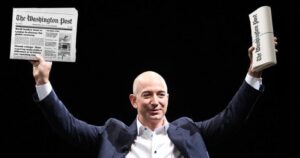 The buyout offer, formally known as a voluntary separation program, was offered in May. “According to a VSP document viewed by Fox News Digital, nine months of base pay would be given to staffers employed for 10-15 years, 12 months of base pay for 15-20-year veterans, 15 months of base pay for 20-25-year veterans and 18 months for anyone who has worked at the Post for more than 25 years. All of them would also receive 12 months of pay credit in their Separate Retirement Account (SRA),” Joseph A. Wulfsohn wrote May 27 for Fox News.
In late July, Politico compiled a three-page list of Post employees who had left the paper since November, although not all of them had taken the buyout. White House bureau chief Toluse Olorunnipa left for The Atlantic, for example, but was not eligible for the Post buyout because his 6 1/2 years of service there did not meet the 10-year threshold.
Among those journalists of color on that list are Jose del Real, Marian Chia-Ming Liu, Eugene Robinson, Tracy Jan, Olorunnipa and Allison Cho.
Later, Krissah Thompson, a former managing editor, columnist Joe Davidson, and editorial columnist Colbert King would announce their own departures.
Deputy Managing Editor Monica Norton appears on some lists, but she declined to confirm her exit to Journal-isms. “With all due respect, in nearly 40 years of journalism I’ve never made any public comment about my personal life. I think there’s enough reporting out there to bring clarity on my professional status,” she messaged.
Post spokeswoman Liza Pluto told Journal-isms Friday, “We are not publicly disclosing any numbers from the VSP and will not be commenting on that.”
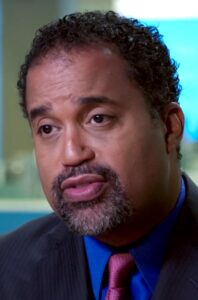 Alexander (pictured) made his pledge to continue to speak out at a mixer held by the Washington Association of Black Journalists, of which he is a former president, in preparation for next week’s convention of the National Association of Black Journalists.
View this post on Instagram
If no image appears, please consider changing browsers.
On July 26, NABJ said in a statement, “NABJ, along with our Washington Association of Black Journalists (WABJ) affiliate chapter, is particularly concerned about the representation and retention of Black journalists at The Washington Post.
“In light of the recent voluntary departures of several Black staffers, we have requested a meeting with senior leadership to address these concerns and advocate for a continued commitment to diversity and equity within their newsroom.”
A Post spokesperson messaged Journal-isms Friday, “The Washington Post remains committed to advancing diversity at all levels of our organization. The current voluntary separation program has led to the departure of several valued colleagues, including Black Opinion and Newsroom staff whose contributions we respect and appreciate, and we wish them success in the next chapter of their careers. Our entire organization remains urgently committed to reflecting diversity of all America.”
Among the Black journalists remaining at the Post are editorial writer Keith Richburg, who has been the paper’s No 2 foreign editor and is on contract, living in Thailand after running a journalism program in Hong Kong for seven years. Also staying put is Michelle Singletary, who still wins kudos as a personal finance writer. “I decided to stay because I have more I want to accomplish in the personal finance space on the Post platform given the current economic conditions under the Trump administration,” she messaged Journal-isms.
Robin Givhan, a Pulitzer Prize winner while a fashion columnist and who writes a column for the A section, said she would “be able to answer that question with certainty and detail next week.”
Also still in place are sports editor Jason Murray and three sports columnists, Jerry Brewer, Candace Buckner and Kevin B. Blackistone, and editorial columnists Theodore R. Johnson and Karen Attiah.
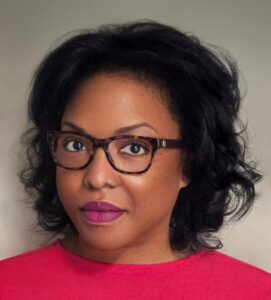 On July 22, longtime Post veteran Carla Broyles (pictured) was named deputy head of print, working on the Post’s print edition, and two days later, Jamie Stockwell (pictured, below), a seventh-generation South Texan of Mexican descent, was promoted to deputy managing editor of the News Hub.
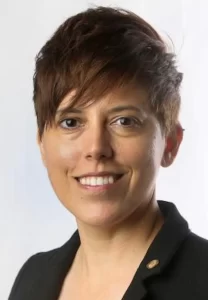 Separately, Attiah, who was also an adjunct professor at the School of International and Public Affairs at Columbia University and who confirmed that she is staying at the Post, is teaching a Resistance Summer School in Washington at the Martin Luther King Jr. Memorial Library. “We sold out 500 seats in 48 hours. 40 scholarships,” she told Journal-isms.
In a video posted Friday, the caption reads, Boston Globe columnist “Kimberly Atkins Stohr speaks with Karen Attiah, founder of Resistance Summer School, about the importance of creating safe spaces for discussions on tough topics in education.
“They explore the intersection of journalism, race, and global affairs, and how Attiah’s experiences led her to create a new educational initiative after her course at Columbia was canceled. The conversation highlights the role of librarians in fostering community and the need for journalists to document history amidst challenges in the media landscape.”

Credit: American Eagle Outfitters
What Did That Ad Mean by ‘Great Jeans’?
“After more than a week of near-nonstop scrutiny on social media, in the mainstream media and among consumers, American Eagle Outfitters has addressed the controversy facing its new ad campaign featuring Sydney Sweeney,” Rosemary Feitelberg reported Friday for Women’s Wear Daily.
“The sportswear and denim company posted on its Instagram Friday afternoon, saying: ‘ “Sydney Sweeney Has Great Jeans” is and always was about the jeans. Her jeans. Her story. We’ll continue to celebrate how everyone wears their AE jeans with confidence, their way. Great jeans look good on everyone.’
“In one of the campaign’s promotional videos, the 27-year-old ‘White Lotus’ and ‘Euphoria’ actress is seen lying on the floor zipping up her jeans, as she says, ‘Genes are passed down from parents to offspring, often determining traits like hair color, personality and even eye color.’ The camera then focuses on her face, when she says, ‘My jeans are blue.’ The narrator then says the campaign’s tag line: ‘Sydney Sweeney has great jeans.’ ”
“Some questioned the narrative and the use of ‘genes,’ seeing a sign of eugenics. . . .”
Trump Calls Charlamagne Tha God ‘Racist Sleazebag’
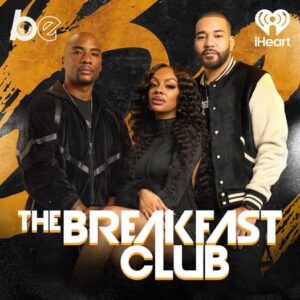 “President Donald Trump ripped Charlamagne tha God (pictured, at left) in a scathing weekend post after the radio host claimed that the ‘MAGA base’ is losing its power over the Republican Party due to the Trump administration’s handling of the Jeffrey Epstein scandal,” Jazmin Tolliver reported Sunday for HuffPost.
“ ‘The very wonderful and talented Lara Trump, whose show is a big ratings success, put racist sleazebag Charlamagne “The God” (Why is he allowed to use the word ‘GOD’ when describing himself? Can anyone imagine the uproar there would be if I used that nickname?),’ Trump began in a message on Truth Social, referring to his daughter-in-law’s Fox News show, ‘My View with Lara Trump.’
“Calling Charlamagne a ‘Low IQ individual’ who ‘knows nothing about me or what I have done,’ Trump went on to claim that he’s ended ‘5 Wars’ and created ‘the greatest economy, where prices and Inflation have come way down, and where STUPID and CORRUPT JOE BIDEN set the record for doing the Worst Job as President, EVER.’ . . . ” (Aug. 3 update)
- Natalie Neysa Alund, USA Today: Who is Charlamagne tha God? Trump reacts to radio host’s Epstein-MAGA remark
- Brakkton Booker, Politico: Trouble with tha God: The influential radio host of “The Breakfast Club” is a thorn in the side of Democrats — but he’s also representative of one of their biggest problems. (Jan 2, 2024)
- Ted Johnson, Deadline: Charlamagne Tha God Responds To Trump, Calls Out His “Authoritarian Strategy,” But Adds, “I’m Rooting For You, But I Need You Focused” (Aug. 4)
Short Takes
- In January 2025, a US executive order suspended foreign assistance, leading to a disastrous reduction in support for independent media in many places where it is urgently needed [PDF], according to a new report, “Crisis in Journalism: The Impact of U.S. Funding Cuts on Global Media.” . . . “The findings make one thing clear: without swift and flexible support, countless journalists, outlets and communities will
be left even more vulnerable to disinformation, censorship and the near-total absence of impartial information or accountability mechanisms. . . .”
- Between 2020 and 2022, women journalists “faced a digital harassment campaign led by the hashtag #malqueridas, a term in Spanish loaded with misogynistic and sexual content. The hashtag was often accompanied by doctored images and even rape threats,” Silvia Higuera reported Friday for LatAm Journalism Review. “In fact, after months of investigating these incidents and other attacks on the press in El Salvador, the Legislative Assembly in 2020 issued a report saying freedom of expression and freedom of the press were being violated in the country. Despite the report, the situation did not change. . . . Gender-based violence is a recurring pattern among women journalists who are forced into exile,” according to researchers who interviewed exiled women journalists from El Salvador, Guatemala, Honduras and Nicaragua.
- “The Israeli military has been slandering Gaza’s journalists with unproven allegations of being terrorism accomplices, making them a target of attacks since the start of the war in Gaza in October 2023, “the International Federation of Journalists said, reiterating “its condemnation of Israel’s strategy of criminalising journalists in Gaza, a strategy based on unfounded claims that put their lives at risk, and it calls on international bodies to protect Palestinian journalists.” The New York Times added July 27, “Times journalists in Gaza face difficulty finding food and ensuring safe freedom of movement in order to do their jobs. The Times has supported appeals to the Israeli Supreme Court for safe and increased access to Gaza, has evacuated a number of Gazan journalists and their families and will continue to push for journalists to be allowed to work securely and without fear or hesitation in Gaza.”
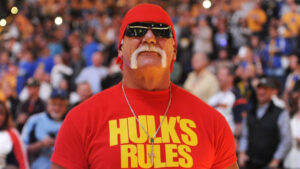 “Hulk Hogan (pictured, by Bay Area News Group) is a self-admitted racist who was caught on tape using the N-word freely on multiple occasions and also dreading the idea that his son’s arrest could mean that the two could be reincarnated as Black men,” David Dennis Jr. wrote July 24 for Andscape. “When that is part of your legacy, it becomes singularly defining. As a result, Hulk Hogan died being known a racist who also became famous as a professional wrestler. He only has himself to blame for that.” Eric Deggans wrote Friday on Substack, “I always thought, based on my coverage of the Shock Jock radio era from Florida, that people who thrived in that environment had a toxicity to their lives that was difficult for other people to exist in. It was often a world of thinly-disguised racism and sexism, filled with self-promoters who were hyper focused on titillating a mostly-male, mostly-white audience with provocative media content.” The wrestling legend, born Terry Gene Bollea, died July 24 at 71.
