
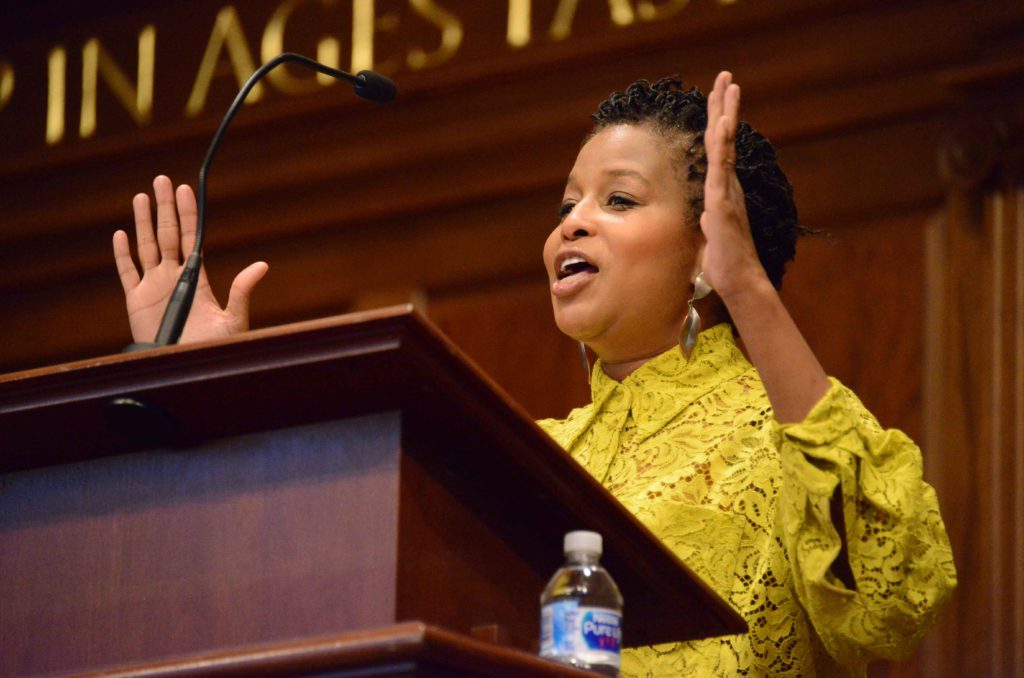
Nikita Stewart discusses her year with Troop 6000, the first Girl Scout troop founded by and for girls living in a homeless shelter in Queens, N.Y., at a virtual National Press Club event in 2020. (Credit: YouTube)
First Black Journalist in the Role Since the ’90s
“Nikita Stewart, a gifted leader who has brought a spirit of innovation, investigative energy and an expansive storytelling ambition to Real Estate, will be our next Metro editor,” top New York Times editors announced Thursday.
 Stewart, 53, is the first Black journalist in the job since Gerald M. Boyd held the position at the beginning of the 1990s. It was then the newsroom’s biggest department and Boyd went on to become managing editor.
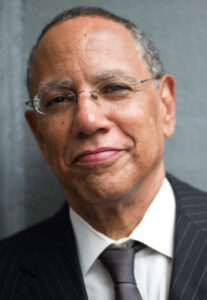
“She is a creative and empathetic editor who has tremendous support in the newsroom and cares deeply about the city,” Dean Baquet (pictured), executive editor for eight years, now leading the Times’ Local Investigations Fellowship, told Journal-isms.
Stewart arrives as the city is in the midst of a three-way mayoral contest involving incumbent Eric Adams, who is facing a federal corruption indictment, insurgent Democratic nominee Zohran Mamdani and former Gov. Andrew Cuomo, like Adams, running as an independent. Republican Curtis Sliwa is also on the ballot.
Although the announcement of Stewart’s promotion was filled with superlatives, as are most such notices, few could argue that she has not delivered the goods. In 2022, the Journal-isms item “Not your parent’s real estate section” (scroll down) detailed the new voices she had brought to real-estate coverage. Thursday’s announcement promised an “exciting new era for Metro.”
The editors — Executive Editor Joseph Kahn and Managing Editors Marc Lacey and Carolyn Ryan — also said, “As Real Estate editor, she has boldly reshaped our definition of coverage. She shepherded dazzling features, ranging from an animated history of Barbie’s Dreamhouse to the story of a broker to New York’s elite who hid her racial identity. And she championed high-impact investigations, including Debra Kamin’s examination of abuses and misconduct within the industry.”
 Sam Sifton (pictured), who worked closely with Nikita as assistant managing editor for Culture and Lifestyle, praised her ‘uncanny ability to make any story she touched just right for the team.’
“ ‘Nikita married lifestyle coverage to accountability journalism in a package that was invariably beautiful and always compelling, and led her people with empathy and drive,’ Sam said. ‘We’ll leave a light on for her always.’
“Nikita believes in nurturing the craft of storytelling, and helping staffers, from young reporters to veteran journalists, do truly distinctive work. She is driven by ideas and big swings, and loves a fast-moving breaking news story as much as a surprising yarn. She thinks visually and embraces all storytelling platforms.
“In rejoining Metro, she will be teaming up with a creative and ambitious staff of reporters and editors, who have shown how to make New York stories reverberate in the region and beyond it.
“Nikita has deep roots in local coverage, and came to us after covering Cory Booker for The Star-Ledger in Newark and city hall for The Washington Post. As a reporter at The Times, she vividly chronicled the story of Troop 6000, a Girl Scout group founded in a Queens homeless shelter, which became an anchor for girls living lives of upheaval and a model for scouts’ troops nationwide. The reporting led Nikita to write a book, which was praised in The Times for ‘the rigor of Stewart’s reporting and thinking.’
“The story of New York now — its politics, personalities, economy and more — demands that same rigor and deftness, high standards and generous journalistic spirit.”
Among the section’s many awards was one in June from the National Association of Real Estate Editors.
“The articles that won dealt with Blaxit, the move of Black Americans to African countries in search of a better life; homeowners who fought the National Association of Realtors and won big; how partisanship is influencing where people live, told through data and graphics; and the disappearance of Googie design. Our winning section entry focused on renters at a time when so many people cannot afford to buy,” Stewart told readers.
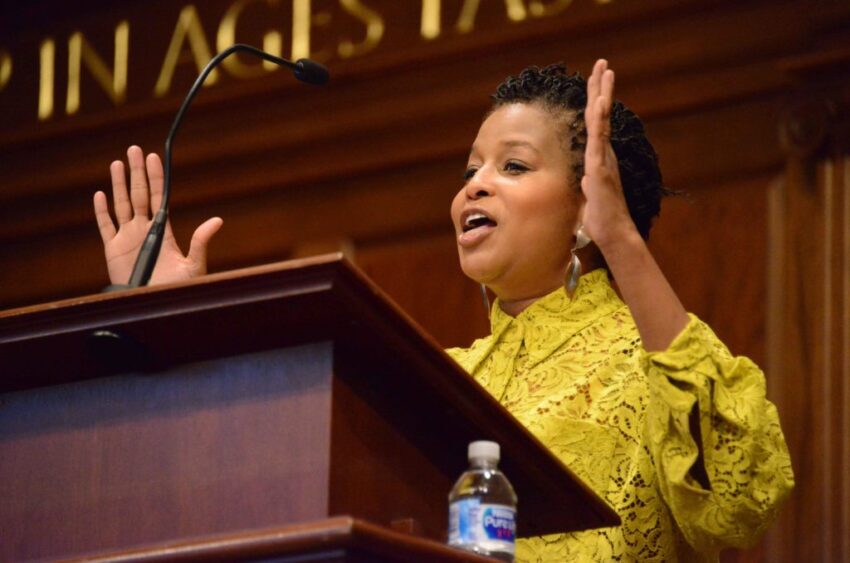 Nikita Stewart speaks in 2019 at the Roxbury Latin School n Boston, 400 years after the first enslaved people from Africa arrived in Virginia by boat. Stewart wrote one of the lead essays for The New York Times’ “1619 Project,” titled “Why Can’t We Teach This?” (Credit: Roxbury Latin School)
When Stewart was named real estate editor in 2021, the Times provided this additional background:
“Nikita, a child of Texas and Kentucky, has been a force at The Times since her arrival from The Washington Post, where she covered city government and wrote a series of investigative articles on campaign fraud. (She was previously a reporter at The Courier-Journal of Louisville and The Star-Ledger of Newark. She is also the author of the terrific ‘Troop 6000: The Girl Scout Troop That Began in a Shelter and Inspired the World,’ published in 2020.)
“As a Times reporter, Nikita covered City Hall, then moved to the social-services beat, where she produced work that exhibited a remarkable penchant for visual storytelling, including ‘How a Garden for the Poor Became a Playground for the Rich’ and ‘Underground Lives: The Sunless World of Immigrants in Queens.’ (Both are Real Estate stories, no?)
“For the 1619 Project, she contributed an essay about how slavery is taught in American schools. In 2020, she was awarded the Ida B. Wells award from the Newswomen’s Club of New York for her coverage of communities of color. And she had great fun along the way, notably in her adventures as a first-time glamper, for Travel, and in her profile of the rising-star chef JJ Johnson, for Food.”
At the Washington Post, Stewart was also vice chair of the Post unit of the Newspaper Guild. At that paper, the Times recounted, “she wrote about the downfall of then-Mayor Adrian M. Fenty, documenting his campaign’s ups and downs in 2010, before moving on to his successor, Mayor Vincent C. Gray, uncovering wrongdoing in his campaign. A subsequent federal investigation first netted four guilty pleas, and then three more as it was expanded to look at a businessman who allegedly funded a secret, illegal campaign for Gray.
” ‘I have a thing for mayors,’ she says. ‘I previously worked at The Star-Ledger where I covered Newark City Hall, sometimes having to physically run down Mayor Sharpe James.’ ”
- Nikita Stewart and and Nate Schweber, New York Times: Stark Symbol of Pandemic in N.Y.: Homeless People Huddled on the Subway (May 2, 2020; updated Nov. 13, 2020)
ICE Is Called Out for Efforts to Intimidate Media
Aug. 28, 2025
Threats Made, Press Credentials Photographed
Atlanta’s AJC to Be Solely Digital After Dec. 31
‘Global Mobilization’ Monday Over Journos’ Deaths
. . . Justice Is ‘Meta Important’ After Press Killings
Guard Urged to Respect Press Rights While in D.C.
Foundations, Report for America to Aid Public Media
Diverse, Everyday People Fill In to Report the News
When Maurice DuBois Met Lucille Ball
Short Takes: Caroline Wanga; Keith Alexander and Robin Givhan; opposition to Nexstar-Tegna merger; hair relaxers; Atlanta Journal-Constitution’s three Black top editors; Hispanic-serving institutions; Spike Lee and Colin Kaepernick; Javier Morgado; TikTok impersonations of Latino journalists; Celeste Wilson; in North St. Louis, “the story corporate media buried”; Kevin Durant’s new print magazine;
New database of police records on misconduct; BET is staying put; Jarvis DeBerry family; Roy S. Johnson; Chinese-American “gifts” to reporters’; Bianca Vázquez Toness; Shon Gables; Raquel Amparo; fleeing El Salvador journalists; more Cuban political prisoners; rightsizing Africa’s place on map.
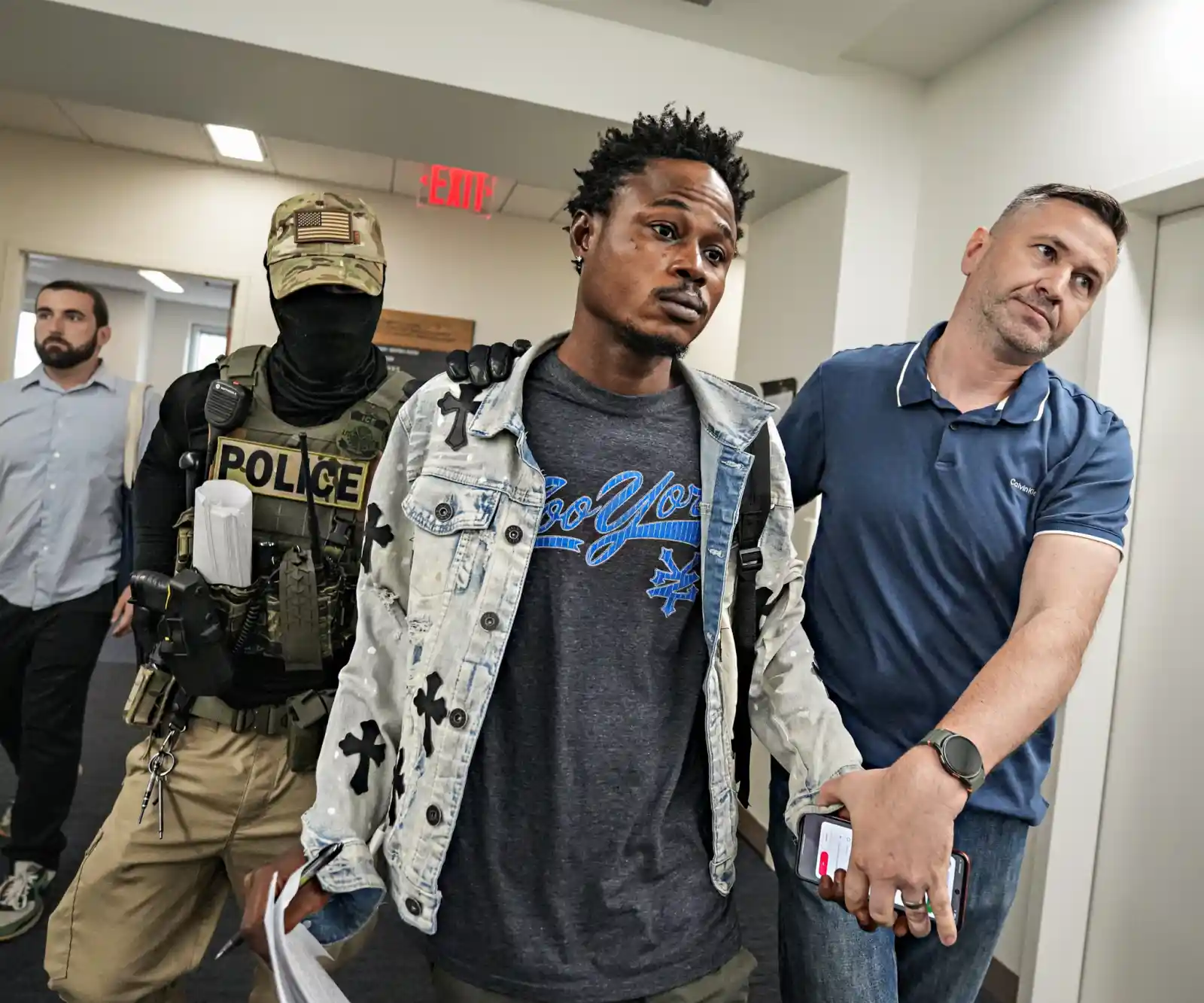
ICE ramped up its immigration enforcement in Lower Manhattan on June 20, both in terms of physicality and what many are calling a blatant disregard for the law. (Credit: Dean Moses/amNY)
Threats Made, Press Credentials Photographed
“An amNewYork article reporting on ICE intimidating the press sparked outrage from the Freedom of the Press Foundation (FPF) and prompted the organization to send letters to federal authorities and the Mayor’s office,” Dean Moses reports for the free daily New York newspaper.
“On June 26, amNewYork reported on federal agents using intimidation tactics inside 290 Broadway as photojournalists documented ICE detainments. The report detailed threats made against media members observing agents arresting immigrants. Agents also photographed reporters’ city-issued press credentials and sought to prohibit photographers from accessing public areas,” Moses reported July 23.
“In one incident, not disclosed in the original coverage, two masked agents surrounded an amNewYork reporter and took a mocking selfie before laughing to themselves.
“In response, the Freedom of the Press Foundation,an American non-profit organization founded in 2012 to fund and support free speech and freedom of the press, along with a slew of press rights organizations — such [as] the National Press Photographers Association, the Society of Professional Journalists, and more — compiled several letters to the Mayor’s Office of Media and Entertainment and Federal Protective Services asking them to address the intimidation tactics.
The Student Press Law Center produced this video on covering high school and the community: reporting on immigration issues. (Credit: YouTube)
Mickey Osterreicher, general counsel for the National Press Photographers Association, told Journal-isms on Monday that he had heard from the mayor’s office but not federal authorities.
“No substantive updates, unfortunately,” agreed Seth Stern, Freedom of the Press Foundation director of advocacy. “We continue to monitor press freedom abuses in immigration courts and explore options to combat them.”
Yasmeen Pitts O’Keefe, regional director at U.S. Department of Homeland Security, left a message Monday that she was out of the office.
In the city’s response, Pat Swinney Kaufman, commissioner of the Mayor’s Office of Media & Entertainment, wrote July 20 that city officials respect the First Amendment, “but we do not have a role in enforcing journalists’ access to Federal officials and facilities.”
Said Osterreicher, “Expressing our concerns to the federal authorities is something we always knew we needed to do and which we have done. We just wanted to make MOME, which issues and oversees press credentialing in NYC, aware of what their credentialed journalists were having to deal with.”
- Adrian Carrasquillo, The Bulwark: Exclusive: The Churches Fighting Back Against ICE
- Christina Carrega, Capital B: Undocumented Black Communities Brace for Ripple Effects of Federal Takeover
- Committee to Protect Journalists: CPJ, Free Press, partners call for ICE to release journalist Mario Guevara after 2-month detention (Aug. 14)
- Leila Fadel, Obed Manuel, NPR: Salvadoran journalist’s arrest in Georgia sets ‘alarming precedent’ (June 24)
- Daisy Gomez, Sierra Nevada Daily: Doing The Work When Being Targeted: The Role of Latino Journalists on Immigration (Aug. 15)
- Institute of the Black World: “Chocolate Cities” in Danger: IBW Condemns Raids on Communities of Color — Calls for Emergency Summit
- Hanna Kang, Orange County (Calif.) Register: Immigration raids cast a shadow over Orange County’s back-to-school season
- Christine Mai-Duc, KFF Health News: ‘A fear pandemic’: Immigration raids push patients into telehealth
- National Association of Hispanic Journalists: NAHJ guidelines for reporting on immigration raids
- National Immigration Project: Who’s Behind ICE? The Tech Companies Fueling Deportations
- Ruben Navarrette, Creators Syndicate: For Immigrant Day Laborers, Work Is About Survival, Not Fun and Games (Aug. 12)
- Sen. John Ossoff, D-Ga.: The Abuse of Pregnant Women & Children in U.S. Immigration Detention [PDF]
- Nissa Rhee, Nieman Reports: How Can Journalists Better Serve Immigrant Communities? (Jan. 11, 2021)
- Student Press Law Center: A Legal ‘FAQ’ on ‘ICE Raids’ for Student Journalists
- Suzuki Law: How The Migrant Experience Varies By U.S. State
- Gregory Svirnovskiy, Politico: Journalist detained by ICE sues Noem, Bondi for his release
- Caitlin Vogus, Freedom of the Press Foundation: ICE wants to work in secret. We shouldn’t let it (July 2)
Atlanta’s AJC to Be Solely Digital After Dec. 31
,“The Atlanta Journal-Constitution will stop providing a print edition at the end of the year and go completely digital, marking a dramatic change for a storied newspaper that was founded just a few years after the end of the Civil War,” Jeff Amy reported for the Associated Press.
“The decision will make Atlanta the largest U.S. metro area without a printed daily newspaper, although some smaller metro Atlanta newspapers continue printing.
“Publisher Andrew Morse made the announcement Thursday, saying the news organization will continue to report news using online, audio and video products.
“ ‘The fact is, many more people engage with our digital platforms and products today than with our print edition, and that shift is only accelerating,’” Morse wrote in a letter to subscribers posted on the Journal-Constitution’s website. The AJC has about 115,000 total subscribers, of whom 75,000 are online only; Morse has set a goal of gaining 500,000 online subscribers. . . ”
“About 30 staff members, half of them part-time workers, would lose their jobs as a result of the change, a company spokeswoman said,” Katie Robertson reported for The New York Times.
.
Spokesman Hugo Rojo did not respond to a question asking how many were newsroom jobs.
“Five journalists were among the dead after Israel struck one of the main hospitals in the Gaza Strip with a missile Monday and then fired another as reporters and rescue workers rushed to the scene. At least 20 people were killed in the attack, according to local health workers,” CBS News reported Monday. “CBS News senior foreign correspondent Holly Williams has more.” (Credit: YouTube)
‘Global Mobilization’ Monday Over Journos’ Deaths
“More than 150 media outlets from over 50 countries will participate in a world-first, global media mobilization on Monday, Sept. 1, coordinated by Reporters Without Borders (RSF) and Avaaz, the global civic movement,: the groups announced Thursday.
“The action comes in response to the unprecedented killing of over 210 journalists in Gaza and Israel’s ongoing refusal to allow independent international press access to the territory — a situation that is without precedent in modern warfare.
“The Sept. 1 mobilization will unite newspapers, broadcasters and online platforms in a coordinated call to end the killing of journalists, open Gaza to the press and protect Palestinian reporters working under fire.
“This urgent action follows the latest deadly strike on Aug. 25, when the Israeli army bombed the al-Nasser medical complex in central Gaza — a well-known hub for reporters — killing five journalists and staff from local and international outlets including Reuters and The Associated Press. Just two weeks earlier, on Aug. 10-11, an airstrike killed six journalists, among them Anas al-Sharif, correspondent for Al Jazeera. . . .”
. . . Justice Is ‘Meta Important’ After Press Killings
Pursuing justice for journalists killed in Gaza is “meta important” at a time when the international legal system is fighting for survival — because the presence of journalists is essential for accountability, argues Janina Dill, a professor at the University of Oxford and codirector of the Institute for Ethics, Law, and Armed Conflict.
That need has become all the more acute in the aftermath of Monday’s strike on Nasser Hospital, press freedom champion Joel Simon wrote Wednesday for Columbia Journalism Review.
“Israel has been widely condemned for an attack its forces conducted on Nasser Hospital in southern Gaza’s Khan Younis that killed at least 21 people, including five journalists, one of whom worked for Al Jazeera,” as Maram Humaid reported Tuesday for Al Jazeera.
 All told, some 200 members of the press have been killed in Gaza. The latest attack followed another on the night of Aug. 10, when Anas al-Sharif (pictured, via Instagram), 28, a correspondent for Al Jazeera and one of the best-known journalists in Gaza, was sleeping in a tent with colleagues outside a hospital in Gaza City. Israeli forces struck and al-Sharif died.
“Several of the legal experts I spoke with believe there is a basis for opening an investigation into the killing of al-Sharif,” wrote Simon, founding director of the Journalism Protection Initiative at the Craig Newmark Graduate School of Journalism, who went on the explore thee practicalities of such a move.
“As more members of the press are killed, more of their colleagues and advocates are speaking publicly about why their deaths may represent a war crime. Ultimately, this is not about any single reporter. It’s about the rights of all journalists working in Gaza and the need for new strategies and approaches that move beyond outrage, into the messy and uncertain realm of justice.”
- Frédéric Métézeau, the Gaza Project: Journalists killed in Gaza: 12 international media outlets unite to investigate and take forward Palestinian journalists’ stories (March 27)
- Ishaan Tharoor, Washington Post: Israel’s unprecedented slaughter of journalists in Gaza
View this post on Instagram
If no image is visible, please consider using another browser.
Guard Urged to Respect Press Rights While in D.C.
A coalition of more than a dozen press freedom and civil liberties organizations have signed onto a letter led by Reporters Without Borders urging the National Guard to uphold press freedoms during its current deployment to Washington, D.C., the Society of Professional Journalists reported Aug. 15.
The National Association of Black Journalists, Washington Association of Black Journalists and the International Women’s Media Foundation are among the organizations signing.
“The letter, addressed to the Chief of the National Guard Bureau Gen. Steven Nordhaus, reiterates concerns previously raised during the Guard’s deployment to Los Angeles in June, when numerous journalists were assaulted or detained while covering protests. The coalition calls on the National Guard to ensure its troops are fully aware of journalists’ First Amendment rights and to avoid interfering with members of the media as they carry out their constitutionally protected duties.
“While the current situation in D.C. does not resemble the widespread protests previously seen in Los Angeles, the coalition stresses the need for vigilance in protecting journalists who may be covering Guard activity. . . .”
Meanwhile, Columbia Journalism Review was among media observers praising the news media for calling out the Trump administration’s lies and misinformation during the takeover.
“President Trump’s stated goal is to reduce crime in the District. But the city’s carjackings and murders are not spread evenly,” CJR wrote Friday. “Many of them occur in predominantly Black neighborhoods, and some Trump supporters have portrayed the influx of federal agents as a way to protect those residents.
“Now, there are two ways of handling this story.
“One is to sit in front of your computer and do what The Atlantic did: hypothesize what people in higher-crime areas might say. The story included this kicker: ‘I have little doubt that a mother in Ward 8 might draw comfort from a National Guard soldier standing watch near her child’s school. And I try to imagine having the audacity to insist to her that the homicides and the danger that are her daily reality are somehow a phantasm.’
“Or —- wait for it —- you can go to DC and talk to people, where you gain a more nuanced version of the situation, where people share concerns about crime and overreactions by law enforcement.
“That’s what Alecia Taylor and Brandon Tensley did at Capital B: ‘Many Black residents fear that this increased law enforcement presence will lead to overpolicing, while doing little to meaningfully address crime,’ they found. A Howard University student’s ‘first thought when they saw agents near the restaurant was, “Why are they here?” ‘
“That’s what Clyde McGrady and Kenny Holston did at the New York Times. McGrady saw similar trends, including in Ward 8, a part of DC that has had thirty-eight homicides so far this year. One man told McGrady that ‘he is supportive of more law enforcement, so long as Black residents aren’t the target.’
“That’s what Geoff Bennett and his colleagues did at PBS. They interviewed people around the District, ranging from a teenager in Ward 8 who said he saw federal agents intimidating the neighborhood (saying they arrive with ‘big weapons, and…are just basically harassing us for real’) to a gym owner in Northeast DC who welcomed more law enforcement (‘I have been seeing a lot of atrocity, a lot of murders, a lot of innocent children…and there’s nothing done about it’. . . .”
- Jenice Armstrong, Philadelphia Inquirer: Don’t provoke. Don’t engage. And other advice for D.C. residents living under Trump’s takeover. (Aug. 16)
- Associated Press: ‘South Park’ targets federal takeover of DC police in latest episode
- Claretta Bellamy and Joe Murphy, NBC News: How the White House’s claims about D.C. homelessness compare to the data
- A Scott Bolden, BlackPress USA: COMMENTARY: Trump Wrong to Federalize Policing in Washington, DC
- Michael Brice-Saddler and Daniel Wu, Washington Post: National Guard troops are in D.C. We went to see what they’re up to.
- Matt Brown, Associated Press: Trump’s rhetoric about DC echoes a history of racist narratives about urban crime (Aug. 12)
- Chris Cameron, Elena Shao and Kenny Holston, New York Times: See Trump’s Use of Federal Law Enforcement in D.C.
- LZ Granderson, Los Angeles Times: Trump’s D.C. takeover is a desperate distraction from Epstein files (Aug. 16)
- Roy S. Johnson, al.com: Hey, Black Trump voters, are y’all still good? (Aug. 13)
- Colbert I. King, Washington Post:The spirit of Old Dixie rises in D.C.
- Colbert I. King, Washington Post: Hard days for D.C. home rule (Aug. 15)
- Ruben Navarrette, Creators Syndicate: Trump’s D.C. Takeover Is an Encore to a Disastrous Show Out West (Aug. 14)
- Carron J. Phillips, Substack: Muriel Bowser, Letitia James, and the hazards of being a Black woman in power
- Margaret Talbot, New Yorker: What’s Life Like in Washington, D.C., During Trump’s Takeover?
- Terry Tang, Associated Press: Black mayors of cities Trump decries as ‘lawless’ tout significant declines in violent crimes (Aug. 17)
On July 18, “Democracy Now!” spoke to Loris Taylor, president of Native Public Media, about the Trump administration’s drastic defunding of public media and its impact on tribal nations. (Credit: YouTube)
Foundations, Report for America to Aid Public Media
The announcement last week that several leading foundations would commit nearly $37 million to provide immediate relief to public media stations no doubt came as relief to those stations at risk of closure because of federal funding cuts, but was especially welcome news at stations serving Native Americans.
“To the philanthropic institutions that have answered this urgent call, thank you,” Loris Taylor, president and CEO of Native Public Media, said in a statement. “This act of generosity is not just a lifeline. It is a declaration that the voices of communities too often left out of the national narrative are valued. Public radio and television are more than passive media. They are community anchors, educators, watchdogs, and connective tissue that binds us, especially in places where alternatives are scarce.”
But Taylor added, “But as we exhale our collective sigh of relief, it’s essential to ask: Will this remain a one-time gesture, or will it ignite the creation of enduring structures to preserve these outlets for generations to come?
“What we need now is the Tribal Media Endowment Fund, a trust built not just to stem crisis, but to ensure permanent, community-rooted resilience. Imagine a fund where we invest contributions in perpetuity and use only the earnings to support Native-led media initiatives. Such a model mirrors the traditions of enduring stewardship found in tribal endowments like the Hopi Education Endowment Fund, established in 2000, which preserves its principal and allocates only the income for educational purposes.”
The Aug. 19 announcement from the John S. and James L. Knight Foundation, Pivotal, the John D. and Catherine T. MacArthur Foundation, Ford Foundation, the Schmidt Family Foundation and Robert Wood Johnson Foundation, was followed Monday by one from Report for America, which declared it is “taking urgent action to ensure Alaskans continue to receive essential news and information. The national service program will immediately support two full-time reporters in public radio stations KRBD (CoastAlaska) in Ketchikan and KOTZ in Kotzebue.
“Report for America will cover 100% of their salaries and benefits in their first year — a cost typically shared between the organization and host newsroom partners. The stations will also receive training and mentorship for these journalists, along with hands-on support for the newsrooms from Report for America to help them become more financially sustainable.
“Desiree Hagen, who already worked at KOTZ as news director and the station’s only reporter, became a Report for America corps member in early August. Hunter Morrison will join KRBD in October.”
Julian Wyllie wrote for Current, which chronicles public broadcasting, “Since July, almost 10 public media organizations have publicly announced layoffs tied to the rescission . . . in CPB funding.
- Margery A. Beck, Associated Press: Native American radio stations at risk as Congress looks to cut $1B in public broadcasting funding (July 16)
- Michon Boston Group Ltd: Adopt-a-Station — Rescue Public Media:
- Maddy Butcher, Washington Post: A reality check for NPR stations in Trump country
- Benjamin Mullin, New York Times: The Race to Rescue PBS and NPR Stations (Aug. 19)
- Jennifer Shutt, North Dakota Monitor: Tribal radio stations wait on $9M pledged in congressional handshake deal
- Steven Waldman, Columbia Journalism Review: What Will the Next Era of Public Media Look Like? (Aug. 20)

(Credit: Documenters)
Diverse, Everyday People Fill In to Report the News
The ambitious new Tulsa Local News Initiative is joining a growing movement that uses a diverse group of everyday people to fill in for the reporters no longer available to cover local government meetings.
“We’re building something powerful: A network of Tulsa residents who are trained and paid to cover public meetings like city council sessions, school board meetings and more,” Sam Stockley, who leads the Tulsa Documenters Program, announced Aug. 21.
“We believe everyone should be able to see how local government works. Documenters help make that possible. Over time, a corps of hundreds of Documenters will become an invaluable resource to our newsroom, helping us stay connected to the news and information that Tulsans need.
“Whether you’ve been following city issues for years or are just learning how local government operates, Documenters is for you. We’ll provide the training you need, pay you up to $17/hour for your time and publish your notes online so the entire community can stay informed.”
The Tulsa Local News Initiative is a nonprofit backed by $14 million in funding that aims to expand local news coverage, create more than 20 journalism jobs, and support five Tulsa media outlets.
Kristen Fallica, Ph.D., of Chicago’s City Bureau and director of communications for Chicago’s Documenters program, provided these data points:
- “Racial equity is foundational to City Bureau’s mission to reimagine local journalism, civic media, and participatory democracy.
- “Our Documenters program — implemented in partnership with 20+ local news and community organizations around the country through the Documenters Network — trains and pays residents who reflect the diversity of their communities to attend and take notes at local public meetings, transforming civic participation while creating valuable community information resources.
- “Documenters is a powerful new pillar of civic life that ensures people who have historically been disenfranchised by local media or civic engagement have access to opportunities to participate in local government–and get compensated for it, take action, and in turn strengthen their communities.
- “More than 4,500 people total have been trained across City Bureau’s national Documenters Network
- ” We have demographic data for most of them – 4,494 Documenters. Of those 4,494, 2,154 (48%) identify as BIPOC. 2,962 (66%) identify as women or nonbinary.
- In May, “we announced an exciting milestone – a total of $1 million has been paid out to Documenters across the country.”
- “And here’s some context on how we approach impact.”
When Maurice DuBois Met Lucille Ball
One of the most offbeat segments on the nightly news programs this summer was this one from July 29, in which the “CBS Evening News” dusted off an old “I Love Lucy” clip that had co-anchor Maurice DuBois doing a double take. (Credit: YouTube)
Short Takes

- “Caroline Wanga (pictured) is stepping down as president and CEO of ESSENCE Ventures, the media company announced Monday,” Phil Lewis reported in his What I’m Reading newsletter. “Wanga, who had been on health leave since September 2024, joined ESSENCE Ventures in June 2020. She has ‘guided the company through a period of growth, innovation, and renewed cultural influence,’ the company said in a statement.”
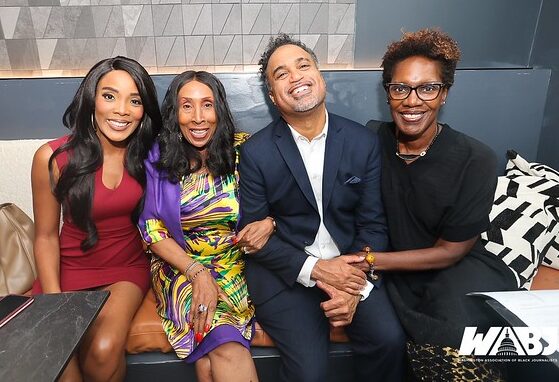
Keith L. Alexander is flanked by, from left, Ameshia Cross, Sheila Brooks and Vanessa Williams at a July 31 Washington Association of Black Journalists mixer at which Alexander announced he has taken the Washington Post buyout and will be working at Bloomberg Law. (Credit: Joy Washington/WABJ)
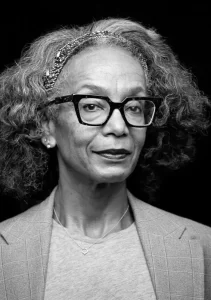 Fashion and culture columnist Robin Givhan (pictured) and local crime and courts reporter Keith L. Alexander have taken the buyout from the Washington Post, these long-timers have announced. Each is a Pulitzer prize winner, alone or as part of a team. Alexander is joining Bloomberg Law as editor-at-large. His first story there, “Ending Cashless Bail Criticized as Guilty Before Proven Innocent,” appeared Wednesday. Givhan wrote, “I’m going to take some time to enjoy Book Tour Part 2.” Separately, the Post announced its diversity figures as of June 30, with news and opinion sections 59.8 percent white; 9.7 percent Black or African American; 6.2 percent Hispanic or Latino; American; 10.5 percent Asian; 3.7 percent multiracial; and 0.1 percent Native American. It said 10 percent “did not disclose.”
- The National Hispanic Media Coalition urged the Federal Communications Commission “to uphold its longstanding limits on broadcast market ownership and to deny the Nexstar TEGNA merger and its unprecedented proposal for market control,” the group said Aug. 19. “The Trump administration appears set to approve the deal, altering regulations in a way that would change how many Americans around the country get their news,” Scott Nover reported Aug. 21 for the Washington Post.
 “Georgia now has the largest concentration of hair relaxer litigation outside of Illinois, where over 10,000 cancer cases have been consolidated from across the country in a federal court, an Atlanta Journal-Constitution analysis of court filings over the past three years shows,” Asia Simone Burns and Samantha Hogan reported Aug. 17 for the Atlanta Journal-Constitution. The paper has lifted its paywall for the article. Meanwhile, “the prices of hair extensions and hair glues used to create wigs and weaves have gone up exponentially after U.S. President Donald Trump imposed a series of different tariffs on China and Vietnam, where the majority of Black beauty products are made,” Arriana McLymore, Jayla Whitfield-Anderson and Julio-cesar Chavez reported last week for Reuters.
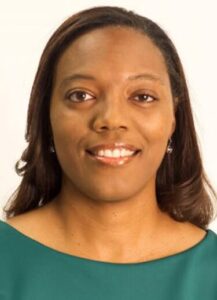 Leroy Chapman Jr., editor of the Atlanta Journal-Constitution, noted at this month’s convention of the National Association of Black Journalists that his is likely the only mainstream newspaper with Black journalists in the top three newsroom positions. Sharif Durhams is managing editor of news and Janel Davis (pictured), managing editor over features, business and growth initiatives. All three were named to their positions in 2023.
- “Hispanic-serving institutions find themselves in a precarious position after news broke Friday that the Department of Justice won’t defend them from a recent lawsuit,” Sara Weissman reported Aug. 26 for Inside Higher Ed. “The lawsuit — filed by the state of Tennessee and the group Students for Fair Admissions deemed the HSI program ‘unconstitutional’ and ‘discriminatory’ for requiring institutions to enroll at least 25 percent Hispanic students to qualify for specific federal grants.”
- ” Director Spike Lee’s multi-part documentary series for ESPN Films about former NFL quarterback Colin Kaepernick, who sparked a national debate when he protested racial injustice nearly a decade ago, will not be released, the filmmaker and ESPN said,” Rory Carroll and Lisa Richwine reported Aug. 17 for Reuters. ” ‘ESPN, Colin Kaepernick and Spike Lee have collectively decided to no longer proceed with this project as a result of certain creative differences,’ ESPN said in a statement to Reuters on Saturday.”
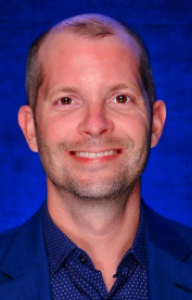 ‘ Former CNN executive producer Javier Morgado (pictured) announced that he is joining the Tegna television group as its vice president of content,” Adweek reported. “According to Morgado, he will be overseeing its television stations in the northeast and leading morning news strategy across the company’s 64 stations.”
- “A network of nearly 90 TikTok accounts has been using artificial intelligence to create fake versions of high-profile Spanish-language journalists and spread falsehoods online for potential financial gain,” Nicole Acevedo reported Aug. 19, updated Aug. 20, for NBC News. “Over a third of the accounts used AI-generated versions of Jorge Ramos, one of the best-known Latino journalists in the United States, to front fabricated news stories. One of them featured an AI avatar of Ramos falsely claiming that President Donald Trump’s son Barron Trump stormed into the United Nations to denounce the deportation of his mother, first lady Melania Trump. . . .”
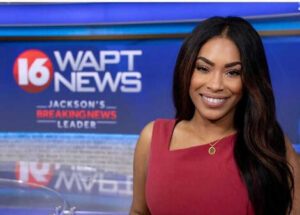 Celeste Wilson, weekend anchor at WAPT in Jackson, Miss., has died after a heart attack, the station reported Wednesday. She was 42. Wilson joined KARK in Little Rock, Ark., in October 2023 as a reporter and anchor with the morning team before leaving in August 2024, KARK said.
- “On May 16, 2025, a ‘once-in-a-century’ tornado ripped through North St. Louis, flattening homes, destroying churches, and leaving Black families without shelter,” the Kansas City Defender reported Aug. 16 on YouTube. “But instead of rushing aid to survivors, police were deployed to guard grocery stores. Mainstream media left after the shock-bait headlines. Two months later, elders still sleep under open skies.This is the story corporate media buried. A story of climate collapse, systemic abandonment, and the people fighting back.”
- “Seven years in the making, a database of police records on misconduct, shootings and use of force causing serious injury or death is now public on the websites of LAist and KQED in San Francisco,” Kathryn Squyres reported Monday for Current. “The database is free to access and doesn’t require an account. Readers can search by officer name or keyword, filter by county or agency, and narrow searches to date ranges. It’s a product of The California Reporting Project, a coalition of news organizations that joined forces to coordinate requests for documents that had been added to the public record under a 2018 law.”

- After Paramount President Jeff Shell called Black Entertainment Television “a pretty important building block of our streaming strategy,” Skydance CEO David Ellison “confirmed that the network, which, along with VH1, BET Studios and BET+ had been shopped multiple times over the past several years, is not going anywhere as Ellison plans to keep the promise he gave Shari Redstone awhile back,” Nellie Andreeva reported Aug. 13 for Deadline. Redstone is controlling shareholder of Paramount Global, which won approval last month for a merger with Skydance. The promise to Redstone was “to keep the company together and invest through the lines of a long-term commitment,” Ellison said.
 “Five years ago, when I’d just left The Times-Picayune and was working remotely for cleveland.com, my cousin Aisha DeBerry donated a kidney to me,” messages Jarvis DeBerry, now opinions editor at MSNBC. “I’ve been doing great since then. My daughter, Naomi, who was 7 then and turns 13 next month, decided to write a book advocating for organ donation from the perspective of a child watching her father on dialysis. ‘My Daddy Needs a Gift’ has been featured on ‘Tamron Hall,’ she’s read at multiple book festivals and just this month her advocacy led to the distinction of her being named a TIME Girl of the Year. Of the 10 girls chosen, she is the only one in the U.S. She’s most excited about, though, that LEGO made a mini-figurine of each honoree. She’s in a lab coat in hers because she’s set a goal of becoming a transplant surgeon. WVUE in New Orleans did a story last week about her.” (Pictured: The DeBerry family in 2019)
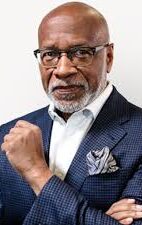 “Late last month, I told you about my prostate cancer diagnosis and my confidence that I’ll beat it — call it chapter one of my Cancer Chronicles,” al.com columnist Roy S. Johnson (pictured) wrote Aug. 18, updated Aug. 19. “Currently, eight states have laws making PSA tests free for men with a high risk for prostate cancer. Alabama could’ve cracked the Top 10, but, once again, our lawmakers couldn’t get out of their own way. . . . Cancer knows no political aisle, no left nor right. Only live (early detection) or die.”
- A new layer to the relationship between the Chinese American community and New York Mayor Eric Adams, seeking reelection, has emerged: red envelopes filled with cash, Bianca Pallaro, Jay Root and Michael Forsythe reported Aug. 21 for The New York Times. “The news that an adviser to Mr. Adams, Winnie Greco had put a red envelope stuffed with cash inside a potato chip bag and slipped it to a reporter after a campaign event “was not an isolated incident in Chinese-language media circles. . . . “ Steven Tin, the director of Better Chinatown USA, said that it is a common practice in Chinese culture to give cash to ‘reporters, YouTubers, photographers’ as a ‘thank you for coming’ gift. . . . “
- “Kevin Durant’s Boardroom plans to launch a new print magazine. Boardroom has only been a digital site, so it is moving in reverse order from the once-typical print to online migration. A trial issue is due out later in August with a cover feature on number one ranked female tennis star Aryna Sabalenka, and the plan is to print four times a year starting in 2026,” Daniel Kaplan reported Aug. 11 for the Hollywood Reporter.
 Bianca Vázquez Toness (pictured) of The Associated Press is the 2025 recipient of the Society of Professional Journalists’ New America Award, which recognizes public service journalism that explores and exposes issues affecting immigrant or ethnic communities in the United States, SPJ announced Aug. 22. In her reporting series “The Migrant Experience in America,” Vázquez Toness, who covers how the pandemic continues to affect young people and their education, documents the complex experiences of immigrant communities in Aurora, Colo.
 “Six months after she was last on air, evening news anchor Shon Gables (pictured) has officially left Atlanta News First, the station confirmed,” Rodney Ho reported Aug. 20 for the Atlanta Journal-Constitution. “WANF general manager Erik Schrader told The Atlanta-Journal Constitution in July that she was on leave for unspecified personal reasons. He said she will not be returning after seven years at the station. Gables, 54, provided the AJC with a statement: ‘Atlanta, WANF and Gray Media have been very good to me, and I’m grateful for the time I’ve spent here. Due to ongoing personal matters, I will not be providing further comment. I respectfully ask for privacy for myself and my family at this time.’ “
 Raquel Amparo (pictured), president and general manager of CBS News Texas, overseeing CBS 11 KTVT and TXA 21 in Dallas-Fort Worth, is leaving the company, Jennifer Mitchell, CBS News and Stations president, told staff members Aug. 21, NewsBlues reported. “Amparo rejoined CBS DFW in 2021 after four years with Metroplex rival Univision’s KUVN-DT and KSTR-DT, where she was named News Director in 2017 and later promoted to Vice President of News in 2019. Just months later, she also became the regional content lead for Univision’s large-market stations across Texas and Chicago. While at Univision, Amparo earned recognition as 2020 Broadcaster of the Year by the Texas Association of Broadcast Educators,” according to industry blogger Mike McGuff.
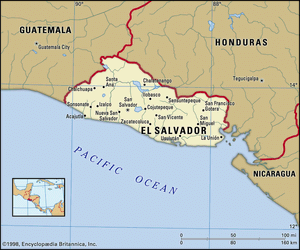 According to data from Association of Journalists of El Salvador (APES) and the Central American Network of Journalists, at least 47 journalists left El Salvador between May and July, Alex Maldonado wrote for the Guatemalan news organization Agencia Ocote, LatAm Journalism Review reported Tuesday. “Of those, 37 fled through Guatemala. Half are still in the country, while others ended up in Mexico, Europe and, to a lesser extent, the United States. “I decided that in the face of repression it was better to leave El Salvador and continue working from outside rather than be locked up within the four walls of a prison,” said Angélica Cárcamo, former president of APES and current executive director of the Central American Network of Journalists.
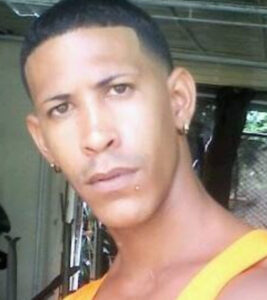 “Twenty-five new political prisoners have been added to the list of political prisoners in Cuba,” largely due to demonstrations “for freedom, rights, and against the lack of basic services in Cuba,” the Spain-based group Prisoners Defenders reported Aug. 7. Likewise, there have been 7 casualties, 6 due to full compliance with the sanction and one regrettable drop from the list due to death: that of Yan Carlos González, as a result of a prolonged hunger strike as a protest against his arbitrary imprisonment and inhumane situation.” Among those imprisoned is “Luis Ángel Cuza Alfonso (pictured), a journalist and activist member of the MONR and the Democracy Movement (MD),” who “has been transferred to the maximum security prison Combinado del Este in Havana, falsely accused of having committed the crimes of ‘illegal possession of weapons’ and ‘other acts against State Security’.”
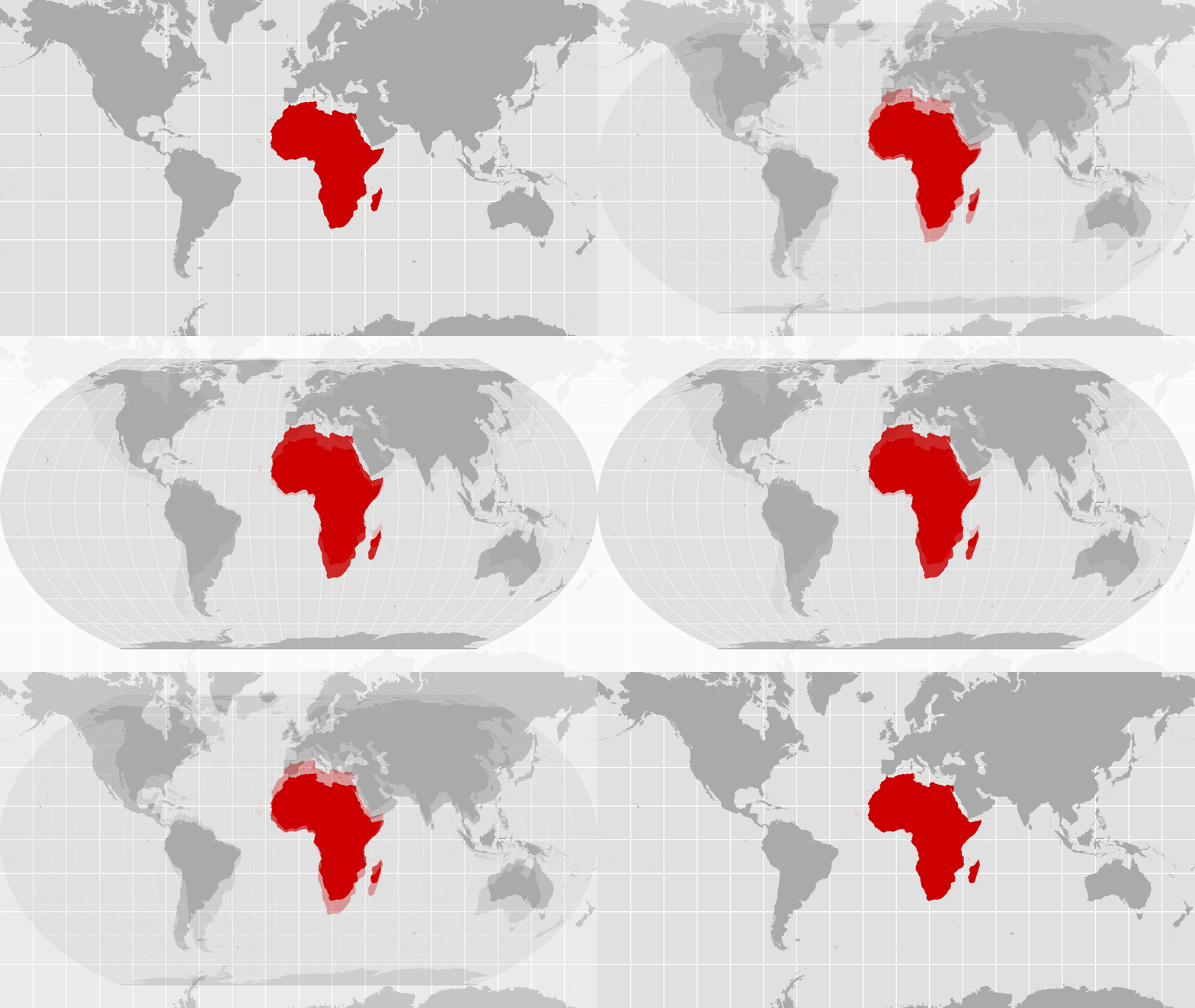
- “The African Union has joined a campaign calling for the widely-used Mercator map, which makes Africa appear smaller than it is, to be replaced with a map that more accurately reflects the continent’s relative size,” Ayana Archie reported Aug. 21 for NPR. AU Commission Deputy Chairperson Selma Malika Haddadi told Reuters when the size of Africa is misrepresented on maps, the world’s perception of the continent is also distorted, including in media, education and policy.” (Map credit: Alyson Hurt/NPR)
