
Fourth Estate Faces Hospital Stays, Arrests, Tear Gas
Nominations Open for J-Educator Promoting Diversity
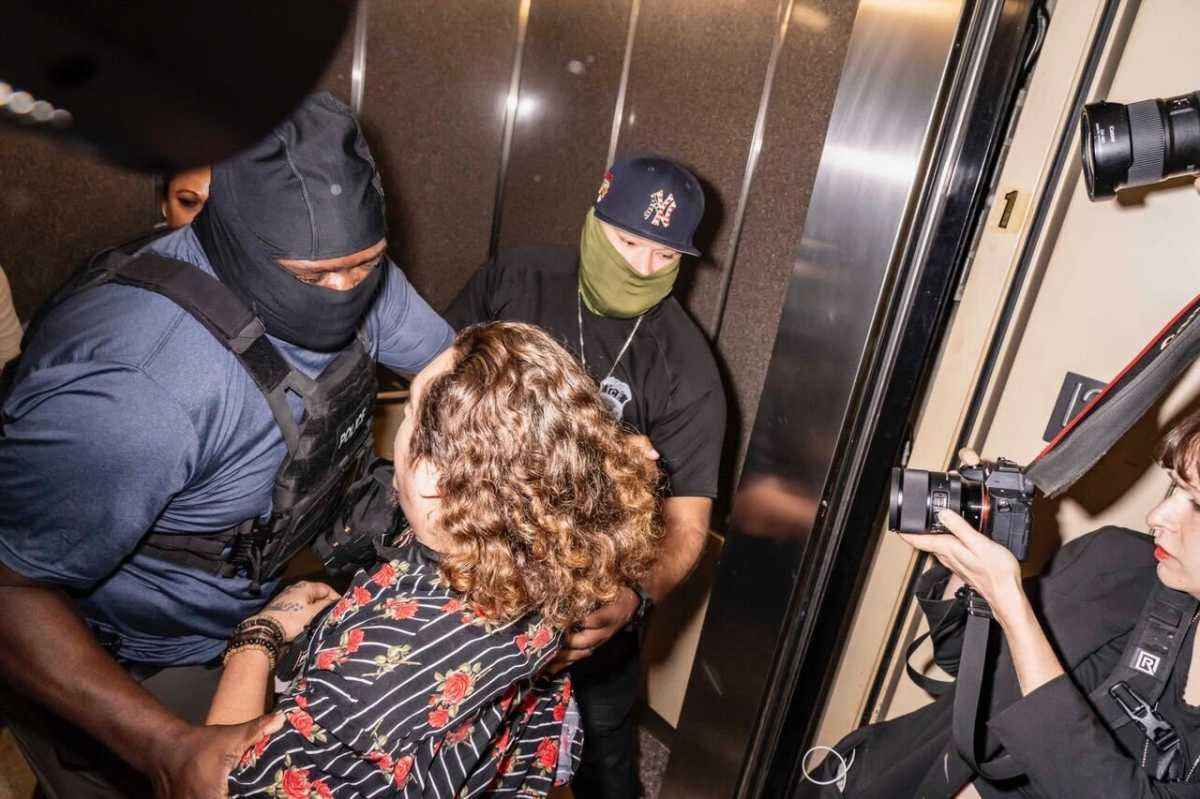
Homepage photo: An ICE agent grabs hold of amNewYork Police Bureau Chief Dean Moses at 26 Federal Plaza in New York Tuesday. (Credit: Obtained by amNewYork).
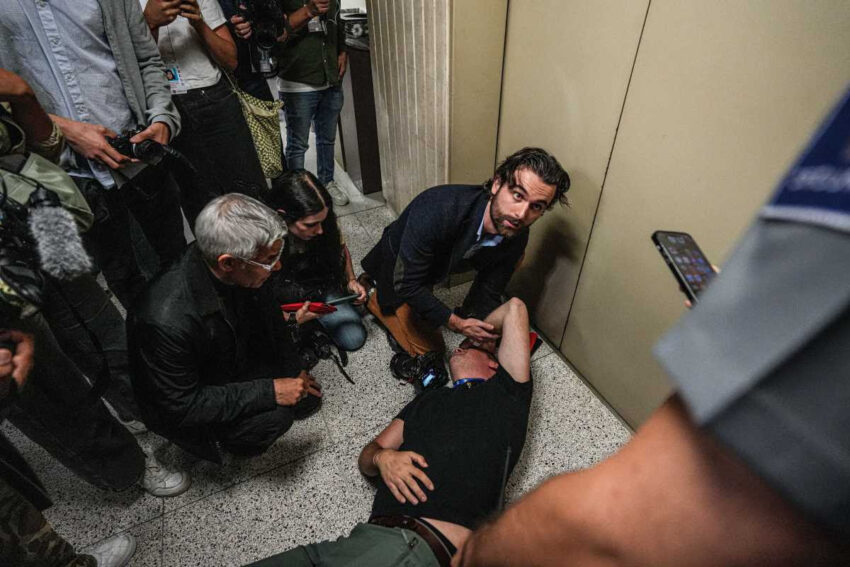
A photographer tends to injured journalist L. Vural Elibol Tuesday after an ICE agent apparently shoved him hard to the floor at 26 Federal Plaza in Lower Manhattan. (Credit: Dean Moses/amNewYork )
Fourth Estate Faces Hospital Stays, Arrests, Tear Gas
A photojournalist on assignment at New York’s federal immigration court was assaulted and hospitalized Tuesday after a chaotic incident with agents from the U.S. Bureau of Immigration and Customs Enforcement (ICE), according to New York news reports. That development followed a weekend in Chicago in which federal authorities arrested at least one journalist and used chemical weapons on protesters and members of the press.
Also in Chicago, WBBM-TV, known as CBS Chicago, reported Sunday that its reporter Asal Rezaei was alone, driving her truck to an ICE detention center when a masked federal agent shot pepper balls at her from about 50 feet inside the fence.
The incidents coincided with a Journal-isms Roundtable discussion Monday of “ICE and the Press,” in which more than 75 journalists, students and experts discussed what speakers described as out-of-control federal immigration authorities who they said increasingly believe they can act with impunity toward the press and others who get in their way. Another 80 watched on Facebook. You can watch that discussion here.
More than 75 journalists, students and experts met Monday at the Medill-D.C. campus and via Zoom for the Journal-isms Roundtable discussion of “ICE and the Press.” Another 80 watched on Facebook. (video)
“ICE agents assaulted amNewYork’s own Dean Moses, and allegedly attacked another journalist, on Tuesday morning as they were documenting the ongoing arrests of individuals attending immigration court proceedings at 26 Federal Plaza in Lower Manhattan,” Robert Pozarycki and Adam Daly reported Tuesday for amNew York.
“Masked officials grabbed Moses, the police bureau chief of amNewYork, as he went to photograph them apprehending an immigrant inside a public elevator at around 10:15 a.m. on Sept. 30.
“The chaos occurred five days after an ICE agent was caught on camera violently shoving a woman to the ground after she pursued her husband, who had been arrested after a court appearance. ICE suspended the yet-to-be-identified agent on Friday, but he reportedly returned to work on Monday, according to CBS News.
“As he has done for months, Moses and other photojournalists — exercising their First Amendment rights to freedom of the press — were on the 12th floor of 26 Federal Plaza observing the actions of masked ICE agents outside immigration courtrooms, where many individuals have been taken into custody after attending court-mandated hearings.
“ICE agents paced the 12th-floor hallway on Tuesday morning and briefly followed a woman after she exited a courtroom. They suddenly stopped pursuing her and allowed the woman to head toward an elevator bank, where she boarded an arriving lift.
“ ‘A couple of seconds after she goes into the elevator, two ICE agents go in after her,’ Moses said. ‘They never identified themselves, they didn’t ask for her papers or her ID.’ ”
Footage taken by @Steffikeith this morning of ICE agents shoving photographers on assignment at 26 Federal Plaza. One journalist has been hospitalized. pic.twitter.com/sOo6XAMWJP
— Molly Crane-Newman (@molcranenewman) September 30, 2025
If image is not visible, please consider changing to another browser.
“Homeland Security Assistant Secretary Tricia McLaughlin defended the agents’ actions, saying they were being ‘swarmed by agitators and members of the press, which obstructed operations,’ “ Michael R. Sisak reported for the Associated Press.
“ ‘Officers repeatedly told the crowd of agitators and journalists to get back, move, and get out of the elevator,’ McLaughlin said in a statement. ‘Rioters and sanctuary politicians who encourage individuals to interfere with arrests are actively creating hostile environments that put officers, detainees and the public in harm’s way.’ ”
The amNewYork reporters also wrote, “During the episode, Moses said, a second photojournalist outside the elevator — Olga Fedorova, a freelancer working for the Associated Press — was shoved to the floor by another ICE agent. In the process, another photojournalist directly behind Fedorova fell to the floor hard.
“The journalist, identified as L. Vural Elibol of the Anadolu Agency, had hit his head on the back of the floor near the elevator bank, and appeared seriously injured.
“ ‘People immediately started screaming because he was seriously injured,’ Moses said of the chaotic scene. ‘He was semiconscious, but he didn’t move from the position for 35 to 40 minutes.’ . . .”
Molly Crane-Newman and Thomas Tracy added for the Daily News in New York, “Masked and armed agents have been routinely grabbing people as they walk out of courtrooms, including many people who had moments earlier been told they were safe in the country for the time being by immigration judges.
“The approach has led to accusations that the federal government is targeting people following the law as low-hanging fruit, despite Trump’s claims that they are targeting criminals.
“Immigration judges, lawyers for the DHS [Department of Homeland Security] and ICE agents are all part of the executive branch, meaning they ultimately answer to Trump.”
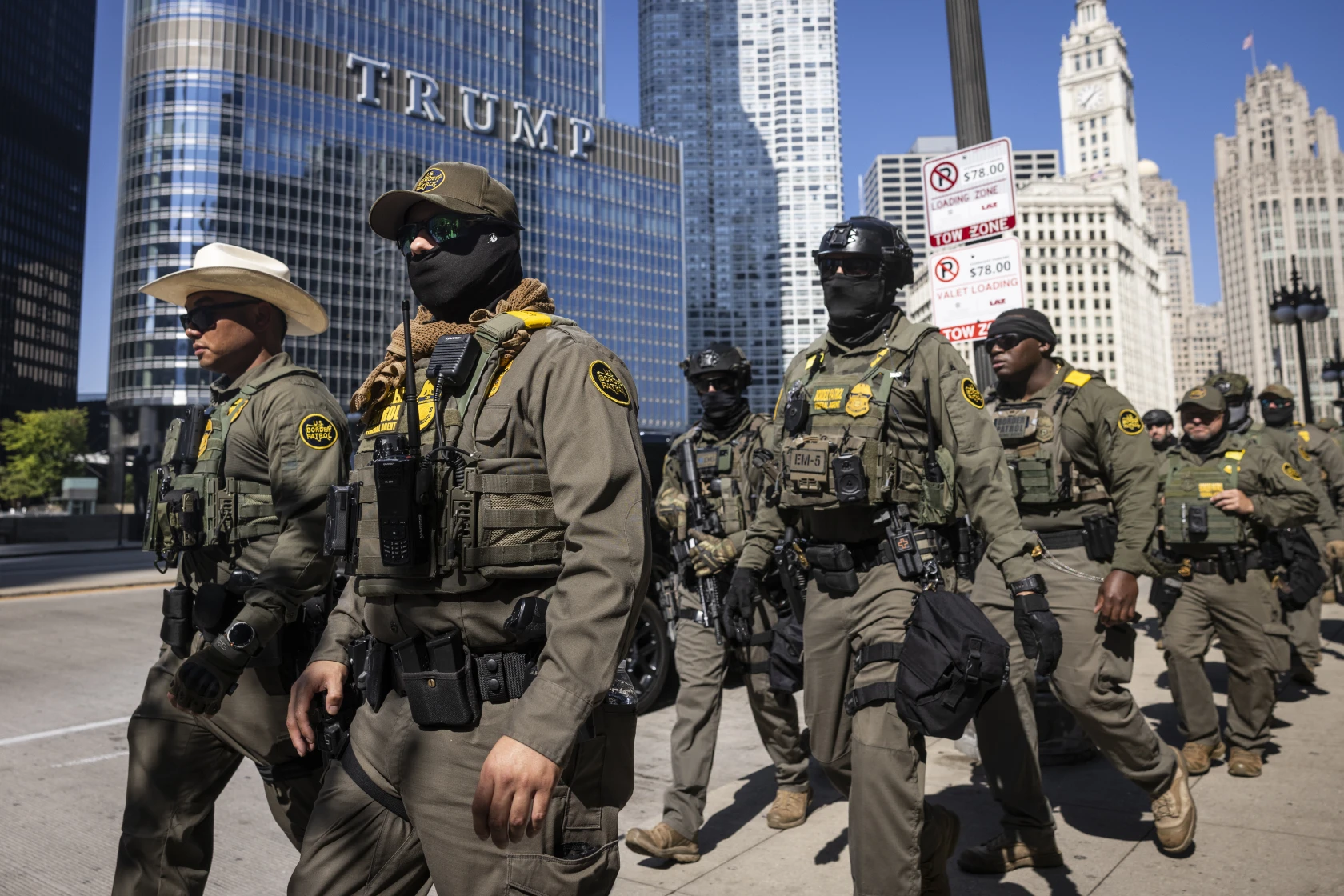
U.S. Border Patrol agents march through downtown Chicago on Sunday afternoon. (Credit: Ashlee Rezin/Chicago Sun-Times)
In Chicago, meanwhile, , , and federal agents launched tear gas and other chemical irritants near protesters gathered outside the U.S. Immigration and Customs Enforcement facility in Broadview.
“Agents fired pepper balls into a crowd of about 75 protesters Saturday evening and made several arrests.
“Steve Held, a Chicago journalist, was one of those arrested. A Chicago Sun-Times reporter was struck by rubber projectiles and tear-gassed. Held is a co-founder of Unraveled Press, which has been working with the digital oulet The TRiiBE and other independent media to cover protests at Broadview.
“ ‘It was shocking to see, but it was not shocking because they’ve been targeting us for days,’ said Raven Geary, a colleague of Held who was across the street when he was detained. ‘They know that they’re being watched, they know that they’re secret police, they know that they’re targeting reporters on purpose.’ ”
wrote Sunday for Block Club Chicago that Geary “was shot in the face with a pepper ball by federal officers on Friday and sought medical attention afterwards, Block Club reporters witnessed.
“ ‘We have never witnessed anything like what ICE has unleashed on our communities this week,’ Unraveled said in a statement posted to social media Sunday.”
as alone, driving her truck to the facility early Sunday when a masked federal agent shot pepper balls at her from about 50 feet inside the fence. There were no protests or protesters on scene at the time.
“The chemical round hit Rezaei’s driver’s-side panel, causing the chemical powder to fill the inside of her truck, leaving white residue on her windshield and causing her face to feel ‘on fire for at least the last 10 minutes or so,’ Rezaei told Broadview police, according to the report. The chemical also caused her to vomit once outside her truck. . . .”
At Monday’s Journal-isms Roundtable, speakers attributed the boldness of the ICE moves to the politicization of federal agencies under the Trump administration. They said the relative media inattention to the issue sprang from the flood of similar politically motivated actions that also demand news coverage, and called for a united front among news organizations and journalism associations, particularly those of color, in opposing such repressive measures.
However, the ownership of media organizations by corporations seeking federal regulatory approval was cited as a mitigating factor. Still, attendees named organizations such as the Pivot Fund that can provide small media outlets with access to legal advice when confronted with federal bullying.
Speakers included:
Craig Duff, a professor at the Medill school of journalism at Northwestern University who was at the Broadview ICE facility and experienced tear gassing and rubber bullets; Giovanni Diaz, attorney for Atlanta reporter Mario Guevara, a Salvadoran who has been imprisoned for more than 50 days; Seth Stern, director of advocacy, Freedom of the Press Foundation; Ray Suarez, veteran journalist, broadcaster and author; Mickey H. Osterreicher, general counsel, National Press Photographers Association; and Dave Levinthal, investigative reporter and author of “ICE May Be Breaking the Law to Stonewall Reporters” for the Columbia Journalism Review.
More in a subsequent column.
- Chicago Sun-Times: Federal immigration agents in full tactical gear were walking through downtown Chicago Sunday (video)
- Freedom of the Press Foundation: A journalist has been arrested by ICE. Now what? (video)
- Ivan Fernandez, LA Taco: How L.A.’s Playbook Can Guide Chicago’s Fight Against ICE
- National Lawyers Guild Chicago: NLG Chicago Denounces Continued Violence from Federal Law Enforcement and Attacks on Free Speech and Press in Broadview, Illinois
- National Press Photographers Association: NPPA Condemns ICE Officers’ Assault on Journalists (Oct. 1)
Julian Rodriguez of the University of Texas, Arlington, accepts the Barry Bingham Sr. Fellowship award in 2015 at the Association of Opinion Journalists Symposium, held at the Poynter Institute. (Credit: John McClelland/YouTube)
Nominations Open for J-Educator Promoting Diversity
Beginning in 1990, the Association of Opinion Journalists annually granted a Barry Bingham Sr. Fellowship — actually an award — “in recognition of an educator’s outstanding efforts to encourage minority students in the field of journalism.”
Journal-isms assumed stewardship of the award last year, handed the baton from the News Leaders Association, which absorbed the now-defunct Association of Opinion Journalists but in 2024, itself dissolved.
Since 2000, the recipient had been awarded an honorarium of $1,000 to be used to “further work in progress or begin a new project.”
This will be the first such award under the new affiliation.
Past winners include James Hawkins, Florida A&M University (1990); Larry Kaggwa, Howard University (1992); Ben Holman, University of Maryland (1996); Linda Jones, Roosevelt University, Chicago (1998); Ramon Chavez, University of Colorado, Boulder (1999); Erna Smith, San Francisco State (2000); Joseph Selden, Penn State University (2001); Cheryl Smith, Paul Quinn College (2002); Rose Richard, Marquette University (2003).
Also, Leara D. Rhodes, University of Georgia (2004); Denny McAuliffe, University of Montana (2005); Pearl Stewart, Black College Wire (2006); Valerie White, Florida A&M University (2007); Phillip Dixon, Howard University (2008); Bruce DePyssler, North Carolina Central University (2009); Sree Sreenivasan, Columbia University (2010); Yvonne Latty, New York University (2011); Michelle Johnson, Boston University (2012); Vanessa Shelton, University of Iowa (2013); William Drummond, University of California at Berkeley (2014); Julian Rodriguez of the University of Texas at Arlington (2015); David G. Armstrong, Georgia State University (2016); Gerald Jordan, University of Arkansas (2017), Bill Celis, University of Southern California (2018); Laura Castañeda, University of Southern California (2019); Mei-Ling Hopgood, Northwestern University (2020); Wayne Dawkins, Morgan State University (2021); Marquita Smith of the University of Mississippi (2022), and Rachel Swarns of New York University (2023).
Nominations may be emailed to Richard Prince, who chairs the awards committee, at richardprince (at) hotmail.com. The deadline is Oct. 15. Please use that address only for Bingham fellowship matters.
Feel free to urge others to write supporting letters for your nominee, especially if they are students or former students of the person you favor.

Members of NABJ’s current executive board hold their first meeting in August: From left, Walter Smith Randolph, Errin Haines, Roland Martin, Eva D. Coleman. Not shown: Khorri Atkinson, Jasmine Styles. (Credit: Richard Prince)
NABJ Board Votes to Rescind Director’s Contract
Sept. 27, 2025
Dismissed Lawyer Had Warned Against Such Action
Belva Davis, ‘Trailblazer,’ ‘Pioneer’ Dies at 92
Attiah Files Grievance Against Washington Post
Under Trump, Univision Seeks to Be ‘More Centrist’
N.J. Public TV Needs Benefactor to Avoid Shutdown
Suspect Gives Reporter a Story for the Grandkids
Nominations Open for J-Educator Promoting Diversity
Short Takes: National Newspaper Publishers Association; Stephen A. Smith; Kansas City Defender and free food program; Diverse: Issues in Higher Education; preferences of Latino podcast listeners; Latino digital magazine at UNC; Jorge and Paola Ramos; Karen Yin and Editors of Color database;
Lincoln University of Pennsylvania’s student newspaper, The Lincolnian; Mary Mitchell; SPJ’s Laura J. Downey and Wesley Wright; Rachel Scott and Elliott Smith wedding; Amazon tribe’s suit against N.Y. Times; forced labor in Cuban prisons; Burkina Faso journalists freed from forced conscription.
Dismissed Lawyer Had Warned Against Such Action
The board of directors of the National Association of Black Journalists has voted to rescind the contract of its newly chosen executive director, NABJ president Errin Haines disclosed this week, despite an assertion from its now-dismissed attorney of record that such a move could leave it open to lawsuits charging breach of contract and defamation of character — and perhaps a hefty financial penalty.
The Aug. 20 board action was mentioned in the 29th paragraph of a newsletter from Haines to members Tuesday that promised transparency, though the report of the board action took up only one paragraph and Haines did not respond to questions seeking clarification.
 According to minutes posted Tuesday on NABJ’s members-only web page, the motion “to rescind Elise Durham’s (pictured) contract and to renegotiate the terms of the contract,” introduced by Vice President-Digital Roland Martin, passed on an 8-4 vote during the meeting, held by Zoom.
Durham’s selection to succeed Drew Berry, who had announced his retirement, was made public at an Aug. 6 news conference during NABJ’s annual convention.
Voting yes on the motion were Martin, Walter Smith Randolph, vice president-broadcast (whose proxy was held by treasurer Jasmine Styles), secretary Khorri Atkinson; Styles; Region I Director Melony Roy; Region III Director Steve Crocker; Academic Representative Lisa Armstrong; Media-Related Representative Raschaonda Hall (Styles had her proxy); and student representative A’Lauren Gilchrist (Styles had her proxy).
Voting no were Vice President-Print Eva D. Coleman; Parliamentarian Sia Nyorkor; Region II Director Angela Smith and Region IV Director Aaron Day.
The executive director is the chief full-time representative of the organization. As former vice president -digital Amir Vera explained in July, “I know members are, at times, unhappy with the convention site or question why we do or don’t partner with certain companies and entities. What they don’t realize is that the executive director plays a major role in those and other significant decisions that directly affect every member of NABJ. Since at least 2018, NABJ has been remarkably stable, and that’s largely because we’ve had a strong, steady executive director.”
However, Vera added, “If we want to continue on this path, the Personnel Committee — which I serve on — must select the next executive director through an objective, fair process with ample time to vet candidates and not rush through the process.”
That caution was the primary argument advanced by some prominent members, including board members and then-candidates for board positions, for opposing the choice of a new executive director in August. Haines was among them.
Lemon declined to hold off on the selection, however, and at a fractious hours-long business meeting at the convention in Cleveland, some of the principals revealed that key members of NABJ, such as Styles and financial manager Nathaniel Chambers, were kept out of the loop when then-president Lemon, just days before he was defeated in a bid for re-election, signed a contract with Durham to become NABJ’s new executive director. The contract’s legality is now being questioned.
Haines began her term the next day, and announced that the organization would review the process by which the previous administration chose Durham. She also said NABJ would end its relationship with Nat Jones, the lawyer who told the board it could face massive penalties if it tried to undo the choice.
Durham is a communications strategist and television news manager in Atlanta with a long history with NABJ, and she resigned her job to take the NABJ position.
At an Aug.14 board meeting, according to the minutes, prominent and politically connected lawyer A. Scott Bolden of Reed Smith LLP was introduced as NABJ’s counsel. He appeared at the meeting with colleague Tate Gray. The previous day, according to the minutes, Martin moved for the board of directors to retain legal counsel and “offered to make a donation to NABJ to cover legal fees due to concerns about the financial impact of hiring legal counsel.”
Bolden did not respond to requests for comment, nor did Durham’s attorneys, from the PCW Law Firm in Atlanta.
 Meanwhile, the organization is without an executive director. Berry told Journal-isms he has moved on with his life and denied that he had been asked to leave his position early.
“As you know, I announced my retirement before and during the convention meaning NABJ matters are under someone else’s care,” Berry messaged.
“The plan with my family was to leave IMMEDIATELY after the convention so that I could be completely free to participate in a bunch of family events as I started sharing on Facebook. (pictured above on Sept. 10, Grandparents’ Day). I stayed through the conference because it was the right thing for me to do for NABJ.”
Bill Whitaker narrates this “CBS Sunday Morning” piece on Belva Davis in 2023. (video)
Belva Davis, ‘Trailblazer,’ ‘Pioneer’ Dies at 92
After a February 2013 tribute to pioneering journalist Belva Davis on her retirement, veteran Bay Area broadcaster Barbara Rodgers wrote to attendees:
“I wanted to send a personal note to all of you to say a BIG, BIG THANKS and WOW, what an exciting night you helped to create for Belva!
“I don’t think I need to tell you how happy she was because you could see it on her face in all the photos . . . and she confirmed that by calling me yesterday to say how pleased she was with all the hard work and love that so obviously went into the tribute to her.
“But it was not just Belva who was happy, so were the hundreds who came and witnessed what many are describing as one of the most memorable and unique events they have ever attended. From the hilarious opening monolog by comedian Bill Cosby to the fascinating panel discussions introduced by career highlight videos, the heartfelt individual tributes — including the surprise note from President Obama — and the magical musical moments to the last bite of cake and sip of champagne.
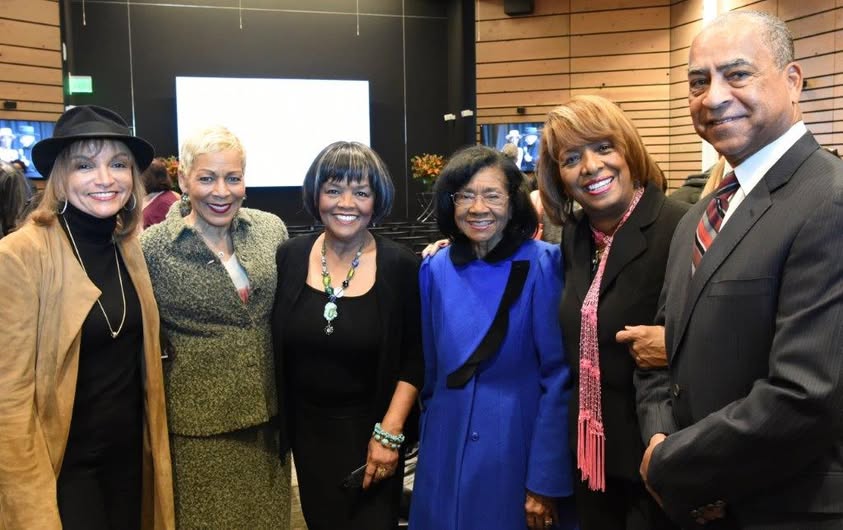 ‘Journalist models’ in West Coast broadcast journalism, from left, in 2019: Pam Moore, Valerie Coleman, Barbara Rodgers, Belva Davis, Rosie Allen and Bob Butler (Credit: Johnnie Burrell)
“It was an evening that we will all look back on years from now and be glad and proud that we were a part of it. Thank you, thank you, thank you for all the hard work and everything that you did to turn our creative concept into a roaringly successful reality. It was a pleasure working with all of you.”
Davis, an Emmy Award-winning journalist who broke the color barrier in Bay Area radio and television in the 1960s, died Wednesday,” Scott Shafer reported Wednesday, updated Thursday, for KQED in San Francisco. “She was 92. Davis was the first Black woman to be hired as a television journalist on the West Coast when she took a position with KPIX-TV, the CBS affiliate in San Francisco, in 1966. She remained on the air for nearly five decades at KPIX, KRON and KQED. Davis rose to prominence during an era of pervasive sexism, racism and discrimination.
‘“ ‘Her legitimacy as an excellent reporter, her integrity, her professional accomplishments and her personal attributes made her the sort of person that everyone aspired to become,’ said Mary Bitterman, who served as KQED’s CEO from 1993 to 2002.
“ ‘Her reputation as a journalist, reporter and anchor was always highly respected, noted for its fairness and for putting stories into context,’ Bitterman noted.
“Davis was hired by KQED TV in 1977 and continued working there until her retirement in 2012. Among the programs she hosted were KQED Newsroom and This Week in Northern California. She was known as much for her personal kindness and warmth as she was for her deep knowledge of journalism, Bay Area communities and politics.
“ ‘She is a legend and she was a mentor, a friend, a mom – you know, all of those things. And I just loved her,’ said former KRON TV anchor Pam Moore, who met Davis early in her own career. ‘Certainly you don’t work in California and journalism as a person of color and not know about Belva Davis.’ . . . .”
- Catherine Bigelow, San Francisco Chronicle: Belva Davis caps 50-year career with bow (Feb. 26, 2013)
- CBS News: Journalist Belva Davis, a trailblazer who “kicked open the door” (Feb. 26, 2023)
- Journal-isms: Catching Up With Books for the Fall – Belva Davis (Oct. 23, 2011)
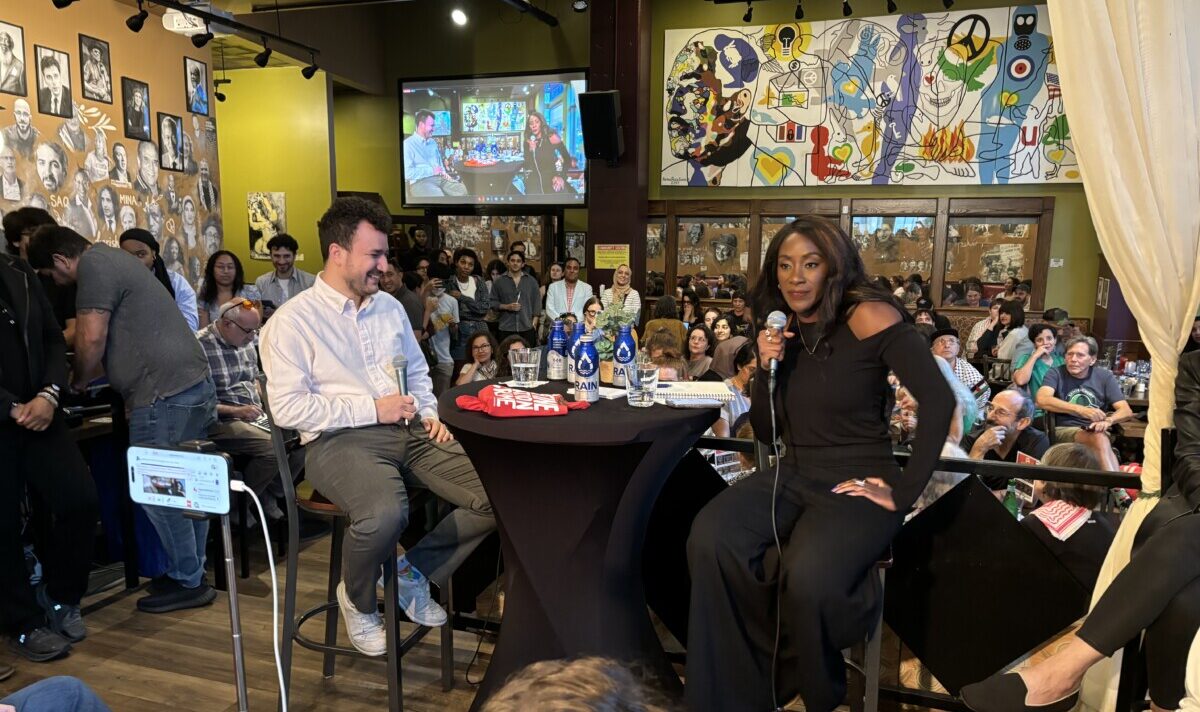
Karen Attiah interviews Palestinian activist Mahmoud Khalil before a standing-room-only crowd Sept. 18 at Busboys and Poets, a popular Black-oriented D.C. restaurant and bookstore, that owner Andy Shallal estimated at 500. (Credit: Richard Prince)
Attiah Files Grievance Against Washington Post
“Karen Attiah, a Washington Post opinion writer fired this month for her social media posts about the assassination of Charlie Kirk, has filed a grievance arguing that she should have been allowed to share her views on news events under the company’s labor agreement and social media policy,” Benjamin Mullin reported Wednesday for The New York Times.
“In addition to the grievance, filed by The Post’s labor union last week, Ms. Attiah, 39, submitted a four-page letter to The Post’s head of human resources on Wednesday seeking to recover damages from her firing.
“In the letter, her lawyers said she ‘spoke truthfully and forcefully about matters of vital public concern.’
“The Washington Post did not immediately respond to a request for comment.
“According to The Post’s termination notice, attached to Ms. Attiah’s letter, the newspaper fired Ms. Attiah for posts on the social media app Bluesky that violated the company’s social media policies, saying they “harm the integrity” of the organization. The organization’s policies and standards say that Post employees are expected to use social media responsibly and civilly, and to treat people with respect. . . .”
- Kim Bellware and Michelle Boorstein, Washington Post: Black Christians confront Charlie Kirk’s religious legacy
- Aaron Morrison and Jaylen Green, Associated Press: Black church leaders reject Charlie Kirk martyrdom and point to his race rhetoric
- Rep. Ayana Pressley, D-Mass.: Karen Attiah and the attacks on Black women. (starts at 31:55.) (video)
Former president Donald Trump took questions from undecided Hispanic voters at a Miami town hall hosted by Univision last October. (Credit: YouTube)
Under Trump, Univision Seeks to Be ‘More Centrist’
“Univision is adapting to a changing marketplace. In the years since the Trump campaign labeled
Univision ‘a mouthpiece’ for the Democratic Party, the network has made ‘a concerted effort’ to be more centrist, its CEO said, and ditch its reputation as left leaning,” Hannah Miller reported Thursday for Bloomberg.
“Candidate Trump, for example, sat down with Univision in November 2023 during his second reelection campaign. While the interview was criticized as too soft from within and outside the company, [TelevisaUnivision Inc. chief executive officer Daniel] Alegre said it was an important moment for Univision and that both Trump and President Joe Biden had faced tough questions from the network.
” ‘Since Trump took office in January and launched immigration raids around the country, Univision has continued to extensively cover the news — its Vix streaming platform aired a live special earlier this month that went over new rules and changes in immigration law. The company has come under fire for airing ads from the Department of Homeland Security urging people in the US illegally to leave. . . . ”
“Immigration has always been the top issue for Spanish-language media, because traditionally the audience for those outlets was recent arrivals or Hispanic immigrants who have been in the country for a long time and prefer getting their news and entertainment in Spanish,” said Juan Manuel Benítez, a Columbia Journalism School professor.
“TelevisaUnivision continues to provide resources and has teamed up with nonpartisan nonprofit groups to offer naturalization assistance for Hispanics who want to become US citizens or gain legal immigration status, Alegre said.
“ ‘We have crisis hotlines for our community when issues rise, and we can address them in any one of our different access points, radio, local and all the way up to national,’ he said. . . . ”
On an Aug. 8 special edition of “Reporters Roundtable,” Aliya Schneider of the Philadelphia Inquirer, Brent Johnson of NJ Advance Media and Daniel Han of Politico NJ discuss some of the week’s top political headlines. (Credit: YouTube)
N.J. Public TV Needs Benefactor to Avoid Shutdown
“New Jersey’s public television network may be forced to shut down next year after its nonprofit operator and the state’s Public Broadcasting Authority failed to reach a contract agreement, according to a statement released by the network, NJ PBS, on Tuesday,” Samantha Latson reported Wednesday for The New York Times.
“NJ PBS cited recent funding cuts to public broadcasting at the state and federal levels as ‘significant’ factors in the possible closure. The contract between the network’s operator, the WNET Group, and the broadcasting authority expires on June 30, 2026, according to the statement.
“It was not clear precisely how the funding cuts had led to the contract impasse. Debra Falk, a spokeswoman for NJ PBS, said Wednesday that WNET and the authority had been ‘too far apart on key aspects of the agreement about term and monetary obligations.’
“ ‘WNET is committed to supporting the state through this transition and looks forward to collaborating with New Jersey-based institutions interested in operating a public television network,’ Ms. Falk said in the statement on Tuesday, suggesting the network could continue operations past the contract deadline if another operator was found.
“The announcement from NJ PBS comes as state and federal funding cuts have targeted public broadcasting organizations across the United States, and as independent news outlets in New Jersey have closed. . . .”
Meanwhile, “WNYC in New York announced Wednesday that it will provide its nationally distributed programs at no cost to stations affected by federal funding cuts to public media,” Tyler Falk reported for Current.
“The Station-to-Station Programming Project will offer public media organizations access to WNYC’s program portfolio for free if they received 10% or more of their budget from CPB [the Corporation for Public Broadcasting.] Stations below that threshold could also be eligible ‘on an as-needed basis,’ according to a press release. Noncommercial stations that don’t receive CPB funds are also eligible to air the programs for free. . . .”
- Tyler Falk, Current: New nonprofit receives funding for public radio distribution
- David Folkenflik and Frank Langfitt, NPR: NPR to trim $5 million this year as public radio stations struggle to pay bills (Sept. 17)
Suspect Gives Reporter a Story for the Grandkids
Julian Rodriguez of the University of Texas, Arlington, accepts the Barry Bingham Sr. Fellowship award in 2015 at the Association of Opinion Journalists Symposium, held at the Poynter Institute. (Credit: John McClelland/YouTube)
Nominations Open for J-Educator Promoting Diversity
Beginning in 1990, the Association of Opinion Journalists annually granted a Barry Bingham Sr. Fellowship — actually an award — “in recognition of an educator’s outstanding efforts to encourage minority students in the field of journalism.”
Journal-isms assumed stewardship of the award last year, handed the baton from the News Leaders Association, which absorbed the now-defunct Association of Opinion Journalists but in 2024, itself dissolved.
Since 2000, the recipient had been awarded an honorarium of $1,000 to be used to “further work in progress or begin a new project.”
This will be the first such award under the new affiliation.
Past winners include James Hawkins, Florida A&M University (1990); Larry Kaggwa, Howard University (1992); Ben Holman, University of Maryland (1996); Linda Jones, Roosevelt University, Chicago (1998); Ramon Chavez, University of Colorado, Boulder (1999); Erna Smith, San Francisco State (2000); Joseph Selden, Penn State University (2001); Cheryl Smith, Paul Quinn College (2002); Rose Richard, Marquette University (2003).
Also, Leara D. Rhodes, University of Georgia (2004); Denny McAuliffe, University of Montana (2005); Pearl Stewart, Black College Wire (2006); Valerie White, Florida A&M University (2007); Phillip Dixon, Howard University (2008); Bruce DePyssler, North Carolina Central University (2009); Sree Sreenivasan, Columbia University (2010); Yvonne Latty, New York University (2011); Michelle Johnson, Boston University (2012); Vanessa Shelton, University of Iowa (2013); William Drummond, University of California at Berkeley (2014); Julian Rodriguez of the University of Texas at Arlington (2015); David G. Armstrong, Georgia State University (2016); Gerald Jordan, University of Arkansas (2017), Bill Celis, University of Southern California (2018); Laura Castañeda, University of Southern California (2019); Mei-Ling Hopgood, Northwestern University (2020); Wayne Dawkins, Morgan State University (2021); Marquita Smith of the University of Mississippi (2022), and Rachel Swarns of New York University (2023).
Nominations may be emailed to Richard Prince, who chairs the awards committee, at richardprince (at) hotmail.com. The deadline is Oct. 15. Please use that address only for Bingham fellowship matters.
Feel free to urge others to write supporting letters for your nominee, especially if they are students or former students of the person you favor.
Short Takes
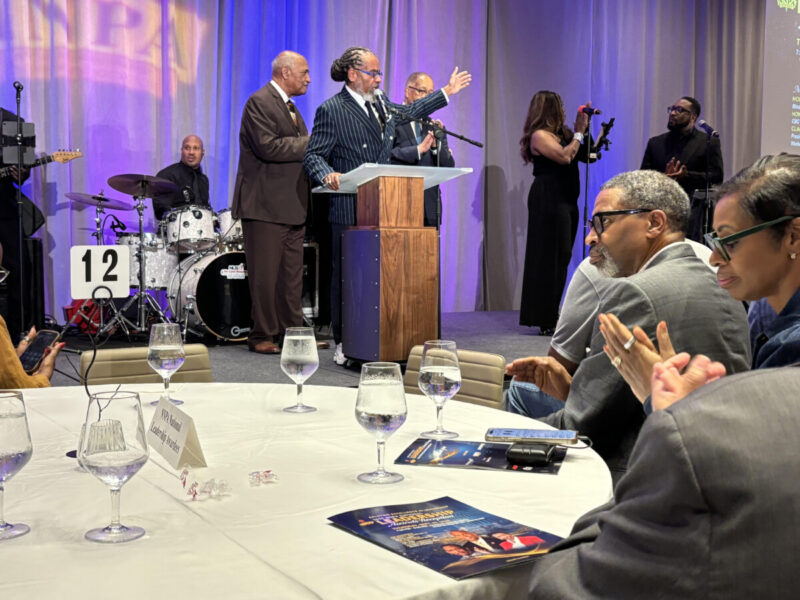
Derrick Johnson, CEO of the NAACP, seated, was among the leaders of Black organizations attending the National Newspaper Publishers Association’s Leadership Awards Reception Thursday, held in Washington in conjunction with the weeklong Congressional Black Caucus Foundation Annual Legislaive Conference. Johnson is seated next to the vice chair of the NAACP board, Karen Boykin-Towns. Standing on stage are John Warren, NNPA board chair, Mark Thompson , emcee for the event, and Benjamin Chavis, NNPA CEO. During the reception, attorney Benjamin Crump pledged $50,000 to the Black Press — structured at $10,000 a year for five years. (Credit: Richard Prince)
- “Stephen A. Smith is already probably the most influential sports commentator in the media game. His salary proves it, as he is pushing $40 million a year in earnings, sources briefed on his contracts told The Athletic,” Andrew Marchand reported Sept. 17 for the Athletic. “His ESPN deal totals five years and $105 million, while his new SiriusXM contract is for three years and $36 million, according to the sources. The $33 million per year base from his two main employers, combined with the revenue from his YouTube channel and podcast, will result in him approaching $40 million a year. . . .”
- “When the last grocery store in a historically Black Kansas City neighborhood shut its doors this summer, residents were suddenly left without access to fresh food,” Haven Gibbons reported Wednesday for the PIvot Fund. “The Defender stepped in. Partnering with community leaders, the Black-owned newsroom helped launch the Hamer Free Food Program, a mutual aid initiative tackling food insecurity head-on while strengthening trust between media and community. The September–October rollout is delivering produce boxes to 50 households within a mile of the closure. . . . “
 Diverse: Issues In Higher Education, originally Black Issues in Higher Education, has changed its name again, to The EDU Ledger. “Though our name is changing, our mission remains: to deliver trusted reporting, rankings, and analysis that empower every member of the academic community — especially those whose stories and contributions have too often gone unseen,” publisher Maya Matthews Minter told newsletter subscribers on Sept. 18.
- New data from Edison Research shows that “Among all Latino monthly podcast listeners, 64% said they would listen more often if podcasts focused on topics that interested them,” Cameron Coats reported Sept. 19 for Radio Ink. “That figure climbs to 68% for those who had listened to a Spanish-language podcast in the past year. But the gap between general listeners and Spanish-language listeners grows sharper when it comes to cultural representation. More than half of Spanish-language podcast listeners said they wanted more stories from Latinos (55%), more stories from their country of origin (52%), and more Latino hosts (52%). In each case, these numbers outpace the broader Latino podcast audience by 10 percentage points or more. . . .”
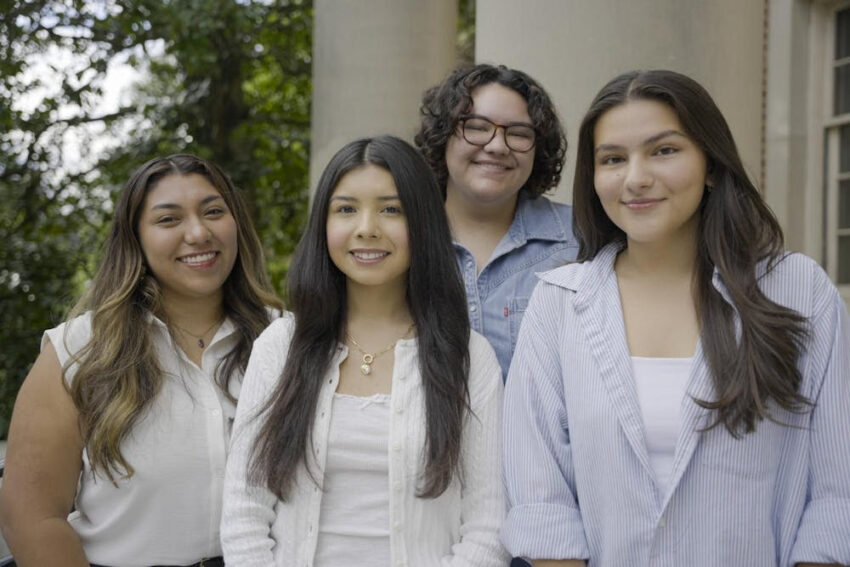
UNC NAHJ executive board members Maria Fernanda Barriga-Mateos, Abby Maldonado, Elaine Jimenez and Sofia Rangel pose for a portrait on Sept. 16. (Credit: Viyada Soukthavone/Daily Tar Heel)
- After five years as a campus organization, “The Tar Heel chapter of the National Association of Hispanic Journalists is expanding its initiatives to include a digital magazine, Lauren Geddes wrote Sept. 16 for the Daily Tar Heel at the University of North Carolina. “The project aims to establish the organization’s legacy and create a space that highlights the voices of Hispanic students.”
- Jorge Ramos, former Univision anchor, and his daughter Paola Ramos, a regular contributor to MSNBC and Telemundo, have debuted a podcast focused on Latino issues, Ken Bensinger and Jennifer Medina reported Sept. 15 for The New York Times. The goal of “The Moment,” “they said in several interviews, is to reach an audience that they think is much underserved in American news media: English-speaking Latinos.”
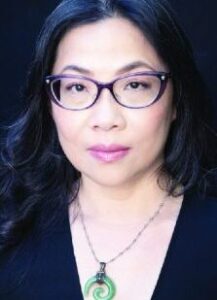 “On September 10, 2018, I launched the Editors of Color Database to raise the visibility of editorial professionals of color,” Karen Yin (pictured) wrote on LinkedIn. “Today, my database features over 500 professionals in the U.S. or Canada specializing in editing or editing-adjacent roles. My favorite emails are the thank-yous from hiring managers for making their jobs easier and from editors of color for helping them get noticed (and hired).”
 Lincoln University of Pennsylvania’s student newspaper, The Lincolnian,- one of the oldest college papers in the country, will be celebrated at the university’s homecoming as the newspaper turns 100. Pulitzer Prize winner Leon Dash, former Knight-Ridder executive Jay Harris, Black film scholar Donald Bogle and HBCU sports legend Rob Knox are among the newspaper’s alums, says university trustee Will LaVeist. Homecoming takes place from Oct. 23 to Oct. 26.
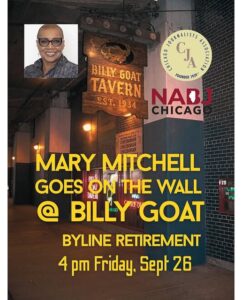
- On Friday, columnist Mary Mitchell was to join “the ranks of Chicago newsroom greats whose bylines are hung on the wall of legendary Billy Goat Tavern — joining only two other women to receive the city’s most idiosyncratic journalism honor,” fellow Sun-Tmes alum Maudlyne Ihejirika wrote on Linked In. “Always a trailblazer, Mitchell, who retired in 2024 after 34 years at the SUN-TIMES — where she rose quickly from a 41-year-old college graduate and cub reporter to one of Chicago’s most decorated columnists and influential voices — will be the 1st woman of color to have her name hung on the wall at the Goat.” [Sept, 30 update: Ihejirkia told Journali-isms, “It went off as planned, and beyond expectations. At last count, 110+ journalists from across the city and a few from out of state, were in attendance. Most stayed the whole evening, toasting Mary, reminiscing and catching up with old friends, enjoying Billy Goat ‘cheezborgers,’ and reflecting on the state of journalism today.”]

- The Society of Professional Journalists has selected Laura J. Downey and Wesley Wright to each receive a Howard S. Dubin Outstanding Pro Member Award for contributions to their SPJ chapters and regions, SPJ announced Sept 16. Wright is assistant director of student media at Florida Atlantic University and an at-large director on the SPJ Board. “In 2021, Wright founded the ReNews Project, a non-profit with a mission to restart dormant student newspapers on historically Black colleges and universities and Hispanic-serving institutions. . . . Downey, a 2021 Dori Maynard Diversity Leadership Program Fellow and 2022 graduate of the Maynard 200 Fellowship Executive Leadership Program, is immediate past president of the SPJ Georgia Pro Chapter. She is executive editor of WebMD’s point-of-care products. Downey made history as the first Black president of the chapter since its official founding in 2014. Under her leadership, the chapter raised the most funds in its history.”
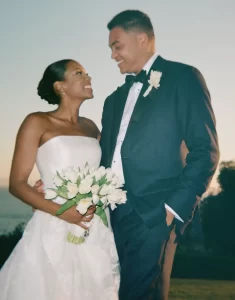
- “As the senior political correspondent for ABC News, Rachel Scott has to be ready at a moment’s notice to cover a big story. Elliott Smith proved early on that he wouldn’t hesitate to do whatever it took to help her. Sadiba Hasan wrote Wednesday for the “Vows” section of The New York Times. (Credit: Victoria Gold)
- “As several Sahel countries face growing insecurity and their media are heavily pressured, Reporters Without Borders (RSF) is screening ‘Community radios: the fight to keep the Sahel informed,’ its new documentary dedicated to community radio stations, in Dakar, the press freedom group said Sept 12. The film delves into the daily lives of three journalists from Mali, Burkina Faso and Niger, essential workers in the news industry. They persist in reporting despite serious threats, embodying the last hope for a free press in rural areas.”
- “A California judge has dismissed a lawsuit filed by an Indigenous tribe in the Brazilian Amazon against The New York Times and TMZ that claimed the newspaper’s reporting on the tribe’s first exposure to the internet led to its members being widely portrayed as technology-addled and addicted to pornography,” Itzel Luna reported Sept. 17 for the Associated Press. The suit was filed in May by the Marubo Tribe of the Javari Valley, a sovereign community of about 2,000 people in the Amazon rainforest. . . .”
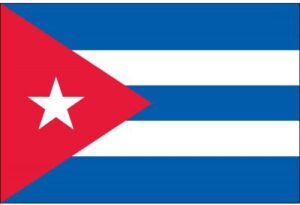
- “This report exposes the alarming situation of forced labor in Cuban penitentiary centers, revealing and demonstrating, beyond any doubt, the painful and criminal situation of forced labor exercised by the State, for economic and punitive purposes, on a total of 60,000 of the 90,000 inmates and 37,458 sentenced in open regime in the country ,” the Spain-based Prisoners Defenders said Sept. 15. “This report documents with total qualitative and quantitative precision how prisoners are subjected to inhuman and exploitative conditions in absolute and unpunished disconnection from international legislation and any labor rights. . . .” While the report did not mention journalists, it said “An intersectional analysis of the testimonies, segmented by race, shows that forced labor practices in Cuban prisons, despite the extremely serious violations that affect both groups, also affect Afro-Cubans , reproducing patterns of structural discrimination historically rooted in the Cuban prison system.”
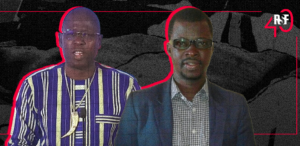
- “Deprived of their freedom since June and July 2024, columnist Adama Bayala [right], and journalist Alain Traoré were reunited with their families on 17 September, Reporters Without Borders said Sept. 17. Their reappearance follows a wave of releases of journalists forcibly conscripted by the army since July 2025. Reporters Without Borders (RSF) is relieved that they have been reunited with their loved ones and calls on the authorities to release journalist Atiana Serge Oulon.”
