

Correcting Errors Is Considered a Key to Credibility
. . . NABJ Postpones 50th Anniversary Gala
. . . Ethnic Media Well-Suited to Stop Disinformation
Judge Rules Federal Agents Can’t Target Journalists
Border Patrol Agents Detain Producer for WGN Chicago
Nobel Peace Prize Win Strikes Blow for Press Freedom
Documented: Trump Fires Blacks, Hires Whites
Trump Presses YouTube TV on Univision’s Behalf
Jim Mitchell, Editorialist, Dies at 71 of Prostate Cancer
Eric Adams Is Charismatic but Loathes the Press
Wednesday Is Deadline to Nominate J-Educator
Short Takes: Black winners of MacArthur Foundation grants; FCC member on thefts of copper; Cathy Hughes and Urban One anniversary; Cheryl Smith; Rob Parker; Phillip Martin; pressure on Nicaragua journalists to spy on each other; United Arab Emirates detains South Sudanese commentator;
Homepage photo: Society of Professional Journalists
Correcting Errors Is Considered a Key to Credibility
Two reports on public trust in the news media are receiving significant attention; neither offering good news.
“Americans’ confidence in the mass media has edged down to a new low, with just 28% expressing a ‘great deal’ or ‘fair amount’ of trust in newspapers, television and radio to report the news fully, accurately and fairly,” reported the Gallup Organization last week. “This is down from 31% last year and 40% five years ago.”
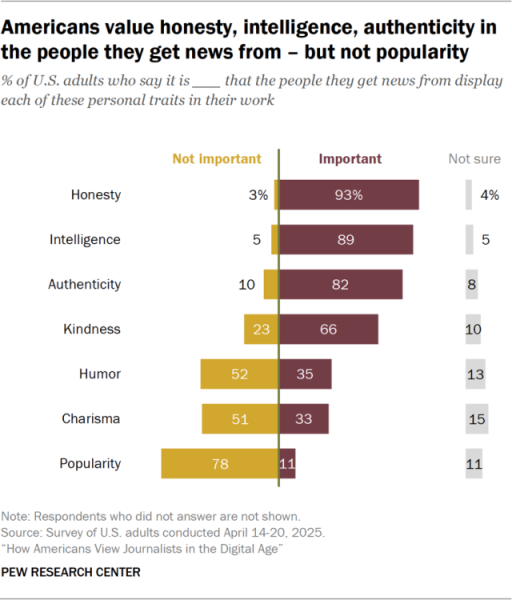
The Pew Research Center reported in August, “Most Americans say journalists are at least somewhat important to the well-being of society. At the same time, many are critical of journalists’ job performance and say they are declining in influence, an opinion that follows years of financial and technological turmoil in the news industry.”
Pew also said, “Most Americans agree that the people they get news from should definitely report news accurately (84%) and correct false information from public figures (64%) in their daily work.”
That brings us to the recent decision by the leadership of the National Association of Black Journalists not to correct a glaring error in its film commemorating its 50th anniversary.
As reported in this space in August, the documentary, “Behind the Headlines,” quotes NABJ co-founder DeWayne Wickham saying there was “not a newspaper that had more than three or four” Black journalists when NABJ was founded in 1975.
Journalists who were at the Washington Post, Newsday, the New York Times, the St. Louis Post-Dispatch, the Los Angeles Times, the Miami Herald, the Chicago Tribune and the old Washington Star disagreed with that assertion, which also does not count those in the Black press.
NABJ President Errin Haines, asked whether the organization would correct the mistake, chose not to address the accuracy issue. “I consider the documentary a good start that is not meant to be a definitive history of NABJ or Black journalism. It is an important part of what I hope will be ongoing storytelling about Black journalists’ contribution to our profession and our democracy,” she said.
However, in her first newsletter as president, Haines wrote last month, “I invite all of you to stay engaged, continue to share your perspectives, and to hold us to the highest standards.”
If it’s any consolation, the Gallup Poll showed more confidence in the news media from nonwhites than from white people, though the numbers were still low.
Asked whether they had “a great deal” of trust in the media, 5 percent of whites said yes, 14 percent of nonwhites said so. For “a fair amount,” 19 percent of whites said yes, 23 percent of nonwhites did. “Not vey much,” 36 percent of whites, 38 percent of nowhites. “None at all,” 39 percent from whites, 23 percent from nonwhites, and “Don’t know/refused,” no whites, 2 percent of nonwhites.
On the Editor & Publisher webpage, near a story about the Pew study, the publication reports a move by the military-oriented newspaper Stars & Stripes to maintain its credibility. “By adopting and publishing a clear Statement of Core Values, the paper is not only reinforcing its own commitment to impartiality and transparency but also offering a replicable path for every newsroom seeking to rebuild credibility,” E&P reported.
“Correct errors promptly” is among Stars & Stripes’ values.
 That is in line with news industry standards.
“When we’re wrong, we must say so as soon as possible,” mandates the Associated Press. “When we make a correction, we point it out both to subscriber editors (e.g. in Editor’s notes, metadata, advisories to TV newsrooms) and in ways that news consumers can see it (bottom-of-story corrections, correction notes on graphics, photo captions, etc.) . . .”
The Society of Professional Journalists says in its Code of Ethics, “Journalists should: Take responsibility for the accuracy of their work. Verify information before releasing it. Use original sources whenever possible.”
The New York Times declares, “We recognize an ethical responsibility to correct all factual errors, large and small, promptly and in a prominent space. We encourage readers to reach out to us at nytnews@nytimes.com when they spot a possible mistake. . . . ”
The Washington Post says, “Mistakes will happen. When they do, we correct the information as soon as possible, and we are transparent about exactly what we got wrong and what is right so the magnitude of the error is clear. We correct all errors, no matter how small or how quickly we’re able to fix them after publication.” It provides an email address and phone number for readers to use.
Separately, BlackPressUSA, a product of the National Newspaper Publishers Association, also reported on the recent media trust surveys. Although the Black press was not mentioned in the reports, the story nevertheless was headlined, “Trust in Mainstream Media at a New Low, But the Black Press Stands as the Trusted Voice.”
- Eric Deggans, Substack: My take on why Americans don’t trust journalists anymore
- Allison Joyner, NABJ Black News & Views: Black journalists tell their story in documentary traversing film festival circuit (Sept. 4)
. . . NABJ Postpones 50th Anniversary Gala
The National Association of Black Journalists has postponed the 50th anniversary gala it had planned for December in Washington, D.C., where the organization’s founding meeting took place on Dec. 12, 1975, NABJ President Errin Haines announced on the NABJ website.
 “After thorough evaluation and discussion, the President and Chair have determined that, due to fiduciary responsibilities and the realities of the current economic climate, it is in the best interest of the organization to postpone the gala,” the message said. “This decision was not made lightly, as we fully recognize the anticipation and excitement surrounding this historic celebration.”
Convention chair Rod Carter messaged Journal-isms that no contract had been signed with a location, and that “As for the 2026 plan—that’s still a bit fluid. The hope is to still have something in our founding city. We are however planning something very special for our members on our founding date, December 12.”
Haines’ note added, “While the gala will not take place as originally planned, our commitment to honoring NABJ’s incredible 50 years of Resilience, Advocacy, Excellence, and the Evolution of Our Voices remains steadfast. We encourage all members, partners, and supporters to continue celebrating this milestone throughout the year — in your newsrooms, classrooms, communities, and chapters. The impact of NABJ is not confined to one night, but is reflected in the powerful legacy we continue to build together.
“Looking ahead, we remain optimistic about rescheduling the gala in 2026 and finding other opportunities to extend the celebration of NABJ’s 50th Anniversary. Our mission continues, and so does the spirit of this golden milestone. . . .”

(Credit: Arkansas Black Vitality)
. . . Ethnic Media Well-Suited to Stop Disinformation
“While political disinformation is surging across the United States, one part of the news media is proving especially resilient in stopping the spread of false information – ethnic and Indigenous newsrooms, according to a new study by the International Center for Journalists (ICFJ),” the center reported Oct. 1.
“ ‘Thanks to their deep community ties and well-established credibility, ethnic and Indigenous newsrooms are often attuned to harmful rumors and falsehoods circulating within their communities well before those narratives manage to garner national attention,’ the study concluded. . . .
“Among the key findings:
- “U.S. President Donald Trump was the dominant source and distributor of disinformation appearing in the ethnic and Indigenous press during the 2024 election, highlighting the function of domestic political forces, rather than foreign state actors, as the primary source of disinformation narratives in U.S. political discourse.
- “WhatsApp groups, WeChat channels and other closed digital spaces often act as ‘information cocoons’ for mono-linguistic communities, allowing rumors and other forms of disinformation to spread unabated.
- “86% of Americans say they have seen or heard journalists being harassed or abused online, indicating wide visibility and the normalization of such attacks.
- “Ethnic outlets respond to this challenge by monitoring those spaces, engaging directly with users in their language and publishing timely, in-context reporting that addresses specific claims.
- “Financial scams are a persistent, cross-community threat, and many research subjects report that scams often travel through the same channels as political falsehoods.
- “The exclusion or willful omission of Indigenous community voices in public discourse, including through mainstream media coverage, feeds disinformation, and fuels racist narratives. . . .
- ““Trust in the mainstream press continues to decline in a climate of increasing attacks on the news media by the Trump administration. But our survey revealed that participants identifying as people of color (POC) were less likely to ‘distrust’ the press, with 32% of POC participants expressing distrust in the news, compared to 44% of white-identifying participants. . . . “
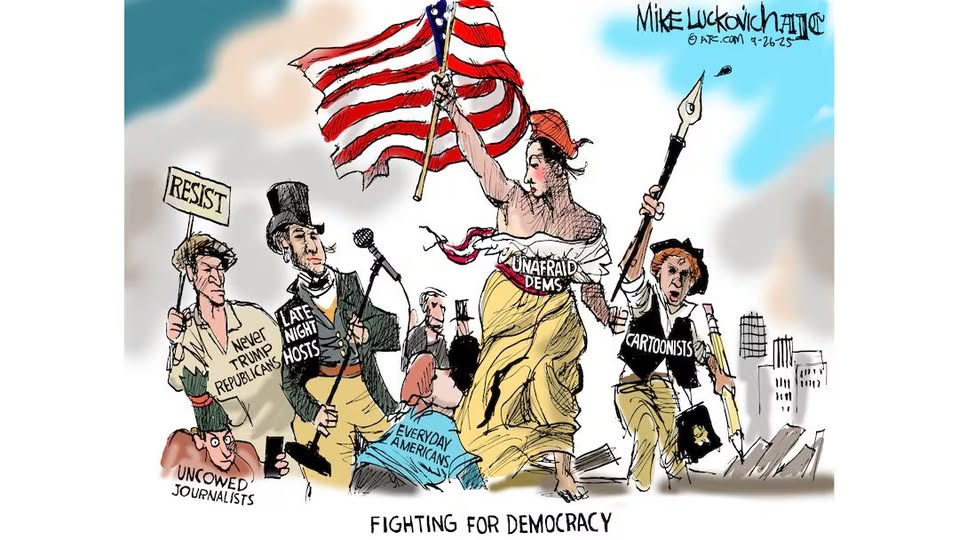 Mike Luckovich of the Atlanta Journal-Constitution believes that “uncowed journalists” — and cartoonists — are among those fighting for democracy. (Credit: Mike Luckovich of the Atlanta Journal-Constitution.)
Judge Rules Federal Agents Can’t Target Journalists
“A federal judge ruled Thursday that federal agents can’t use tear gas, pepper spray and other weapons against journalists and peaceful protesters after Block Club Chicago and others sued the federal government over its actions against journalists outside the Broadview ICE detention facility,” Block Club Chicago reported Thursday.
The judge also ruled that “Federal immigration agents who aren’t working undercover are now required to have visible identification anytime they’re on the job in Chicago and surrounding areas — including when they’re making arrests or responding to protests,” Block Club Chicago reported separately on Friday.
The nonprofit newsroom wrote, “The temporary ruling comes after four Block Club journalists were indiscriminately hit by pepper-spray bullets and tear-gassed by federal agents; an independent journalist was arrested; and a TV reporter’s vehicle was hit with a pepper ball, covering her face in chemicals — all as they covered protests outside the suburban Broadview facility.
“The ruling comes after the Trump administration deployed scores of federal agents to Chicago to carry out a ‘blitz’ of immigration enforcement, then mobilized National Guard troops, ostensibly to provide backup. Against that backdrop, the order from U.S. District Judge Sara Ellis confirms journalists’ right to report and the public’s right to protest under the First Amendment. . . .
“Whatever lawlessness is occurring is not occurring by peaceful protesters” and journalists, Ellis said after reading her decision aloud. Some actions by federal agents “clearly violate the constitution,” the judge said. “Individuals are allowed to protest. They are allowed to speak. That is guaranteed by the First Amendment to our Constitution, and it is a bedrock right that upholds our democracy.”
Meanwhile, Columbia Journalism Review on Friday gave a “laurel” to CBS News Chicago investigator Dave Savini, “who acquired bodycam footage showing the Broadview Police responding to calls from the ICE facility that appeared to be bogus. Broadview Police Chief Thomas Mills, who has previously described ICE’s use of tear gas and other incendiaries as ‘creating a dangerous situation for the community,’ told Savini he considered the calls a waste of resources: ‘It’s ridiculous,’ he said.”
“Bystanders filming the arrest of Debbie Brockman, who’s been with the station for more than 14 years, recorded the news producer as she was held facedown to the ground by two masked ICE agents, who handcuff her as she cries out in pain,” reported the Daily News in New York. (Credit: YouTube).
Border Patrol Agents Detain Producer for WGN Chicago
“Federal agents detained a woman who works for the news agency WGN on Friday morning as she attempted to document them detaining a Latino man, witnesses said,” Francia Garcia Hernandez reported Friday for Block Club Chicago.
“It is unclear if the woman was working for WGN when she was detained. In a video a witness recorded of the incident, the woman identified herself as Debbie Brockman and said she works for WGN. Brockman is a full-time video editor and producer for the station, according to her LinkedIn profile.
“ ‘Earlier today, a WGN-TV creative services employee was detained by ICE. She has since been released, and no charges were filed against her,’ the company said in a statement. ‘Out of respect for her privacy, we will have no further statements about this incident. . . . ”
Hernandez also wrote, “Witness statements were at odds with Homeland Security’s version of events that were detailed in a statement Friday from Assistant Secretary Tricia McLaughlin. Border Patrol officers were in the area conducting an immigration enforcement operation when ‘several violent agitators’ used vehicles to block in the officers, McLaughlin said. McLaughlin’s statement accused Brockman of throwing ‘objects’ at the Border Patrol vehicle after the officers struck another vehicle to create an opening. . . .”
- Deborah D. Douglas, The Hub, Northwestern/Medill: Block Club Chicago Creates Community-Powered Response to Immigration Enforcement
- Journal-isms Roundtable: “ICE and the Press” (Sept. 29) (video)
- Ray Suarez at Journal-isms Roundtable: “If you ask a journalist when the most recent bad time was, their answer is always right now. Because things have been on a pretty bad trajectory for a while. But now it’s like, really, right now.” (video)
- Isaac Schorr, Mediaite: ‘What a Dumb Question!’ Stephen Miller Berates CNN Anchor for Asking if ICE Is Racially Profiling During Explosive Interview
“Venezuela has evolved from a relatively democratic and prosperous country to a brutal and authoritarian state that is now suffering a humanitarian and economic crisis,” the Nobel Peace Prize announcer said. “Most Venezuelans live in deep poverty even as the few at the top enrich themselves.” (Credit: France 24 English)
Nobel Peace Prize Win Strikes Blow for Press Freedom
The Nobel Peace Prize awarded Friday to Venezuelan opposition leader María Corina Machado is a boost for press freedom in one of the world’s most repressive nations for journalists.
Machado “built a powerful social movement and has been living in hiding since last year,” in the words of The New York Times.
Venezuela ranks 160 of 180 countries on Reporters Without Borders’ annual press-freedom index.
“IIn Venezuela, the executive branch has tight control over the judicial and legislative branches, which has resulted in a shaky institutional system,” said the group, known by its French initials of RSF. “Despite signs of exhaustion within the opposition and pro-democracy forces, a new leadership was consolidated around Maria Corina Machado at the end of 2023, after she won an opposition primary election.
“But she was disqualified by a 15-year ineligibility sentence issued by the Supreme Court in January 2024. On July 28, 2024, a presidential election was finally held, and without publishing detailed results or official electoral records, Nicolás Maduro claimed power for a third presidential term from 2025 to 2031. Public demonstrations accusing him of fraud were harshly repressed, and at least eight journalists were imprisoned.”
On journalist safety in the country, the press-freedom group said, “Journalism is heavily restricted in Venezuela. Reporters are often beaten or threatened in the course of their work during elections or political conflicts. As President Maduro controls both the attorney general’s office and the ombudsman’s office, neither helps to guarantee the safety of journalists, with the result that physical or verbal violence against them is seldom investigated. The post-electoral repression and arrests of media professionals were justified by the Attorney General’s Office, and the ombudsman remained silent about these abuses.”
- Efecto Cocuyo, Venezuela: After 206 days of enforced disappearance, journalist Rory Branker’s family has discovered his whereabouts (Sept. 15)
- Dave Goldiner, Daily News, New York: White House trashes Nobel Peace Prize committee for snubbing Trump
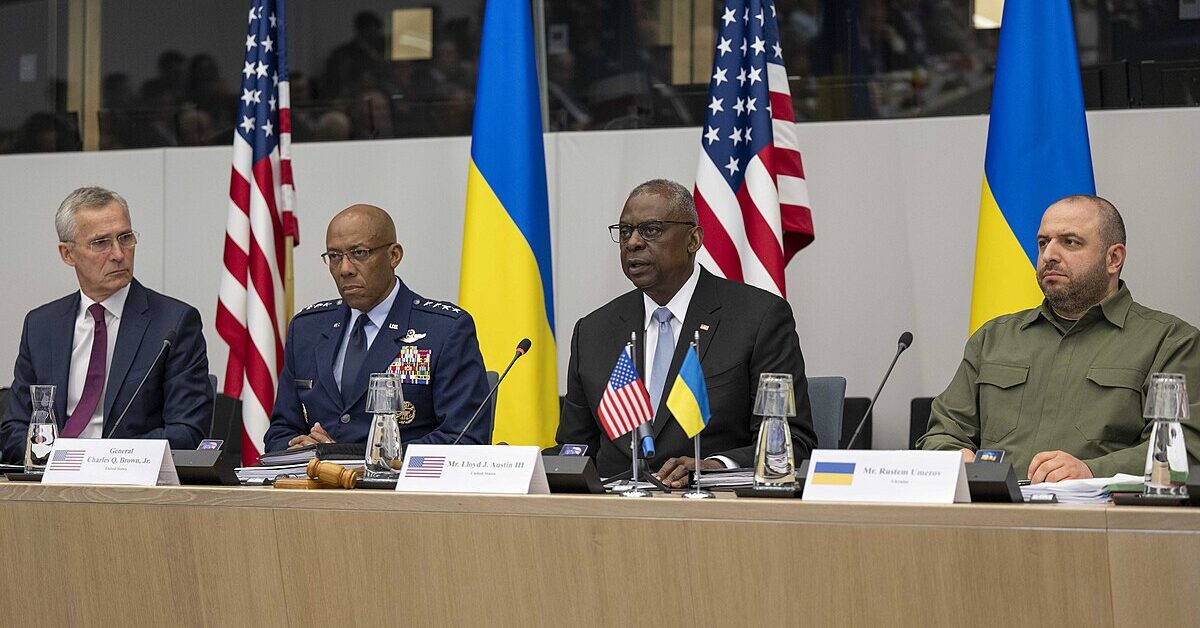
Lloyd Austin, third from left, was secretary of defense when this photo was taken in 2024. Austin sits next to Gen. Charles Q. Brown Jr., chairman of the Joint Chiefs of Staff, at a Ukraine Defense Contract Group meeting in Brussels, Belgium. Austin resigned when the Trump administration took office, and President Trump promptly fired Brown as too “woke.” It was unprecedented for two Black men to hold these top two military positions simultaneously. They are flanked by NATO Secretary General Jens Stoltenberg, left, and Rustem Umerov of Ukraine. (Credit: Department of Defense)
Documented: Trump Fires Blacks, Hires Whites
It’s always reasuring to have documentation for one’s suspicions, and The New York Times has now done so for those who have called the Trump administration anti-Black, if not downright racist.
The interracial team of Elisabeth Bumiller, former Washington Bureau chief, and Erica L. Green, a White House correspondent, wrote about the “series of firings of Black officials from high-profile positions in an overwhelmingly white administration that has banished all diversity, equity and inclusion programs across the federal government.
“And while there are no statistics on firings by race,” they continued, “an examination of the people Mr. Trump is appointing to fill those and other jobs shows a stark trend.
“Of the president’s 98 Senate-confirmed appointees to the administration’s most senior leadership roles in its first 200 days, ending on Aug. 7, only two, or 2 percent — Scott Turner, the secretary of Housing and Urban Development, and Earl G. Matthews, the Defense Department’s general counsel — are Black. . . .
“The statistics were compiled for the Brookings Institution by Kathryn Dunn Tenpas, a senior fellow at the University of Virginia’s Miller Center who specializes in presidential personnel. . . .
“Trump seemed to be very proud to have ‘Blacks for Trump’ at all of his rallies and behind the podium, but not behind him in the cabinet meetings,’ said Dedrick Asante-Muhammad, the president of the Joint Center for Political and Economic Studies, a think tank that tracks Black representation in government leadership, among other markers. The dearth of Black people at the top, he said, would result in ‘radical substantive policy changes’ for African Americans.
“ ‘When we’re not in the room,’ he said, ‘things don’t tend to go better for us.’ . . .
” Those terminated include Carla Hayden, the first African-American and the first woman to be the librarian of Congress; Gwynne A. Wilcox, the first Black woman to serve as a member of the National Labor Relations Board; and Alvin Brown, the only Black member of the National Transportation Safety Board at the time of his removal. . . .”
- Jamelle Bouie, New York Times: ‘The Most Epic Political Victory Our Country Has Ever Seen’ Is Nothing of the Kind (Oct. 1)
- Aaron Morrison and Jaylen Green, Associated Press: Black church leaders reject Charlie Kirk martyrdom and point to his race rhetoric
- Roy S. Johnson, al.com: Hey, Black Trump voters, are y’all still good? (Aug. 23)
- David Cay Johnston, dcreport.org: Trump’s Racism and Misogyny in Action (May 27)
- Greg Morrison, NABJ Black News & Views: Black historians strategize how to preserve culture in racially hostile climate
- Kevin Powell, Newsweek: America, the Smithsonian, and Slavery (Aug. 21)
- Julia Prodis Sulek, Bay Area News Group: Kamala Harris opens up about her election night pain
- Michelle Singletary, Washington Post: Changing the Smithsonian doesn’t erase slavery and the racial wealth gap (Aug. 22).
Trump Presses YouTube TV on Univision’s Behalf
“President Donald Trump over the weekend pressed Google-owned YouTube TV to restore access to Univision on the streaming platform, a striking embrace of the country’s most-watched Spanish-language network by a president who this year signed an order declaring English the nation’s official language,” Sabrina Rodriguez reported Wednesday for the Washington Post.
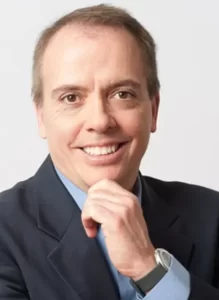 As reported in this space last month, Hannah Miller reported Sept 25 for Bloomberg that Daniel Alegre (pictured), Univision’s CEO, “said Univision is adapting to a changing marketplace. In the years since the Trump campaign labeled Univision‘ a mouthpiece’ for the Democratic Party, the network has made ”a concerted effort’ to be more centrist,’ its CEO said, and ditch its reputation as left leaning.”
“Trump and lawmakers in both parties are drawing attention to the ongoing dispute between Google and Univision over carriage fees. YouTube TV dropped Univision from its streaming package last week after the two companies were unable to reach a new contract.
“The dispute provides the latest example of Trump pressuring a media company to take an action that he believes will be politically beneficial for Republicans, and of the president involving himself in a clash between two private businesses. . . . “
Jim Mitchell, Editorialist, Dies at 71 of Prostate Cancer
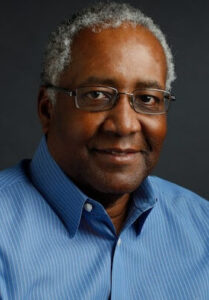 “Jim Mitchell, longtime member of The Dallas Morning News editorial board, died quietly in home hospice care in Carrollton on Tuesday morning from prostate cancer,” Cheryl Hall reported Tuesday for the Morning News. “He was 71.”
” ‘The News was his extended family, and he was devoted to it.’ ”
Hall noted that Mitchell was a pack rat who nevertheless could immediately find any document he was looking for in the pile on his desk. He was also the first person in the office each day, and had to be forced to take a vacation.
Colleagues at the old TImes-Union in Rochester, N.Y., the first place Mitchell worked after college, said of him on social media, “He was such a lovely man,” and “a gentle soul, for sure.”
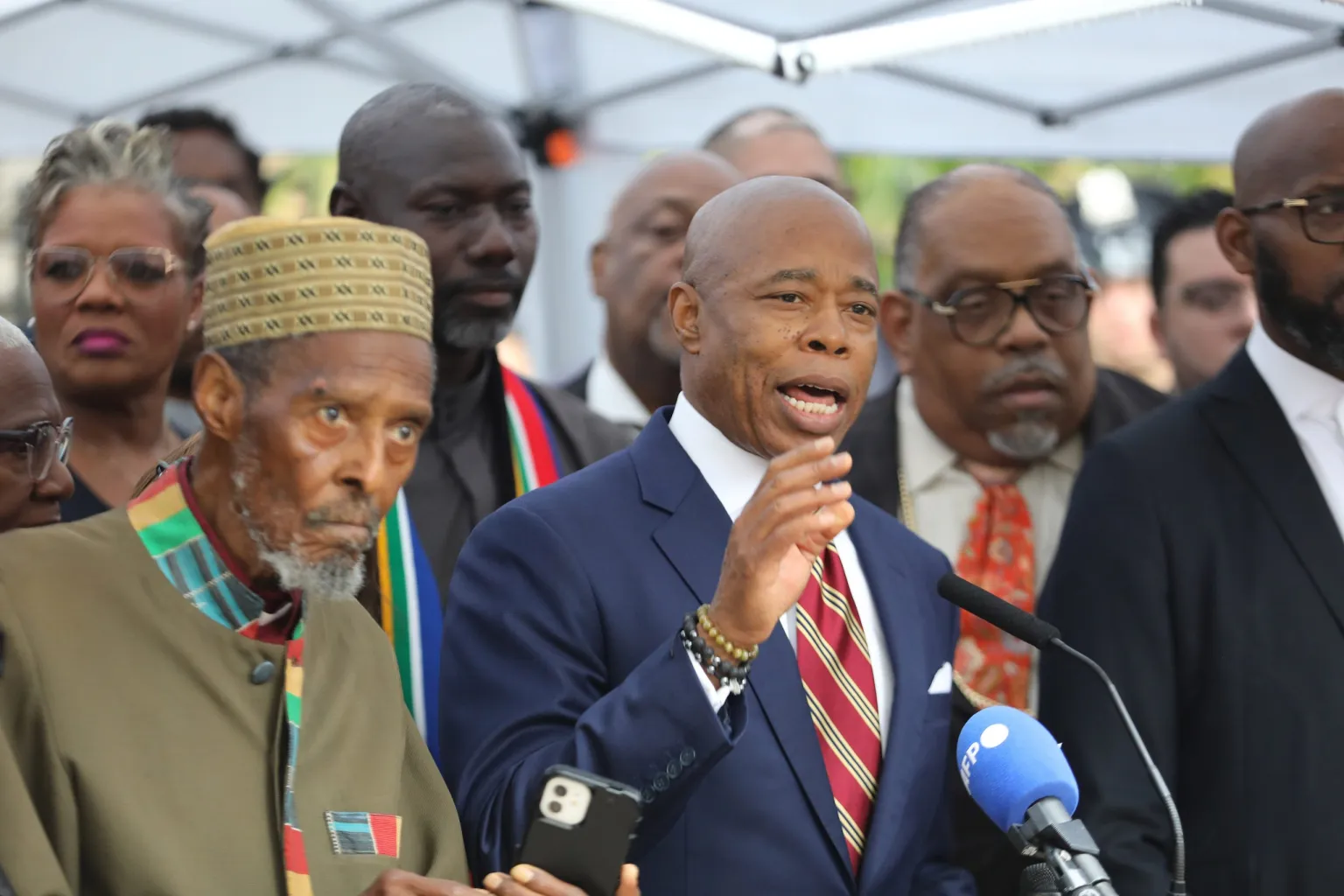
New York Mayor Eric Adams, standing in September 2024 with the Rev. Herbert Daughtry outside Gracie Mansion, vowed to fight federal bribery and other charges. (Credit: Alex Krales/The City)
Eric Adams Is Charismatic but Loathes the Press
In the days since New York Mayor Eric Adams dropped his flailing reelection bid in late September, Charlotte Klein wrote Wednesday for New York magazine, “reporters have told me about the unique challenges of covering a mayor who both radiated charisma and openly loathed the press, who could connect with voters even as he delivered one head-scratching sound bite after another, and who could be maddeningly opaque about the most trivial matters while signaling quite clearly that his administration would be corrupt.
“ ‘If you can’t be honest about what you eat and where you sleep, what else are you lying about?’ the City Hall reporter said. Adams was a source of tremendous content — but at what cost?’ ”
Klein also wrote, “Reporters came to know Adams as something of comedian, such as when he made off-the-cuff remarks about how he used to ‘jump the turnstile’ to visit ‘a shorty’ out in Rockaway, or wore a two-sizes-too-small shirt that said ‘In God We Trust’ in Italian, which he nevertheless insisted was in Spanish. He was also extremely thin-skinned — a defensiveness he ‘just couldn’t overcome,’as one journalist put it — and this quickly eroded his relationship with the press.
“Six weeks after taking office, following a New York Daily News headline about an unsuccessful trip to Albany, Adams railed against the largely white press corps, suggesting racial bias was resulting in unfair coverage. ‘The way in which he called that out was to use it as a shield to claim that anything reporters were writing about his administration was somehow racist,’ said a City Hall reporter. ‘Saying that shortly after taking office, when not that much bad shit had even happened yet, was just kind of jaw-dropping.’ From there, it was ‘a steady downward spiral,’ said another reporter. . . .”
Julian Rodriguez of the University of Texas, Arlington, accepts the Barry Bingham Sr. Fellowship award in 2015 at the Association of Opinion Journalists Symposium, held at the Poynter Institute. (Credit: John McClelland/YouTube)
Wednesday Is Deadline to Nominate J-Educator
Beginning in 1990, the Association of Opinion Journalists annually granted a Barry Bingham Sr. Fellowship — actually an award — “in recognition of an educator’s outstanding efforts to encourage minority students in the field of journalism.”
Journal-isms assumed stewardship of the award last year, handed the baton from the News Leaders Association, which absorbed the now-defunct Association of Opinion Journalists but in 2024, itself dissolved.
Since 2000, the recipient had been awarded an honorarium of $1,000 to be used to “further work in progress or begin a new project.”
This will be the first such award under the new affiliation.
Past winners include James Hawkins, Florida A&M University (1990); Larry Kaggwa, Howard University (1992); Ben Holman, University of Maryland (1996); Linda Jones, Roosevelt University, Chicago (1998); Ramon Chavez, University of Colorado, Boulder (1999); Erna Smith, San Francisco State (2000); Joseph Selden, Penn State University (2001); Cheryl Smith, Paul Quinn College (2002); Rose Richard, Marquette University (2003).
Also, Leara D. Rhodes, University of Georgia (2004); Denny McAuliffe, University of Montana (2005); Pearl Stewart, Black College Wire (2006); Valerie White, Florida A&M University (2007); Phillip Dixon, Howard University (2008); Bruce DePyssler, North Carolina Central University (2009); Sree Sreenivasan, Columbia University (2010); Yvonne Latty, New York University (2011); Michelle Johnson, Boston University (2012); Vanessa Shelton, University of Iowa (2013); William Drummond, University of California at Berkeley (2014); Julian Rodriguez of the University of Texas at Arlington (2015); David G. Armstrong, Georgia State University (2016); Gerald Jordan, University of Arkansas (2017), Bill Celis, University of Southern California (2018); Laura Castañeda, University of Southern California (2019); Mei-Ling Hopgood, Northwestern University (2020); Wayne Dawkins, Morgan State University (2021); Marquita Smith of the University of Mississippi (2022), and Rachel Swarns of New York University (2023).
Nominations may be emailed to Richard Prince, who chairs the awards committee, at richardprince (at) hotmail.com. The deadline is Oct. 15. Please use that address only for Bingham fellowship matters.
Feel free to urge others to write supporting letters for your nominee, especially if they are students or former students of the person you favor.
Short Takes
 Garrett Bradley (pictured), “The first Black woman to win Best Director in the Sundance Film Festival’s U.S. Documentary competition,” and Tonika Lewis Johnson, a Chicago-based photographer and social justice artist, are two of the five Black artists, scientists, musicians, and activists among the 22 recipients of what’s popularly known as the “genius gtrant,” an $800,000, no-strings-attached award from the nonprofit MacArthur Foundation Chicago, Liz Courquet-Lesaulnier reported Wednesday for Word in Black.
- “With days left before journalists covering the Pentagon must sign on to a new set of guidelines to retain physical access to the [Defense] department, major US news companies – and organizations representing their interests – remain concerned about specific policies they fear will stifle independent reporting on the Pentagon,” Jeremy Barr wrote Thursday for the Guardian.
- “A New York City judge has dismissed a civil summons against Alex O’Keefe, a former writer for FX’s hit show ‘The Bear’ who was removed from a commuter train in handcuffs last month following a seating dispute,” Jake Offenhartz reported Wednesday for the Associated Press. “O’Keefe, who is Black, has accused transit officers of targeting him over his race after another passenger complained about how O’Keefe was sitting on a Metro-North train. . . .”
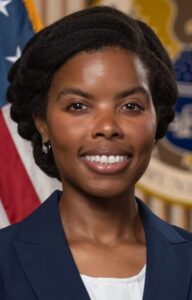 “Copper theft isn’t just knocking stations off the air. It’s now at the center of a national conversation about public safety and whether the law is doing enough to protect America’s communications infrastructure, said the newest commissioner of the Federal Communications Commission, Olivia Trusty, Cameron Coats reported Wednesday for Radio Ink. Coats also wrote, “In Van Nuys, CA, thieves severed 13 fiber cables, disrupting hospitals, schools, a military base, and 50,000 customers. “ ‘That is not mischief,’ Trusty said. ‘That is a direct attack on the lifeblood of our economy and our daily life.’ “
- The New York Amsterdam News is warning social media users that a City Council candidate is using its logo to falsely identify a story as having run in the Amsterdam News. “Our brand has been used to perpetuate a clear falsehood,” Executive Editor Madison J. Gray wrote Wednesday.
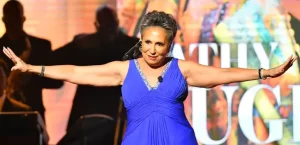 “On October 3rd, WOL News Talk 1450 in Washington, D.C., celebrated its 45th anniversary, a moment that showcased the perseverance and tenacity of its founder, Urban One maven Cathy Hughes (pictured),” Brandon Caldwell wrote Friday for BlackAmericaWeb. ”The radio station, which serves the D.C. area with today’s news, politics, and community events, was the first station in the Urban One family. Currently, the company has stations that stretch from D.C. to Atlanta, Baltimore, Charlotte, Cincinnati, Cleveland, Columbus, Dallas, Houston, Indianapolis, Philadelphia, Raleigh and Richmond.”
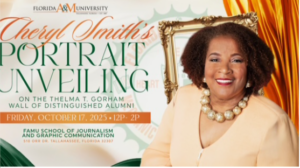 Cheryl Smith (pictured),is a Dallas-Fort Worth-based publisher and editor at I-Messenger Media LLC.. She has been active in the National Newspaper Publishers Association, the National Association of Black Journalists and the Society of Professional Journalists. Smith is being honored on Oct 17 with the unveiling of her portrait on the Thelma T. Gorham Distinguished Alumni Wall in the School of Journalism and Graphic Communication at Florida A&M University. She is a 1980 FAMU graduate.
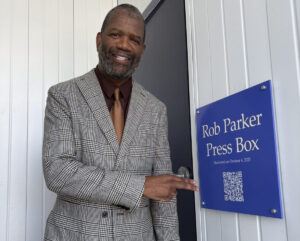
- Sports journalist Rob Parker (pictured), a member of the Class of 1986 at Southern Connecticut State University, “saw his name immortalized in a halftime ceremony unveiling the Rob Parker Press Box overlooking the gridiron‘’ during homecoming, Jaime C. Harris reported Thursday for the New York Amsterdam News.
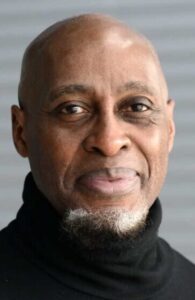 Phillip Martin (pictured) is retiring from his position as a senior investigative reporter for GBH in Boston. Martin joined the station in 2010 and was also a panelist for the station’s Basic Black public affairs program. Martin previously worked for NPR as a race relations correspondent and later as a supervising senior editor, Current reported. “I plan to continue to work on various projects to help ensure that democracy does not die in darkness alongside other journalists who continue to try to give real meaning to that motto,” Martin said on LinkedIn. He called attention to his final story for the GBH News Center for Investigative Reporting, on human trafficking.
- “Police officers — working for the dictatorship — are pressuring independent journalists who remain in Nicaragua to hand over information about other colleagues, including those outside the country, according to the report on Attacks on Press Freedom for the period July to September this year, published by the Foundation for Freedom of Expression and Democracy (FLED, for its Spanish acronym).”
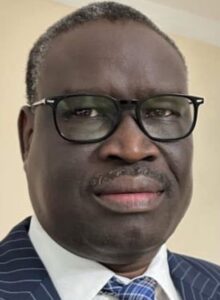 The Committee to Protect Journalists called on authorities in the United Arab Emirates Tuesday to explain the detention of South Sudanese freelance commentator Samuel Peter Oyay (pictured), who was arrested at his home in Dubai on September 30, and to immediately disclose his whereabouts. Oyay’s wife, Vivian Johnson, told the independent South Sudanese daily Radio Tamazuj that six security personnel arrived at their home at 1 a.m. to arrest him and searched the premises for about two hours. She said she and their children were locked in a room, her phone was confiscated, and no explanation was given. Authorities reportedly told her only that Oyay would be held for five days for ‘investigation.’ ”
