

After Unfair Jabs, They Often ‘Seemed Fine With It’
Journalism DEI Efforts Found to Be in Decline
Another Blow to ‘Minority-Serving Institutions’
Slain Charlie Kirk Also Known for Insulting Black Achievers
Baltimore Mayor Calls Out Reporter’s Crips Reference
CBS News Closer to Conservative Leadership
Survey Finds Blacks Lead in Consuming Local News
Comcast, NBC Award $2.5 Million to Local Nonprofits
Services for Ron Harris Planned for Memphis, D.C.
Short Takes: Omar Jimenez; Rosa Flores; Brian Fung; selecting the images in news stories; Stephen A Smith; documentary on history of HBCUs; in favor of cashless bail; Cuba’s International Journalists’ Day; exiled Latin American journalists; kidnapped Ghanaian journalist; spyware inserted in Kenyan journalists’ phones; injured in Nepal clashes.
Homepage photo: Kamala Harris with her forthcoming book, to be published Sept. 23.
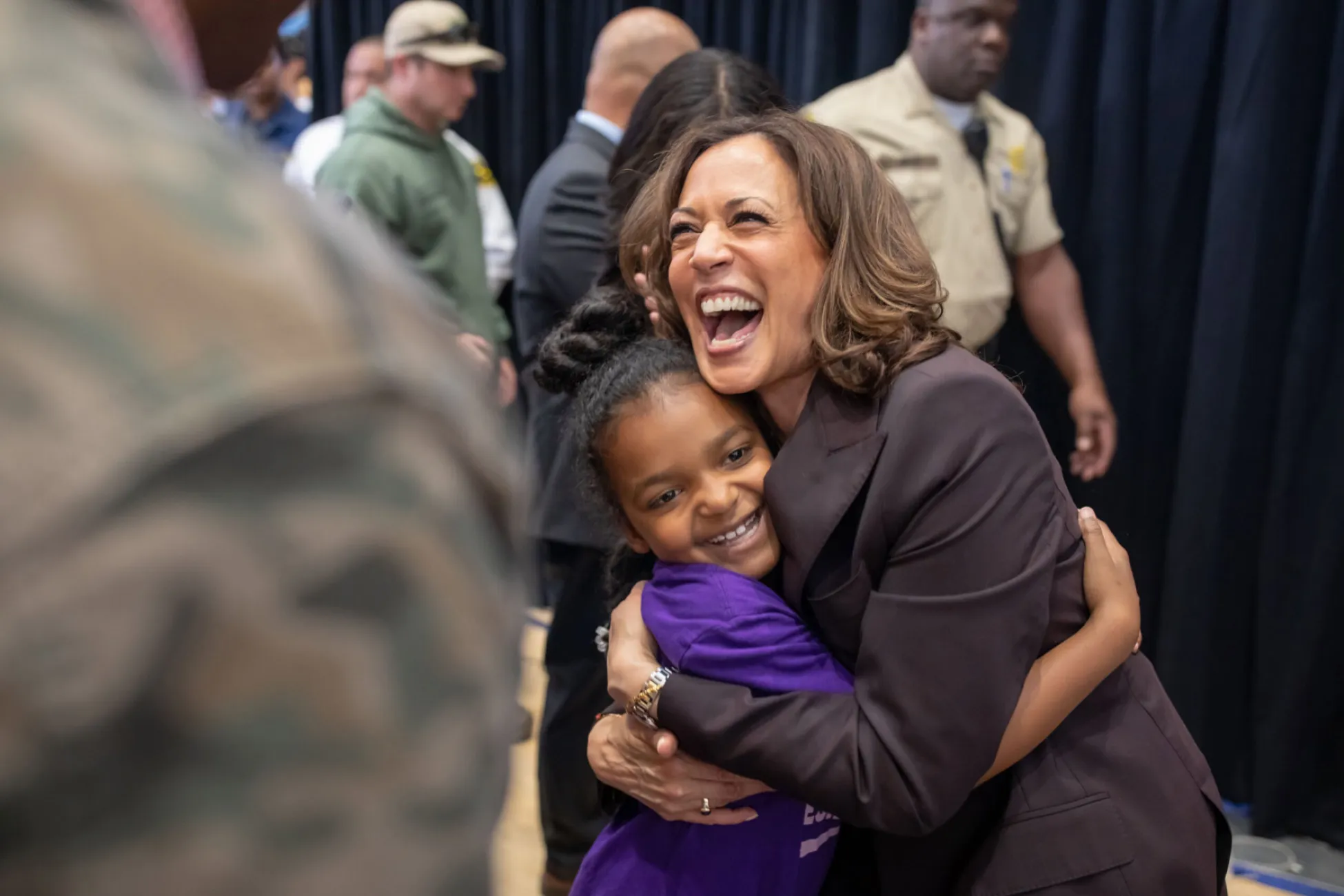
The book excerpt shows another Kamala Harris: “ blunt, knowing, fervent, occasionally profane, slyly funny,” said Jeffrey Goldberg, editor of the Atlantic.
After Unfair Jabs, They Often ‘Seemed Fine With It’
“When Fox News attacked me on everything from my laugh, to my tone of voice, to whom I’d dated in my 20s, or claimed I was a ‘DEI hire,’ the White House rarely pushed back with my actual résumé,“ Kamala Harris writes in her new campaign memoir, “107 Days.” “Two terms elected D.A., top cop in the second-largest department of justice in the United States, senator representing one in eight Americans.
“Lorraine Voles, my chief of staff, constantly had to advocate for my role at events: ‘She’s not going to stand there like a potted plant. Give her two minutes of remarks. Have her introduce the president.’
“They had a huge comms team; they had Karine Jean-Pierre briefing in the pressroom every day. But getting anything positive said about my work or any defense against untrue attacks was almost impossible.”
The Atlantic released the first excerpt from Harris’ book Wednesday. “The biggest surprise in Kamala Harris’ forthcoming account of her rough-and-ready, intense, and absurdly condensed campaign for president, 107 Days, may be that it is filled with surprises,” wrote Atlantic Editor Jeffrey Goldberg.
“I read it last week, expecting lawyerly calibration and discretion. This careful Harris is present, but so too is another Harris: blunt, knowing, fervent, occasionally profane, slyly funny. As you will see in the following excerpt — and throughout this newsworthy book — she no longer seems particularly interested in holding back.”
Most media accounts focused on Harris saying that Biden’s re-election bid was “reckless.” “The stakes were simply too high. This wasn’t a choice that should have been left to an individual’s ego, an individual’s ambition. It should have been more than a personal decision,” Harris wrote.
In 2019, Karine Jean-Pierre discusses the moment when she blocked then-Sen. Kamala Harris from a male protester who jumped on the event stage at a San Francisco forum. Jean-Pierre said Thursday she had no comment on Harris’ book excerpt. (Credit: MSNBC/YouTube)
She gave this example of what she said was the White House’s failure to have her back:
“In 2021, I was dispatched to the Élysée Palace to help reset our tattered relationship with France after we signed the Australia-U.K.-U.S. security pact. Australia had agreed to buy submarines from France but scrapped that contract when we and the U.K. agreed to supply Australia with nuclear subs under the new AUKUS agreement instead. This had caused tremendous friction.
“In our meeting, Emmanuel Macron and I warmed the chill by focusing on our many areas of cooperation, such as space exploration, climate change, transatlantic security, cybersecurity, the Sahel, and the Indo-Pacific.
“On that trip, I was invited to visit the renowned Pasteur Institute, where my mother had worked on research related to breast cancer. I was speaking informally with the scientists there about how I wished politicians would more closely follow the scientific method: testing a hypothesis and adjusting according to results, rather than coming in with the Plan, as if they had all the answers up front.
“I said ‘the Plan’ with exaggerated emphasis and air quotes. Fox News, the New York Post, and Newsmax went wild, claiming I’d faked a French accent. This was total nonsense, but the White House seemed glad to let reporting about my ‘gaffe’ overwhelm the significant thaw in foreign relations I’d achieved.
“Worse, I often learned that the president’s staff was adding fuel to negative narratives that sprang up around me. One narrative that took a stubborn hold was that I had a ‘chaotic’ office and unusually high staff turnover during my first year.”
In another passage, Harris wrote, “I was the first vice president to have a dedicated press pool tracking my every public move. Before me, vice presidents had what’s called a “supplemental pool,” as the first lady does, covering important events. Because of this constant attention, things that had never been especially newsworthy about the vice president were suddenly reported and scrutinized.
“And when the stories were unfair or inaccurate, the president’s inner circle seemed fine with it. Indeed, it seemed as if they decided I should be knocked down a little bit more. . . .
“When Republicans mischaracterized my role as ‘border czar,’ no one in the White House comms team helped me to effectively push back and explain what I had really been tasked to do, nor to highlight any of the progress I had achieved. I won commitments of $5.2 billion in new investments by private companies for the region. I had already seen almost a billion dollars of that money deployed, thanks to enthusiastic partners such as Mastercard, Microsoft, and Nespresso.
“I held numerous bilateral meetings with leaders throughout the region, especially with President Alejandro Giammattei in Guatemala, and later his successor, President Bernardo Arévalo. I had multiple calls with Giammattei, warning him that I expected free and fair elections; I sent my national security adviser Phil Gordon to reinforce the message in person; and I publicly supported Arévalo once the election was called.
“I met with activist groups fighting against corruption and for human rights in El Salvador, Guatemala, and Honduras. Cabinet members pitched in: Tom Vilsack at the Department of Agriculture accessed resources to train farmers in the latest methods to increase yields. . . .”
A spokesperson for Jean-Pierre messaged, “Karine has no comment on the matter.”
- Renee Graham, Boston Globe: Team Biden never gave Kamala Harris a chance (Sept. 14)
- LZ Granderson, Los Angeles Times: Biden was supposed to be a bridge. He became a roadblock (Sept. 13)
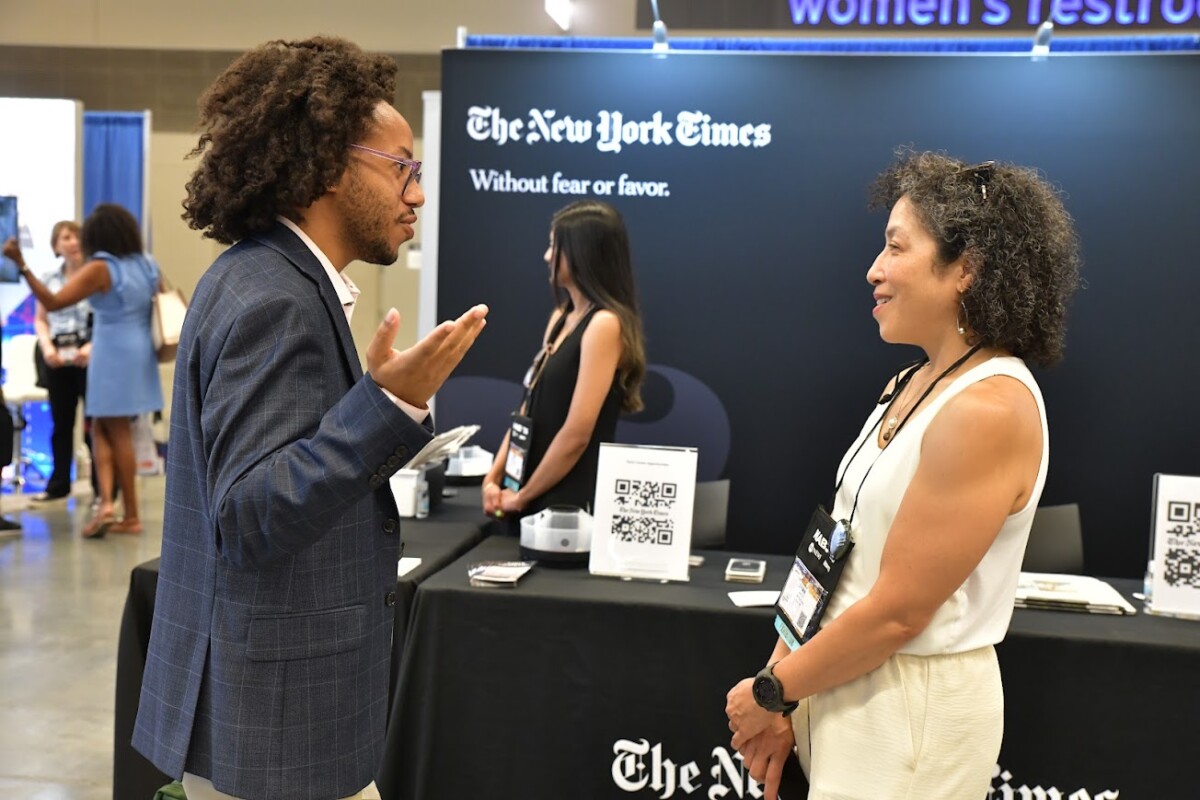
The New York Times booth at the August convention of the National Association of Black Journalists in Cleveland. In 2022, 51 news organizations exhibited at the joint convention of NABJ and the National Association of Hispanic Journalists. This year, just 34 newsrooms exhibited at the NABJ and NAHJ conferences. (Credit: NABJ)
Journalism DEI Efforts Found to Be in Decline
“In 2020, as George Floyd’s killing and nationwide Black Lives Matter protests set off a ‘racial reckoning’ in journalism, the Maynard Institute for Journalism Education (MIJE) was flooded with newsroom requests for company-wide diversity trainings,” Hanaa‘ Tameez reported Thursday for Nieman Lab.
“MIJE, a nonprofit founded in 1977, focuses on ‘equity, belonging, and diversity in news.’ Martin Reynolds, the organization’s co-executive director, conducted 20 newsroom trainings in a single month in 2020. Between 2020 and 2022, MIJE earned $1.2 million from its training work.
“This year, Reynolds said, MIJE is planning for exactly $0 in income from diversity trainings. The demand has collapsed.
“In 2022, I reported, ‘American journalism’s “racial reckoning” still has lots of reckoning to do.’ Three years later, what we’re seeing looks less like a reckoning and more like a retreat from diversity, equity, and inclusion (DEI).
“The shift, fueled in part by the Trump administration’s efforts to quash diversity initiatives throughout the country, extends well beyond newsrooms. A recent poll from the AP-NORC Center for Public Affairs found that about 30% of Americans believe DEI programs increase discrimination; the perception of discrimination against Black, Hispanic and Asian people has also decreased since 2021. The number of S&P 500 companies that reference “diversity, equity, and inclusion” in their annual reports has fallen by nearly 60% since 2024. (My own employer, Harvard University, disbanded its DEI office.)”
Tameez also found:
- “Race, diversity, and identity products are also being shut down. This month, Politico shuttered The Recast, its four-year-old newsletter about politics, race, and power. Bloomberg stopped sending its Equality newsletter in May (though its Equality reporting team remains). And last June, The Washington Post put its ‘About US’ newsletter (‘Candid conversations about race and identity in 21st century America’) ‘on hiatus’; it has not returned. . . .
- “Fewer newsrooms seem to be recruiting at the National Association for Black Journalists (NABJ) and National Association for Hispanic Journalists (NAHJ) conferences. In 2022, 51 news organizations exhibited at the joint NABJ-NAHJ annual convention. This year, just 34 newsrooms exhibited at the NABJ and NAHJ conferences. . . .
- “Media companies are also less likely to publicly share workforce data. . . . “
- Of 169 full-time journalism jobs related to race, diversity, and equality that were posted and filled between June 2020 and December 2024, “Most of the roles created (62%) were reporting positions, meaning that the majority of the roles didn’t have explicit power to implement change in newsroom operations or culture. . . .
- “News organizations may have lessened their focus on diversity-related jobs well before [President] Trump’s second term began. Diverse hiring in general has also slowed. . . .”
- The Maynard Institute “is not alone in seeing decreased demand for its trainings: Companies of all types are cutting them. . . .
- “Over the past few years, journalists and other staffers have banded together to create diversity committees in their newsrooms. One goal of these committees was to improve elements of the workplace beyond diverse hiring. The committees and teams have had mixed success. . . .
- “Some journalists I spoke with said their companies have been reluctant to increase salaries, even if doing so would help retain diverse talent. . . .
- “Explicit language around DEI is going away, too. . . .”
- Gretchen A. Peck, Editor & Publisher: What’s next for DEI in newsrooms? Legal risks, political pressure and resilience (Aug. 5)
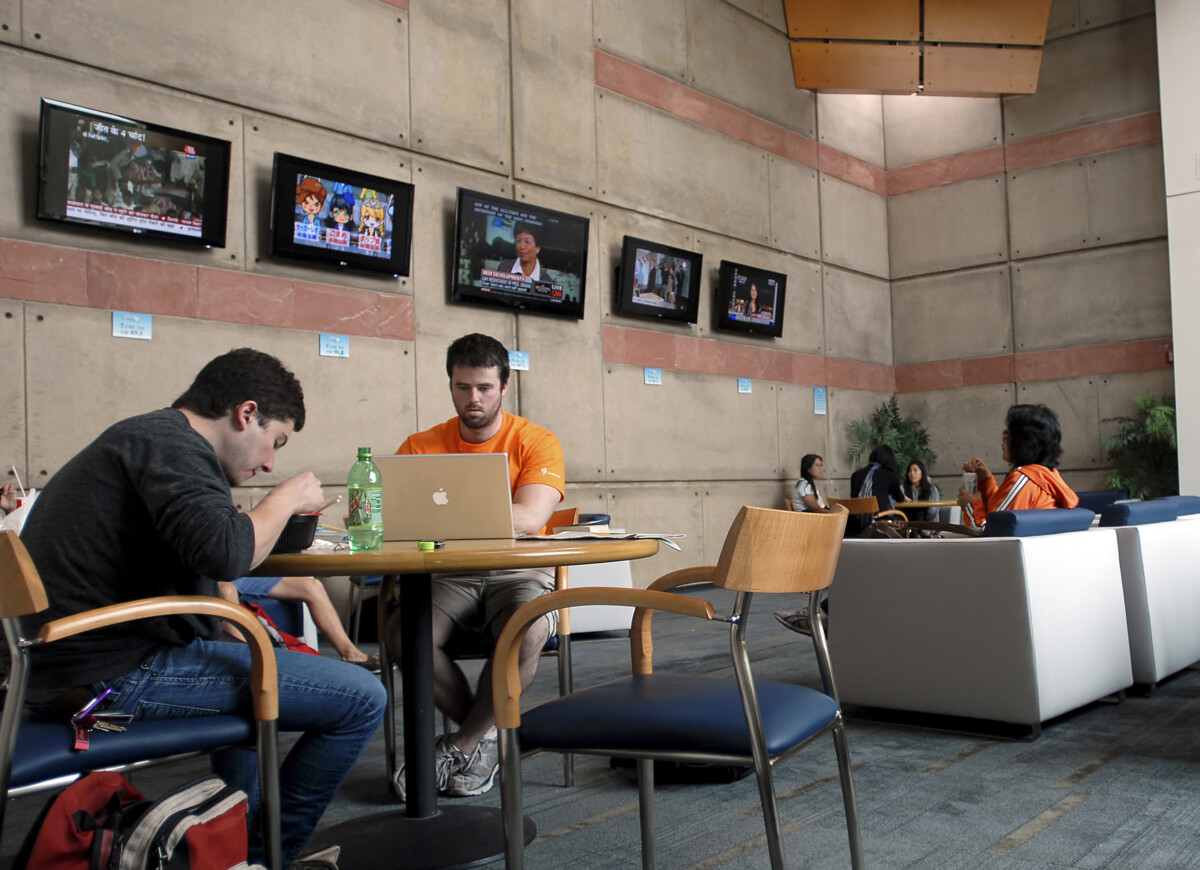
The Bruin Viewpoint Room at UCLA, site of a town hall held by the UCLA Hispanic-serving institution initiative. (Credit: Daily Bruin, UCLA)
Another Blow to ‘Minority-Serving Institutions’
“The U.S. Department of Education plans to end discretionary grant programs for a slew of minority-serving institutions, officials announced Wednesday — after Congress had already appropriated hundreds of thousands of dollars to those programs,” Sara Weissman reported Thursday for Inside Higher Ed. “The move stunned MSI advocates, who argue the department doesn’t have the authority to nix them.
“The Education Department asserted that these programs amount to ‘discrimination’ and are ‘unconstitutional’ because they require colleges to enroll a certain percentage of students from a particular racial or ethnic background to qualify. For example, HSIs [Hispanic-serving institutions] must enroll at least a quarter Hispanic students, among other requirements, to earn the federal designation”
The department said it would reprogram funding from these programs, some located at colleges that educate a large share of Black and Native students but were not founded as historically Black colleges or tribal colleges. Those programs:
- Strengthening Alaska Native and Native Hawaiian-Serving Institutions (Title III Part A);
- Strengthening Predominantly Black Institutions (Title III Part A);
- Strengthening Asian American- and Native American Pacific Islander-Serving Institutions (Title III Part A);
- Strengthening Native American-Serving Nontribal Institutions (Title III Part A);
- Minority Science and Engineering Improvement (Title III Part E);
- Developing Hispanic-Serving Institutions (Title V Part A); and
- Promoting Postbaccalaureate Opportunities for Hispanic Americans (Title V Part B).
Jamal Watson wrote for Diverse: Issues in Higher Education: The California State University system, where 21 of its 22 campuses qualify as Hispanic-Serving Institutions, will be among those hit hardest by the funding cuts. CSU Chancellor Dr. Mildred García called the decision ‘deeply troubling’ and warned it would cause ‘immediate impact and irreparable harm to our entire community.’
“Hispanic students account for nearly half of the CSU’s total student population,” said García. “Without this funding, students will lose the critical support they need to succeed in the classroom, complete their degrees on time, and achieve social mobility for themselves and their families.”
- Lauren Nowacki, bankrate.com: More than half of America’s HBCUs could lose access to federal financial aid
Charlie Kirk said Joy Reid, Ketanji Brown Jackson, Shiela Jackson Lee, and Michelle Obama used affirmative action because they “do not have the brain processing power to otherwise be taken really seriously” so they had to “steal a white person’s slot.” pic.twitter.com/W6DgzF4r2l
— PatriotTakes 🇺🇸 (@patriottakes) July 14, 2023
If no image is visible, please consider using a different browser.
Slain Kirk Also Known for Insulting Black Achievers
Charlie Kirk, the conservative flame-thrower who was killed Wednesday, is being hailed as a martyr by the Christian right, The New York Times tells us, but a glance at some of his comments on race over the years brings to mind other ways to describe him.
Purveyor of “sexist, racist ugliness,” was the way Arizona Republic columnist EJ Montini characterized Kirk in 2023 after Kirk tweeted that he was “envisioning a fantasy scenario on an airplane in which an announcement is made, saying, ‘in the spirit of affirmative [action] we have Ramon and Cadillac as your two pilots,’ adding, ‘they’ve never flown before but they are Black.’ ”
That was the same month in which Kirk told his radio listeners that journalist Joy Reid, Supreme Court Justice Ketanji Brown Jackson, the late Rep. Sheila Jackson Lee, D-Texas, and former first lady Michelle Obama used affirmative action because they “do not have the brain processing power to otherwise be taken really seriously” so they had to “steal a white person’s slot.”
Even Black conservative Armstrong Williams couldn’t abide Kirk’s comments about Martin Luther King Jr.
Williams wrote in his syndicated column, “Speaking to students and teachers at American Fest, a political convention organized by Kirk’s Turning Point, Kirk insisted, ‘MLK [Martin Luther King] was awful. He’s not a good person. He said one good thing he actually didn’t believe.’ ”’
Williams added, “Kirk has never risked that last full measure of devotion for any principle higher than himself. He epitomizes cynical opportunism on steroids. . . . Kirk apparently yearns for the day to return to segregated education, racist grandfather clauses for voting, and Satchel Paige pitching exclusively in Negro League Baseball.”
In February, the Florida State University chapter of the NAACP protested Kirk’s appearance on that campus. “Kirk’s history of racist, homophobic and transphobic rhetoric stands in direct opposition to FSU’s stated values of diversity, equity and inclusion,” NAACP’s FSU Chapter President Alysha Dorcely said in a statement. “His presence at FSU creates a hostile and unsafe environment for Black students, LGBTQ+ students and all marginalized communities.”
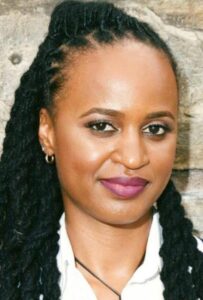 And on social media after his death Wednesday, journalist and college professor Stacey Patton (pictured) wrote to her 215,000 Facebook followers, “I am on Charlie Kirk’s hit list.
“His so-called ‘Professor Watchlist,’ run under the umbrella of Turning Point USA, is nothing more than a digital hit list for academics who dare to speak truth to power. I landed there in 2024 after writing commentary that inflamed the MAGA faithful. And once my name went up, the harassment machine roared to life.
“For weeks my inbox and voicemail were deluged. Mostly white men spat venom through the phone: ‘bitch,’ ‘c*nt,’ ‘n****r.’ They threatened all manner of violence,” she continued.
“They overwhelmed the university’s PR lines and the president’s office with calls demanding that I be fired,” Patton wrote. “The flood was so relentless that the head of campus security reached out to offer me an escort, because they feared one of these keyboard soldiers might step out of his basement and come do me harm.
“And I am not unique,” she added.
“Kirk’s Watchlist has terrorized legions of professors across this country. Women, Black faculty, queer scholars, basically anyone who challenged white supremacy, gun culture, or Christian nationalism suddenly found themselves targets of coordinated abuse,” Patton wrote.
Kirk, a conservative activist and close ally of President Trump who played an influential role in rallying young Republican voters, was shot and killed at a Utah college event in what the governor called a political assassination. The assailant was still at large Thursday night and the slaying prompted appeals to end political violence.
But media outlets reported precious little about his racial views.
Trump ordered flags flown at half-staff and called Kirk “a martyr for truth and freedom,” then said he would posthumously award Kirk the Presidential Medal of Freedom.
- Ashley Ahn and Maxine Joselow, New York Times:Where Charlie Kirk Stood on Key Political Issues
- Bill Bowkett, the Standard, Britain: Good Morning Britain guest sparks fury as he compares Charlie Kirk to ex-KKK leader hours after fatal shooting
- Editor & Publisher: After the Kirk shooting, Peter Laufer warns: Journalism is more dangerous than ever
- Nehemiah Frank and Ezekiel J. Walker, Black Wall Street Times: Charlie Kirk Is Dead — But Black America Remembers His Racism
- J.R. Gamble, the Shadow League, “The Great, Legendary Charlie Kirk”: Conservative Leader Was A High School Quarterback In Wheeling, Illinois With An ESPN Recruiting Profile and Captain Of Varsity Basketball Team
- James Hibberd, Hollywood Reporter: MAGA Blames ‘South Park’ for Charlie Kirk Assassination as Comedy Central Pulls Episode
-
Jordan Liles, Snopes.com: Charlie Kirk once said some gun deaths ‘worth it’ in order to have Second Amendment
- Elie Mystal, The Nation: How to Canonize a White Supremacist (Sept. 12)
- Joey Nolfi, Entertainment Weekly: MSNBC fires Matthew Dowd over on-air comments about Charlie Kirk: ‘Insensitive and unacceptable’
- Carron J. Phillips, Substack: Stephen A. Smith, and the chronic irresponsibility in political commentary
- Brett Schenker, Graphic Policy: DC [Comics] Cancels Red Hood After a Single Issue After Pressure
- Chris Sommerfeldt and Graham Rayman, Daily News, New York: Adams admin official fired after calling Charlie Kirk killing ‘karma’ (Sept. 12)
- Jackson Thompson, Fox News: Stephen A Smith condemns anyone celebrating Charlie Kirk’s assassination, praises Yankees for tribute
- Steven Walker, Orlando Sentinel: Florida warns teachers not to post negatively about Charlie Kirk
- Joan Walsh, The Nation: Let’s Not Forget Who Charlie Kirk Really Was
View this post on Instagram
Baltimore Mayor Calls Out Reporter’s Crips Reference
“Baltimore City Mayor Brandon Scott called out a local journalist who implied that a member of his staff was a part of the street gang, The Crips, simply because he was wearing a blue cap,” Gerren Keith Gaynor reported Wednesday for the Grio.
“Y’all according to Gary from Sinclair (Fox45) any black man in Baltimore with a blue hat and hoodie must be a crip. A blue hat in Baltimore = Crip? In Baltimore? These are the kind of questions being leveled against frontline community violence interrupters by MAGA activist, Sinclair reporter, and former RNC Delegate Gary Collins,” Mayor Scott captioned in a post with a screenshot of an email Collins sent to City Hall.
“ ‘This is ridiculous, this is racist, this is dangerous and this is unacceptable,’ said Scott.
Station officials did not respond to a request for comment.
CBS News Closer to Conservative Leadership
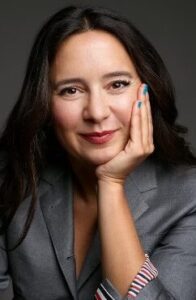 “Bari Weiss (pictured) has spent the past few years leading The Free Press, a scrappy online media start-up that was founded as a rebuke to traditional news organizations. Now, she is closing in on a leadership role at CBS News, the country’s quintessential traditional TV news organization,” Lauren Hirsch and Benjamin Mullin reported Wednesday for The New York Times.
“The new owner of CBS News is weighing giving Ms. Weiss the job of editor in chief or co-president of the network, as part of a broader deal to buy The Free Press, according to two people with knowledge of the deal.
“The people cautioned that the terms of a deal were not final. But even the consideration of Ms. Weiss for such a prominent role at CBS News is the strongest sign yet that the network’s new owner, David Ellison, intends to make major changes at the news organization. On Monday, the company announced that Kenneth R. Weinstein, a longtime proponent of conservative policies, would take a job focused on reviewing complaints about the network’s coverage.
- Adam Piore, Columbia Journalism Review: A Tipping Point at CBS News
- Max Tani, Semafor: View / Can Bari Weiss remake one of the oldest US news channels?
“The digital era is even more disruptive to legacy journalism because smartphones and social media put information choices – and information creation – in the hands of each consumer,” the Medill report said.
Survey Finds Blacks Lead in Consuming Local News
Blacks consume more local news — by far — than any other ethnic group, according to a new report from The Medill Local News Initiative at Northwestern University, which has been studying the digital revolution’s impact on local journalism.
“This survey of 1,101 adults examined news consumer behavior in Chicagoland, but it can be taken as a microcosm for what is happening locally across the country. The survey included the city, suburbs, exurbs and rural areas on the outskirts of the metro area,” according to the report, released Wednesday.
“The 2025 results capture the digital transformation in full force, as local news consumers – especially young adults – embrace new options for getting information,” authors said.
“A few highlights:
-
“Smartphones dominate TV: Two-thirds of those surveyed (67%) frequently use a smartphone to consume local news, ahead of television (53%), confirming the shift in preference identified in the 2024 Medill survey.
-
“Consumers are skeptical of AI: 52% of consumers are uncomfortable with local news produced mostly by artificial intelligence. However 47% approve of a supporting role for AI in news production.
-
“Content creators are more popular than local newspapers: Nearly one-third (30%) of respondents consume local news daily from content creators (such as people posting on social media and self-published writers on sites like Substack), compared to 18% who rely on local newspapers.
-
“Audiences still follow local news: The majority of Chicago-area residents (52%) consume news daily, a solid number …
-
“As Gen Z takes a pass: Just 32% of people ages 18-29 follow local news daily.”
On race, report co-author Tim Franklin, retiring professor and John M. Mutz Chair in Local News, messaged, “Sixty-five percent of Blacks said they consume local news daily, compared to 53% for Asians, 51% for whites and 45% for Hispanics. In fact, more Blacks consume local news than any group period, including older residents. That level of engagement with local news is impressive and illustrates a deep connection with the city and the region.” Stephanie Edgerly was Franklin’s co-author.
Other results, he said, “showed that Blacks are more comfortable — again, by far — with news produced mostly by AI.”
Racial breakdowns are provided in the report [PDF] on pages 13, 24, 31, 32, 40 (for the overall sample).
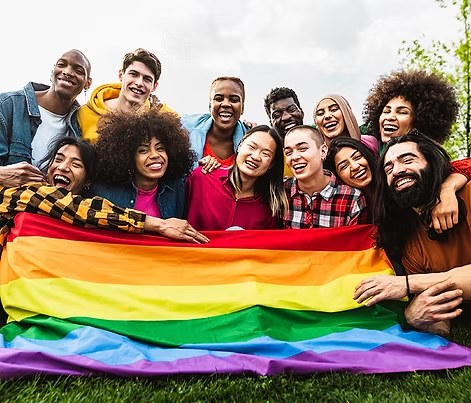
“The Northwest Connecticut BIPOC LGBTQIA+ Healing & Strengthening Retreat addresses a critical need for a safe, supportive space for individuals at the intersection of multiple marginalized identities,” the project says. It is part of the Afro Caribbean Cultural Center in Waterbury, Conn.
Comcast, NBC Award $2.5 Million to Local Nonprofits
The Afro Caribbean Cultural Center in Waterbury, Conn., is one of 69 nonprofit organizations splitting $2.5 million from Comcast NBCUniversal and NBCUniversal Local, the media companies announced Tuesday.
Each grantee services one of the 11 NBC- and Telemundo-owned stations’ markets across the nation through the 2025 NBCUniversal Local Impact Grants. Founded in 2018, NBCUniversal’s grant program has provided $21 million to 615 nonprofit organizations. See the full list of grantees here.
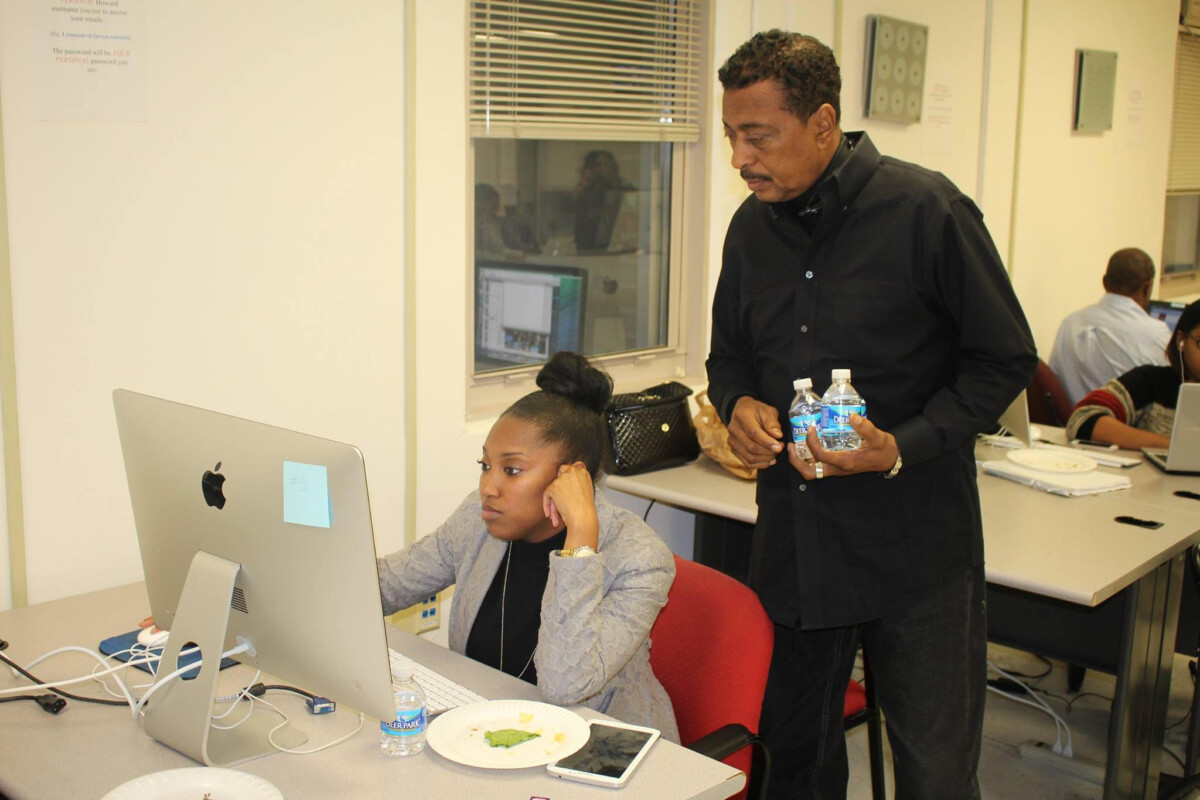
Ron Harris founded the Howard University News Service, which forwarded this photo of Harris advising a student during the 2014 elections.
Services for Ron Harris Planned for Memphis, D.C.
Services for Ronald J. Harris, the journalist and sailor whose body was found Aug 20 off the coast of Georgia, are planned for Saturday, Sept. 27, in his hometown of Memphis, Tenn., and Sept. 19 in Washington, D.C., where Harris spent much of his career, according to the family. Details to come.
Separately, members of the Black Sailors group plan to meet for a marine tribute on Sunday, Sept. 21. It is scheduled at Anchorage marina clubhouse at Baltimore Harbor from 5 p.m. to 8 p.m., organizer Lemart Presley told Journal-isms. “I’m available if they wish to go sailing,” he added.
Harris, 73, was a local reporter, editor, national correspondent, columnist, foreign correspondent, editorial writer and congressional reporter for the Los Angeles Times and St. Louis Post-Dispatch, as well as a public relations professional at Howard University..
The Georgia Bureau of Investigation Medical Examiner’s office said Thursday that an autopsy was underway.
-
- Yanick Rice Lamb, Ph.D., professor, Howard University: In Memoriam – Ronald J. Harris (Sept. 12)
Short Takes
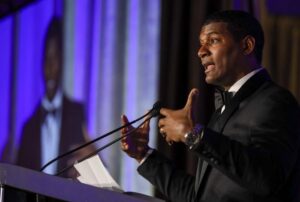 “After leading award-winning coverage for various affiliates, Omar Jimenez (pictured) is officially an anchor at CNN,” Kay Wicker wrote Tuesday for the Grio. “On Wednesday, September 10, the 31-year-old journalist announced his promotion in an Instagram post. ‘I’m officially an anchor at CNN. Some exciting things in the works! The hustle continues,’ the Emmy-winning correspondent wrote in the caption of the post that included a black and white photo of him. . . .”
-
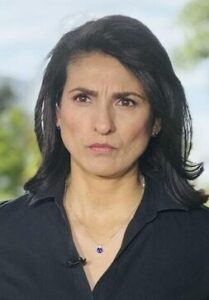 ”After more than a decade as a news correspondent at CNN, Rosa Flores (pictured) has moved on to another cable news network,” Veronica Villafañe reported Sept. 4 for her Media Moves site. “Now a national correspondent for MSNBC, she will continue to be based in Houston.”
-
- ”Tech reporter Brian Fung has joined Google as an external communications manager,” Chris Roush reported Wednesday for Talking Biz News. “For the past nine months, he’s been running an independent livestreaming channel on Twitch that combines gaming content with real-time conversations about tech and media. He left CNN at the end of last year after spending five years covering tech, business and policy. Fung previously covered business and technology for The Washington Post. Before joining The Post, he was the technology correspondent for National Journal and an associate editor at The Atlantic. He speaks two dialects of Chinese and is a native of the nation’s capital. . . .”
-
- The Just Journalism Project has produced “a resource for reporters, editors, photojournalists, art directors, and anyone else involved in producing and selecting the images in news stories. It catalogs the types of images that commonly appear in public safety reporting, offers guidance for how to choose images that tell a more holistic story about the people and places impacted by crime and the criminal legal system, and provides a behind-the-scenes look at the image selection process in a leading outlet covering gun violence and public safety.”
- “Stephen A. Smith has had lots to say about sports on the air for decades,” Jeremy Barr wrote Sept 2 for the Washington Post. “And in recent years he has stretched his commentary to politics and culture. Starting on Sept. 17, he will be expanding on that front weekly as the host of a live politics-focused radio show on the SiriusXM POTUS channel called ‘Straight Shooter with Stephen A. Smith.’ He will also bring his daily ‘Stephen A. Smith Show’ to SiriusXM’s Mad Dog Sports Radio, while continuing his longtime gig hosting ESPN’s morning show, ‘First Take.’ . . . ”
-
- A new documentary in collaboration with Rep. Alma Adams, D-N.C., “is taking a deeper look into the history of underfunded Historically Black Colleges and Universities (HBCUs), and the need to protect them,” Gerren Keith Gaynor reported Wdnesday for the Grio. “ ‘ “Of all of the civil rights for which the world has struggled and fought for for 500 years, the right to learn is undoubtedly the most fundamental, Adams, who represents North Carolina’s 12th Congressional District, says in the opening of the trailer for “The Price of Excellence,” a new doc from The Century Foundation, a progressive think tank.”
-
- “America remains No. 1 when it comes to the percentage of residents who are incarcerated,” the Seattle Times editorialized Tuesday. “Especially for people not convicted of a crime, incarceration can be disruptive to individuals and families. Cashless bail provides alternatives to incarceration that don’t punish people for being poor, yet protects the community as well.” It also said, “one of President Donald Trump’s latest executive orders would undo many reforms that have proved to be successful. The executive order instructs the U.S. Attorney General to investigate which jurisdictions have cashless bail and give them notice to abolish it under threat of withholding federal funding. He signed a separate order specifically for Washington, D.C.”
-
-
-
-
-
-
-
-
-
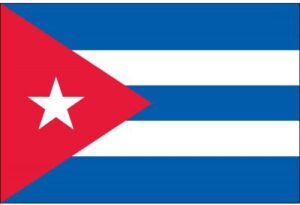 ”On September 8, International Journalists’ Day, the Cuban Institute for Freedom of Expression and the Press (ICLEP) published a statement to remind journalists that, despite repression, journalism is still being practiced on the island and that those imprisoned for practicing it are still being held,” ADN Cuba reported. “The platform mentioned reporters José Gabriel Barrenechea, Luis Ángel Cuza Alonso, and Yeris Curbelo Aguilera, currently political prisoners for practicing journalism in the country. . . .” Separately, “the Cuban Observatory of Human Rights (OCDH) denounced in a statement this Thursday that “at least 168 repressive actions against the civilian population were recorded in August in Cuba, of which 13 were arbitrary detentions and 155 were other abuses.” In addition, the legal advisory group Cubalex reported that in the first half of 2025, “1,566 human rights violations occurred on the island, with an average of almost nine per day.”
-
”From 2018 to 2024, nearly 913 journalists from 15 Latin American countries have been forced to move to other countries to protect their lives, their safety, and that of their families. A large portion end up leaving the profession altogether,” César López Linares reported Tuesday for LatAm Journalism Review. “This estimate comes from the recently released report ‘Displaced Voices: A Snapshot of Latin American Journalistic Exile 2018-2024,’ whose authors say the figure represents an open wound in Latin American democracies. . . .”
-
-
-
-
-
-
-
-

-
-
-
-
-
-
-
-
- On Aug. 12, “unidentified armed men abducted Akyemkwaa Nana Kofi Asare, (pictured) a presenter with Wontumi TV, in Ejisu Krapa in Ghana’s Ashanti Region,” the Media Federation for West Africa said. “Eyewitnesses reported that the men arrived in unmarked vehicles, fired warning shots, and chased the journalist as he attempted to flee. The hooded assailants forcibly put him into a waiting pickup truck and drove off without revealing their identities or intentions.” On Aug. 29, Tik-Tok reported that Asare had returned, saying the “Last Hero is Back.”
-
-
-
-
-
-
-
-
-
-
-
-
-
-
-
-
The Committee to Protect Journalists said Wednesday it was “gravely alarmed by the installation of spyware on two Kenyan filmmakers’ phones while the devices were in police custody, and calls on authorities to drop a case against them and two other filmmakers and ensure that journalists are not further targeted for surveillance. . . .“
-
-
-
-
-
-
-
-
-
-
-
-
-
-
-
-
-
Four journalists were injured in Kathmandu, Nepal, on Sept. 8 “during violent clashes with police over the country’s controversial social media bill and the recent banning of 26 social media platforms. the International Federation of Journalists reported. IFJ joined its affiliates, the Federation of Nepali Journalists (FNJ) and Nepal Press Union (NPU), “in condemning violence against journalists covering protests and calling on the Nepali government to launch a swift, independent investigation into the deadly crackdown.”
-
-
-
-
-
-
-
-

