

Windowless Cell, Inmate Extortion for Guevara
Jonathan Capehart Taking Washington Post Buyout
‘Alligator Alcatraz’: When Blacks Were Gator Bait
Public Broadcasting Cut a Major Blow for Indigenous
. . . Howard U.’s WHUT Expects $1.3 Million Cutback
Gray Named Executive Editor at Amsterdam News
‘Accountability Tour’ Follows Essence Festival
Urban League Discusses How to Be Media Savvy
Univision Journo Calls Cuban Counterparts ‘Accomplices’
Jose Antonio Vargas on Rising Criticism of ICE
Short Takes: Richard Prince and DEI; Asian American Journalists Association and diversity; Voting Rights Act project; for people who are angry but feel powerless; ruling backs journalists covering protests; David Cho; LaFontaine Oliver; saving Black-owned bookstore; Grist and Indigenous Journalists Association; John Warren and NNPA; Joy Reid; Shannon Sharpe; Rachel Scott; Javier E. David; Elaine Ayala; Javier C. Hernández; critical situaion in Honduras.
“I’m plainly convinced that my situation in this ICE jail is direct retaliation for my coverage,” Mario Guevara told The Atlanta Journal-Constitution from the Folkston ICE Processing Center, an immigration detention facility near the Florida border. (Univision 34 Atlanta)
If no image appears, please consider changing browsers.
Windowless Cell, Inmate Extortion for Guevara
Mario Guevara, the Salvador-born reporter who was arrested after covering a demonstration in Georgia over U.S. immigration operations, says he is “emotionally destroyed” after being kept in a windowless cell — inside a federal prison where a nonimmigrant inmate extorted him — despite protests from press-freedom and civil liberties groups and a ruling from a federal immigration judge that Guevara could be released from ICE custody.
ICE — Immigration and Customs Enforcement — appealed the judge’s decision, triggering a stay on Guevara’s $7,500 bond order, Lautaro Grinspan recalled Saturday for the Atlanta Journal-Constitution.
To pass the time, Guevara paces, sings and reads his Bible, Grinspan wrote. He said Guevara is allowed out for only two hours per day.
“ I’m emotionally destroyed,’ Guevara told The Atlanta Journal-Constitution from the Folkston ICE Processing Center, an immigration detention facility near the Florida border,” Grinspan continued.
“The reporter’s time in ICE custody recently crossed the one-month mark. . . .
“ ‘I’m plainly convinced that my situation in this ICE jail is direct retaliation for my coverage,’ Guevara said. ‘I haven’t committed any crimes.
” ‘The government wants to use me as an example, they want to send a message that people can’t be following ICE operatives or expose what’s happening.’ . . .
“Although Guevara lacks permanent legal status, he has a valid work permit and a path to a green card through his U.S. citizen son, his attorneys have said. . . .
“According to Guevara, ICE detainees at the federal penitentiary spend most of the day mixed with the prison’s nonimmigrant inmates, all of whom are criminal convicts. In contrast, nearly half the people in ICE detention have no criminal record.
“Guevara said a nonimmigrant inmate extorted him, requiring wire transfers from his family to keep him safe. ICE did not respond to a question about Guevara’s characterization of his time in the federal penitentiary. . . .
“Should he be released from detention, Guevara said he would stop documenting immigration enforcement operations.
“ ‘I can’t put myself at risk,’ he said. ‘Unless I become a U.S. citizen, my coverage will have to change.’
“Guevara said he feels let down by a political party with which he once identified — the GOP.
“ ‘I feel like I have always had an ideology that leaned toward the Republican Party because of my principles and my Christian values,’ Guevara said. ‘But now I’m so disappointed knowing that those Christian morals I thought they had, they’ve turned into racial hatred.’
“Looking back, Guevara said he regrets risking time with his wife and three children, ages 27, 21 and 14, by coming into frequent contact with law enforcement through his immigration reporting.
“ ‘That may have been the biggest mistake of my life, because now I’m realizing that work is not more important than family,’ he said. ‘But I am no criminal.
“ ‘My family needs me. I’m going to fight until the end.’ ”
- George Chidi, the Guardian: Atlanta journalist fights deportation from Ice jail despite dropped charges: ‘I’m seeing what absolute power can do’

Jonathan Capehart hosts a reporter debrief, followed by a roundtable discussion with Washington Post opinion columnists, in 2024. (Credit: Washington Post)
Jonathan Capehart Taking Washington Post Buyout
Jonathan Capehart, opinion writer and associate editor of The Washington Post who now is perhaps better known as a television host and commentator, said Monday he is taking a buyout offer from The Post.
“Yes it’s true,” Capehart messaged Journal-isms after a report stating as much from Axios’ Sara Fischer. “No elaboration. I was offered the buyout (like everyone else in the Opinion section) and I opted to take it.”
Capehart’s departure follows that of longtime Black Post columnists Joe Davidson (scroll down) and Eugene Robinson, and the planned September exit of Colbert King, who in addition to his role as columnist, is a former deputy editorial page editor. Veteran Metro columnist Courtland Milloy, another Black journalist, left in December 2023.
More of Capehart’s time these days is spent on television than in the Post. His last Post column ran on May 25.
Capehart is co-host of MSNBC’s “The Weekend” and a commentator on the PBS “News Hour.” A memoir, “Yet Here I Am: Lessons From a Black Man’s Search for Home,” was published in May.
Capehart was a member of the Post editorial board from 2007 to 2023, when he resigned from the board (scroll down) after a dispute over whether warnings about the effects of voter suppression tactics in Georgia should be called “hyperbolic.“.
He hosted the podcast “Capehart” (formerly named “Cape Up”) and anchored the weekly “Washington Post Live” show “First Look.”
In these media appearances, Capehart offers the additional perspective of a Black, gay man.
As The Wrap noted, Post owner Jeff Bezos “in February announced he had ordered his opinion section to focus on ‘two pillars’: personal liberties and free markets. Several staffers quit soon after, including former opinion editor David Shipley and longtime columnist Ruth Marcus.
“Capehart’s buyout also comes just a few weeks after WaPo CEO Will Lewis called on writers who do not ‘feel aligned’ with the paper’s ‘reinvention’ to resign via their ‘voluntary separation program.’ ”
Remaining Black columnists include Robin Givhan, senior critic-at-large writing about politics, race and the arts; Theodore R. Johnson, contributing columnist; and Kevin B. Blackistone and Jerry Brewer in Sports. Editorial writer Keith B. Richburg also writes occasional columns, as does Karen Attiah. Perry Bacon Jr., another African American columnist, announced July 22 that he was leaving for the New Republic.
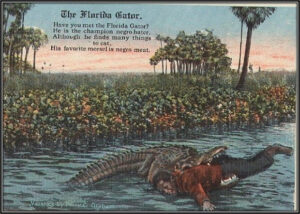
“Those last-century images represented just a few of the thousands of cheerful cards sent across the country and the world,” wrote Elizabeth Bird, professor emerita of anthropology at the University of South Florida. ‘But some holiday-makers clearly found them hilarious. I’ve seen a flood of social media condemnation of Alligator Alcatraz — but hate still spreads at a rate never imagined in the 1940s.”
‘Alligator Alcatraz’: When Blacks Were Gator Bait
“ ‘I don’t kind of love it; I really love it!’ ” began Elizabeth Bird, writing an op-ed piece July 11 in the Tampa Bay Times.
“That’s Lawrence Jones, Fox host and MAGA cheerleader, gushing over Alligator Alcatraz, the appalling emblem of the new Trump-DeSantis alliance.
“Jones and his colleagues on Fox’s Outnumbered chuckled their way through Florida’s swaggering ad for the new facility, giggling about keeping ‘illegals’ in and Democrats out.
“One panelist, looking momentarily queasy, commented gingerly:
“ ‘I just want to make sure we’re not gleeful about the image of alligators eating humans, because that’s not what this is about …’ A few sage nods, before more hilarity ensues.
“Make no mistake, the image of alligators eating humans is exactly what all this excitement is about. And as I scroll through the gleeful Alligator Alcatraz graphics and cheap, imported merch — giant gators, lunging, their wide-open jaws ready to crush escapees — I recall another set of popular images, most now banished to academic collections. In the early 20th century, during the heyday of the Florida postcard, some vacationers just loved them.
“These cards featured African Americans being attacked by alligators or serving as ‘alligator bait,’ often accompanied by an ‘amusing’ rhyme. Black adults were ‘coons,’ ‘darkies,’ or worse, and children were ‘pickaninnies.’ Caricatured as hapless victims, often with exaggerated ‘minstrel’ features, they offered laughs to white audiences. They’re not hard to find online; Florida International University lists one, captioned ‘Free lunch in the Everglades, Florida.’ Printed in Tampa in 1940, this postcard shows a terrified Black man caught in an alligator’s jaws, accompanied by a verse:
“Have you met the Florida Gator?
“He is the champion negro hater
“Although he finds many things to eat
“His favorite morsel is Negro meat.”
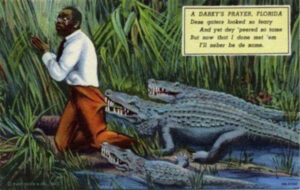
During the Jim Crow era in Florida, postcards including this one, were commonly sold at store counters and tourist attractions. (Credit: Florida archives)
“Or there’s ‘Darky’s Prayer,’ from the special collections at Mississippi State University, showing alligators attacking another Black man, who prays for escape in stereotyped dialect. It was mailed from Tampa in 1944, with a scrawled message, ‘Very warm but having a good time … Mom.’ Others show terrified children sitting in trees while alligators snap at their dangling feet.
“All while families enjoy the beaches and look past the Black people serving their drinks and maintaining their resorts. Sounds familiar? Dehumanizing? Of course.
“All this represents the stunning success of a key MAGA narrative that has eclipsed the earlier, Black boogeyman. Our nation has been over-run by criminals who represent ‘the worst of the worst.’ . . . ”
- Nicole Acevedo, NBC News: Puerto Rico ACLU denounces transfer of immigrant detainees to ‘Alligator Alcatraz’
- Hayes Brown, MSNBC: A new poll shows the backlash to Trump’s immigration cruelty has begun
- Stacy M. Brown, BlackPressUSA: Billions for ICE, Cuts for the Poor: Trump’s Bill Redefines Federal Priorities (July 3)
- Adrian Carrasquillo, the Bulwark: ‘Alligator Alcatraz’ and Why Mass Deportation Is Doomed
- Editorial, San Antonio Express-News: “Alligator Alcatraz” is a monument to inhumanity that we will regret
- Jacqueline García, Calo News: Immigration reverberates as one of the main topics at the National Association of Hispanic Journalists conference
- Marcela García, Boston Globe: A ‘big, beautiful’ disaster for immigrant families
- Anthony Man, South Florida SunSentinel: Congressional Democrats seek to defund Alligator Alcatraz. ‘No cages in the Everglades.’
- Ruben Navarrette, Creators Syndicate: Trump’s Immigration Crackdown Creates Mayhem and Madness. Here’s What We Can Do.
- Kate Payne, Associated Press: The Miccosukee Tribe of Florida wants to join a federal lawsuit against ‘Alligator Alcatraz’
- Amelia Schafer, ICT News: ‘The Everglades is our home’: Native leaders, activists pushback on ‘Alligator Alactraz’ (June 30)
- Jim Saunders and Dara Kam, News Service of Florida: Florida’s Alligator Alcatraz is preventing attorney access, lawsuit says
- Nicolas Villamil and Juan Carlos Chavez, Tampa Bay Times: Inside Alligator Alcatraz: Detainees describe what it’s like right now
- Vision Maker Media says it has been the premier source of public media by and about Native Americans since 1976. (Credit: YouTube)
Public Broadcasting Cut a Major Blow for Indigenous
“Francene Blythe-Lewis spent Friday morning crying at her desk, trying to assess how the loss of nearly half of her organization’s $2.8 million annual budget would impact its ability to support public media by and about Native people,” ICT News reported Friday from dispatches from the Associated Press and its own Kevin Abourezk.
Vision Maker Media supports training to increase the number of American Indians and Alaska Natives producing public broadcasting programs.
Its woes “were realized early Friday when the U.S. House approved President Donald Trump’s request to claw back about $9 billion for public broadcasting and foreign aid as Republicans intensified their efforts to target institutions and programs they view as bloated or out of step with their agenda. . . .
“The package cancels about $1.1 billion for the Corporation for Public Broadcasting and nearly $8 billion for a variety of foreign aid programs, many designed to help countries where drought, disease and political unrest endure.
“Vision Maker Media isn’t the only Native-focused public media organization likely to be affected by the public media budget cuts.
“According to the National Congress of American Indians, at least two other Native-focused nonprofit public media organizations are funded by the Corporation for Public Broadcasting, including Koahnic Broadcast Corporation and Native Public Media.”
Headquartered in Anchorage, Alaska, and with a satellite office in Albuquerque, N.M., Koahnic Broadcast Corp. “serves 192 stations in 34 U.S. states, including 57 rural Tribal stations and operates Native Voice One, also known as NV1, a content distribution service providing programming that is all Tribally produced to stations throughout the nation through a satellite channel.”
Native Public Media “serves as a national center for the network of Tribally licensed and operated radio stations, and receives funding from the CPB to provide technical assistance to 36 such stations.”
“While it is available online, ICT’s weekly newscast could become less available to viewers through their local television programming.
“Blythe-Lewis . . . said she wasn’t sure whether the cuts would impact her ability to keep her nine full-time employees, but she said she was confident that Vision Maker Media would be able to continue funding Indigenous-focused programming.
“ ‘I think we will always be able to raise money to have content made,’ she said. ‘I think that the saddest impact is the potential loss to mass audiences of authentic, genuine, trustworthy storytelling from the storytellers in the communities themselves.’
“Blythe-Lewis said the organization receives nearly half its funding from philanthropic sources, including private foundations and individual donors, which she is confident will continue to support its efforts. She said every $1 of federal funding to Vision Maker Media results in $3 of economic development for Native communities.
“As Native people we have always survived,” she said. “Vision Maker Media will too.”
Benjamin Mullin added July 14 for The New York Times:
“Marc Hand, the founder and chief executive of the Public Media Venture Group, said that foundations could finance the acquisition of local stations to keep them from disappearing, the way foundations have bought newspapers that were in danger of going out of business.
“But those philanthropists could also be up against investors who are interested in acquiring those stations for their valuable broadcast spectrum, Mr. Hand said. They would include deep-pocketed private buyers who have large sums of money to hold the stations for future television spectrum auctions.”
In fact, two public broadcasters were among the recipients of Press Forward’s latest funding round of $22.7 million, the nationwide coalition to fund local news announced Wednesday.
“The group awarded Rocky Mountain Community Radio $1 million to create a shared broadcast engineering team for its 21 community radio stations in Colorado, New Mexico, Utah and Wyoming. . . .
“In addition, High Plains Public Radio will use a $750,000 award to launch a multistate media network. High Plains Civic Media Network will support regional news in Kansas, Texas, Oklahoma, Nebraska and Colorado.”
. . . Howard U.’s WHUT Expects $1.3 Million Cutback
 Among the public broadcasters appealing for donations in the wake of the cutbacks in federal funding is WHUT-TV at Howard University. General Manager Sean D. Plater messaged Journal-isms Monday, “These cuts represent a significant amount of funding for WHUT. We estimate the impact at over $1.3M.
“This has the potential to impact our staffing, local programming offerings and storytelling through original series,” Plater continued.
“We offer unique cultural content not found on commercial media. Also, this impacts our educational programming and work with local school systems. WHUT plays a vital role in emergency alerts and public safety as a whole. This finding could impact the ability to use those systems. As the only public television station in the country licensed to an HBCU,” a historically Black colleges and university, the cuts also create fewer opportunities for learning and the training of the next group of journalists and content creators, Plater said.
- Amy Goodman with Loris Taylor, Democracy Now!: Trump Cuts to Public Media Threaten Native Stations That Protect Culture & Public Health, Issue Alerts
- Andrew Mercein, Columbia Journalism Review: Inside the Radio Stations Devastated by Public Funding Cuts
- Gretchen A. Peck, Editor & Publisher: Defunding the airwaves: How public media became a political battleground
- Elena Shao and Benjamin Mullin, New York Times: Where Congress’s Cuts Threaten Access to PBS and NPR
Gray Named Executive Editor at Amsterdam News
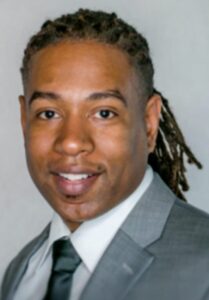 Madison J. Gray (pictured), a media veteran who has been as a senior editor at BET Digital, digital managing editor at Ebony.com, front door editor for CBSNews.com, and held roles at the Associated Press, Time magazine and The New York Times, has been named executive editor of the New York Amsterdam News.
He succeeds Damaso Reyes, heading to Stanford University in the fall as a John S. Knight Journalism Fellow.
“We’re at a critical time in the news business, particularly when it comes to the Black press,” Gray said in the July 15 announcement. “So I’m excited about joining this multi-talented team as it continues to make a difference in the community.”
The Detroit native “is hoping to expand the AmNews digital presence, reaching new audiences and growing the organization’s influence in today’s challenging marketplace. At the same time, he wants to offer even better coverage for readers who have been loyal for generations,” the announcement continued.
“He brings the experience and energy we need to grow and better serve our audience,” Reyes said.
In an extensive entry on LinkedIn, Gray lists among his attributes: “A journalist with an old-school editorial work ethic and a strong belief in the First Amendment,” “An experienced multimedia writer and editor with a background in print and digital/online media,” “An adept understanding of social media, how it contributes to reporting, and the metrics that illustrate it,” and “An accurate journalist who is used to deadline-driven environments, and who thrives on breaking news.”
- Madison J. Gray, Stark Raving Madison: Media and Journalists: It’s a Messy Divorce and a Bitter Song (June 5)
Richelieu Dennis, who leads Essence’s parent company, told Charlamagne Tha God on “The Breakfast Club” that his job is to protect Black women as well as “to develop the infrastructure that drives Black businesses,” and so it was no time for excuses. (Credit: YouTube)
‘Accountability Tour’ Follows Essence Festival
Any event known to bring out tens of thousands of people is prone to have some issues somewhere, but this year, the criticism of the production of the Essence Music Festival “seemed louder than ever with participants and those on social media claiming that the production, vibes and experience didn’t match the expectation set by [years] past,” Panama Jackson wrote Wednesday for the Grio.
“Typically, when a brand gets hit with bad press, they provide a press release that speaks around the issue without acknowledging what went wrong, focusing on what went right and hoping the people will forget and pull up the next time. Essence, though, this year decided to take a different approach.
“It started when Lauryn Hill had production issues, delaying her show by hours. Media outlets reported that Hill performed to a few hundred people deep into the night and chalked it up to Hill’s reported issues with punctuality and time. Essence, however, jumped in front of that narrative and took accountability for the production issues, making sure that it was clear that Hill wasn’t the problem, a notable step towards accountability from such a large brand, which Hill appreciated.
“Essence’s accountability tour has continued. Executive Chairman of the Sundial Group of Companies— which owns Essence — Richelieu Dennis recently pulled up to The Breakfast Club and sat down with the host to discuss the production issues that caused such a backlash and uproar, which also included the inclusion of Target as sponsor for the event in the midst of a community-wide boycott of the retailer. In response to the production issues and complaints, Dennis was very graceful and intentional with his words.
“ ‘At the end of the day, it’s not any of our partner’s fault, it’s our fault, because we engaged them, and it’s our job to make sure that everything is delivered properly. I’m not gonna sit here and say that it’s the Solomon Group’s fault, it’s this group’s fault, it’s that group’s fault,’ he started.
“So [Essence is] gonna take the hit, we will deal with our internal partners, our internal partners will step up. And if they don’t step up to the plate, then they will be gone, but it will not be because they made a mistake here. It will be because they haven’t been able to learn from those mistakes. . . . ”
- Asha Bandele, Essence: Susan L. Taylor: A Life Of Meaning And Purpose
- Sheletta Brundidge, Rep. Troy Carter, Cleveland Spears, Richelieu Dennis, NOLA.com: The future of Essence Festival
- Adam Mahoney, Capital B: In New Orleans, Essence Fest Is a Celebration — but Not Always for Black Locals
- Keith Spira, NOLA.com: 2025 Essence Festival had some issues. Here’s what needs to be fixed. (July 8)
- Will Sutton and Dr. Ashonta Wyatt, NOLA.com: Essence Fest executive vice chairman speaks on issues: ‘We’re listening to everything’ (July 10)
- Lawrence Ware, The Root: The One Reason This Year’s Essence Festival Was Considered By Many a Complete Disaster (July 10)
- Chris Welty, WVUE, New Orleans: Essence Fest says ticket sales are down (July 1)
- Sughnen Yongo, Forbes.com: How Black Women Influencers Dominated A $24B Market At Essence Fest (July 9, updated July 10)
Urban League Discusses How to Be Media Savvy
Veteran broadcast journalist Ed Gordon said Black media outlets that don’t do news should be called out. Longtime White House correspondent April Ryan, now with BlackPressUSA, urged the audience to lean in on the difference between fact and opinion as they consume social and other media. “Words matter, facts matter,” echoed Benjamin Chavis, CEO of the National Newspaper Publishers Association, trade group for Black-press publishers. They were part of a livestreamed plenary session in Cleveland Friday at the National Urban League convention, “Mastering Media and Making Your Voice Heard.”
Also on the panel were Eugene Daniels, MSNBC senior Washington correspondent and host of “The Weekend”; Alencia Johnson, cultural critic, co-moderator with Gordon; Valeisha Butterfield, founder and CEO of SEED MEDIA and Rachel Noerdlinger, crisis management and communications expert.(Credit: YouTube)
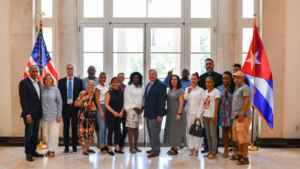
A group of former political prisoners, relatives of July 11, 2021, protesters currently in prison, independent artists and journalists, religious leaders and human rights activists gathered at the residence of the U.S. ambassador in Havana, Mike Hammer, on July 9 (Credit: Courtesy/Miami Herald)
Univision Journo Calls Cuban Counterparts ‘Accomplices’
“The Univisión journalist Javier Díaz (pictured, below) sent a message to his colleagues who, from the state media in Cuba, continue to be – in his view – ‘direct accomplices’ of the Castro dictatorship,’ ” the CiberCuba website reported July 12.
“Four years after the social uprising on July 11, 2021, Díaz reaffirmed his critical stance against state-aligned communicators and urged them to ‘stand on the side of truth’ before it is too late.
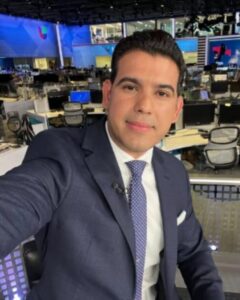 ” ‘My message from July 11, four years after the Cuban people finally awakened and took to the streets en masse in the main provinces and municipalities of the country, remains the same as the one I sent four years ago to journalists, broadcasters, and communicators,’ he began saying in a video posted on his Instagram account.
“Díaz was emphatic in pointing out that those who work in state media can no longer hide behind the argument of ‘just doing their job.’
” ‘Anyone who currently works in the media, who appears in front of a newscast or an informational segment, does not simply become a teleprompter reader; rather, they have a strong complicity with the Cuban dictatorship by repeating the lies and the narrative that the regime wants the nation to receive in order to continue indoctrinating them,’ ” he declared.”
Díaz emigrated in January 2016, following a challenging trek through Central America. His first job in the United States was in the kitchen of a restaurant in San Antonio, Texas, as he sought to rebuild his life from scratch.
Meanwhile, “Four years after the protests of July 11, 2021 (11J), national and international organizations warn of a new peak of repression by the Cuban State against activists, independent journalists, human rights defenders and relatives of persons deprived of liberty for reasons of conscience. This situation demands urgent attention from the international community in view of the intensification of restrictions on fundamental freedoms and human rights,” a coalition of human rights groups declared on July 11.
In addition, David C. Adams reported Sunday for The New York Times, “While the Communist Party remains firmly in charge, Cuba’s government has faced intensifying anger among ordinary Cubans who have lost patience with the six-decade old socialist system imposed by the revolutionary leader Fidel Castro.”
Adams also wrote that “many Cubans have long concluded — that their government is out of touch with the lives of ordinary people who struggle to make ends meet while their leaders cling to a state-run economic model and one-party rule.”
Jose Antonio Vargas on Rising Criticism of ICE
Amid the public outcry over President Trump’s immigration policies, Pulitzer Prize-winning journalist Jose Antonio Vargas released a new edition of his memoir, ‘Dear America: Notes of an Undocumented Citizen,’ ” Ali Rogin reported Thursday for the “PBS News Hour.”
“In 2011, he publicly revealed he was an undocumented immigrant and today is once again stepping into the spotlight to tell his story of how he left the U.S. for the first time since he arrived as a child to begin his process of becoming documented.”
Vargas said, “The public finally understands what ICE does.. . . something is happening that for the first time in the 14 years I have been doing this work, I have not seen so many people say, wait, this is not OK.”
Host William Brangham told viewers, “A Gallup poll found just 30 percent of Americans believe immigration should be reduced. That’s compared to 55 percent last year. And a new AP poll out today finds just 43 percent of Americans say the president supports — say they support the president’s handling of this issue.”
But Vargas was critical of media coverage. “In some ways, our own colleagues in journalism have failed. I have to tell you, whenever I watch the White House press briefings and a White House official says something inaccurate about immigration, I’m watching those White House correspondents. Why can’t they fact-check in real time?
“Why can’t we actually say, wait a second, that’s not accurate. That’s — some people do it. But for the most part, we just — the lies, the misinformation, the disinformation become such oxygen. It just becomes part of the air.”
Short Takes
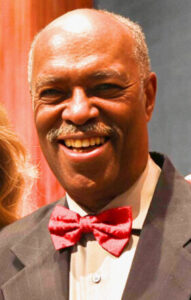
- The news media should pay more attention to one of the benefits of diversity that white people receive — it provides opportunities to interact with others not like themselves, this columnist (Richard Prince, by Shevry Lassiter) said in a wide-ranging podcast discussion about Journal-isms and the author’s history with diversity issues that aired Friday. The interviewer was J.J. Green, a national security reporter for all-news WTOP radio in Washington. The talk nearly coincided with a piece in Fast Company, “Why workplaces should be doubling down on DEI.” “In today’s volatile climate, doubling down on DEI isn’t just a values-driven decision; it’s a strategic one. In this article, leaders weigh in on why meaningful DEI efforts remain essential — not optional — for building resilient, future-ready workplaces,” it said.
 “I would not be writing this column if it wasn’t for DEI,” Naomi Ishisaka (pictured), the Seattle Times’ assistant managing editor for diversity, inclusion and staff development, wrote Monday for the Times, in advance of the July 30-Aug. 3 national convention of the Asian American Journalists Association. “No, despite what detractors have frequently alleged, it’s not because I was hired over a more qualified white man. It’s because long, long ago when I was still a teen, journalists who believed in diversity, equity and inclusion had the foresight and conviction to create opportunities for young people like me to see themselves in the field. . . .”
 “President Lyndon B. Johnson signed the Voting Rights Act on Aug. 6, 1965, a culmination of about a century of demands for equal access to the ballot box,” reports the National Association of Black Journalists’ Black News & Views. “Black News & Views and the New York Amsterdam News, in collaboration with the Associated Press, have taken a look back and a look forward as America continues to grapple with the Black vote. The work is part of the AP Inclusive Journalism Initiative supported by the Sony Foundation.”
- Chris Quinn, editor and vice president of content for cleveland.com /The Plain Dealer, offered suggestions Saturday for “people who are angry about the state of our nation” who “regularly tell me they feel powerless and ask what they can do to stop the descent of America into a fascist state.” Quinn’s recommendations: “First, never watch ABC or CBS again. Let their ratings tank, along with their advertising dollars. The journalists who work for them have been undermined, so they should seek employment in newsrooms that still stand for something. Their networks no longer have credibility. Second, cancel your subscriptions to the streaming services of Paramount and Disney. . . .”
- “A federal judge on Friday ordered the Los Angeles Police Department to stop using foam projectiles, tear gas and flash-bang devices against journalists covering protests after reporters and photographers were struck during demonstrations last month,” Laurel Rosenhall reported July 11 for The New York Times. “The temporary restraining order by Judge Hernán D. Vera of U.S. District Court also prohibits police officers from blocking journalists from closed areas, obstructing them from gathering information and detaining them for violating curfews or failing to disperse. . . .”
 David Cho (pictured) has been named editor-in-chief of CNBC, responsible for all editorial coverage across the network’s linear, digital and direct-to-consumer platforms, the network announced Thursday. Cho joins CNBC on Aug. 11. “Before joining CNBC, he was Editor-in-Chief of Barron’s and head of editorial content for Dow Jones Wealth and Investing, which includes publications such as MarketWatch, Investor’s Business Daily and Financial News London. Prior to that, he was the business editor of The Washington Post, where his digital-first focus led to aggressive expansion as well as audience growth.
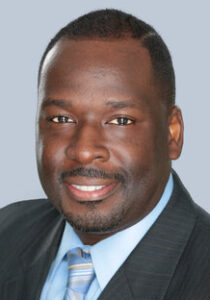 LaFontaine Oliver will transition away from leading New York Public Radio and step into the role of executive chair, a staff position, Tyler Falk reported July 15 for Current. “NYPR Board Chair John Rose wrote in an email to staff that the station needs’ to reimagine how public radio can adapt and thrive in this moment.’ To address that ‘urgent task,’ Rose said, the board needs someone ‘not consumed by the day-to-day operation of the business.’ He said Oliver was the right person given his experience at stations throughout the system and leadership background, including serving as NPR’s board chair. . . .”

Willa Robinson stands in front of her store, Willa’s Books & Vinyl, last year. (Credit: Jade Williams)
- “In a moment that embodies what community media can be when rooted in purpose, The Kansas City Defender is doing far more than chasing headlines. It’s preserving Black history, investing in Black futures, and redefining what service to community truly means,” Haeven Gibbons reported Wednesday for the Pivot Fund. “At the helm is Ryan Sorrell — a founder who sees journalism not just as storytelling, but as a tool for liberation. This August, Sorrell and his team are launching a $500,000 capital campaign to purchase and preserve Willa’s Books & Vinyl — Missouri’s oldest Black-owned bookstore. . . .”
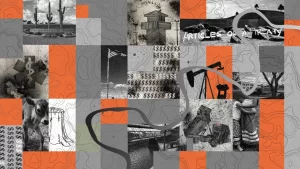
(Credit: Marty Two Bulls Jr./Grist)
- The Indigenous Journalists Association selected Grist as the recipient of the 2025 Richard LaCourse Award for Investigative Journalism, the association announced Friday, citing Grist’s “Misplaced Trust” investigation series, “which revealed how land-grant universities continue to profit from more than 8.3 million acres of land taken from 123 Indigenous nations through the Morrill Act of 1862. This deeply reported series traced the legacy and ongoing impacts of these land transfers, exposing how universities have benefited financially while tribes were dispossessed and excluded from decision making.”
 Dana Hedgpeth (Haliwa-Saponi Tribe of North Carolina) (pictured) has been chosen for the Indigenous Journalists Association’s 2025 IJA-Medill Milestone Achievement Award,” Native News Online reported July 5. “Hedgpeth was selected by IJA’s special awards committee in recognition of her 26-year career at The Washington Post, where she has reported extensively on Native American communities. Her work has illuminated untold stories and uncovered deeply buried histories, helping to bring long-overdue visibility and truth to the forefront of public discourse. . . .”
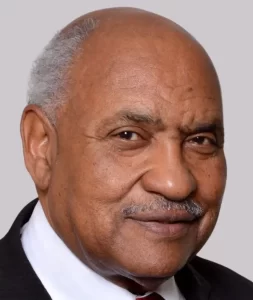 “Dr. John Warren (pictured) of the San Diego Voice & Viewpoint made his mark at the 2025 National Newspaper Publishers Association (NNPA) annual convention in Savannah, Georgia when he became the third person from the West Coast to lead the 85-year-old organization, whose members are mostly from the East Coast, South and Midwest,” Tanu Henry reported July 8 for California Black Media. “ ‘I will say this: I will push to reinvigorate the NNPA, starting with each region,” said Warren, who is also an attorney, ordained minister, U.S. Army veteran and college professor. He has also served as a Washington, D.C. Board of Education member and U.S. congressional aide. . . .”
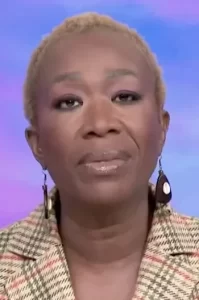 Born in Brooklyn to a Congolese geologist father and a Guyanese nutritionist-turned-professor mother, Joy Reid (pictured) “was raised primarily by her mother. Her insights into global Black identity are not performative. They’re personal,” Ime Ekpo wrote July 7 for Forbes. “It’s that lived complexity of being Black, American, Caribbean, and woman that underpins Reid’s voice. Her journalistic beat isn’t race. It’s truth, viewed through a lens shaped by heritage, history, and hard-won clarity.”
- ” NFL hall-of-famer and podcaster Shannon Sharpe has settled a lawsuit brought by a woman, who accused him of raping her twice across a two month period last year in her Las Vegas home,” Winston Cho reported for the Hollywood Reporter. Tony Buzbee, “a lawyer for the Jane Doe, announced on Friday that a deal was reached to resolve the lawsuit. Terms of the agreement weren’t disclosed.”
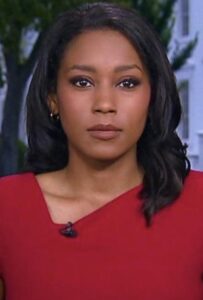 “The newest show on Disney+ is likely to have more surprising plot twists than any Marvel movie and more oddball characters than the latest series from ‘Star Wars,’ ” Brian Steinberg reported July 14 for Variety. ”What is it? The news. In its first original daily program designed specifically for the streaming service, ABC News will, starting each weekday at 6 a.m., dispatch James Longman and Rachel Scott (pictured) to give viewers an 8-to-10-minute recap of the latest headlines. . . .”
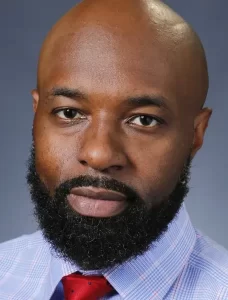 In December, Javier E. David (pictured) stepped into this complex narrative as The Dallas Morning News’ new business editor, Public Editor Stephen Buckley wrote July 12 for the Morning News. “He comes with sterling credentials: Over nearly 30 years, he has worked as a reporter and editor for outlets such as Thomson Reuters, Axios, Yahoo! Finance, CNBC and The Wall Street Journal. ‘. . . ‘We want people to look to us as the definitive guide as to what’s happening with business in this region.’ A native New Yorker with an arresting baritone, David takes over a staff of 12 full-timers (including Dave Lieber, The Watchdog) and two columnists. His team is among the newsroom’s youngest, but, he says, ‘We’re super motivated. We bring a lot of strengths.’ . . .”
 Metro columnist Elaine Ayala (pictured) told San Antonio readers July 11 that “I’m retiring after 45 years in journalism, almost 29 of them at the San Antonio Express-News. The column was headlined, “Six newspapers, three editorial boards, 45 years in journalism.” “After a good rest, I’ll continue to write,” Ayala said. ” One book project is already in the works with great allies of Mexican American history. The book will tell the stories of incredible Americans who rose out of the most Mexican of U.S. cities and a place regarded as the Mexican American cultural capital of the United States.”
 “Javier C. Hernández Is Tokyo’s Next Bureau Chief,” The New York Times announced July 16. “Javier is returning to International after a successful run on the Culture desk, where he transformed how the Times covers classical music and dance. . . . Javier, who joined The Times in 2008, got his start on the Metro and Business desks. He has also spent time reporting on Latin America from his family’s native Honduras. He was educated at Harvard and grew up in Oregon.”
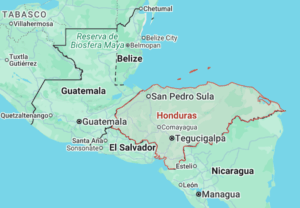 “Press freedom and civic space in Honduras face a critical situation in 2024,” the human rights group Article 19 reported July 15. “Our recent report reveals how censorship strategies and attacks against journalists and media outlets have become entrenched, making independent journalism increasingly difficult. . . . Between October 2021 and October 2024, CONADEH [National Commissioner for Human Rights] recorded the deaths of 101 people linked to the media, with approximately 88% of the cases remaining unpunished. Fear of lethality has led to self-censorship among journalists. Despite this bleak outlook, our report also highlights the importance of collective action and support networks between journalists and human rights defenders. . . . ” (Map credit: Google)
