
Anti-Discrimination Tool Would Disappear
SCOTUS on Voting Rights: Nearly ‘Worst Case Scenario’?
Story on Environmental Racism Doesn’t Call It Out
Laid Off: ‘Best Thing That Has Ever Happened to Me’
Charlie Neal, HBCU Broadcast Legend, Dies at 80
Short Takes: Tasteless joke at Kevin Hart roast; Wayne Dawkins; Linn Washington Jr.; Ron Thomas; Daniel Grimes and Don Lemon; Pittsburgh Post-Gazette; Manuel Bojorquez; Isabel Wilkerson; George W. Goodman; Black independent journalists; free speech and Black journalists; biologically accurate vs. preferred pronouns; harassment in El Salvador; Cuba’s political prisoners; arrested in Democratic Republic of Congo; Nicaragua closing radio stations.
Homepage photo: New York Times newsroom in 1978
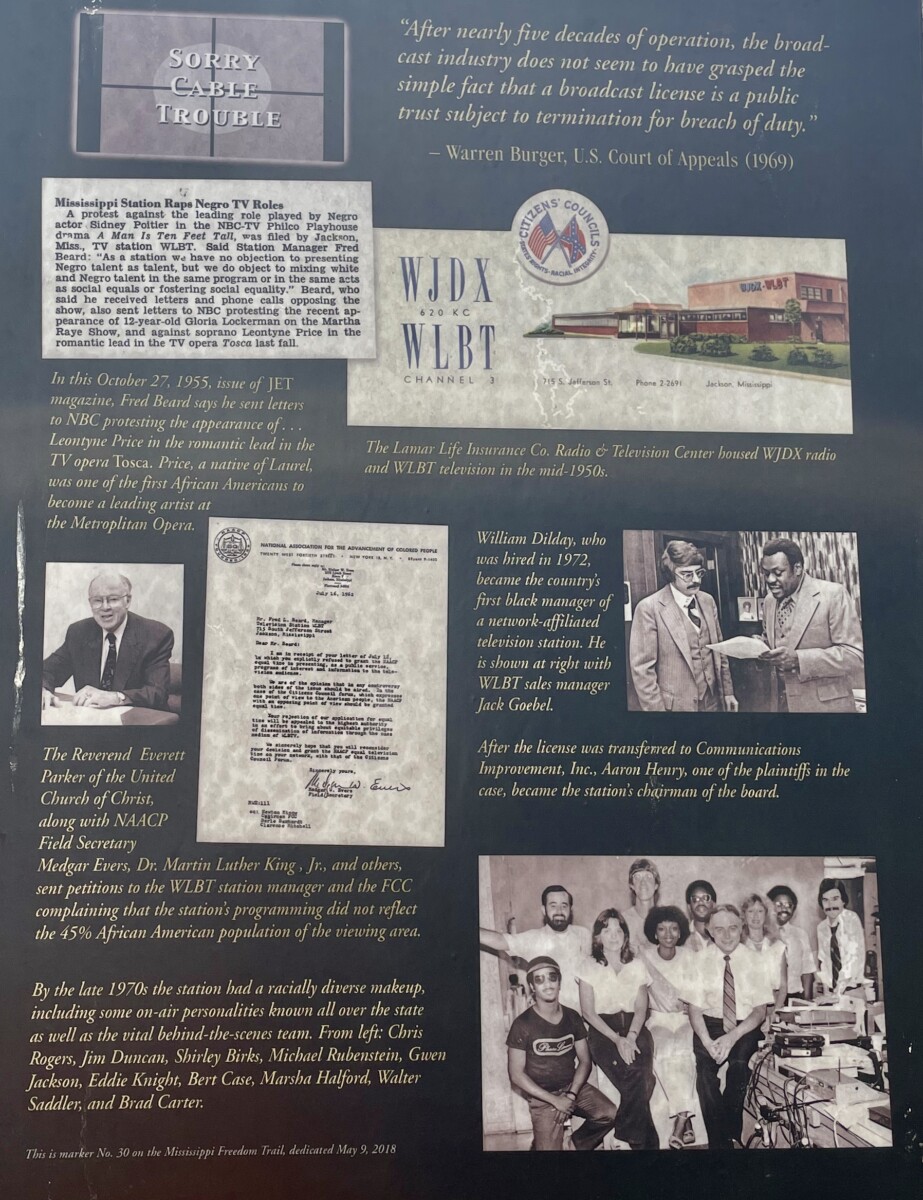
In a landmark case involving discrimination in the broadcast industry, the Federal Communications Commission gave control of WLBT-TV in Jackson, Miss., to a biracial, nonprofit foundation called Communications Improvement, Inc. in 1964. Jackson citizens and the United Church of Christ challenged Lamar Life Insurance Company’s application for renewal of its WLBT license. (Marker photographed by Mark Hilton, July 31, 2021)
Anti-Discrimination Tool Would Disappear
“The Equal Employment Opportunity Commission submitted a proposal to the White House this week seeking to halt employers’ obligation to report annual workforce demographic data on sex, race and ethnicity,” Michelle Travis wrote Saturday for Forbes. The action, if approved, could also affect media companies.
The Federal Communications Commission, which has its own antidiscrimination policies, generally follows the EEOC, David Honig told Journal-isms. Honig founded the Multicultural Media, Telecom and Internet Council (MMTC), which advocates for broadcast and telecommunications ownership by people of color.
The Trump-appointed FCC chairman, Brendan Carr, is an avid crusader against civil rights laws, more recently labeled “diversity, equity and inclusion.”
Without numbers, it is difficult to prove discriminatory intent, Honig said, agreeing with others who found the EEOC plans alarming.
Meryl Kornfield added for the Washington Post, “The EEOC also wants to ax data reporting rules for apprenticeship programs, unions, state and local governments, and schools, as well as reporting requirements in other civil rights laws that protect workers, including those who are pregnant or have disabilities.”
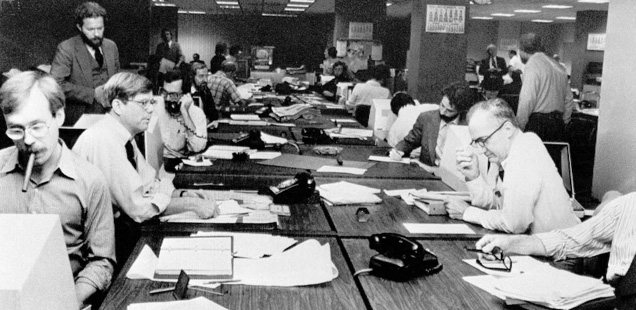
The New York Times newsroom in 1978, the year the then-American Society of Newspaper Editors urged its members to collect diversity data. (Credit: New York Times)
The American Society of Newspaper Editors, later the American Society of News Editors, began urging newspapers to collect data in 1978 with the goal of reaching racial parity with the overall population first by 2000, then by 2025. ASNE is now defunct, and that information is no longer collected by an industry-wide newspaper-focused organization.
Some specialized groups, such as Associated Press Sports Editors and the Radio Television Digital News Association, have continued counting the numbers, but a Pew Research Center survey of nearly 12,000 working U.S.-based journalists conducted in 2022 showed that newsroom demographics are nowhere close to those of the general population.
As a rationale for ending the obligation to report data, EEOC Chair Andrea Lucas, appointed by President Trump, has told employment lawyers that Trump “wants his enforcement agencies to be focused on I think the most morally offensive type of discrimination, which is intentional discrimination, not inadvertent discrimination, at least as defined by disparate impact in Title VII” of the 1964 Civil Rights Act.
Forbes’ Travis continued, “Twelve former government officials from the EEOC and the Department of Labor’s Office of Federal Contract Compliance Programs responded with a statement yesterday warning of the risks to workers, employers and the public from abandoning workforce data collection.
“The EEOC is the agency charged with enforcing federal employment discrimination laws, including Title VII of the Civil Rights Act of 1964. When enacting Title VII, Congress authorized the collection of annual workforce data to ensure compliance. As a result, the EEOC issued regulation EEO-1 in 1966, which has required private employers with 100 or more employees to report workforce demographic data on sex, race and ethnicity, across 10 job categories each year.”

As the civil rights movement progressed in the 1960s and 1970s, diversity became a stated goal of the journalism industry. (Credit-Prostock-Stdio-iStock)
“The 12 former government officials contend that eliminating this 60-year practice will remove a critical tool for identifying workplace discrimination, and that this move marks a retreat from the EEOC’s role in ensuring nondiscrimination in employment. These former officials now comprise the nonpartisan EEO Leaders organization, which analyzes Administration actions impacting equal employment opportunity,” Travis wrote.
The EEOC proposal follows other setbacks, most alarmingly the Supreme Court’s decision two weeks ago to gut the Voting Rights Act.
In addition, the EEOC, led by Lucas, announced this month it was filing a civil rights lawsuit against The New York Times (scroll down), centered on the allegations of a white male employee who did not get a sought-after promotion and argued it was because of his race and gender.
Kornfield continued in the Post, “Some attorneys representing employers have advised their clients that they should collect the data as they usually do to comply with the law.
“Employers should continue to collect the information as a best practice, because Title VII obligations are not going away and disparate impact is not going away,” despite the EEOC’s plans, said Christy Kiely, a partner at the Seyfarth Shaw law firm. ‘It’s been deprioritized, but it’s still in the statute. . . .’
“The elimination of data collection would fulfill one of the goals listed in the Heritage Foundation’s Project 2025, the blueprint of the second Trump administration, which outlined how the data could be used to support discrimination allegations. . . .”
- David W. Brown, Philadelphia Inquirer: Trump is making it harder for us to champion diversity, but we absolutely cannot give up
- Andrea Hsu, NPR: How Trump’s EEOC is attacking DEI and emphasizing white people (March 31)
- Dan Petrella, Chicago Tribune: Illinois passed a law to expose diversity gaps at top nonprofits. Almost none are complying. (Added Nov. 18)
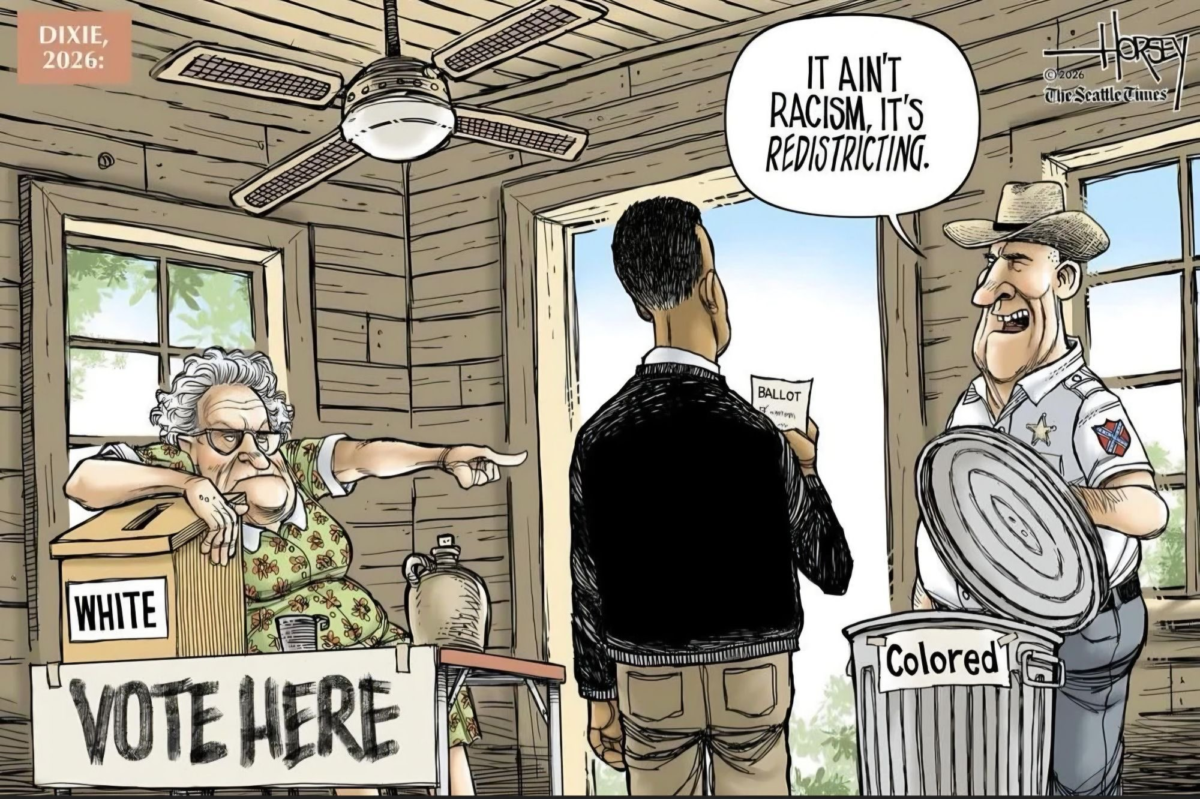
David Horsey illustrated his views on the subject for the Seattle Times.
SCOTUS on Voting Rights: Nearly ‘Worst Case Scenario’?
“Last week, the U.S. Supreme Court issued what will surely be a landmark ruling in the case of Louisiana v. Callais, in which it declared the state’s current congressional district map unconstitutional and vastly limited the scope of the Voting Rights Act’s Section 2,” NOLA.com told readers on May 8. “Columnists Stephanie Grace, Quin Hillyer and Will Sutton recently discussed what it means and what comes next.
 “Sutton: I think the absolutely worst-case scenario would have been for them to say, ‘To hell with the Voting Rights Act, we’re throwing this out.’ I think this is the next worst-case scenario. It’s like saying, ‘Here are the guidelines for your workplace and here’s your workers’ bill of rights, except we’re going to take away the list so there’s nothing that is really in your favor.’
“This has been something that has been relied on for decades, and we’ve made so much progress, and the progress isn’t just for [Rep.] Cleo Fields or Louisiana or Black people. And now we’re taking away the resources and tools that don’t guarantee anything except to see whether districts can stand a test that gives people an opportunity for representation.
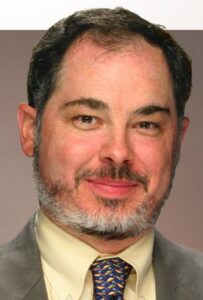 “Hillyer: As a longtime opponent of the formula from an earlier case known as Gingles, I should be very happy with this decision because it did say that Section 2 still stands. The problem is that the reasoning was not necessarily internally consistent. I liked the immediate result and the immediate top-line explanation, but then when I read closer, the reasoning didn’t seem to hold up and kept a situation where there is going to be a lot more litigation and trying to decipher the meaning.
 “Grace: I have so many reactions to this decision, and I feel like there are a lot of things that kind of lead to the same place, and that is a real potential loss of trust in elections. . . .
“Hillyer: . . . I think in the long run what’s going to come out of this, assuming that it doesn’t get endlessly bogged down in litigation, is that it is going to push both sides to moderate, because the more that districts are not chosen by race, the more they’re closer to 50/50. And when they’re closer to 50/50, suddenly you’re going to have Republicans having to actually pay attention to Democratic voters and pay attention to Black voters in order not to lose close elections. . . .
“Sutton: I think one of the things that gets lost in conversations like this is that Black people, for the most part, vote for White people and Black people and other people. And in so many places, White people do not vote for Black people. This really is more of a Southern issue. We might go to the same events, cheer for the same teams, enjoy the same church service, but when we go in the voter booth, it’s something totally different.
“So I say that to address Quin’s point about representation. It is not true with opportunity districts with the Voting Rights Act’s Section 2 that it means Black people always elect Black people.
“Hillyer: There are a number of Black Republicans in the South representing very strongly majority White districts. There is Wesley Hunt in Texas. There is Byron Donalds in Florida. There is Tim Scott from South Carolina, who, before he was a senator, got elected in a very White Republican district, defeating the sons of two former White governors.
“I think that the more we concentrate on race, the more we deter developments like this, where people are voting not because of race but on completely different grounds, better grounds, than that.
“Grace: We haven’t had examples of that in Louisiana. . . . ”
- Jamelle Bouie, New York Times: This Is Getting Dangerous
- Joseph D. Bryant, al.com: ‘Death of the Confederacy’: Thousands rally for voting rights in iconic Alabama cities
- Derrick Z. Jackson, American Prospect: Trump’s Appalling Racial Legacy
- John McWhorter, New York Times: The Voting Rights Act Changed America. Now, It Can Change.
- Will Sutton, NOLA.com: The Supreme Court has threatened Black representation at all levels of elective office
“This is Ray Baylor. He’s been in West Baltimore for over 30 years, and he’s seen firsthand how urban renewal and environmental injustice have shaped his neighborhood,” says the Environmental Justice Journalism Review. (Credit: YouTube)
Story on Environmental Racism Doesn’t Call It Out
A Baltimore Sun piece on environmental racism affecting a majority-Black section of town raises the issue of when race should be included in a story. Neither environmental racism nor the fact that the affected area is Black was mentioned.
Under the headline, ” ‘People around here are scared’ of West Baltimore air pollution,” reporter Lily Carey wrote Wednesday about work on the $6 billion Frederick Douglass Tunnel, “which is expected to reduce train delays along the Northeast corridor by replacing the 150-year-old B&P Tunnel that currently provides a path to and from Penn Station through West Baltimore. . . .
“Residents, however, have raised concerns about potential air pollution from the project, largely because West Baltimore has historically had higher rates of asthma-related hospital visits than other parts of the city,” Carey continued. “In the ZIP code containing Midtown-Edmondson, about 51 in every 10,000 people were hospitalized for asthma as of 2011, and the neighborhood is in the 95th percentile for respiratory risk from air toxins, according to a 2017 study by the Environmental Integrity Project.”
Not mentioned is that Ray Baylor, the concerned resident quoted as the story begins, is Black, and that the area in question has the highest percentage of Black residents in the city. [PDF]
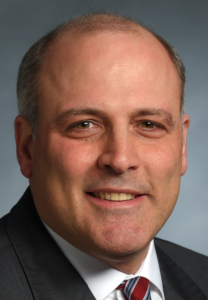 “We believe The Sun’s readers are aware of the racial makeup of West Baltimore,” Trif Alatzas (pictured), publisher and editor-in-chief of the Sun, told Journal-isms, “This article addresses historical environmental burdens, including redlining and elevated asthma rates in explaining the air-monitoring effort. It also outlines the data residents and researchers are gathering around the tunnel project.
“Having said that, your question prompted discussion among our team and we will keep that in mind moving forward.”
Is race relevant enough to be mentioned? Augusta University says, “Environmental racism has been an issue in marginalized U.S. communities for a long time. Modern patterns of environmental racism derive from the centuries-long legacy of American racial discrimination, which, among other inequities, denied enslaved and marginalized people access to land and natural resources that could provide safe living environments.”
Boston journalist Derrick Z. Jackson (pictured, below), who writes often about the environment, offers this perspective: “It is meaningless to name ‘environmental justice’ and ‘redlining’ if you don’t go the extra half-sentence to say who is suffering the injustice and redlining and who delivered the injustice and who redlined the community in question,” he messaged.
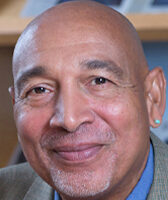 In other words, West Baltimore does not exist in isolation. In 2017, Jackson wrote about the national media’s failures in the Flint, Mich., water crisis, in which high levels of lead were found in the water and in the blood of thousands of children. The majority of the residents were Black.
Jackson wrote for the Shorenstein Center on Media, Politics and Public Policy at Harvard University’s Kennedy School of Government, “There is not much hope for the environmental security of all Americans if the media does not respond to emergencies in a nondiscriminatory way. The media are not yet up for the task. A 2012 Columbia Journalism Review article praised the shoestring efforts of the Web-based Environmental Health News to highlight environmental justice, relative to its lack of coverage in the mainstream media.
“ ‘A number of media reports in the last year have examined the impacts of toxic pollution on communities, but few have emphasized, let alone focused on, the fact that low-income, minority neighborhoods tend to bear the brunt of the burden,’ the article said. ‘The environmental-justice angle is often missing or subdued in major reports on toxic pollution,” Jackson continued, pointing to stories by USA Today and NPR.
“These were public-service investigations of the highest caliber, to be sure, but they stopped short of connecting the socioeconomic dots.”
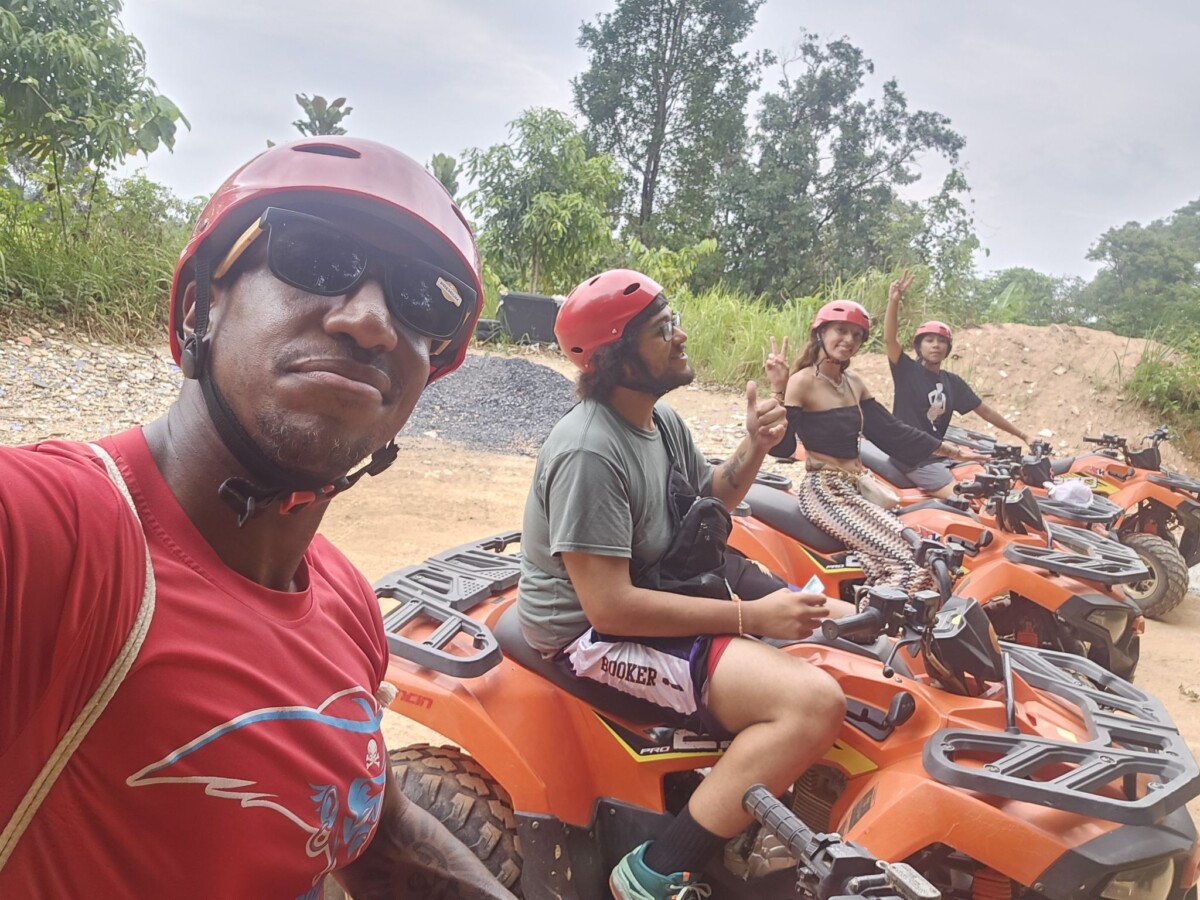
Dion Rabouin, at left, just outside Phuket, Thailand. (Credit: Dion Rabouin)
Laid Off: ‘Best Thing That Has Ever Happened to Me’
“Two years ago, the best thing that has ever happened to me happened – I was laid off from my job at The Wall Street Journal,” Dion Rabouin, founder of his own company and candidate last year for president of the National Association of Black Journalists, writes on LinkedIn.
“WSJ’s head of video called me into a tiny little office on the seventh floor with an HR representative to tell me my position was being eliminated. Thank God.
“It has been the most incredible two years. Yesterday I was in Iceland watching humpback whales in the Faxaflói bay after spending the night looking up at the Northern Lights of the Aurora Borealis in Reykjavik. I walked on lava rocks and traipsed across a bridge that connected the European and North American continents.
“Two days before that I was in Perugia, Italy, at the International Journalism Festival. I ate amazing pasta, drank delicious red wine and talked about the future of journalism with some of the industry’s elite thinkers and practitioners inside and outside of centuries old opera houses, churches and auditoriums. (I also went to see the house where the Foxy Knoxy murder happened.)
“Three days before that I was in Bangkok at the Songkran new year’s festival walking with hundreds of thousands of elated revelers from around the world in the streets, shooting water from a super soaker at locals and visitors alike, sharing in the blessings of a new year with childlike whimsy.
“Earlier that week, I was in Phuket riding an ATV through the jungle with family members, feeding elephants and watching Muay Thai fighters at the Rawai Boxing Stadium.
“A few days before, I was in Singapore sampling kaya toast and soft boiled eggs, satays and Nasi Lamak at Lau Pa Sat, Maxwell Road and Changi food centers with a former colleague I hadn’t seen in years.
“And that’s just the last two weeks.
“In the two years since the Journal dismissed me, I’ve gotten to connect just about every member of my family, traveled around 250,000 miles, traveled across six continents (I’m coming for you Antarctica!) by bus, plane, train, van, taxi, tuk-tuk, songthaew, tro-tro and aluguer. I’ve met more amazing people, had more unforgettable experiences and felt more love, excitement and adventure than I ever thought was possible. I’ve also become fluent in French, conversational in Chinese and am on my way to becoming a certified investment advisor representative.”
He also founded his own company, a venture implementing digital transformations at legacy Black-owned newspapers known as The Black Press.
“It’s been an invigorating two years, and none of it would have been possible if they hadn’t called me into that cramped office on a Wednesday and told me my services were no longer necessary. I am so genuinely thankful – not sarcastically, vindictively thankful – to everyone at the Journal who decided to let me go,” Rabouin continued.
“I write this for anyone who’s been laid off recently who is scared, unhappy, uncertain, feeling rejected or disrespected and wondering what comes next. Know that your former employer has just done you an incredible favor. It may not feel like it now. The best advice I can offer is to take this time and appreciate the opportunity you have to make your life whatever you want it to be.”
HBCUGameday prepared this brief tribute to Charlie Neal, posted Wednesday. (Credit: YouTube)
Charlie Neal, HBCU Broadcast Legend, Dies at 80
“Charlie Neal, the legendary architect of modern HBCU sports broadcasting and the lead play-by-play voice of HBCU GO, has died at the age of 80 following an illness that had sidelined him last season, Kyle Mosley wrote Wednesday for HBCU Legends on SI,” Sports Illustrated.
“For more than four decades, Neal sat at midcourt or in the press box and delivered what no one else in American sports media did at the scale he did it. He told the most compelling stories of historically Black colleges and universities, their coaches, players, administrators, stadiums, arenas, and campuses. He gave them all weight and historical relevance.
” ‘Charlie was underrated for his impact on sports,’ Curtis Symonds said to HBCU Legends. ‘I consider him the ‘John Madden‘ of Black College Sports. Who’s been involved with Black college football for 50 years like Charlie? He was a historian. He was a proven product because he’s lived it, and he would give you history and give you anything that no one else could give you. . . . .
“Neal called games for Black Entertainment Television (BET) from 1980 to 2004, then for ESPNU, MEAC Digital Network, and finally HBCU GO. He was the voice when Grambling State University’s Eddie Robinson broke Bear Bryant’s all-time wins record in 1985. His body of work included Bayou Classics, Florida Classics, MEAC tournaments, and CIAA tournaments, and even hosted the NBA on TNT and covered the Goodwill Games in Moscow. . . . ”
William Rhoden wrote for Andscape that news of Neal’s passing “was not a gut punch or slap in the face; it was more like being doused with a bucket of cold water. . . .
“When Bob Johnson launched BET in 1980, Charlie was his first call. Johnson made Charlie executive producer for sports, and he covered athletics at historically Black colleges and universities with an unrivaled passion and depth of knowledge, something I appreciated as someone who had attended an HBCU (Morgan State) and who had played football.
“Over the next two decades, Charlie became the face and the voice of Black college football. . . .”
Short Takes
View on Threads
If no image is visible, please consider changing browsers.
- “Tony Hinchcliffe, a comedian with a reputation for pushing buttons, reportedly has upset members of George Floyd’s family with a joke he made in Netflix’s ‘The Roast of Kevin Hart.‘ ” Neal Justin wrote Wednesday for the Star Tribune in Minneapolis. ” ‘The Black community is so proud of you,’ Hinchcliffe said to Hart during Sunday’s live airing. ‘Right now George Floyd is looking up at us all laughing so hard that he can’t breathe. ‘ ” How comedy norms have or have not changed is sure to be discussed at this coming Thursday’s Journal-isms Roundtable, ” ‘Everyone Needs a Laugh — the History of African American Comedy.“
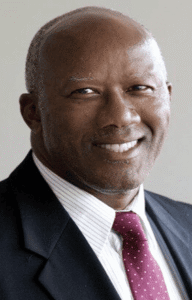 Wayne J. Dawkins (pictured), Linn Washington Jr. and Ron Thomas — three veteran and accomplished Black journalists — are retiring from academia, each told Journal-isms this weekend. “At 2 p.m. Friday I officially retired from Hampton University and the Scripps Howard School of Journalism and Communications,” messaged Dawkins. “I closed the door on 14 years at Hampton, from 2005 to 2017, where I was assistant, associate, and professor of journalism, and from 2024 to 2026 when I returned as professor of research, which meant a reduced teaching load to complete ‘Black and Golden: Fifty Years of NABJ,’ (video) and a chapter in the forthcoming ‘A Full Measure of Freedom‘ that commemorates the 200th anniversary of the Black Press in America [Johns Hopkins University Press.] Sandwiched between my Hampton years was a seven-year stint at Morgan State University School of Global Journalism and Communication, 2017 to 2024. . . . What now? Stay tuned.”
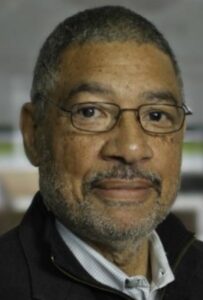 . . . Washington (pictured) said he was “leaving the academy after 30 years at Temple U. I’m currently doing a summer school course at Temple’s Rome campus. I was accepted to teach the Summer 2026 semester in Rome two years ago…way before TU presented a voluntary retirement package last December that presented me with a Godfather-like offer I couldn’t refuse. . . . What next? Looks like I’ll write a bi-monthly column for The Philadelphia Tribune. The Trib is that historic institution where I began a career in journalism back in the mid-1970s… I started at the Tribune in 1973 as a freelancer writing a weekly column featuring community-based entertainment like talent shows in church basements.
When shifting to full-time in 1975 as a general assignment reporter/photojournalist, I never thought I’d teach at the college level, earn the rank of Full Professor or even be able to retire from anywhere with a modicum of comfort. . . .”
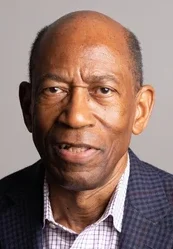 . . . Thomas was the first chair of the National Association of Black Journalists Sports Task Force and founding director of the journalism program at Morehouse College. He messaged, “I have decided to retire after more than 18 years as a Morehouse journalism professor. I’ve decided I want more time for projects related to my book ‘They Cleared the Lane: the NBA’s Black Pioneers.’ I want to explore the possibility of writing a second edition and turning my book into a documentary, plus doing research about my family, playing more tennis and just having more spare time.” Thomas was inducted last month into the Black Sportswriters Hall of Fame.
- “About 90 journalists from the old Post-Gazette indicated an interest in coming over, and we ended up hiring 58 of them,” Stewart Bainum, a Maryland hotel magnate and philanthropist who founded the Venetoulis Institute, which bought the Pittsburgh Post-Gazette and owns the Baltimore Banner. Bainum told Richard J. Tofel of Bob Cohn Substack, “the Post-Gazette had been losing a lot of money, and we had to make some hard decisions about having a smaller operation until we could stabilize the finances. . . . And I fully expect that the Post-Gazette newsroom will grow after we can stabilize the business.”
 Manuel Bojorquez (pictured), Miami-based national correspondent for CBS News for more than a decade, has landed at WFOR, the CBS station in Miami, after being swept up last year in CBS cost-cutting. “He’s reported from Cuba, Venezuela, and Haiti – all three countries with big populations in South Florida. What happens in those countries affects South Florida – and he has the experience to tell those stories, CBS spokesperson Elita Fielder Adjei told Journal-isms. “I’m grateful for the opportunity and happy to be back in journalism,” Bojorquez said.
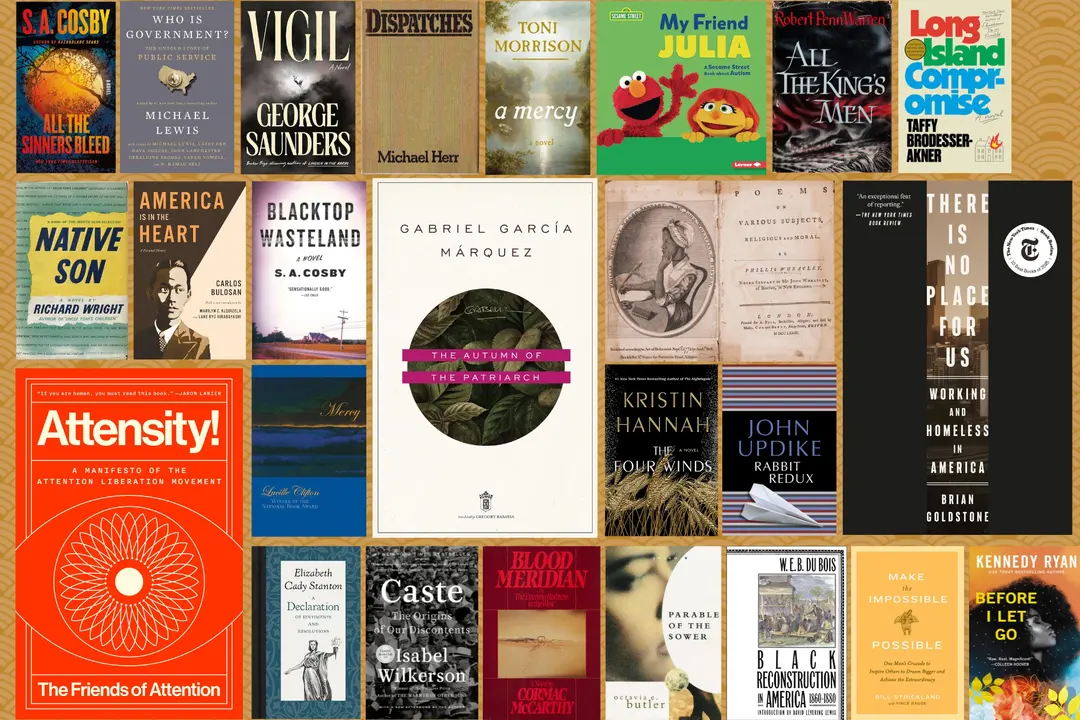
- Oprah Winfrey selected Isabel Wilkerson’s “Caste” and Wilkerson chose “Black Reconstruction in America” by W.E.B. Du Bois. “Ahead of the 250th anniversary of the United States, we asked 25 literary luminaries to each pick one book that they believe reflects where American life is headed or speaks to the present in a meaningful way,” Time magazine said Tuesday, updated Thursday. “The book Caste by Isabel Wilkerson explains why we’re so racially divided without focusing on the word ‘race,’ ” Winfrey wrote. “It changes the lens through which we see the world. Caste explains the why and how about who automatically holds human value, who has to earn it, and who is denied it all together. ” Wilkerson won the Pulitzer Prize for feature writing in 1994 while at the New York Times.
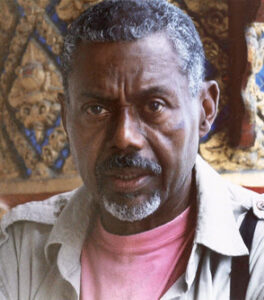 “George W. Goodman (pictured), writer, musician and pioneering journalist, died in Los Angeles on April 7 at the age of 87,” the Daily Hampshire Gazette in Northampton, Mass., reported May 2. “Goodman wrote and reported for a host of newspapers and magazines from the Los Angeles Sentinel to Look, The Atlantic and The New York Times on everything from the Watts riots of 1965 to profiles of Pete Seeger, BB King, Miles Davis, Jimi Hendrix and Sonny Rollins. . . . His father, George Goodman, Sr., was Executive Secretary of the Urban League in Boston and Washington, DC, started a radio program at New York’s WLIB in the 1950s, and was on the editorial board of The Hartford Times. His mother, Blanche Juanita Washington, was a journalist and probation officer in Los Angeles, where her brother, Leon Washington, owned the Los Angeles Sentinel newspaper. . . . ”
- “After the success of some Black journalists, like Don Lemon or Joy Reid, who have gone independent, it might be simple to suggest that reporters launch a Substack or an independent newsroom when laid off from corporate media,“ Fallon Brannon wrote May 7 for the Objective. “However, those career pivots cost more than just money, and most independent journalists have to start from scratch — particularly Black independent journalists. . . . “
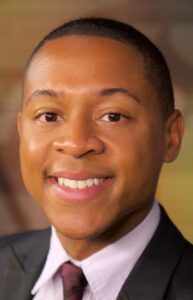 Daniel Grimes (pictured), a political correspondent for Spectrum News, has joined the Lemon Media Network, a project of journalist Don Lemon, as Washington correspondent. The network announced Monday it was expanding its news and operations team and has topped 10 million followers across social media platforms “with a more than 50% growth in the last year alone.”
- “To be a Black journalist who reports on race, who critiques systems of power and controversial but popular figures is to know that pushback, especially online, is almost guaranteed,” Nicky Childers wrote Tuesday for NewsOne. “When I’ve written articles or done investigations that call powerful people or institutions to account, people coming out of the woodwork to make sure I know they are displeased has always been part of the work. It’s also the point of the work. I write to strike a chord and shift how readers engage with an issue. When my writing is nudging people to consider broadening how they see an issue or unearths a hidden truth, somebody is bound to be upset and vocal about it. . . .”
- “Thanks to a bill passed last year, Coloradans cannot use biologically accurate pronouns or titles in their interactions with their colleagues at work,”‘ Krista Kafer wrote Tuesday for the Denver Post. “If they do not address customers and colleagues by their preferred pronouns, the business could run afoul of the Colorado Anti-Discrimination Act as amended. To protect First Amendment rights, XX-XY Athletics, an athletic apparel company, and Born Again Used Books sued in federal court. . . .”
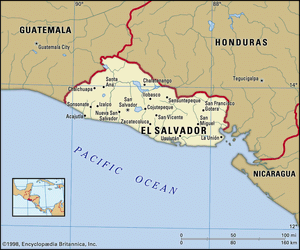 Media groups in El Salvador expressed their “profound solidarity with the digital newspaper El Faro , its partners, its journalistic team, and their families, in the face of the latest escalation of harassment by the Nayib Bukele government, the Article 19 freedom-of-expression group reported Tuesday. “This includes the freezing of a bank account and a property belonging to two partners of Trípode SA de CV, the founding company of the media outlet. . . . This action is part of a systematic pattern of reprisals that is triggered every time El Faro publishes investigations that are uncomfortable for those in power.”
 “Cuban humanitarian groups posted video on Thursday, May 14 of a political prisoner being released amid pressure from the United States and high stakes diplomatic negotiations,” Nick Penzenstadler and Josh Meyer reported Thursday, updated Friday, for USA Today. “Video circulated online of Sissi Abascal Zamora hugging loved ones outside the La Bellotex women’s prison. The release comes a day after USA TODAY’s exclusive report about two other Cuban political prisoners who were given the ultimatum of exile or jail after a secret meeting between U.S. and Cuban officials in Havana. The two said they chose exile but remain behind bars. . . .”
- The Committee to Protect Journalists Wednesday called on authorities in the Democratic Republic of the Congo to release journalist Stéphane Shisso, who was arrested in January after reporting on erosion caused by mining, and to ensure the safety of his colleague Guelord Shamba, who is in hiding.
- “The dictatorship of Daniel Ortega and Rosario Murillo ordered the closure of radio stations Stereo Romance 105.3 FM and La Buena Onda 91.1 FM — both based in Carazo — marking a new escalation against independent media in Nicaragua,” Artículo 66, an independent media outlet reporting from exile in Costa Rica, reported Tuesday. “The owner and general director, Francisco Gadea López, said this measure is an act of retaliation for the commitment they consistently upheld as an independent media outlet, and for giving a voice to citizen complaints.”
NABJ Honors Journos on Outs With Authorities
May 14, 2026
Among Winners: Afro-Cuban Exile, Arrested Reporter
BuzzFeed Shares Up After News of Sale to Byron Allen
N.Y. Times’ Kristof Details Abuse of Palestinians
‘What Did Jamaica Do to Deserve Kari Lake?’
Publisher Ruthie Hopkins, 83, Survived Calif. Fires
19 Win Knight-Wallace Fellowships at U. of Michigan
Asian Americans’ ‘Overlooked History’; Struggle to Belong
Abraham Jiménez Enoa is presented with the International Press Freedom Award from the Committee to Protect Journalists on Nov. 17, 2022. (Credit: CPJ/YouTube)
Among Winners: Afro-Cuban Exile, Arrested Reporter
Abraham Jiménez Enoa, an Afro-Cuban who fled the island and its government’s repressive policies toward non-government journalists; Georgia Fort, arrested along with Don Lemon and others covering protests in Minneapolis; and Brent Staples, longtime New York Times opinion writer who retired last year after a reorganization of his section, are among those to be honored this summer by the National Association of Black Journalists, NABJ announced Thursday.
“I am very happy about this award. It is a great recognition for the independent Cuban press and for me in particular,” Jiménez Enoa, now living in Spain, messaged Journal-isms. “But most importantly, it is recognition for Black people in Cuba who have suffered racism on the island and in exile, and who never tire of condemning this inhumane discrimination.”
Jiménez Enoa is the first journalist from Latin America to win the Percy Qoboza Award for a foreign journalist. It comes as the Trump administration is threatening to invade the island, and, according to USA Today, at least a dozen political prisoners languishing in Cuban prisons “are at the center of high-stakes negotiations between U.S. and Cuban officials that could reshape future relations between the Cold War foes.”
The Spain-based Prisoners Defenders reported Thursday, “Our April 2026 report documents 23 new political prisoners in Cuba, including minors, athletes, artists, independent journalists, and peaceful activists, as well as serious allegations of sexual violence in prison, repression against family members of dissidents, and death threats against prisoners of conscience in the event of a US intervention in Cuba.”
Jiménez Enoa called the award “great recognition for press freedom. It’s a shame not to be able to be there in person at the gala! I would have loved it!
“But I don’t have the finances to pay for a ticket and lodging. I live in very precarious conditions in exile.” It is a complaint voiced by others representing foreign journalists honored by NABJ.
Georgia Fort testifies before the Congressional Black Caucus.
If no image appears, please consider using a different browser.
“When federal agents arrived at Georgia Fort’s front door to arrest her, she knew what to do: be a journalist,” Rachel Leingang wrote April 16 for the Guardian.
“Fort, an independent Minnesota reporter who faces criminal charges after covering a protest inside a St Paul church, took out her phone and spoke directly to the camera, livestreaming to her audience that her lawyer advised her to go with the agents. Her three kids were in the house at the time, she said.
“ ‘I’m going to have to hop off here and surrender to agents,’ she said in the video on 30 January. ‘As a member of the press, I filmed the church protest a few weeks ago, and now I’m being arrested for that. It’s hard to understand how we have a constitution, constitutional rights, when you can just be arrested for being a member of the press.’ ”
Fort, a three-time Midwest Emmy Award-winning journalist, is to receive the Ida B. Wells Award, which “recognizes an individual who has provided distinguished leadership in increasing access and opportunities for Black journalists and improving the coverage of communities of color in American media.”
A nominating letter from Sheree Curry, president of NABJ-Minnesota, said, “As founder of BLCK Press, Georgia created an independent newsroom committed to rigorous, community-centered journalism that improves coverage of communities of color. Through the ‘Here’s the Truth’ series she created, which aired online and on the local CW station, she has challenged dominant narratives and insisted on accountability and dignity in storytelling.
“But her most enduring work may be the pipeline she has created for the next generation of
Black journalists. Georgia founded the Center for Broadcast Journalism to expand access to
journalism careers for people ages 16-24 and to help news directors and general managers
diversify their newsrooms. She also acquired and transformed Power 104.7 FM into a hands-on
training ground.
“Through CBJ’s Summer Journalism Intensive and its Power 104.7 Level II Media Lab, she has
trained and paid more than three dozen emerging journalists, even equipping them with their
own professional cameras, microphones, and audio recorders. . . . ”
Staples was part of the New York Times Editorial Board from 1990 to 2025. In 2019 he received the Pulitzer Prize for writing on the legacies of slavery with “extraordinary moral clarity,” using his Pulitzer day remarks to honor his enslaved ancestors and his great-great-grandmother Somerville Staples, who came of age in the chaos following the Nat Turner rebellion of 1831.
However, a year ago, the Times made major changes to its Opinion section, and the paper “offered current writers on the editorial board — including Mara Gay, Brent Staples, Jesse Wegman and Farah Stockman — new jobs elsewhere in the opinion pages and the Times’ newsroom, or buyout packages if they want to leave,” Max Tani wrote then for Semafor. Staples retired in November after 40 years at the Times.
- Scott Nover, Washington Post: The Trump administration arrested this journalist [Georgia Fort]. She says the censorship is ongoing. (Nov. 17)
- Protect the Press: Journalist Georgia Fort Reflects on Frontline Reporting as George Floyd Anniversary Approaches with Protect the Press
BuzzFeed Shares Up After News of Sale to Allen
“Twelve years ago BuzzFeed Inc reportedly valued itself at almost $1 billion, scaring off rumored interest from the Walt Disney Company,” Sarah Fielding reported Tuesday for Fast Company.
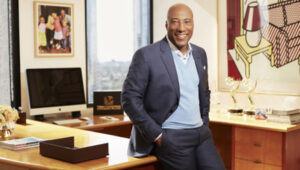 “Fast-forward to this week and BuzzFeed is selling a controlling stake to Allen Family Digital for $120 million — $100 million of which isn’t due for five years.
“Allen Family Digital, associated with Byron Allen, will control about 52% of BuzzFeed’s outstanding shares at $3 each.
“BuzzFeed’s shares were up more than 101% to over $1.49 on Tuesday morning. The stock has been trading at under a dollar a share for most of this year.”
Eric Hayden added Thursday for the Hollywood Reporter, “The deal will add BuzzFeed and HuffPost to Allen properties that include Local Now, a free streaming app, the linear TV network of The Weather Channel (purchased for $300 million in 2018) as well as the network and website TheGrio, local TV stations in multiple cities, streaming service HBCU Go and branded properties like Cars.TV and Pets.TV.
“. . . He also covets a subscription video on-demand platform to pair with his assets. As he revealed to The Hollywood Reporter, his next target for a full takeover is Starz — and he’s taken a notable stake so far.”
According to Bloomberg News, “Allen said he wants to turn BuzzFeed into a ‘free-TV super app’ that will combine news, weather reports and entertainment content.”
Not everyone was bearish on the news. “All of the sources I spoke with were hard-pressed to make sense of Byron’s decision to spend anything on a brand that has lost nearly all its value,” Dylan Byers wrote for Puck. “One media banker posited that it was ‘a weird way to bet $20 million.’ Another suggested that Byron may simply not understand what he’s doing. Presumably, he’s seeking relevance — but even then, it’s not clear what residual brand awareness, if any, BuzzFeed still confers.”
- Shannon Dawson, NewsOne: How Did Byron Allen Get So Wealthy? A Look At The Media Giant’s Net Worth
- Todd Spangler, Variety: Byron Allen on How He Plans to Use BuzzFeed to Create a ‘Premier Global Free Streaming Service,’ What It Means to Be Taking Over Colbert’s CBS Time Slot and Why He Wants to Buy Starz
— NYTimes Communications (@NYTimesPR) May 13, 2026
N.Y. Times’ Kristof Details Abuse of Palestinians
“The New York Times is standing by Nicholas Kristof’s article detailing how Palestinians are regularly abused in Israeli prisons after sharp criticism and calls for the column to be retracted,” Jacob Bryant reported Tuesday for the Wrap.
“Kristof’s story – titled ‘The Silence That Meets the Rape of Palestinians‘ – details how Palestinian men and women held in Israeli prisons are facing ‘brutal sexual abuse at the hands of Israel’s prison guards, soldiers, settlers and interrogators.’
“In wrenching interviews, Palestinians have recounted to me a pattern of widespread Israeli sexual violence against men, women and even children — by soldiers, settlers, interrogators in the Shin Bet internal security agency and, above all, prison guards,” Kristof wrote.
“There is no evidence that Israeli leaders order rapes. But in recent years they have built a security apparatus where sexual violence has become, as a United Nations report put it last year, one of Israel’s ‘standard operating procedures’ and ‘a major element in the ill treatment of Palestinians.’ A report out last month, from the Euro-Med Human Rights Monitor, a Geneva-based advocacy group often critical of Israel, concludes that Israel employs ‘systematic sexual violence’ that is ‘widely practiced as part of an organized state policy.’
The Times of Israel reported Thursday, “Israel will sue The New York Times over an op-ed alleging widespread sexual abuse and rape against Palestinian prisoners, said Prime Minister Benjamin Netanyahu and Foreign Minister Gideon Sa’ar in a joint statement Thursday.
“They called the piece by columnist Nicholas Kristof ‘one of the most hideous and distorted lies ever published against the State of Israel in the modern press.’ ”
View on Threads
If no image is visible, please consider using a different browser.
‘What Did Jamaica Do to Deserve Kari Lake?’
“Jamaica is a beautiful island with white beaches; a green, mountainous interior; and, despite its small size, one of the most recognizable cultures in the world. Jamaica has exported music, fashion, and food to the farthest corners of the planet. Bob Marley alone wrote songs that hundreds of millions of people would instantly recognize as Jamaican . . . ,” Anne Applebaum wrote Tuesday for the Atlantic.
“Given all of that: What did Jamaica do to deserve Kari Lake?
“Lake, a failed Senate and gubernatorial candidate from Arizona, has just been named as President Trump’s candidate for ambassador to Jamaica. If confirmed, she will arrive in Kingston with no diplomatic or political preparation, other than the 14 months she just spent running America’s foreign broadcasting agencies into the ground.
“During a chaotic tenure as the leader of the U.S. Agency for Global Media, Lake tried to dismantle Voice of America, and to block funding for America’s other broadcasters, including Radio Free Europe/Radio Liberty and Radio Free Asia. By doing so, Lake ceded influence to Chinese and Russian state media all over the world and undermined America’s ability to reach people during times of crisis, most notably in Venezuela and Iran.
“Lake also squandered tens of millions of dollars, perhaps hundreds of millions, of taxpayer money. Because she couldn’t be bothered to understand U.S. employment law, she tried and failed to fire hundreds of VOA staff. . . .”
In Jamaica, meanwhile, Lester Hinds wrote Tuesday, “When The Gleaner spoke with Jamaicans in the diaspora about the new ambassadorial appointment, they were guarded in their response to her nomination.
“Dr Rupert Green, a supporter of the Republican Party, told The Gleaner that he believes the president is doing her a favour with the nomination.
“ ‘It will be interesting to see how she fits into her role, if and when she is confirmed by the Senate,’ he said.
“Irwine Clare, a community leader, told The Gleaner that Jamaica is in for interesting times for the next two years if the nomination goes through.
“ ‘Unlike other appointments who brought specific skills to the position, whether as businesspeople or former elected officials, I don’t know what value Lake brings to the position,’ he said.”
Publisher Ruthie Hopkins, 83, Survived Calif. Fires
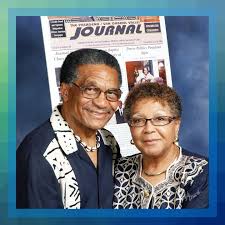 Ruthie Hopkins, who with her husband, Joe Hopkins, published The Pasadena/San Gabriel Valley Journal, the only African American-owned newspaper in California’s San Gabriel Valley, for 34 years, died May 9, the Los Angeles Sentinel reported. She was 83.
The family home was destroyed in the devastating fires that swept through Altadena and Pasadena in January 2025, and an appeal created then on a GoFundMe page said Ruthie Hopkins “has health challenges that prevent her from walking on her own.”
“As the founders of one of the region’s most influential Black-owned media outlets, the Hopkins family dedicated over three decades to documenting the triumphs and struggles of the African American community in Southern California,” the NAACP in Los Angeles said in a tribute. It quoted California State Assemblymember Chris Holden as having long championed the couple as “pillars of the Black community” and civil rights “Unsung Heroes.”
“During his tenure as Chair of the California Legislative Black Caucus, Holden frequently highlighted how their ‘fearless leadership’ and ‘unrelenting dedication’ to local news provided a vital voice at a time when Black perspectives were often excluded from mainstream media. . . .”
The NAACP continued, “They didn’t just report the news; they challenged the status quo. The Journal became a frontline weapon against systemic racism in city government, hiring practices, and law enforcement. Their advocacy was transformative. It was the persistent pressure from Joe and Ruthie Hopkins that paved the way for the Tournament of Roses to welcome its first African American president in 2019.”
A family obituary said that “Beyond publishing, Hopkins was an entrepreneur, author, sorority leader, and devoted missionary at Pasadena First AME Church. Her business ventures included the Pasadena Black Expo, Professional Careers Institute, and Hopkins Village — a Pasadena-based hub for small businesses and community events. . . . From empowering teenage girls to celebrating established community leaders, Hopkins dedicated her life to lifting up Black women and girls at every stage of life. . . .”
- Thembisa S. Mshaka, Andscape: How Black culture and history became collateral damage in the Altadena fire (June 26, 2025)
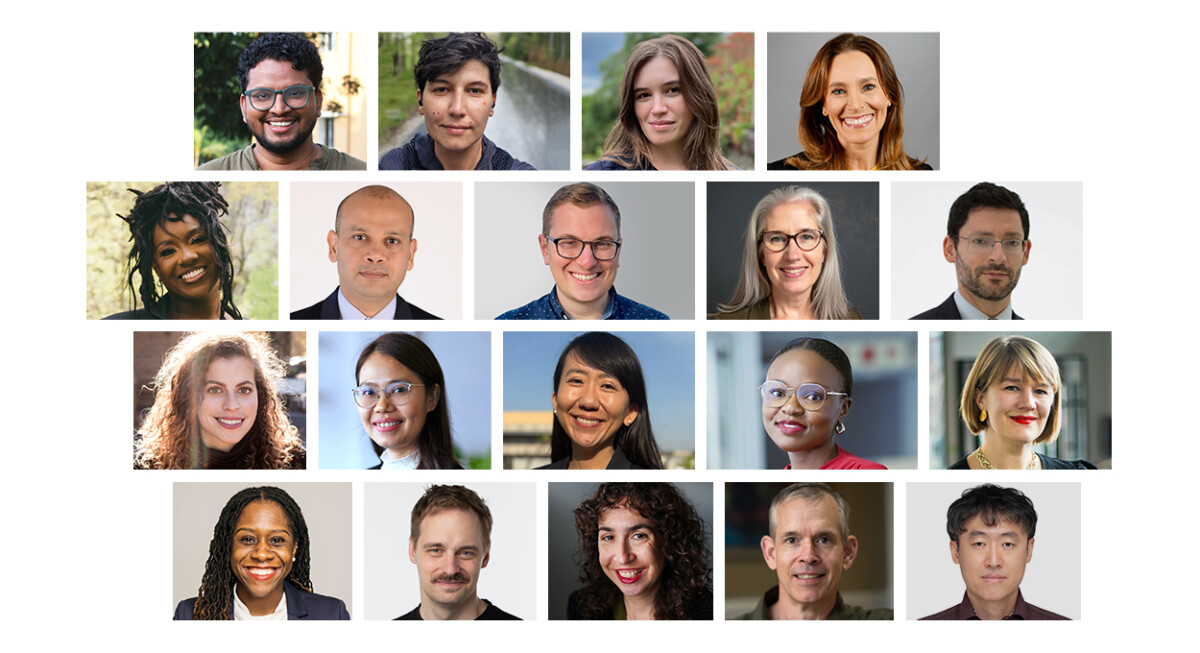
The next Knight-Wallace fellowship class. “One of the most exciting aspects of our work each year is creating the space for accomplished journalists to learn from and with one another,” said Lynette Clemetson, director of Wallace House.
19 Win Knight-Wallace Fellowships at U. of Michigan
The Wallace House Center for Journalists and the University of Michigan Thursday announced the Knight-Wallace Journalism Fellows for the 2026-2027 academic year. The 19 hail from from eight countries and across the United States.
“Over the course of the academic year, the Knight-Wallace Journalism Fellows will pursue ambitious projects exploring pressing issues, including sustainable models for rural and hyperlocal news, the collapse of institutional trust, the future of media innovation and AI, and newsroom culture and censorship,” the program said. “In addition to their individual research, they will participate in biweekly seminars and workshops with scholars, innovators, journalism leaders and social changemakers.
“In addition to the academic and intellectual resources provided, Fellows receive a $90,000 stipend, health insurance and relocation and logistical support to enable them to participate in the residential program and prioritize their fellowship research for the academic year.”
The new fellows and their fields of study are listed here.
Asian Americans’ ‘Overlooked History’; Struggle to Belong
“Asian Americans are the fastest-growing demographic group in the U.S., but across American history, their stories and the discrimination they faced have often been overlooked,” Amna Nawaz said Wednesday on the “PBS News Hour.” “For her series, ‘America at a Crossroads,’ Judy Woodruff looks at how that past continues to shape the question of who belongs in America. . . .”
The segment was partly narrated by American-born Michael Luo, executive editor of The New Yorker.
It was one of three noteworthy ones on that evening’s program: Another told of how Uganda is accepting almost all immigrants from other African countries, even though humanitarian aid from others has been cut; the United States is giving only one-third of the aid for humanitarian issues than it did two years ago.
Another reported on the death of Jason Collins, the first openly gay NBA player, and featured one of his friends, Los Angeles Times columnist LZ Granderson.
- Ken Makin, Andscape: Jason Collins was dignity, not distraction
- Terry Tang, Associated Press: Sandra Oh, Kumail Nanjiani among ‘A List’ Asian American, Pacific Islander names in new HBO doc
- Terry Tang, Associated Press: UCLA online textbook gives voice to Asian American, Pacific Islander history and cultures
- Gary Washburn, Boston Globe: Remembering the incredible life of NBA trailblazer Jason Collins
