
M.E., With Family History at the Paper, Is Also Leaving
Repeating, to Israeli: ‘Do You Know That to Be True?’
Pentagon Fires Ombudsman for Stars and Stripes
Ron Smothers, 79, Covered Explosive Racial Stories
NAHJ Names Four to Hall of Fame
Winning Topics: Missing Indigenous, Poetry That Heals
Journos in Latest Class of American Academy
Yale Student Wonders Where the Black Journos Are
Short Takes: Indigenous Journalists Association at U.N.; detailing decline of Black population in San Francisco; slain Memphis community activist and editor; Shawna Thomas; Sean ‘Diddy’ Combs; consequences of USAID exit; “most challenged books of 2025”; Sharon Farmer and “Tough Old Broads”
Homepage photo credit: Charlotte Observer
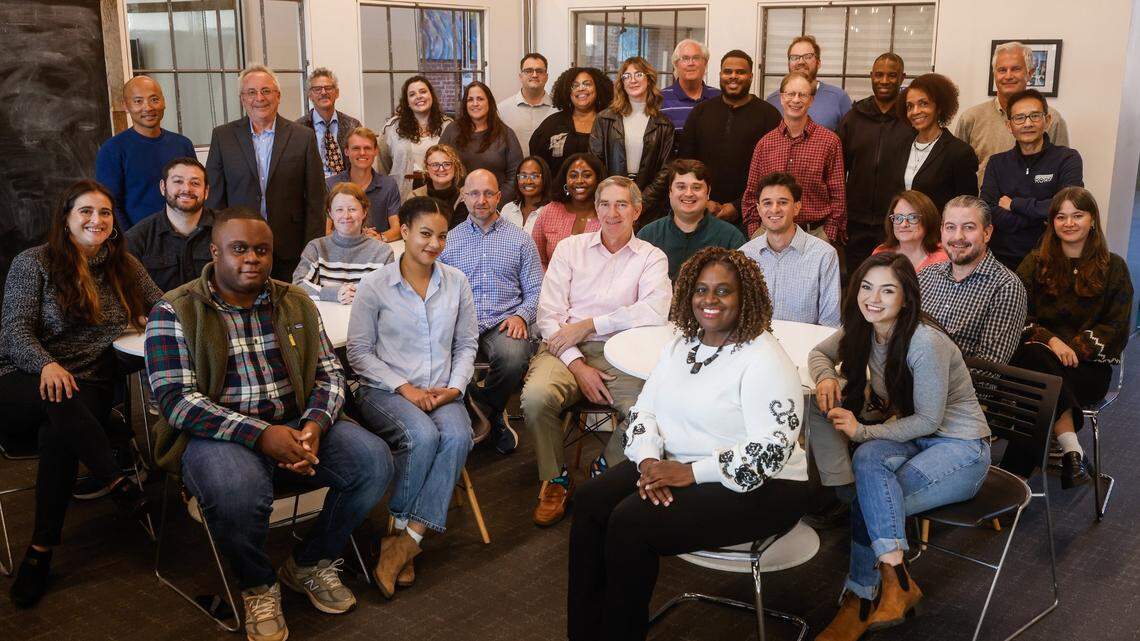
Rana Cash, in front, with Taylor Batten, in first row in white shirt, and the Observer news staff. (Credit: Charlotte Observer)
M.E., With Family History at the Paper, Is Also Leaving
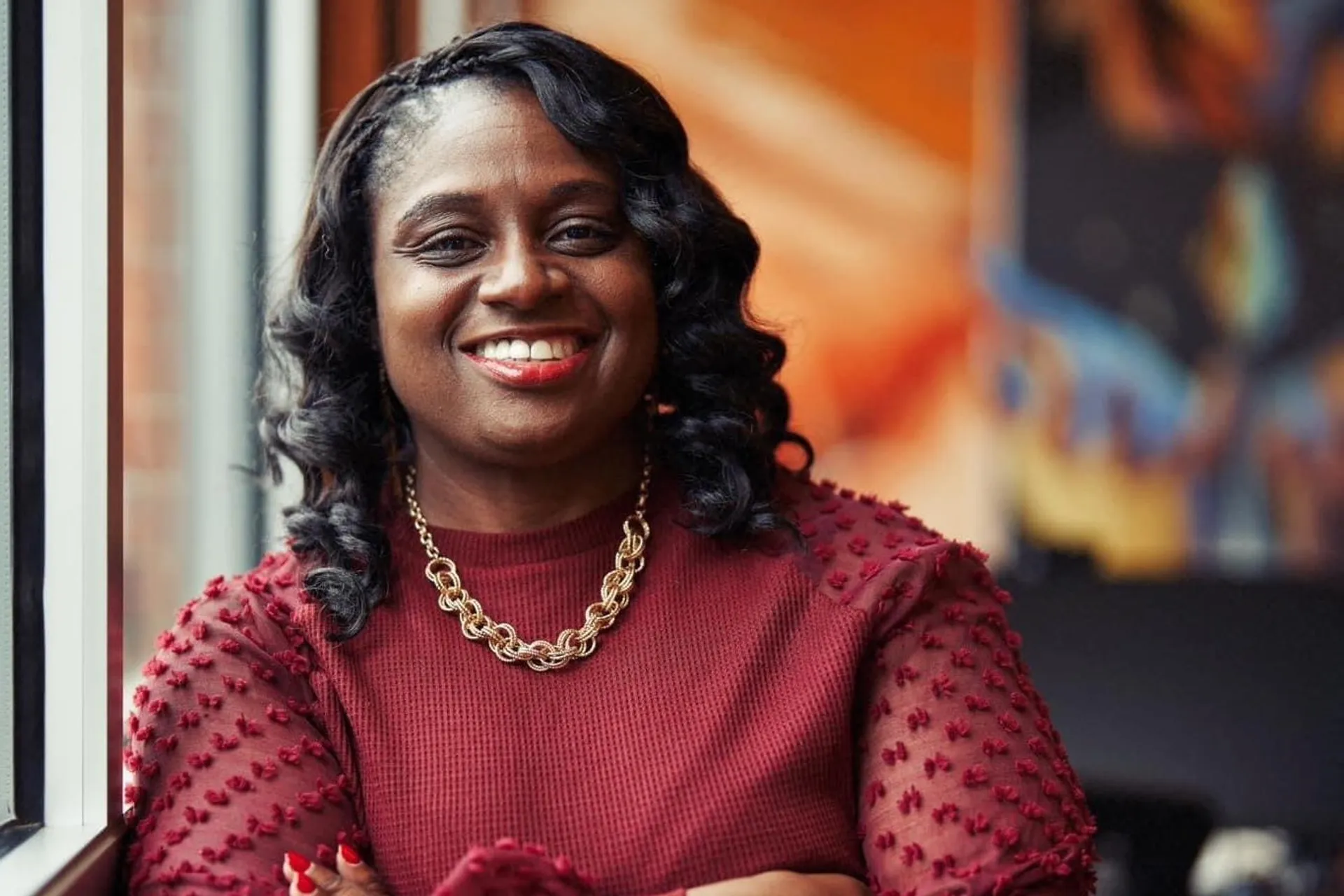
Rana Cash, the Charlotte (N.C.) Observer’s first Black top editor since its founding in 1886 and one who led the paper to the finalist’s circle at the Pulitzer Prizes, has resigned effective May 1, according to multiple reports.
Also leaving is managing editor Taylor Batten, his position eliminated “as the company moves to consolidate leadership at its North Carolina outlets,” Tony Mecia wrote for the Charlotte Ledger. “Batten joined the paper in 1995 and later became an editor and editorial page editor. His father, Jim Batten, served as The Observer’s executive editor in the 1970s and later became chairman of the Knight-Ridder newspaper chain, the paper’s previous owner.”
The Observer is now owned by Chatham Asset Management, a New Jersey-based hedge fund that acquired McClatchy, the Observer’s parent company, in July 2020,
Cash told Journal-isms, “I’m afraid I cannot explain things right now. I wish I could.”
But Glenn Burkins, founder of Charlotte’s Q City Metro and formerly of the Observer, wrote, “Like most legacy newsrooms in the U.S., the Observer has struggled as Google, Meta, Amazon and other tech giants now dominate the internet and the advertising dollars that once funded local journalism. Artificial intelligence, which scrapes news websites for free content, now poses a new threat.”
Those cutbacks have created anxiety especially among journalists of color, including editors.
Last year, after Katrice Hardy left as top editor at the Dallas Morning News for the Marshall Project, Mark Rochester, then executive editor of the Sarasota Herald-Tribune, wrote, “The impact of this loss reverberates beyond Dallas. Of the nation’s roughly 1,200 daily newspapers, fewer than 10 have African American leadership.”
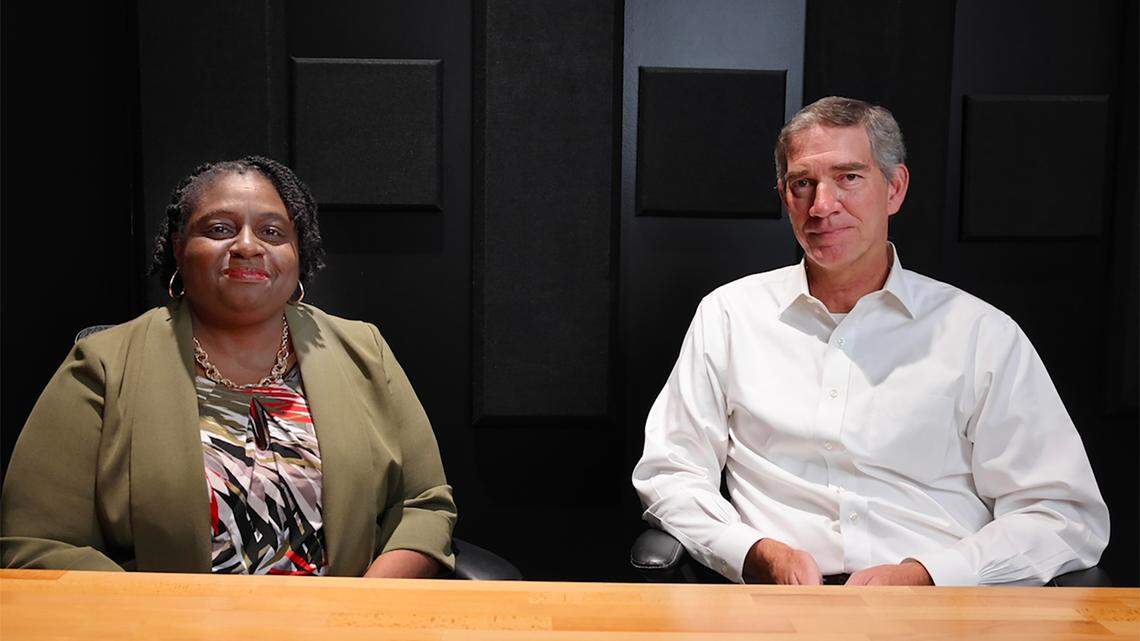
Rana Cash, left, and Managing Editor Taylor Batten
Rochester disclosed last month that he had been “fired” from the Herald-Tribune.
In the Trump era, the job-security issue goes beyond journalism. Alvin Brown, a Democratic member of the National Transportation Safety Board nominated by President Biden, was fired from his post in May 2025. He charged this month in a lawsuit, “President Trump has removed Black Senate-confirmed appointees; he has either nominated a non-Black individual for their replacement or has not formally replaced them at all. This trend fits with President Trump’s consistent messaging criticizing diversity and inclusion and his clear and demonstrable emphasis on hiring white people.”
In Charlotte, Tonya Rivens, president of the The CLT Area Association of Black Journalists, said of Cash, who is a board member, “Her departure from the Observer continues a troubling pattern of diverse talent — particularly Black women in leadership — being displaced from Charlotte’s media institutions at a time when their presence is most needed. CAABJ calls attention to this trend with urgency and calls upon media organizations in this region to do better in retaining the exceptional talent they are fortunate enough to attract.”
The Observer was a Pulitzer finalist in 2025 for its partnership with the Raleigh News and Observer for “collaborating on comprehensive and community-focused reporting on Hurricane Helene, which killed more than 100 people and damaged 70,000 homes and businesses in the western part of the state.”
Burkins noted, “Cash, who was 50 when hired by the Observer, had previously worked as executive editor of the Savannah Morning News in Georgia. She also had worked at The Miami Herald, The Dallas Morning News, The Atlanta Journal-Constitution, The Minneapolis Star Tribune and The Louisville Courier Journal. And from 2010 to 2016, she worked in Charlotte as the deputy editor of the Sporting News.”
Veteran journalist Wanda Lloyd, who watched Cash when Cash led the Savannah newsroom, said, “I’m sure Rana will be fine. She is smart talented and well respected in the industry.”
- Mike Schneider, Associated Press: DeSantis signs Florida law banning local DEI funding, says white men are ‘disfavored’
Israel’s ambassador to the United Nations, Danny Danon, insists that journalists who were killed could have placed themselves near Hezbollah terrorists and were not themselves targeted. (Credit: PBS/YouTube)
Repeating, to Israeli: ‘Do You Know That to Be True?’
“Israel has killed 260 journalists in Gaza, Lebanon, Yemen and Iran,” as Spain’s El Pais reported Friday.
And on Thursday, the Committee to Protect Journalists said, “Israel’s failure to allow medical crews access to injured Lebanese journalist Amal Khalil in time to save her may constitute a war crime.”
So when Israel’s ambassador to the United Nations, Danny Danon, joined the “PBS News Hour” for a rare appearance Thursday, he must have expected that the slain journalists would be topic A.
But it did not go exactly as he had hoped.
From the transcript:
Geoff Bennett: The Lebanese journalist Amal Khalil was killed yesterday in an Israeli strike. Lebanon’s prime minister responded by saying that Israel’s targeting of journalists — and this is a quote — “is no longer isolated incidents, but has become an established approach.”
The Committee to Protect Journalists has documented a pattern of journalists killed by Israeli strikes. What military objective is served by killing reporters?
Danny Danon: Well, I beg to differ about your question. It’s biased.
With all due respect, we are not targeting reporters, period. Unfortunately, if you have reporters who are next to Hezbollah terrorists or Hezbollah bunkers or Hezbollah launchers, those incidents happen, and we regret that. But to accuse Israel that we target reporters, that’s a blood libel. You know, what are we actually implying, that we gather intelligence…
Bennett: Excuse me. Excuse me. I…
Danon: .. that you gather intelligence…
Bennett: I take issue. I take issue. I take issue with that, sir.
Danon: … and we actually want to kill reporters, and not to kill terrorists of Hezbollah?
(Crosstalk)
Bennett: You say that Israel does not target journalists. Amal Khalil is dead. CPJ has documented a growing pattern of targeted Israeli attacks in Lebanon, where 15 journalists and media workers have been killed by Israel since the October 7 attacks.
Your government continues to state that Israel does not target journalists. But my question is simple. At what number of dead journalists does that answer become one that the international community can no longer accept?
Danon: Geoff, it’s outrageous. When you say we target journalists, you imply that we have the intention to kill journalists, and that’s a lie. You should ask the other questions. Where were those journalists during the time of the attack? Where they were spending their time? Maybe they were next to Hezbollah terrorists, and that’s why they were in line of fire, unfortunately.
Bennett: Do you know that to be true? Do you know that to be true?
(Crosstalk)
Danon: I will tell you one thing.
Bennett: Do you know that to be true, sir?
Danon: We will focus our efforts…
Bennett: I take that as a no.
- Reporters Without Borders: Journalist Amal Khalil killed by Israeli airstrikes in Lebanon: RSF retraces events and denounces war crimes
Pentagon Fires Ombudsman for Stars and Stripes
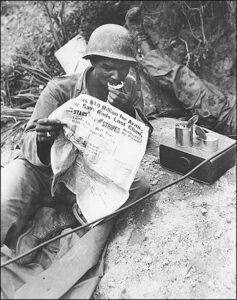
“In a blow to independent coverage of the military, the Pentagon has fired the ombudsman for Stars and Stripes, a newspaper that covers the U.S. armed forces and is partly funded by the Defense Department,” Erik Wemple reported Thursday, updated Friday, for The New York Times.
 “ ‘Apparently the Pentagon also doesn’t want you to hear from me anymore about threats to the editorial independence of Stars and Stripes,’ the ombudsman, Jacqueline Smith, wrote in a Stars and Stripes column published on Thursday. She said that the Defense Department had given no reason for her dismissal and that she had been told it was ‘not grievable.’
“Her role as ombudsman, which she began in December 2023, was to serve as a watchdog monitoring the paper’s independence and to report concerns to Congress.
“ ‘Jacqueline Smith has been relieved of her duties as Stars and Stripes ombudsman effective immediately,’ the Defense Department said in a statement.
“Ms. Smith’s departure followed months of actions by the Pentagon, under Defense Secretary Pete Hegseth, to exert editorial control of the newspaper, which has been published continuously since World War II. . . .”
Erik Slavin, editor of Stars and Stripes, outlined some of those actions Tuesday at a Journal-isms Roundtable on “Race and the Military.” You can watch him here starting at 00:49:13.000.
Photo: Clarence Whitmore reads the Stars and Stripes during the Korean War. (Credit: National Archives and Records Administration)
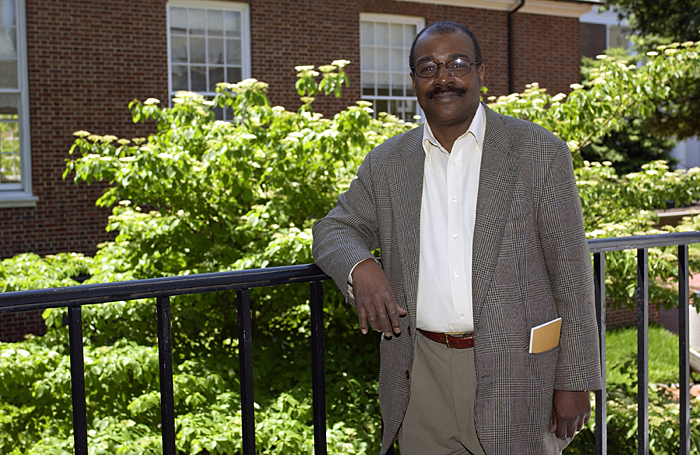 Ronald Smothers joined the University of Delaware’s English Department in 2007 to become involved in the start-up of a minor in journalism program. (Credit: University of Delaware)
Ron Smothers, 79, Covered Explosive Racial Stories
Ronald Smothers, whose journalism career at such newspapers as The New York Times, Washington Post and Newsday took him to some of the most explosive racial stories of his time, died Friday at a Wilmington, Del., nursing home. Smothers, 79, and a native of Washington, D.C., had suffered a stroke last year, said his friend, fellow journalist Jack E. White.
The University of Delaware, where Smothers became distinguished professor of journalism, recalled his days as a Post intern.
“The year was 1967, when there were riots in Newark, N.J., and Smothers soon found himself in the thick of it. ‘There were not many black reporters in those days, and the Post felt I could go places and talk to people that other reporters could not. So the Post bought me a plane ticket, and I became part of the team covering the event, which was big news.’ He also helped with the post-riot articles run by the Post, again doing man-on-the-street interviews.”
Journal-isms readers might recall Smothers’ account of covering the 1968 uprising in his hometown after the assassination of Martin Luther King Jr.
“Smothers: ‘I Was Shocked’ When the FBI Showed a Photo They Took of Me,” read the headline.
Smothers later told Journal-isms that he left the Post in June or July 1968 after witnessing an incident involving a Black police officer whose stomach was shot out, along with a second man who was shot.
Smothers said he interviewed witnesses before the police got to the scene, who told him that the Black officer was partly to blame, being disruptive and showing off with his gun. The police version differed.
He said the Post took out all of his statements about what the witnesses told him and used only the police version. Smothers quit. The coroner’s report on the death confirmed what the witnesses told him, Smothers said. He left for New York, where his girlfriend was, working at Newsday and the Community News Service before landing at the Times, which earlier told him he didn’t have enough experience and to come back in four years. The Community News Service, funded by the Ford Foundation, was created to cover Black, Puerto Rican and other communities of color, not covered by the main media.
Smothers spent 35 years at the Times, where he covered the Attica prison riots in upper New York, as well as the 1984 Jesse Jackson presidential campaign, later reporting from New Jersey and then Atlanta, where he became bureau chief.
“While in Atlanta, he was invited by Harvard University’s Joan Shorenstein Center for the Media to give a lecture on ‘How the Media Deals with Race,’ the University of Delaware recalled. “The speech dealt with what the media has done and not done in terms of race and is a discussion of riots and minority communities, he said.
“A year later, a friend who saw the speech persuaded him to expand and develop his remarks into a seminar course, ‘Race and the Media,’ which he taught at Rutgers University. He also was an adjunct professor at Brooklyn College, teaching news writing.”
Funeral arrangements are pending.
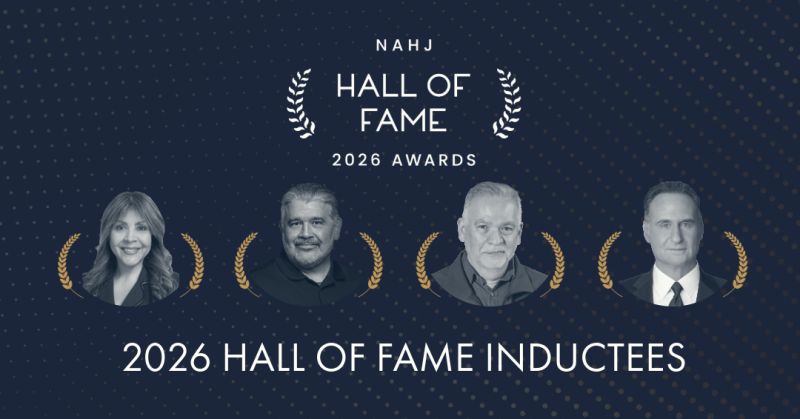
NAHJ Names Four to Hall of Fame
“NAHJ is proud to announce the 2026 Hall of Fame inductees: Sally Ramirez, Carlos Avila Gonzalez, Ricardo Sandoval-Palos and José Díaz-Balart,” the National Association of Hispanic Journalists announced Tuesday.
“The NAHJ Hall of Fame honors the journalists who have paved the way. Those whose work, leadership and mentorship have expanded opportunity and helped shape Latino journalism.
“This year’s class reflects decades of impact across broadcast, print and multimedia, and a shared commitment to telling the stories of our communities with depth and accuracy.
“We look forward to recognizing them on July 25, 2026 at the NAHJ Conference & Expo in New Orleans.”
- Mark K. Miller, TV News Check: Sally Ramirez, WMAQ-WSNS Chicago SVP Of News, To Be Inducted Into NAHJ Hall Of Fame
- Newscast Studio: WBBM-TV [NBC Chicago], Telemundo news VP to be inducted into Hispanic journalism group’s hall of fame
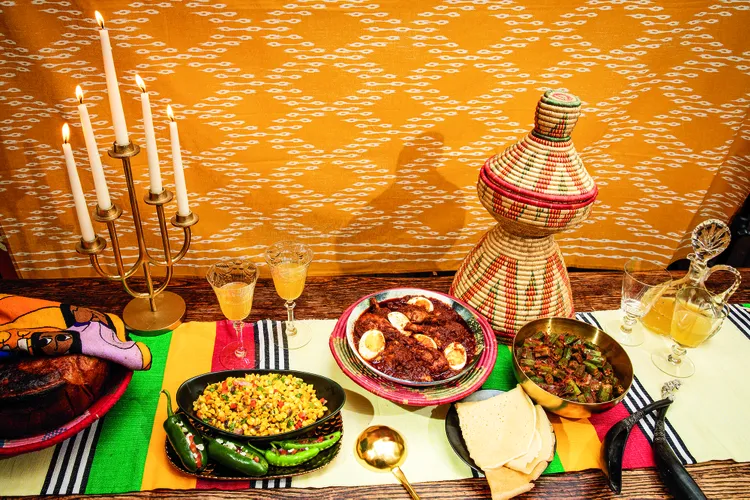
“The base of Ethiopian cuisine as a whole is very much Jewish, more than anything else,” says Beejhy Barhany. (Credit: Clay Williams)
Winning Topics: Missing Indigenous, Poetry That Heals
A story about a Native-led forensics lab dedicated to solving missing and murdered Indigenous people cases, a piece on “Poetry’s Power to Heal,” a look at a “Rosh Hashana Full of Ethiopian Spices” and a collection of three pieces on environmental protection — or the lack of it — were winners of awards for articles and content writing, the American Society of Journalists and Authors announced Wednesday.
“For far too long, citizens of the Blackfeet Nation have been vanishing without a trace,” began Kate Nelson’s 2024 piece for Atmos, winner of the The Arlenes (Articles That Make a Difference) honor.
“Growing up on the expansive Indian reservation in northwest Montana, Haley Omeasoo (Hopi/Blackfeet) witnessed community members go missing and their cases go cold — including the case of her relative and former classmate Ashley Loring HeavyRunner. Still unsolved nearly seven years later in 2024, her classmate’s disappearance prompted 27-year-old Omeasoo to establish Ohkomi Forensics, the first Indigenous-owned forensics organization dedicated to addressing the Missing and Murdered Indigenous People (MMIP) epidemic. . . .”
“With a café in New York City and a new cookbook, Beejhy Barhany is bringing the stories and flavors of Ethiopian Jews to the States,” Andrea Cooper reported in 2025 for Smithsonian magazine. [In February, the restaurant closed its doors for regular dining, citing the backlash it faced during the war in Gaza.]
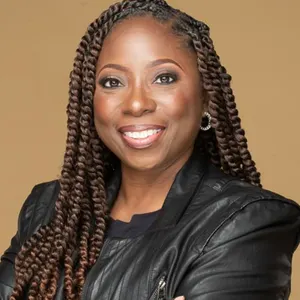 “Hope and History in Verse: Ada Limón and Charles R. Smith Jr. on Poetry’s Power to Heal” by Adrienne Samuels Gibbs (pictured) for the National Council of Teachers of English won another prize.
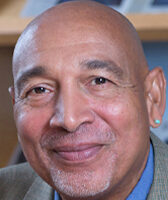 Derrick Z. Jackson (pictured) won in the Opinion/Op-Eds contest for three pieces for the Union of Concerned Scientists: “EPA Staff Stand Firm as Administration Lobs Cuts, Baseless Accusations and Cruelty,” “A Cruel Tradeoff Building the ‘Amazon of Deportation’ While Tearing Down Health and Human Services,” and “President Trump’s Cabinet of Polluters, Frackers and Climate Crisis Deniers Rushes to Gut Protections.”
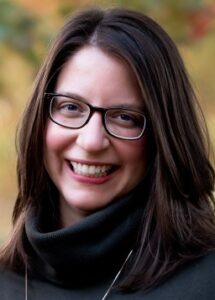 Other winners included Hanif Abdurraqib for cultural criticism for “20 Years Later: Little Brother, ‘The Minstrel Show,” “30 Years Later: Groove Theory, ‘Groove Theory’” and “40 Years Later: Sade, ‘Promise’” and “Prioritizing Women’s Health” by Christina Hernandez Sherwood (pictured) in the Columbia University’s Mailman School of Public Health publication.
Journos in Latest Class of American Academy
Members of the fourth estate were among the 252 leaders in academia, the arts, industry, journalism, philanthropy, policy, research, and science elected to the American Academy of Arts & Sciences, the academy announced Wednesday.
The Academy, chartered in 1780, was “established to recognize accomplished individuals and engage them in addressing the greatest challenges facing the young republic.”
Elected in the Journalism, Media and Communications category were:
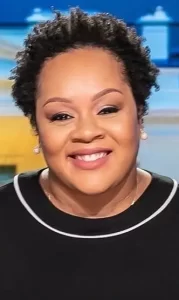 Yamiche Alcindor, NBC News
- Elizabeth S. Arnold, University of Alaska Anchorage
- Dominique Brossard, University of Wisconsin-Madison
- M. Gessen, The New York Times
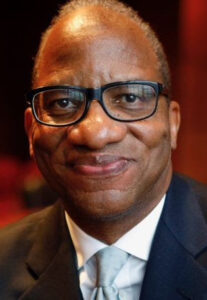 Wil Haygood, [formerly] The Washington Post
- Ruth Allyn Marcus, The New Yorker
 María Elena Salinas, ABC News
- Megan Twohey, The New York Times
Yale Student Wonders Where the Black Journos Are
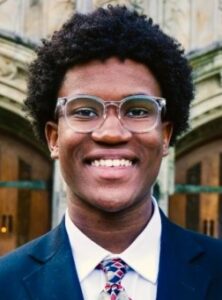 “It is frustrating that three years since the end of race-conscious admissions, one year after the first-ever election of an all-Black Yale College Council ticket and in the midst of an intense anti-DEI campaign against universities across the nation, there is little to no journalism that explicitly and substantively regards race on this campus,” Jean-Claude Pierre III (pictured) wrote Thursday for the Yale Daily News.
“This is troublesome because the stakes of comprehensiveness in our journalism are high, especially in a democratic society. The dissemination of information vitalizes our perception of the world, in turn informing our actions within it. Race-blind journalism builds limited perceptions, which — often, unknowingly — motivate the construction of flawed realities. This is problematic in the context of any race, but I’d like to focus on the need for change specifically in relation to blackness at Yale.
“First and foremost, we need better representation of Black journalists within our publications. While it may seem at a glance that the Yale Daily News’ racial demographics are generally reflective of that of broader Yale, representation dwindles in more influential positions. In the past 20 years, the News has had 65 managing editors and editors in chief, including in the incoming board. Four have been Black; none of the four have been editor in chief. I wouldn’t be surprised if this trend is reflected in most of Yale journalism. . . . ”
View this post on Instagram
If no image is visible, please consider changing browsers.
Short Takes
- “This week, three Indigenous Journalists Association (IJA) members represented IJA at the 25th session of the United Nations Permanent Forum on Indigenous Issues (UNPFII) in New York, with two IJA members delivering interventions,” the association announced. “An intervention at the UN is a brief statement that raises awareness of an issue and provides recommendations to address it. An impactful intervention has the potential to be listed in official UN resolutions, reports and programs that impact Indigenous communities. . . . “
- “Detailed census data on where Black households lived in San Francisco in 1970, recently digitized by the University of Minnesota and analyzed by the Chronicle, reveals in new and vivid detail where the Black population fell over a half century. It shows the extent of declines in the city’s most famous historically Black enclaves, like the Fillmore and the Bayview, but also in lesser known ones, like Lakeview,” Alyce McFadden, Harsha Devulapalli and Yalonda M. James reported Sunday for the San Francisco Chronicle.
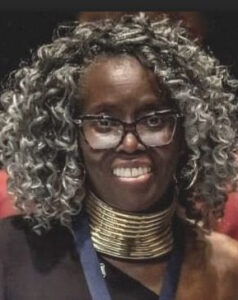 “Almost four years after former Commercial Appeal editor and community activist Yvonne Nelson (pictured) was killed, a woman has been convicted of second-degree murder,” Lucas Finton reported Friday for the Memphis Commercial Appeal. Nelson was former editor of the Whitehaven Appeal, a neighborhood community publication of the Commercial Appeal, Dr. Sybil C. Mitchell wrote in 2022 for the Tri-State Defender. Mitchell also wrote, “Nelson has been a prominent figure in the Whitehaven community for more than three decades. She was president of the Whitehaven Community Development Corporation (CDC) for 25 years.”
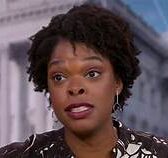 “Shawna Thomas (pictured) a veteran journalist who has enjoyed stints as a Washington producer, news executive and a morning-show honcho, is joining MS NOW after wrapping up a stint as the executive producer of “CBS Mornings,” Brian Steinberg reported Wednesday for Variety. “Thomas has been named political director, and will direct coverage of campaigns and elections. She will also appear on air across various MS NOW platforms. She joins MS NOW as news networks prepare for the 2026 midterm elections, a news event that typically draws broader audiences and boosts ratings.”
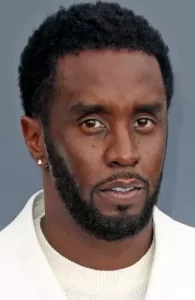 “Still awaiting a ruling from a trio of U.S. Court of Appeals judges over his criminal case, the incarcerated Sean ‘Diddy’ Combs (pictured) got some bad legal news Wednesday: A New York judge just threw out the Bad Boy Records founder’s $100 million defamation lawsuit against NBCUniversal,” Dominic Patten reported Wednesday for Deadline. “In fact, Empire State Supreme Court judge Phaedra F. Perry-Bond didn’t just dismiss the action filed on February 25, 2025 by Combs, she backed up and drove over it several times. The judge said that there is no way the documentary Diddy: The Making of a Bad Boy that streamed on NBCU’s Peacock could have brought scorn on Combs because the Grammy winner’s reputation was already ‘tarnished by the numerous lawsuits, domestic violence video, press coverage, and a criminal indictment prior to the Documentary’s publication.’ ”
- “In 2025, the Trump administration dissolved the $40 billion U.S. Agency for International Development, or USAID,” the “PBS News Hour”reported Wednesday in the first of a two-part series. “Days later, an exemption for ‘life-saving humanitarian assistance’ was issued. But what that included was not specified and aid for health programs has been drastically reduced. Fred de Sam Lazaro reports from Uganda where there has been a spike in disease-related deaths since the cut. . . .”
- For National LIbrary Week, the American Library Association issued its list of “the most challenged books of 2025.” Despite characterizatons of book-banning efforts as “America’s Apartheid,” none of the titles is by a Black author. “Objections include LGBTQ+ themes (‘Gender Queer,’ ‘The Perks of Being a Wallflower’), sexual violence (‘Sold’ and ‘A Clockwork Orange’) and use of alcohol and cigarettes,” the association said Monday.
- “Tough Old Broads follows three trailblazing women as they continue to make waves in their older years. These outspoken, funny, and thoughtful ladies embrace going against convention, speaking their minds, and fighting for what they believe in,” reads the promotion for this trailer. “They’re living proof that if you follow your dreams, you can change the world in the process.” One of the three is Sharon Farmer, the first Black female White House director of photography and the chief visual documenter of the Journal-isms Roundtables.
