
News Media Fail at Goal of Racial Parity by 2025
. . . Journalists’ Participation a Year in Coming
. . . Why the Lack of Progress in Diversity Numbers?
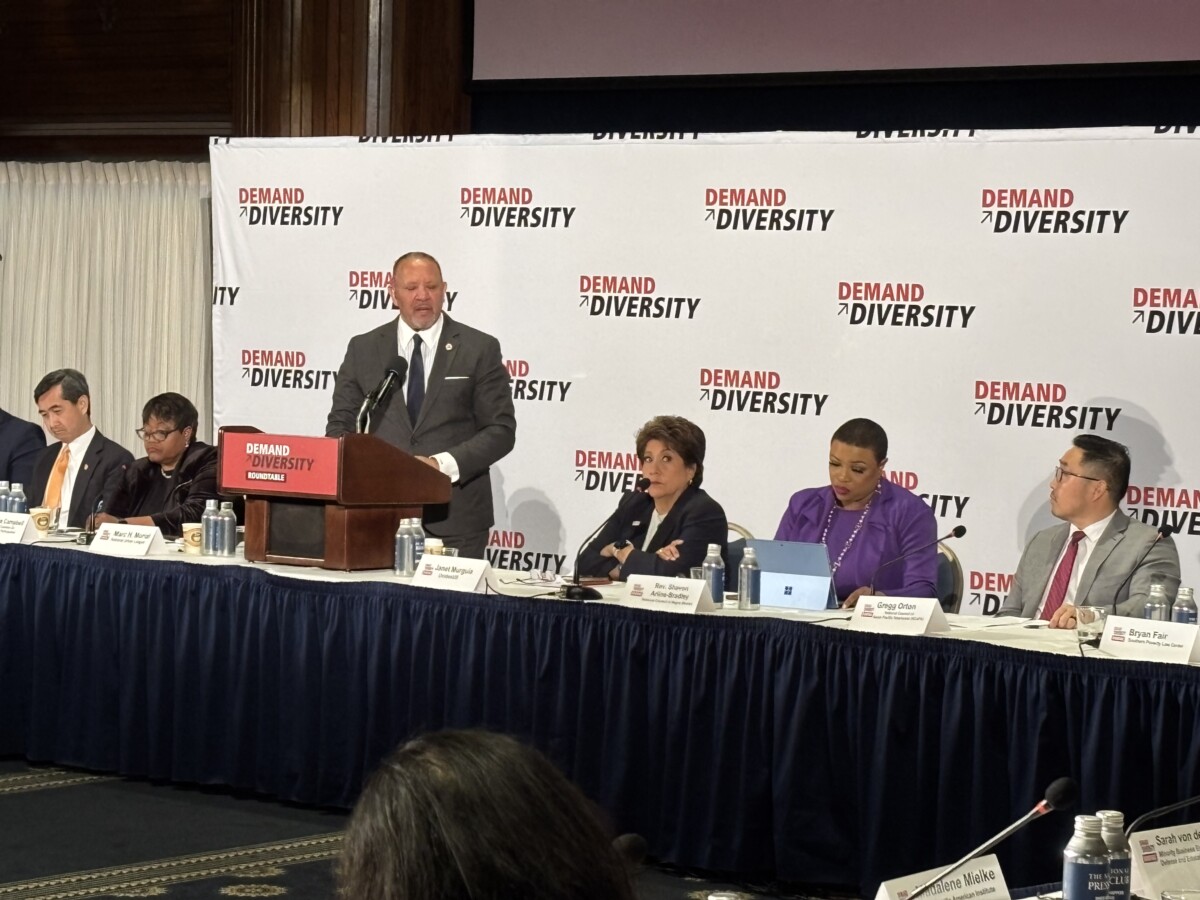
DEI Described as Business, Political, Moral Imperative: Maya Berry, Kwame Raul, Brenda Victoria Castillo, Alfonso David: John Yang, Sarah Vander Lip, Ron Busby, Madeline Milka, Nicole Austin-Hillery, Shavan Arline Bradley.
“Demand Diversity Roundtable” photos by Richard Prince
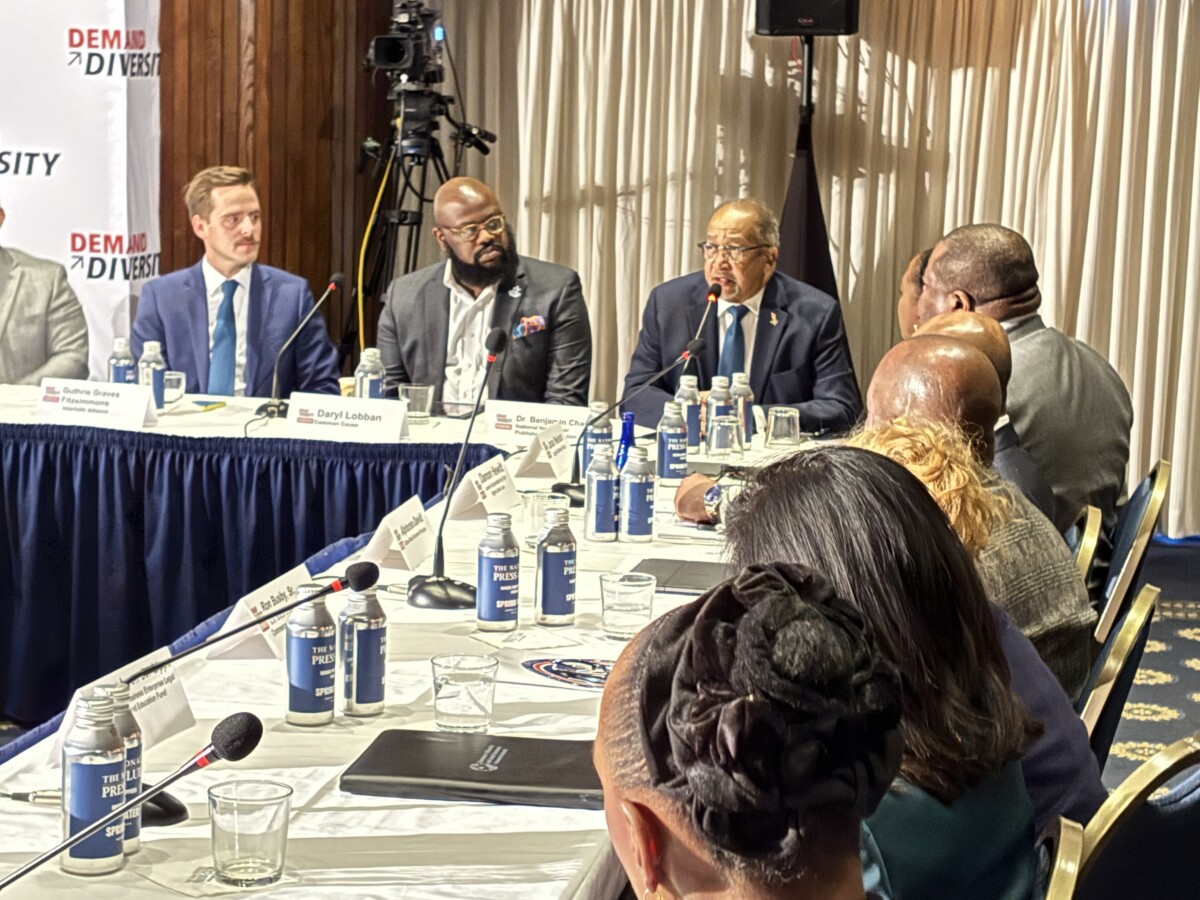
Benjamin F. Chavis Jr. of the National Newspaper Publishers Association urges pro-diversity groups to “fight, fight on.” He is seated next to Guthrie Graves-Fitzsimmons, vice president of programs and strategy, Interfaith Alliance, in blue tie, and Daryl Paul Lobban, senior vice president of Common Cause.
News Media Fail at Goal of Racial Parity by 2025
The nation’s Black press has experienced an 80 percent decline in revenue since the backlash against diversity, equity and inclusion (DEI) ramped up a year ago, and the percentage that Black journalists occupy in the nation’s newsrooms is roughly the same as it was 50 years ago — two startling statements made Thursday at a meeting of pro-diversity organizations (video) convened by the National Urban League.
The figure for Black journalists is part of a bigger picture: Not surprisingly, but without notice, the year 2025 came and went with the news industry failing to meet the goal it set for itself in 1998: Matching in its newsrooms the percentage of people of color with the figures for the general population by 2025. That was an extension of the American Society of News Editors’ original target year of 2000.
Census figures from 2020 show whites to be 57.8 percent of the population, followed by Hispanics at 18.7 percent, Blacks at 12 percent and Asians 7.2 percent, including those identifying as Asian alone or in combination with other races. Native Americans (including Alaska Natives) were approximately 2.09 percent.
By contrast, a Pew Research Center survey of nearly 12,000 working U.S.-based journalists conducted in 2022 found 76 percent of surveyed journalists were white, 8 percent Hispanic, 6 percent Black and 3 percent Asian. Native Americans were not included.
Perhaps most jarring, however, was the revelation of the 80 percent loss in revenue in the Black press.
Marc Morial, the CEO and president of the Urban League who had sought out the journalism groups for his “Demand Diversity Roundtable,” was asked about the difference it made to have those organizations present. Morial told Journal-isms, “Hopefully, we have a chance to amplify” the groups’ message and the problems they face, ”Plus, we’re told they’ve been impacted as well.”
Benjamin F. Chavis Jr., DMin., president of the National Newspaper Publishers Association, told representatives of the 32 groups in attendance, in addition to those who watched the livestream or witnessed the conversation at Washington’s National Press Club, “I feel I’m obligated not only to speak on behalf of the Black press, but also the Latino press, the Asian American press, the Native American press and progressive White press.
“We all have felt the damp hands of oppression and suppression over the last 12 months. I’m going to be very honest with you. We’ve lost advertising revenue 80 percent over the last 12 months. We have been knocked down, but we have not been knocked out. We’re going to rebound [in the] 2026 elections. This is the payback year. We have to organize, we have to mobilize and we have to take our messaging, take our values, take our principles, take the law, everything that everybody said, we’ve got to work together.”
“Investigative Reporter Tracee Wilkins and the News4 I-Team explain why Black-owned newspaper publishers are trying to pivot to survive,” WRC-TV, known as NBC Washington, told viewers on July 15. (Credit: YouTube)
In a news segment that aired in July on WRC-TV in Washington, Denise Rolark Barnes, publisher of the Washington Informer, told reporter Tracee Wilkins, “We are the DEI bucket,” in explaining the loss of revenue. She was interviewed along with Chavis and Alfonso David, president of the Global Black Economic Forum.
Chavis added, “According to a 2024 report by the U.S. Government Accountability Office, small disadvantaged businesses only got 14 percent of the $14.9 billion spent by the federal government on advertising for various agency services, resources, and recruitments with the smallest percentage going to Black-owned businesses.”
But Chavis himself is partly to blame for the shortfall, according to Dorothy Leavell, publisher of the Chicago Crusader and Gary (Ind.) Crusader and a longtime NNPA member. She circulated a letter to that effect on Wednesday.
“I know the difference between a revenue problem and a leadership problem,” Leavell wrote to fellow publishers in the group, which claims more than 200 members.
“The National Newspaper Publishers Association (NNPA) is facing a crisis — not from market forces alone, but from failed internal leadership,” Leavell wrote.
“As of December 15, 2025, the NNPA furloughed staff due to cash flow problems. We cannot pay hotel deposits for our own conventions. We have no national salesperson — which is the CEO’s primary responsibility. Yet Dr. Benjamin Chavis, who collects over $250,000 annually in salary and benefits, now ‘desires to leave within the next two years.’ That means asking us to pay another $500,000 while staff sit at home without pay and members continue to leave.”
Chavis, first hired as interim CEO and president in 2014 with a background in civil rights and other fields but not in publishing, could not be reached for comment.
In a Jan. 6 letter to fellow publishers, NNPA Board Chairman John Warren said, “A decision was made to conduct virtual meetings in 2026 — a Mid-Winter one-day meeting and the June 2026 conference allowing us more time to prepare for the 2027 Bicentennial.“
He also disclosed, “As of December 15th, we did have staff furloughs due to delays in receiving outstanding account receivables.”
Warren added, “Because of our financial condition, I created a special subcommittee to look at our finances. I have asked Mr. Pluria Marshall, Publisher of the Wave Community Group to Chair the Finance Committee.“
“I have also appointed the following Board members to a newly created Transition Committee,” to “transition” to a new CEO. They are: “Mr. Larry Lee, Publisher, Sacramento Observer; Sonny Messiah Jiles, Houston Defender; Ms. Terri Sanders, Publisher, Omaha Star; Ms. Jayme Cain Casimere, Publisher, the [Joliet, Ill.] Times Weekly; Mr. Dale Edwards, Publisher, [Cleveland] Call & Post; and Rod Doss, Publisher, New Pittsburgh Courier.”
Chavis concluded his brief “Demand Diversity” presentation with, “This is the payback year. We have to organize, we have to mobilize and we have to take our messaging, take our values, take our principles, take the law, everything that everybody said, we’ve got to work together.
“Marc, we got to hold this coalition together after this meeting. We got to be meeting regularly. We got to be organizing regularly. James Baldwin said to me once words do matter, our expressions do matter. If . . . our expressions and words represent the interests of our constituencies, of our people, we need the largest voter turnout in American history in November, 2026. That’s our responsibility.
“God bless the Urban League, God bless all of our organizations. We are not going to give up. We’re going to fight and we’re going to fight back, fight back, fight back, fight back, fight back.“
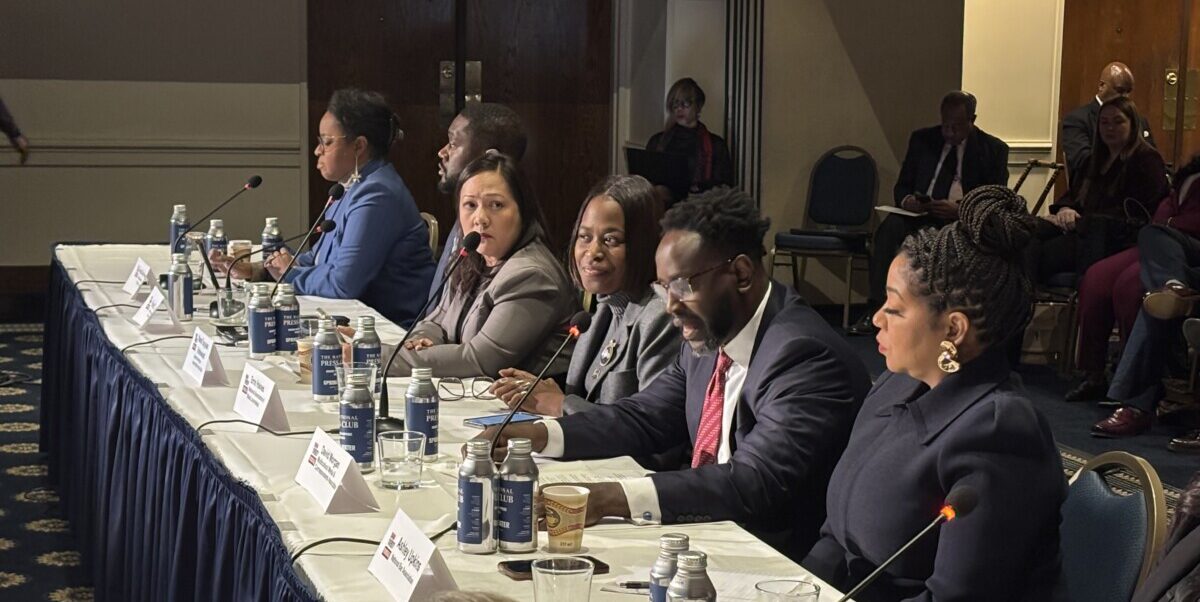
David Morgan, founder and president of the Multicultural Media & Correspondents Association, urges support for his MMCxchange as Naomi Tacuyan Underwood, executive director of the Asian American Journalists Association, third from left, and Errin Haines, president of the National Association of Black Journalists, fourth from left, listen.
. . . Journalists’ Participation a Year in Coming
The observation that the proportion of Black journalists in newsrooms is roughly the same as it was 50 years ago came at a forum in which, only a few months ago, it was not at all certain that journalism organizations would participate.
In May 2025, in response to a question from Journal-isms, Marc Morial, CEO of the National Urban League, said the Urban League was “trying to figure out a way to include” NABJ and the National Newspaper Publishers Association in his coalition, which first met that January.
At the November Journal-isms Roundtable, Morial and the Urban League’s Tara Murray, executive editor of the Washington Bureau, previewed the results of a study that showed that by two-to-one, voters said that focusing on increasing diversity, equity and inclusion in various settings is a good thing rather than a bad thing — consistent with 2024.
At the table Thursday were Haines of NABJ, Chavis of NNPA, Naomi Tacuyan Underwood, executive director of the Asian American Journalists Association and David Morgan, president of the Multicultural Media & Correspondents Association, “ten-year-old nonprofit advancing diverse media ownership and sustainability.”
Jon Schleuss, president of the News Guild, was present but not on the panel. The National Association of Hispanic Journalists was absent. Murray said, “We did extend invitations to NAHJ; unfortunately, they were unable to join this convening.” Murray said she was unaware of the Indigenous Journalists Association, which likewise was not present.
Investigative Reporters and Editors, which had planned to attend, had competing priorities and couldn’t attend, said Executive Director Diana Fuentes. “We do want to participate, at least at some level,” Fuentes told Journal-isms.
Those who did speak gave their own groups’ perspectives on the importance of diversity.
“Black journalists are the trusted messengers and communities across this country,” said Haines, “helping to tell a more honest and accurate story about who we are as a country as part of the American story.
“Now we’ve mentioned the bottom line cost of abandoning diversity, but let me put it another way. When leaders ignore overwhelming public support for equal opportunity, the consequences are real. Trust erodes, institutions lose legitimacy. Communities disengage and journalism suffers because when diversity is dismissed as optional, credibility becomes collateral damage. This is something that should concern and alarm all Americans. . . . “
Underwood said, “The lack of accountability to diversity is a glaring irony. And diversity today in journalism faces many existential threats. As we heard from our members right after the Atlanta shootings, they have had to fight to cover our communities and perspectives.
“Press freedom not only here in America but around the world is under attack and journalists face down security and safety threats daily. API [Asian Pacific Islander] journalists in particular in the field and in their personal time with their families and loved ones have experienced and continue to experience anti-Asian hate violence, all while attempting to cover it.
“Layoffs are the norm and journalists of color are disproportionately affected. Once-thriving business models have been shattered by technology. And social platforms eroding trust in the news and media consolidation where the bottom line is pure profit, further threatens an already shrunken local news ecosystem and the diversity of news reporting for our local communities.
Morgan said, “Last October, here at the Press Club, we unveiled the MMCxchange — shared content and community infrastructure designed to connect these outlets, enable collaboration and syndication, and support coordinated messaging and mobilizing at the speed of trust.
“The MMCxchange is not just software; it is shared infrastructure for publishing, communication, and community management. It enables civic organizations and media partners to connect trusted networks, communicate through a single dashboard, and share content across outlets and communities – ensuring aligned messaging reaches the masses — without relying on social platforms or fragmented tools. In a moment that demands speed, consistency, and trust, this kind of coordination is no longer optional. What’s needed now is alignment and investment — in the Xchange and in the broader ecosystem of diverse, trusted media that underpins democratic engagement.”
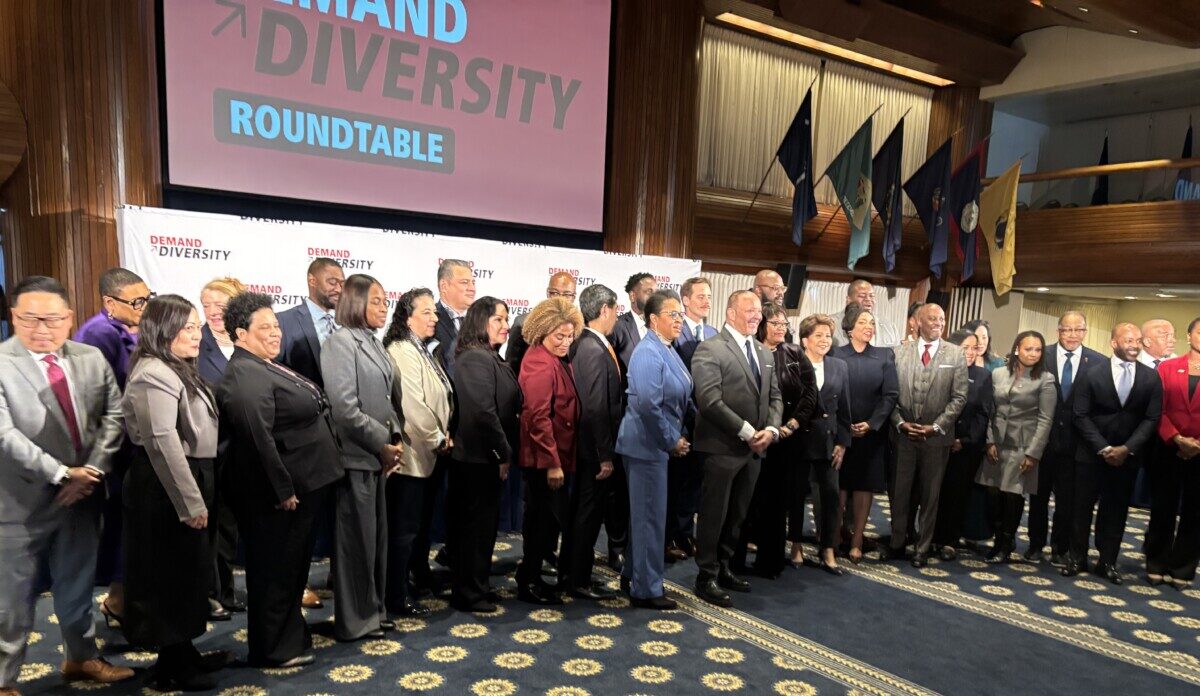
Participants line up for photos as the Roundtable ends. Of members’ next steps, Urban League CEO Marc Morial said they should hold political candidates’ feet to the fire, asking office-seekers to make a pledge. “We say to every elected official and every candidate, choose the Constitution over chaos, equal opportunity over exclusion, the whole American family over division.”
. . . Why the Lack of Progress in Diversity Numbers?
Disproportionate layoffs of Black journalists, disinterest in inclusion and an increase in corporate mergers joined the desire to please the Trump administration as reasons for the still-low percentages of Black journalists in the nation’s newsrooms – below the African American proportion of the population.
Back in 1978, the old American Society of News Editors set a goal of bringing newsroom diversity numbers to parity with national averages by 2000, later moving the goalpost to 2025.
At the “Demand Diversity Roundtable,” NABJ President Errin Haines said, “When the Kerner Commission report was published in 1968, Black journalists made up 5% of American newsrooms. That number today is only 6%. So we definitely have more work to do. . . . ”
The two head counts were not necessarily measuring the same thing, but the overall point is valid.
Kerner measured “editorial jobs” and the Pew Research Center, source of the 6 percent figure, counted “reporting journalists” who were surveyed in 2022.
Still, the lack of progress seems striking, given that 2020 U.S. Census data showed Blacks to be 12.4 percent of the population, not counting those who say they are mixed with other races.
The newsroom percentages have been largely consistent over the past 50 years, though in 2017, the Radio Television Digital News Association found a higher figure in local television news.
“The minority workforce in local television news rose by more than a point to 24.4%. That’s the second highest level ever – just a hair behind the all-time high of 24.6% in 2001, survey author Bob Papper wrote then. “All the gains came with Hispanics, who rose from 8.9% to 10.5%. African Americans slipped slightly from 11.1 to 10.9%.”
Over the weekend, NBC’s “Saturday Night Live” found a way to discuss diversity in the news business through humor. This skit featured Teyana Taylor as host and Kenan Thompson, Mikey Day and Chloe Fineman as journalists. (Credit: YouTube)
Chicago Black journalists discussed the lack of progress Nov. 12 on public radio broadcaster WBEZ’s “In the Loop,“ hosted by Sasha Ann Simons.
“Mass layoffs targeting diversity-focused departments and journalists of color” and “retreat from 2020 George Floyd-era commitments” were two of the most prominent reasons given.
Greg Moore, former editor of the Denver Post who regularly meets with a small group of veteran diversity advocates, put it this way Sunday for Journal-isms:
“I attribute this lack of progress to a lack of commitment to the principle of inclusion. I trace that back to the corporatization of the news media and the sheer magnitude of the consolidation that has taken place.
“The expense and personnel cuts devastated journalists of color, particularly Black journalists. I’m shocked that Alden [Global Capital hedge fund] controls so many of America’s newspapers. And diversity is not top of mind for that company. Same is true for Gannett.
“After promoting a striking number of Black editors across the country, damn near all of them disappeared just as quickly in the last couple years. Most US newspapers no longer report the racial makeup of their newsrooms. Put simply, they don’t give a damn anymore.”
Journal-isms asked the former Gannett Co., now the USA Today Co., how close it came to its stated 2020 goal for USA TODAY and more than 260 local news operations, to make their workforce as diverse as the country by 2025.
The response Monday from a company once considered the news industry’s foremost diversity leader: “While we no longer publish workforce diversity metrics or an inclusion report, USA TODAY Co. remains deeply committed to our ethical business model, which entails creating a thriving workplace where our workforce feels respected and valued.
“You can learn more about our company culture here.”
Last April, Gannett announced it would no longer publish demographic and diversity data about its workforce, and had revamped its corporate site to remove mentions of diversity.
Maya Berry, executive director at the Arab American Institute, referenced the headlines about ICE and Border Patrol activities in “Minnesota. Chicago. What’s starting in Maine, the kind of brutality we’re seeing . . . it is to remove the diversity of America from what we know America to be on our streets. . . . Understand how much that’s tied to DEI. . . . I almost don’t care what we call it. Just understand, we better fight like hell for it.” (Credit: You Tube)
DEI Described as Business, Political, Moral Imperative
Of “Demand Diversity Roundtable” members’ next steps, Urban League CEO Marc Morial said they should hold political candidates’ feet to the fire, asking office-seekers to make a pledge.
“We have too many people who claim to be our allies who pray uptown and play downtown. They have one message on the east side, another message on the west side, and they hide on the north side and come to parades on the south side,” Morial said.
“We have to change the conversation and we’ve got to challenge everyone running for office to stand as we have stood today where the American people are rooted. This polling data, this research information should once again demonstrate that notwithstanding all of the assaults of the last year, the American people are saying ‘no’ and ‘no’ and ‘hell no’ to these assaults on diversity, equity and inclusion, economic opportunity, indeed, and democracy.”
An AI analysis by rev.com of the “Demand Diversity” session listed these “key insights and takeaways”:
- “The ‘great divide’ on diversity is manufactured — public support remains strong at 71% for DEI and 89% for equal opportunity.
- “Corporate retreat from diversity commitments is a choice based on fear rather than legal requirements or market demands.
- “Black women are bearing disproportionate economic consequences, serving as ‘canaries in the coal mine’ for broader economic health.
- “Immigration enforcement is being weaponized for racial intimidation beyond its stated targets.
- “State attorneys general are successfully challenging federal overreach through coordinated litigation.
- “The coalition represents America’s demographic future and has concrete tools (litigation, legislation, economic pressure, voting) to resist.
- “2026 midterm elections are framed as [an] accountability moment requiring unprecedented voter mobilization.
- “Media ownership and narrative control are critical infrastructure for democratic resistance.
- “The moment requires moving from defensive to offensive strategy, with concrete pledges and accountability mechanisms for candidates and corporations.”
Here are others’:
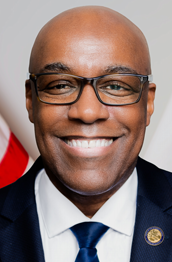 Kwame Raul, Illinois attorney general: “My [Democratic attorneys general] colleagues and I have filed over 77 multi-state lawsuits, some of them directly related to federal attacks on DEI and voting rights, and we’ve been overwhelmingly successful. . . . Right now we’re preparing our most ambitious partnership activity yet, the launch of a national campaign to amplify our message that we need everyone working together to protect civil rights to advocate for DEI and to champion increased opportunity for all. This campaign is called ‘Liberty, Justice and Opportunity for All’ and represents a joint effort between state attorneys general and many of the groups in this room to make sure people hear the message.”
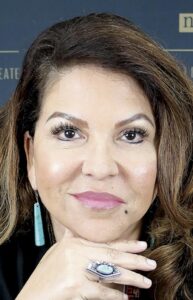 Brenda Victoria Castillo, “I’m an indigenous Latina feminist . . . president, CEO, the very first woman president, CEO of the National Hispanic Media Coalition. The majority of people in this country embrace DEIA [Diversity, Equity, Inclusion, and Accessibility]. It’s telling us that we still see strength in our differences. So why are we being told a distorted narrative? There’s no question that the administration is distorting the truth. Why? They’re trying to control the narrative. How? By controlling the media. Their end goal is to control the public’s perception in order to divide us, control us, control our vote. That’s the truth. My message to media corporations: Hold onto your values. Do not cave in. . . .”
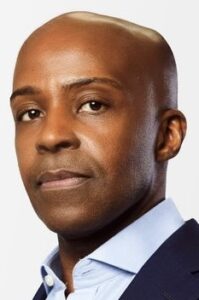 Alfonso David: “I’m a civil rights attorney and I run the Global Black Economic Forum, which is an international enterprise focused on advancing economic opportunity for marginalized communities. . . . Here’s the reality: Diversity is not a risk. The real risk is misreading the law, misreading the market, and misreading the future. Because when companies misread the market, they lose. According to a report that the Global Black Economic Forum issued, minority-owned businesses represent 22 percent of all employer firms, yet they only receive 6 percent of federal contract dollars.
“That means 94 percent of contract payments go to white-owned companies. That is not a neutral outcome.”
 John Yang, president and executive director, Asian Americans Advancing Justice: “When we look at the polls, it is consistent with what we all understand about the community as a whole, is wide broad support for diversity, equity and inclusion, stable support for that and if anything, increased support even for the acronym DEI, when people understand what that term entails.
“Specific to the Asian American community, a recent study . . . shows that over 90 percent of Asian Americans recognize that diversity is a strength in this country. . . . When I look specifically at the Asian American community, only 10 percent of the public thinks that diversity, equity and inclusion somehow hurts Asian Americans.”
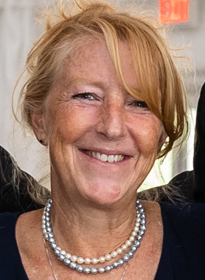 Sarah von der Lippe, chief counsel of the Minority Business Enterprise Legal Defense and Education Fund: “I’m a race discrimination lawyer, but white women in particular have benefited an extraordinary amount from diversity, equity, and inclusion policies. We need to stand up and talk about our pride in participating in one of the extraordinary civil rights advances of our nation. All of us who have benefited need to make that example and talk about it. DEI is not a handout. It’s an investment strategy. Let’s start saying that out loud.”
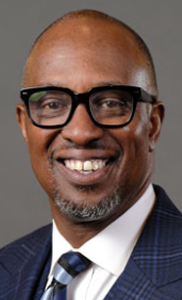 Ron Busby, president and CEO of the United States Black Chambers, Inc. ”Last year, the USBC acquired the historic former BET headquarters here in Washington, D.C., an eight-acre lot housing a 100,000 square foot corporate offices, production studio, office space, training facilities. We didn’t ask for a donation, we bought it, we own it, and we’re building a revenue-generating hub for Black business development, incubators, accelerators, coworking spaces, media production. This isn’t charity, this is infrastructure and it’s ours. Apple shareholders just voted [overwhelmingly] to keep diversity programs. Costco said the same. The market is speaking, so corporate America has a choice. Invest in the infrastructure with us or watch us build it on our own without you. We’re not retreating. The question is, are you?””
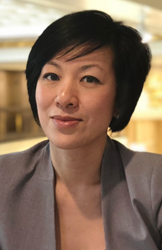 Madaline Mielke, president and CEO of the Asian Pacific American Institute for Congressional Studies: “Leaders must reject and dismantle the Asian American model minority myth. This harmful narrative suggests that our communities are never in need, systemically excluding us from the DEI framework and denying our communities . . . vital resources and visibility. And third, we must reject the idea that AA and NHPI [Asian American and Native Hawaiian Pacific Islander] communities are a monolith. Our leaders need to continue to demand disaggregated data in order to understand the unique diverse challenges faced by each of our subgroups.”
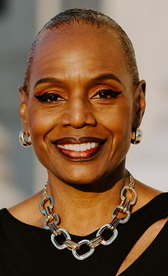 Nicole Austin-Hillery, president and CEO of the Congressional Black Caucus Foundation: “The country needs to hear, and the world in fact needs to hear not just from leaders like us around the table. They need to hear from the everyday people who are taking their children to school, who are raising their families, who are going into these grocery stores, who are going into community centers so that they can say, ‘this is how we want to live. This is the kind of inclusion we want to see, and this is the future that we want for our communities and for our country.’ ”
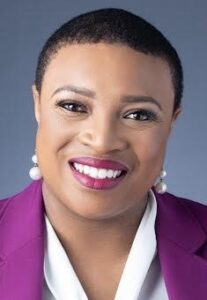 Shavan Arline Bradley, president and CEO of the National Council of Negro Women: “We are as a community, a $2.1 trillion spending community, and 51 percent of those spenders are African American women. Corporations have to understand that we are a consumer base and we will not align with corporations who do not align with our values. I want to be very clear. That means we’re going to recognize that we will spend our dollars where the dollars are spent on our interest.”
- Corbin Bolies, the Wrap: Media Went All-In on Diversity. Now It’s in Full Retreat (Oct. 29)
- Corbin Bolies, the Wrap: Journalism Diversity Groups Meet With NBC Leadership Over DEI Coverage Cuts: ‘A Step Back’ (Oct. 24)
- Stacy M. Brown, BlackPressUSA: The Truth Is Under Attack; The Black Press Needs You (December)
- Daarel Burnette, Dan Morenoff, Anne-Marie Núñez, Diana Natalicio and Denise-Marie Ordway: Shorenstein Center: The Future of Federal Funding at Hispanic-Serving Institutions (video)
- Meredith D. Clark, Nieman Lab: The year journalism starts paying reparations (December 2020)
- John W. Fountain, Substack: My White Editor Confessed She Was “Afraid” Of Me; My Sin: Reporting While Black (Dec. 20, 2024)
- Free Press: Comprehensive New Report Puts Major Media Companies on Notice for Anti-DEI Capitulations
- Edward Iwata, AsAmNews: The Generational Legacy of Journalists of Color: A Tribute (Jan. 17)
- Journal-isms: Gannett Gets Bolder on Diversity (Aug. 25, 2020)
- Journal-isms: Why News Industry Failed on Diversity Goals (Oct. 22, 2015)
- Journal-isms Roundtable: How Trump Has Affected Newsroom Diversity — and What We Can Do About It” (Nov. 24) (video)
- Shorenstein Center on Media, Politics and Public Policy, Kennedy School, Harvard University: In the Shadow of Kerner: Fifty Years Later, Newsroom Diversity and Equity Stall (May 22, 2018)
- Hanaa’ Tameez, Nieman Lab: From reckoning to retreat: Journalism’s DEI efforts are in decline (Sept. 11)
- Mc Nelly Torres, Substack: We know the territory: There’s nothing wrong with acknowledging that you, as a journalist, are the best person to write about your own community. (Dec. 3)
- Francisco Vara-Orta, Nieman Lab: The quest for diversity evolves (December 2024)

