

‘Race and Identity’ Reporter Among 300 Laid Off
From Feb 3: Black Journos ‘Disproportionately at Risk’ — Hundreds Watch as NABJ Takes On Press Freedom
Homepage photo from the Washington Post Guild
Updated Feb. 5, Feb. 7, Feb. 9
- Benjamin Mullin, Katie Robertson and Erik Wemple, New York Times: Washington Post C.E.O. Will Lewis Steps Down After Stormy Tenure (Feb. 7)
- Max Tani, Semafor: Washington Post CEO resigns, leaving no clear strategy (Feb. 7)
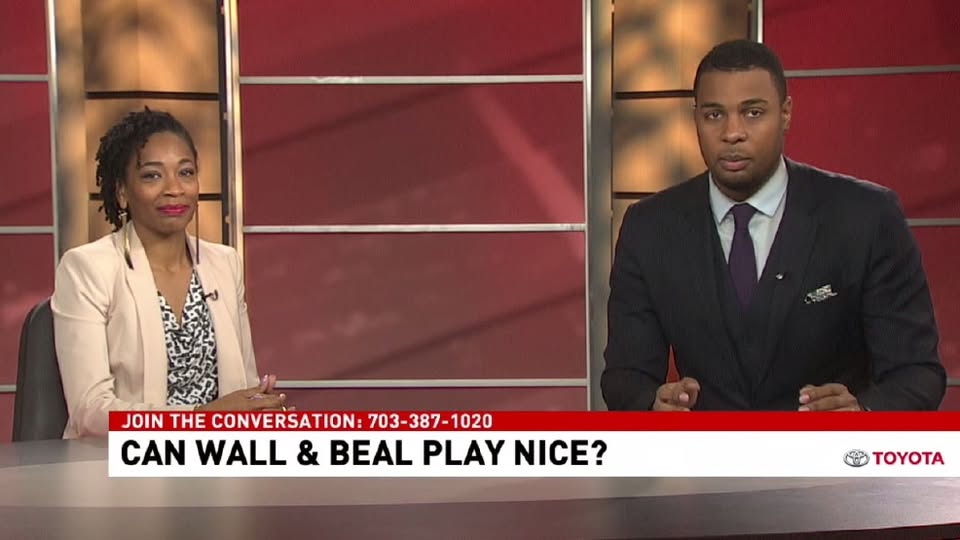
Candace Buckner discusses the NBA’s Washington Wizards last October with Robert Burton of Washington’s NewsChannel 8.
‘Race and Identity’ Reporter Among 300 Laid Off
Journalists of color were kicked to the curb Wednesday along with nearly one-third of the staff at the Washington Post as drastic cuts, said by NPR to be at the behest of owner Jeff Bezos, affected every corner of the newsroom.
In the Guardian, Jeremy Barr quoted one employee, not authorized to speak publicly, calling Wednesday’s action “an absolute bloodbath.”
“I guess democracy has died, y’all,” wrote award-winning sports columnist Candace Buckner, a Black journalist, on X. She was referring to the Post slogan, “Democracy Dies in Darkness.”
“Well at least, the greatest sports section in all the land has… Like so many of my amazingly talented friends & colleagues, my time at the washington post is over,” Buckner continued. “Inconceivable that this was the decision for our section. But onward.”
Benjamin Mullin, Katie Robertson and Erik Wemple reported for the New York Times that ”The Post’s metro section will shrink, and the books section will close, as will the ‘Post Reports’ daily news podcast.”
 Sports Editor Jason Murray (pictured), the Post’s highest ranking Black journalist, confirmed Thursday morning that he, too is leaving.
“I’ll work through the Olympics, editing the reporters who are in Italy,” Murray messaged Journal-isms. “After that I’ll be leaving The Post.”
The Winter Olympics take place from Feb. 6 to Feb. 22 in Milan and Cortina d’Ampezzo.
Murray’s departure will leave no Black journalists on the Post masthead, though Kimi Yoshimo, a managing editor, is Asian American. Colleagues said Jamie Stockwell, a deputy managing editor who is Latina, was also laid off.
When Murray was named in 2023 by then-Executive Editor Sally Buzbee, the announcement from Buzbee and Interim Managing Editor Barbara Vobejda said, “In his three years as an assignment editor at The Post, Jason has earned the wide respect and affection of his reporters and peers.
“Jason came to The Post from Syracuse.com/The Post-Standard in Syracuse, N.Y., where he was director of content, running teams for social media, photo, video and website analytics. He previously had served eight years as sports manager, as well as serving on the news organization’s editorial board. During his time in Syracuse, the paper won numerous awards for its website and its coverage of Syracuse University sports. His time running the sports department in Syracuse followed seven years as an assistant sports editor there. . . .”
 Murray’s and Buckner’s fates were shared by another sports reporter, Tashan Reed, who covers the NFL’s Washington Commanders and arrived just six months ago, and by Gene Wang (pictured), who wrote that he had been “living my dream job as a sportswriter for The Washington Post” for 37 years. He said he plans to take time off before exploring professional options.
Reed (pictured) wrote on LinkedIn, “I’ve been laid off as part of The Washington Post’s job cuts today. This is an incredibly sad day, not just for my colleagues and I, but for journalism as a whole.
“While I’m not sure what’s next, I know I’ll bounce back and continue to elevate.”
 Similarly, Jesus Rodriguez (pictured), who arrived at the Post from Politico in 2023 to write about politics for the Style section, wrote on X, “They say you haven’t lived until you’ve been laid off. I’ve now lived once.
“Gutted to see so many coworkers lose their jobs at the Post today. If you know anyone who’s hiring a politics/culture/magazine writer with a law degree who also speaks Spanish.”
Rodriguez continued, “By my estimate, there are now only two reporters of color in the entire Features department at the Post after layoffs.”
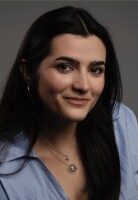 María Luisa Paúl (pictured), national breaking news reporter, added, “Not to mention the number of Latinos and Spanish-speakers at a time when immigration and Latin America are…particularly relevant. There [were] two of us in the — now-defunct — National Breaking News team. We were both cut.”
In its August 2025 workplace demographics report, the Post listed the racial demographics in its news and opinion sections as 59.8 percent white, 9.7 percent Black or African American, 10.5 percent Asian, 8.9 percent Hispanic or Latino, 2.9 percent multiracial, 0.2 percent Native American and 5 percent who “did not disclose.”
The South Asian Journalists Association said Thursday, “We understand that about a dozen South Asian journalists were laid off from The Post, including colleagues based in the Delhi South Asia bureau and national correspondents covering film, healthcare, technology, and other beats.”
Wednesday’s dramatic downsizing comes four months after the National Association of Black Journalists met with Post leadership “to raise urgent concerns about the environment for Black journalists at the paper following the firing of columnist Karen Attiah and the recent departures of several Black reporters, editors and senior staff members.”
NABJ said then that “Leadership at The Post, represented by Executive Editor Matt Murray, acknowledged the challenges of newsroom restructuring. He outlined steps underway, including a new two-year internship program designed to expand access for journalists of color, a willingness to meet with existing Black staff and a commitment to improve career development and retention of diverse staff.”
That meeting took place after the departure of Krissah Thompson, the paper’s highest ranking Black journalist, holding a managing editor’s title, then switching to help with plans for an ill-fated “third newsroom,” described as “a high-wire effort to define a new kind of news initiative.”
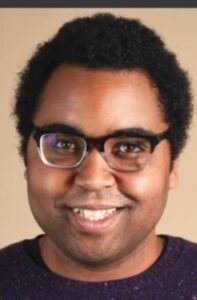 After the morning layoff announcement, Emmauel Felton (pictured), the national race relations reporter who arrived in 2021 from BuzzFeed, wrote on LinkedIn, “I’m among the hundreds of people laid off by The Post. This comes six months after hearing in a national meeting that race coverage drives subscriptions. This wasn’t a financial decision; it was an ideological one.”
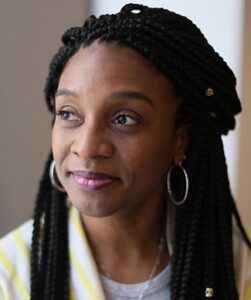 Akilah Johnson (pictured) similarly wrote, “In 2021, I was hired by @washingtonpost to cover health disparities & explore the way racism & social inequality affects health. 4 months ago, I became the generations’ reporter exploring how health is experienced by different pple across the life course. Today, I was laid off.”
The Washington Association of Black Journalists took note of Felton’s departure in an afternoon announcement. “The Washington Post’s destruction has affected our membership as well, leaving fewer Black journalists and storytellers at the newspaper to report on Washington for its residents,” it said.
“The Post’s dedicated race & identity reporter was laid off, including the team dedicated to the newsroom’s diversity, equity and inclusion efforts. We are still waiting for the full picture of how many Black and journalists of color remain in the newsroom.
“We encourage the public to amplify the work of laid-off employees and to stand with the Post Guild at the ‘Save The Post!’ rally on Thursday, February 5, at noon outside The Post’s DC headquarters (1301 K St NW) to let Post owner Jeff Bezos, publisher Will Lewis and executive editor Matt Murray know that these cuts have sharply diminished the quality of the newsroom.
It takes all of us to make The Washington Post. Every section works together to create this authoritative, entertaining, worldwide news report.
So, @JeffBezos: #SaveThePost. pic.twitter.com/DvEpb5VYdi
— Washington Post Guild (@PostGuild) February 2, 2026
If no image appears, please consider changing browsers.
“WABJ will also make a donation to the Post Guild fund that is collecting donations for impacted journalists and staff. WABJ will match up to $500 for WABJ members who contribute to the fund. We have also created a spreadsheet for former employees listing job openings and opportunities.”
The Guild had collected more than $205,000 by sundown, including a large donation from Eugene Robinson, the Black, Pulitzer Prize-winning Opinon section columnist who resigned last April because of a “significant shift in the mission of our section.”
David Folkenflik reported for NPR, “In a newsroom Zoom call, Executive Editor Matt Murray called the move ‘a strategic reset’ it needs to compete in the era of artificial intelligence. The paper had not evolved with the times, he said, and the changes were overdue in light of ‘difficult and even disappointing realities.’
“With the job cuts, the storied newspaper narrows the scope of its ambitions for the foreseeable future. It is a remarkable reversal for a vital pillar of American journalism that had looked to Bezos — one of the wealthiest people on Earth — as a champion and a financial savior.
“Murray said the Post will shutter its sports desk, while keeping some sports reporters who will write feature stories. It will likewise close its Books section and suspend the signature podcast Post Reports.
“The international desk will shrink dramatically. Among those laid off: the paper’s Ukraine bureau chief and correspondent, the latter of whom was in a war zone. (The local staffers are still employed as of now.)
“The paper’s entire Middle East desk was let go, according to their social media posts. So too was Caroline O’Donovan, the reporter who covers Amazon — the primary source of Bezos’ wealth.”
While there is no public list of employees who were laid off, shuttering the photo department means the loss of Black photographers Marvin Joseph, Demetrius Freeman and Joshua Lott, as well as of Salwan Georges, an Iraqi American.
 Ruth Marcus wrote for the New Yorker, “The metro staff, already cut to about forty staffers during the past five years, has been shrunk to about twelve; the foreign desks will be reduced to approximately twelve locations from more than twenty.”
Barr added for the Guardian, “Murray said the Post’s largest team would be focused on covering politics and government, and the paper would also prioritize coverage of [national] news and features topics such as science, health, medicine, technology, climate and business.
“Post employees who have been laid off will continue to be on staff through 10 April, though they will not be required to work. They will receive six months of continued health insurance coverage.”
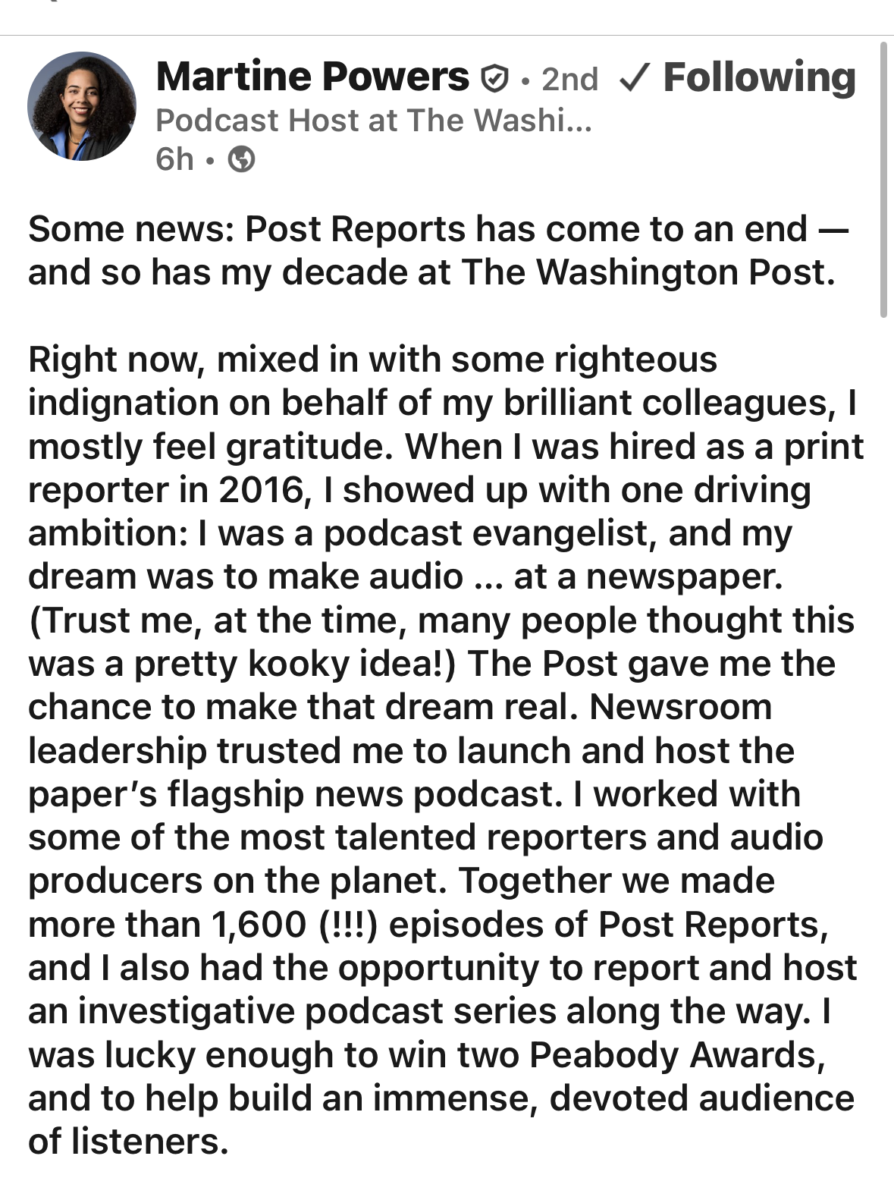
Multiplatform editor Dorine Bethea; Brianna Tucker, national politics breaking news reporter; Shibani Mahtani, international investigative correspondent; audience editor Marine Powers, podcast host; Efrain Hernandez Jr., deputy justice editor; Metro reporter Michael Brice-Saddler; Pradnya Joshi, national weekend editor; and , international breaking news editor, also confirmed their layoffs.
“down nine, up TEN,” wrote Tucker. “I’m hoping to continue covering politics and do the most ambitious journalism possible. Campaigns, breaking news, vertical video, newsletters — I’ve owned it.”
Others of color who were laid off are named in this LinkedIn posting.
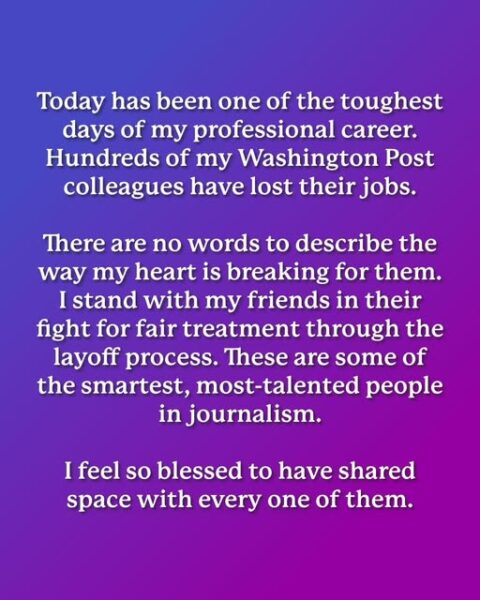
One of those remaining is Michelle Singletary, personal finance columnist, who posted this:
- Zeeshan Aleem, MSNOW: The Washington Post bloodletting symbolizes our great media crisis (Feb. 6)
- Asian American Journalists Association: AAJA offers resources to journalists affected by recent newsroom cuts (The National Association of Hispanic Journalists issued a similar statement.)
- Zachary Bynum, CBS News Atlanta: Atlanta Journal-Constitution to lay off about 50 employees as it restructures for growth
- Margaret Fleming, Front Office Sports: Washington Post Eliminates Sports Department in Mass Layoffs
- Dylan Manshack, Washington Post Guild: Mass layoffs at Washington Post; hundreds of journalists cut as Bezos gives millions to Melania Trump (Feb. 4)
- Aban Usmani, Newslaundry: What the ‘murder’ of Washington Post means for India
- Ruth Marcus, New Yorker: How Jeff Bezos Brought Down the Washington Post
- Ashley Parker, the Atlantic: The Murder of The Washington Post
- Alisa Tang, beehiv.com: I was laid off from the Washington Post (Feb. 5)
- Erik Wemple, New York Times: He Was Laid Off at The Washington Post After Working There 60 Years (on Martin Weil) (Feb. 5)
Black Journos ‘Disproportionately at Risk’
Feb. 3, 2026
NABJ President Errin Haines told viewers, “NABJ was created for moments like this 51 years ago to advocate, to intervene and to ensure that Black journalists are not facing these threats alone.” The association celebrated its 50th anniversary on Dec. 12. (Credit: YouTube)
Hundreds Watch as NABJ Takes On Press Freedom
Los Angeles Mayor Karen Bass urged the National Association of Black Journalists to think about creating a legal defense fund Monday as the organization conducted an unprecedented two-hour “town hall” that attracted hundreds of online viewers in light of the prosecution of Black journalists Don Lemon and Georgia Fort in connection with the Minneapolis protests.
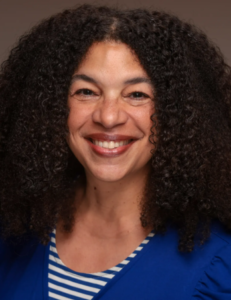 The times are exacerbating journalists’ problems as well as their responsibilities, speakers agreed. “Reporters are walking the streets now. . . . On one arm there’s a Sharpie with an immigration attorney and a name and a phone number, and on the other one is the First Amendment lawyer’s name,” said Karen Rundlet (pictured), executive director and CEO of the Institute for Nonprofit News, one of about 15 top-level press freedom figures assembled for “Not On Our Watch” on short notice.
Participants also said that economic pressure through legal costs might be more effective than direct censorship in silencing independent media, and that safety training and protective equipment are now essential for covering domestic protests. The concentration of media among large corporations rather than with family owners whose priority is journalism, not profits, makes the situation more difficult, they said.
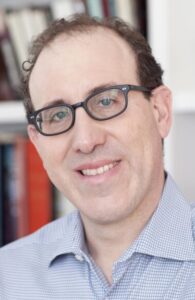 Moreover, said veteran press freedom advocate Joel Simon (pictured), “The laws that protect the rights of journalists covering protests and mobilizations, going back to the civil rights era, are incredibly weak.”
For 16 years, Simon was executive director of the Committee to Protect Journalists. He is now founding director of the Journalism Protection Initiative at the Craig Newmark Graduate School of Journalism at the City University of New York.
“We don’t have real protections,” he said. “And every time there are mass protests and demonstrations, there’s a crackdown on the press freedom and the rights of journalists.”
In addition, Simon continued, “One of the things that [I see] when I look around the world in my CPJ role, this is again something that many people have observed: The first line of attack is against journalists and the media. So if you see journalists coming under attack, you know that there’s a broader crackdown that’s coming. This was true in Russia, it was true in Venezuela. It was true in Hungary. It was true in Poland. It doesn’t matter the nature of the society, the first line of attack is usually against the press, and there’s a reason for that.”
 Trevor Timm, co-founder and executive director of Freedom of the Press Foundation, told viewers, “I’m looking at the U.S. Press Freedom Tracker right now.
“Just a few days ago, a video journalist was shoved and threatened with arrest by federal agents. Another reporter was grabbed and thrown down to the ground by a federal officer. Another was pepper sprayed, another was clipped with tear gas canisters. Others were hit with rubber bullets, another crowd control projectiles and . . . on and on. There’s been 19 incidents that have happened in the past six months in Minnesota. Many of them have happened just in the past six weeks.”
NABJ President Errin Haines replied, “We know for Black journalists, we disproportionately are covering things like civil unrest, protests, immigration, right, police violence. We are the ones that are disproportionately covering those. So to hear that means that we are disproportionately at risk for some of that danger. “
The “Not on Our Watch” session was conducted at the studios of the Black Star Network, a project of entrepreneurial journalist Roland Martin, who is vice president/digital for NABJ. As many as 582 people were watching at one point via NABJ’s YouTube channel, and more tuned in on Facebook.
Participating were leaders of such groups as the Committee to Protect Journalists, the News Guild-CWA, the Society of Professional Journalists, the International Women’s Media Foundation, the Committee for the First Amendment, the National Press Photographers Association, NABJ’s Minnesota chapter, the National Press Club Institute, the Institute for Nonprofit News and the American Society of Journalists and Authors and Free Press.
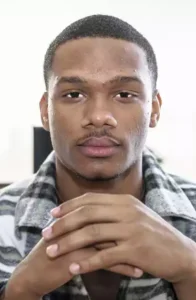 Viewers also saw a clip from Jerome Richardson (pictured), 21, a Black senior at Temple University who is a native of St. Paul, Minn., who turned himself in Monday to federal authorities in Philadelphia after assisting Lemon in Minneapolis. He asked for financial and emotional support.
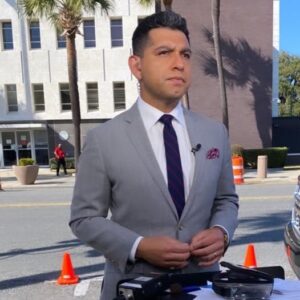 Also speaking was Nick Valencia (pictured), a CNN veteran who has been on the ground at protests and has his own media company, NVN.
“They want us to feel scared and talking about this and sort of panicked.” Valencia said. “I mean, that’s how I used to think words like fascism were too dramatic, right? I mean, I used to sort of cringe myself at people that brought that up, but when you sort of look at the elements of what’s happening, it’s already happening.
“Just the idea that we have this paranoia as independent journalists and feel uncomfortable or feel that potentially there’s going to be a knock on the door. I know I wasn’t alone on the day that my friend got arrested, Don and Georgia Fort and two others, and I wasn’t the only one that was making plans if that happened to me. And that’s when the fear wins. But there is a lot of hope to hold onto. There’s things that are called Bivens lawsuits.
“It’s a 1982, 1983 Supreme Court case that allows everyday citizens to sue federal agents for violating their constitutional rights and seek monetary damages.”
Given the large number of speakers, consider this: “There were some people wanting to join us, but because of the schedule couldn’t get on,” Martin said as he and Haines ended the session, which went overtime at 2½ hours.
 Nicole Carr (pictured), a journalist, author, and professor at Morehouse College, agreed with Haines that Black journalists were especially targeted. She has noted the historical pattern in a newly recirculated piece on the federal government’s harassment of the Black press during World Wars I and II.
“What we’re seeing in this assault today seems like it’s coming out of nowhere. But if you’re a journalist like I am, who was on the ground as the Big Lie was forming here in Georgia, a lot of us in local news were under private security,” Carr said. “I was, for four months, my children had an evacuation plan from this house. We were reporting locally and saying, there are no ballots and suitcases under seats in Fulton County, Rudy Giuliani.
“For every Ruby Freeman, you had 10 election workers and so many local journalists who were also facing threats. And we were encouraged not to talk about this. So silence doesn’t do anyone any good.”
Despite that Black focus, “Not on Our Watch” illustrated the multicultural nature of the issue, voiced by, among others, Latino journalists Valencia and Vanessa Maria Graber, who teaches at Temple University, as well as by Bass.
“Look, when the National Guard was here, we have Latino members of the National Guard that when they were off duty and out of uniform, got pulled over by other National Guard,” Bass said from her car. “I mean, this stuff is just so out of control and it’s just so racially targeted. We have a police department here in Los Angeles that’s almost 50 percent Latino. So now the police officers have to worry. Don’t go home from work without your uniform on.”
Added Temple University’s Graber, “for many of our communities, there are no news outlets. There are no Spanish-language news. So we’re forced to use alternative forms of communication in order to get the message out. And when that happens, you lack the institutional support, these legal trainings and knowledge of resources.”
Bass’ point about a legal defense fund for Black journalists was welcomed as something NABJ is looking into – “That’s one of the things that we’re talking about partnering with others as well,” said Martin, while others pointed out what is already available.
“One of the things that we do for members is we have a really big, we provide legal services basically for photographers,” said Alex Garcia, new president of the National Press Photographers Association. “We are not licensed to practice law in every state, but when we’re not, we can basically refer people to a network of lawyers around the country for referrals. We draft or join in the letters addressing First Amendment and journalist issues. So we’re pretty heavily into legal issues around this.”
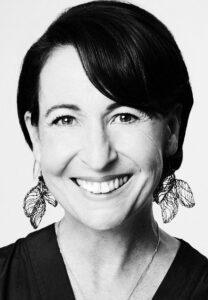 Gabrielle Gayagoy Gonzalez of the American Society of Journalists and Authors, and Elisa Lees Munoz (pictured), president of the International Women’s Media Foundation, each mentioned her group’s Emergency Assistance Fund.
“The threats, the harassment, the attacks online and in public are very gendered, and they are meant to send an additional message in addition to the media being perpetuated as a source of mis- and disinformation, women are belittled and shamed and set out as part of the problem,” said Munoz.
Caroline Hendrie, executive director of the Society of Professional Journalists, added, “SPJ has a very modest legal defense fund that sometimes can provide some assistance, and I think the idea of getting pro bono attorneys is really important. There is an organization called Lawyers for Reporters, I believe, and that’s one that folks should look at.
“Of course, Reporters Committee for Freedom of the Press also has legal hotlines that I imagine that your journalists are aware of. If they’re not, definitely look into that. They do provide pro bono assistance under certain circumstances.”
Katherine Jacobsen, U.S., Canada, and Caribbean program coordinator for the Committee to Protect Journalists, provided the email address emergencies (at) cpj.org, as “the general safety inbox that we have, and we triage from there. So we work with a series of partners, ” also mentioning the Reporters Committee for Freedom of the Press. “We also work with Penn America, Freedom of the Press Foundation . . .as well as the IWMF [International Women’s Media Foundation] to kind of help direct the needs the best.”
That said, Martin said there was no need to reinvent the wheel.
“You have to move as a collective.” he said. ”So if there’s somebody who’s already doing something, it doesn’t make sense for NABJ to say, well, let’s create our own. No, if you already got it, how can we tap into it? . . . .This is where the sharing of information is just so important — to know what is out there to help folks who need help.
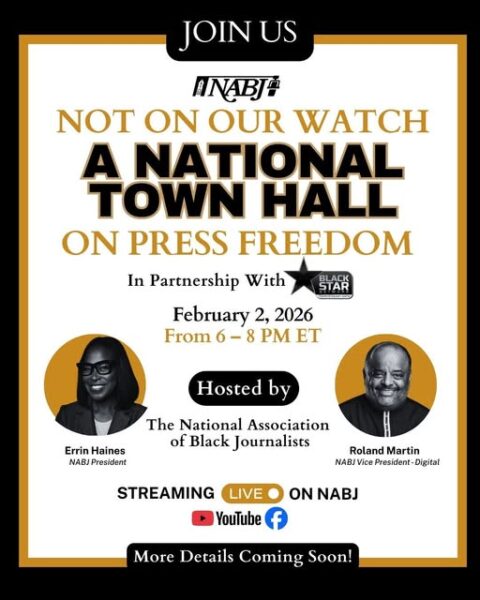 As he wrapped up, Martin said, “We’ve shown you GoFundMe pages, we’ve shown you organizations, nonprofits that raise money for legal defense funds, for training, for security, all of those different things, they are all needed. . . . Remember our soldiers, when we have wars, they didn’t fight for the Second Amendment alone or the Third or the Fourth. There’s a reason the First was the first.”
Haines said, “NABJ was created for moments like this 51 years ago to advocate, to intervene, and to ensure that Black journalists are not facing these threats alone. So if you’re able to support NABJ’s work, support Black-led newsrooms like this one and support organizations providing the legal, safety and professional resources.
“And third, speak up where you have an influence. We heard people calling for that tonight. So if you lead a newsroom, if you lead a classroom, a foundation, a community organization, ask what policies, protections, partnerships are in place when journalists are targeted, and what gaps still exist to be addressed. And, finally, refuse silence. That is what this message is sending. The chilling effect. When you can silence Black journalists, who else can be silenced? . . .
“ A free press is not a privilege. It is a public good, and protecting it is a shared responsibility because this is about the public’s right to know.”
A Journal-isms Roundtable complementing this town hall takes place this coming Sunday at 1 p.m. Eastern. See details.
- Carly Thomas, Hollywood Reporter: Don Lemon Aware His Charges Are “Very Serious,” But That He’s “Not Going to Let Them Steal My Joy”
- Stacey Patton, BlackAmericaWeb: Can NABJ Protect Black Journalists — Or Just Mourn Us After? (Feb. 5)
- Fisher Jack, EURWeb: Mayor Karen Bass Joins NABJ Call for Legal Defense Fund to Protect Black Journalists | WATCH (Feb. 9, from Journal-isms)

