
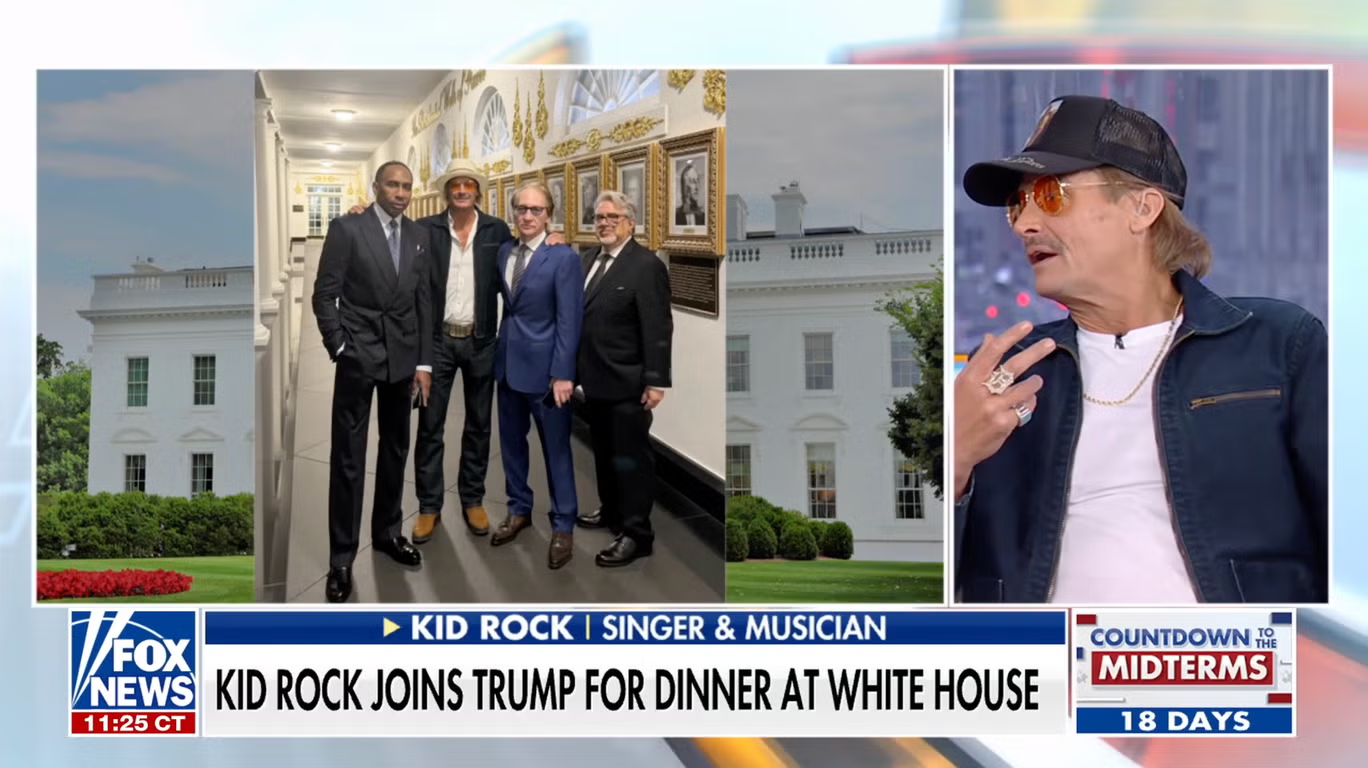
Joined Bill Maher, Kid Rock for 4 Hours at White House
. . . Smith Says He Raised Issues of Black Jobless, HBCUs
Modest Gains for Journalists of Color in Local TV
Blacks Most Likely to Want ‘Upheaval’ in How U.S. Is Run
NAHJ President Favors Ending Barrier to Coverage
Meet LIA, the AI-Generated Latina Newscaster
Your Barry Bingham Sr. Award Choice Is Due by Oct. 30
Short Takes: Stars and Stripes; Rufus Friday; banned books by Native writers; Roy S. Johnson’s Native heritage; Johnson Publishing Co. building; Somali Minnesotans; anti-Indian racism.
Homepage image: Fox News reports on Stephen A. Smith- Kid Rock-Bill Maher meeting at White House. (Credit: Fox News)
“Some will ask why I sat with this president,” Stephen A. Smith said. “My answer is simple: power doesn’t disappear because you ignore it.”
Joined Bill Maher, Kid Rock for 4 Hours at White House
Fresh from a debate over receiving a “Thumbs Down” award from the National Association of Black Journalists for “disparaging commentary” about prominent Black women, Stephen A. Smith is provoking a new round of controversy with a disclosure that he dined Thursday at the White House with President Trump.
As recently as June, Trump had said, “Stephen A. Smith is an arrogant fool, a low IQ individual. In other words, he’s ‘dumb as a rock.'”
“YES, I went to the White House!,” Smith tweeted Friday. “And I’m addressing EVERYTHING! From HBCU funding to DEI and Black unemployment, nothing was off the table.
“Essentially, it amounted to what I consider to be a very substantive evening,” Smith detailed on “Straight Shooter With Stephen A.” Smith was with Real Time With Bill Maher host, and singer Kid Rock. “We were there for over four hours in the White House, and Donald Trump did not run from any questions. He answered every single question. He was very, very defiant with any criticism that came in his direction, any disagreement.”
“Let me be clear! My NUMBER ONE reason for going to the White House was to address HBCUs directly with President Trump!” Smith said on X.
Reaction to the disclosure was swift. Media critic Eric Deggans tweeted, “If a con man calls you and says ‘@Lets sit down and talk about the state of your finances,’ do you assume they are making a good faith effort or do you wonder what the con is? Come on brother — how many times does Trump have to use Black celebrities as props before his intentions are obvious?”
Jemele Hill, Smith’s former ESPN colleague, began her comment with, “Let’s just be honest here: Donald Trump has zero interest in improving the lives of Black folks in this country and has never been serious about helping our community. . . .”
Someone with the handle Omane TV led seemingly countless other tweets with, “Did you get your manhood back? Nobody respects you for a reason. You have zero integrity. Trump knows spineless sellout Ninjas like you and Mike Tyson, and uses you all for votes. He straight up disrespected you, then you go crawling on your knees to kiss his Orange Azz!!!”
However, Trump said, “We had a great time. We even took a little tour of the ballroom. We took a — we went inside the ballroom with beams that are being put up over our heads. But it was a great dinner. It was a very informative dinner. Smart people. Stephen A. is great.
. . . Smith Says He Raised Issues of Black Jobless, HBCUs
Smith sent this to his podcast followers, according to Rev.com:
TO: Subscribers of Straight Shooter
FROM: Stephen A. Smith
DATE: October 16 . . .
RE: My Meeting with President Trump at the White House
Purpose of This Memo
I’m writing to brief you on a meeting I attended at the White House on Thursday, October 15th. Given the public interest and my responsibility to keep you informed, I want to share exactly what happened, why I went, and what I took away from the experience.
How This Came About
Approximately a year ago, President Trump met with Bill Maher, host of Real Time on HBO. That initial meeting went poorly—Trump later called it a “complete waste of his time” and the two traded barbs publicly. Then, about six weeks ago, Trump called Maher to extend another invitation, telling him he could bring “anybody he wanted, even one of his lunatic leftist friends.”
Maher’s response: “I got one better for you. I’m going to ask Stephen A. Smith to join me.”
Trump didn’t object, though from what I was told, he wondered whether I’d actually show up.
When Maher asked me, I immediately said yes.
Why I Accepted
Two reasons drove my decision:
First, I had things to say to this president. I’ve said plenty about him—most of it unflattering—and I wanted to say those things face to face, man to man.
Second, this isn’t an abstract figure to me. I’ve known Donald Trump for roughly 25 years, well before he ever ran for office. I attended numerous boxing events at his Atlantic City casinos. I saw him at Knicks games. In 2006, during Quite Frankly on ESPN2, he sat in as a guest for an hour while he was hosting The Apprentice.
More significantly, in 2014—when Trump was trying to purchase the Buffalo Bills—he called me directly. NFL owners were resisting, and he told me: “If those MFs get in my way and prevent me from purchasing the Buffalo Bills, I’m going to get them all back, Stephen A. I’m going to run for president.”
The price was $1.4 billion; he had about $1.1 billion. They blocked him. He was furious. And, true to his word, he ran.
Given that history, I wasn’t about to miss this opportunity.
What Actually Happened
I expected a brief meeting, maybe a tour of the new ballroom and the helicopter pad where he’d hosted UFC events. Instead, we spent 4.5 hours at the White House:
- 30–45 minutes in the Oval Office
- A tour including the new Rose Garden and the colonnade
- Substantive, extended conversation throughout
Key logistical note: Kid Rock was also present—something I didn’t know until I arrived. This was Maher’s meeting; I was his guest, not Trump’s direct invite.
The Atmosphere
Let me be clear about what I observed:
“Donald Trump did not run from any questions. He answered every single question. He was very, very defiant with any criticism.”
Yet it was respectful. Kid Rock described it accurately on Fox News: “Two Republicans thinking they’re talking to two liberals.” (For the record, I’m neither—I’m a registered independent. I don’t trust either side.)
Behind closed doors, with cameras off, Trump was genuinely hospitable. He couldn’t have been nicer or more complimentary, even toward someone whose “aptitude he just questioned weeks ago.” He even invited me back.
What We Discussed
Maher handled much of the conversation—Afghan translators, the economy, inflation, trade with Canada. Trump was characteristically confident: “Trillions, trillions coming into us… Mark my word. Believe me, believe me. It’s going to be great.”
When pressed for proof, his answer was always: “You’ll see. It’s coming.”
I focused on what mattered to my community.
My Core Issues: Black Unemployment and HBCUs
Black unemployment stands at 7%—nearly double the national average of 4.2% and well above the 3.7% rate for white Americans. This reflects a pattern I’ve long described: “When white folks catch a cold, black folks catch pneumonia.”
I raised federal job eliminations combined with DEI rollbacks—despite white women being DEI’s biggest beneficiaries. Approximately 300,000 black women have lost jobs in this environment.
Trump emphatically disputed my numbers. His communications director sat beside me with alternative figures, arguing many transitioned to private-sector jobs paying double. “It’s not what you think, Stephen A. It’s not what you think.”
We also covered Iran, military costs, oil transport disruptions—Trump insisting throughout: “It’s going to get better and it’s going to get better soon, very, very soon.”
The Paramount Issue: HBCU Funding
This was my number one reason for attending. As an ambassador for HBCU Week since 2019, this is deeply personal. Under CEO Ashley Christopher’s leadership, HBCU Week has generated over $150 million in scholarships for 12,500 students.
Here’s the nuanced reality I presented to Trump:
| Administration | HBCU Funding | |:—|:—| | Obama (2009) | $1.9–2.4 billion | | Trump (2019) | ~$1.9 billion | | Trump’s permanent annual guarantee (FUTURE Act) | $255 million | | Additional 2025 funding | Nearly $500 million (reallocated from other minority-serving institutions) |
The $255 million is the guaranteed floor. Year-to-year, additional funding arrives. But here’s my concern: Trump’s administration has made corporations nervous about racially-targeted giving. With Republicans controlling Congress and Trump championing “no racial preferences,” private sector donors—fearful of government scrutiny—have pulled back.
My direct question: “Mr. President, what you going to do about that?”
To his credit, his response was: “I got to look into that. That’s a good point. I’m going to talk to my team next week and I’m going to get your number two because I might call you.”
I’m not seeking that call. I want action—corporate reassurance that HBCU contributions won’t draw federal heat. The embarrassment at my alma mater, Winston-Salem State University—where students had to spray-paint their own field lines because the school lacked resources—illustrates what’s at stake.
Why Engagement Matters
Some will ask why I sat with this president. My answer is simple: power doesn’t disappear because you ignore it.
Even if Republicans lose the midterms, a president retains formidable authority—executive orders, pardons, vetoes, diplomatic agreements, judicial appointments, military operations, tariffs. Lame duck does not mean powerless.
Conversely, if Democrats regain the House, they can investigate, subpoena, impeach—but removal requires two-thirds of the Senate. Political theater without results.
I don’t seek agreement. I seek access—to hear, and when possible, to be heard, with my heart in the right place.
Final Assessment
Bill Maher put it best, and I endorse his words:
“Damn right, I’m a liberal. I’m proud of it and I don’t like a lot of your policies… But it doesn’t mean I have to hate you because of it, nor do you have to hate me.”
Trump deserves acknowledgment: he was hospitable, he didn’t run from difficult questions, and he devoted genuine time to engagement. Whether this produces tangible results—particularly on private-sector HBCU funding and black unemployment—remains to be seen.
But it started. And as Maher noted: nothing starts without conversation.
Acknowledgments
My thanks to Bill Maher for the invitation that made this possible. Without him, I wouldn’t have been there.
And yes—if the president asks me back, I’ll go. Not to agree. To argue, to push, to advocate for those I represent. That’s who I’ve been. That’s who I’ll remain.
Stephen A. Smith Straight Shooter
- Baltimore Banner: [Baltimore Ravens’] Marlon Humphrey on Visit With President Trump (You Tube video)
- Christopher Rhodes, Blavity: Why Trump’s HBCU Funding Boost Is Drawing Backlash From Black, Hispanic And Asian American Lawmakers (Oct. 6)
Modest Gains for Journalists of Color in Local TV
“Local television newsrooms saw modest gains for journalists of color in 2026 even as women lost ground across nearly every measure, according to the latest RTDNA/Newhouse School at Syracuse University Survey,” the Radio Television Digital News Organization reported quietly on Sept. 29.
 “The overall minority TV news workforce dipped slightly to 27.1%, down from a near-record high the previous year, while African Americans were the only group to see representation increase, edging up to 15%. At non-Hispanic stations, the minority workforce held roughly steady at 26%, still below the 2023 peak of 28.3%.
“Minority representation in the news director ranks reached a record 20.5%, driven by gains among African American and Asian American news directors, even as Hispanic/Latino and Native American representation fell or remained at zero. Minority general managers settled at 13.4%, roughly midway between a “startling” jump three years ago and last year’s pullback, with most minority GMs identifying as Hispanic or African American. Women fared far worse this year.
“The overall women’s TV news workforce fell sharply to 39.1% from 44.5% the year before, and women news directors dropped to 33.8% from a 2024 high of 41.8%. Women general managers also declined to 22.1% from 25.2%, marking a second consecutive year of losses following a multi-year high.
“Gender ratios shifted within some demographic groups as well: Asian American men outnumbered women in the workforce for the first time, while Native American representation remained evenly split.
“The survey also captured non-binary TV newsroom employees for the first time, at just under half a percent of the workforce. LGBTQ+ representation remained strong, with 73.5% of news directors reporting LGBTQ+ staff members, though the share reporting openly transgender staff continued a gradual decline from a 2024 peak of 23.5% to 17.7% this year.
“This annual survey, conducted in the fourth quarter of 2025, drew responses from more than 1,100 television stations and nearly 600 radio stations, and is supported by the S. I. Newhouse School of Public Communications at Syracuse University and the Radio Television Digital News Association.”
In a separate study released Oct, l, Keren Henderson, Tim Mirabito and Akshaya Chandrasekaran reported for the organization, “Diversity in the radio news workforce held flat in 2026, with minority representation at 16.6% — unchanged from last year and down from a record 21.5% two years earlier.
“Hispanic/Latino and Native American representation both improved this year, while African American and Asian American numbers declined. Minority radio news director representation rose to 8.8%, though it remains below the brief high-water mark of two years ago, with Native American and Asian American news directors both reporting zero this year. . . .” (Photo: Towson University)
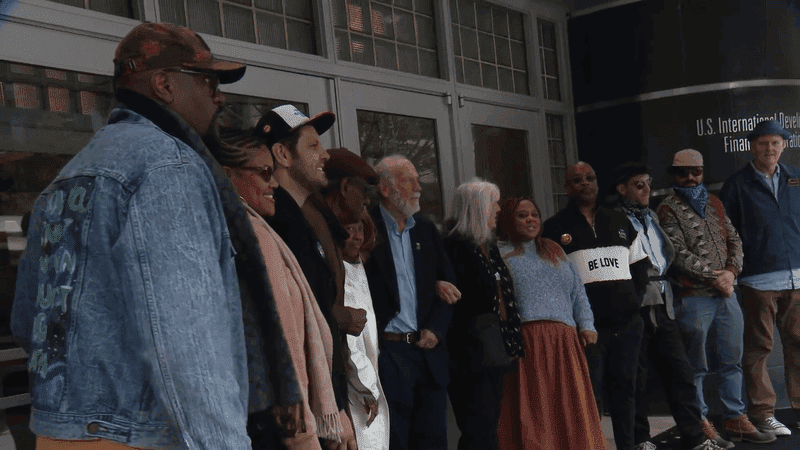
A “Freedom Riders” bus sets off from Washington, D.C. bound for New Orleans on Saturday (WJLA-TV, Washington)
Blacks Most Likely to Want ‘Upheaval’ in How U.S. Is Run
Black Americans are the racial or ethnic group most strongly opposed to Donald Trump and the Republican Party and most likely to believe the nation needs “complete and total upheaval,” according to a new poll from AP-NORC Center for Public Affairs Research.
Fewer Hispanics than whites or Blacks say they would like to see substantial change in how the country is run, or that “compelte and total upheaval” is needed.
Eighty-nine percent of Blacks disapproved of how Trump is handling the economy, 76 percent on handling crime; 92 percent faulted him on the cost of living, and 82 percent disapproved of his foreign policy. Only 1 percent had a favorable view of Vice President JD Vance. Fifty-three percent had a “somewhat or very favorable view” of the Democratic Party; 11 percent said that about the Republicans.
For Hispanics, the figures were 77 percent on handling the economy, 58 percent disapproval on crime; 83 percent on the cost of living; and 69 percent on foreign policy. Forty-two percent had a “somewhat or very favorable” view of the Democratic Party; 35 percent of the Republicans. Thirty-two percent were favorable on Vance.
For whites, 69 percent disapproved on the economy; 48 percent on handling crime; 75 percent on the cost of living; and 61 percent on foreign policy. The favorability for Vance was 23 percent. Thirty-six percent were “somewhat or very favorable” to the Democratic Party; 45 percent for the Republicans.
Among those In the “other” category, 82 percent disapproved on the economy; 64 percent on handling crime; 85 percent on the cost of living and 76 percent on foreign policy. Vance’s favorability was at 21 percent; the Democratic Party’s at 43 percent and the Republicans’ at 27 percent.
Overall, the pollsers said Thursday, “Ahead of the 2026 midterms, voters are focused on economic concerns and are eager for change. Most cite the economy and the cost of living among the country’s most important issues, and 8 in 10 say the country needs substantial change or complete and total upheaval in how it is run,” the pollsters said. “Many also express pessimism about the state of U.S. politics, with only 1 in 10 saying they feel optimistic.
“Eighty-five percent of voters say the economy is one of the most important issues when considering their vote in the upcoming election, and 84% say the same about the cost of living. Health care is considered a top issue for 69% of voters, while 64% cite the war with Iran as a top issue. Forty-five percent say immigration and crime are among the most important issues. Fewer voters say artificial intelligence (35%) or transgender issues (12%) are top priorities.”
Journal-isms asked for a racial and ethnic breakdown of the survey responses; of the 1,119 respondents; 655 were white, 127 Black, 195 Hispanic and 127 “other.”
Blacks preferred Democrats be in control of Congress; 63 percent wanted a majority in the House and 64 percent wanted that in the Senate. For Hispanics, the figures were 45 percent for the House and 41 percent for the for Senate; for whites, the numbers were 37 percent for the House and 41 percent for the Senate.
For “others,” 48 percent wanted a Democrat-controlled House and 45 percent a Democratic majority in the Senate. Both chambers are now majority Republican.
More than 70 percent in each group agreed the midterm elections were “extremely important”: 79 percent overall, whites 81 percent, Blacks 78 percent, Hispanics 72 percent and “other,” 79 percent. More than 65 percent in all categories agreed that health care was one of the most important issues.
Blacks and Hispanics more optimistic than whites about the future of democracy in the United States, though the number for all groups was less than half, and 28 percent said they felt neither optimistic nor pessimistic. The Black figure for optimism was 27 percent; with Hispanics at 31 percent; whites at 22 percent and “other”at 14 percent.
Asked “How much change would you like to see in how the country is run?” 40 percent of Blacks said “substantial,” with 49 percent saying “complete and total upheaval”; Hispanics, 37 percent “substantial,” another 37 “complete and total”, 52 percent of whites said “substantial,” 27 percent “complete and total.” The “other” figure was 42 percent.
- Jonathan J. Cooper, Nicholas Riccardi and Valerie Gonzalez, Associated Press: Latino voters helped put Trump back in the White House. What’s their next move?
- Eugene Daniels and Emily Berk, MS NOW: Hundreds of thousands of Black men are sitting out elections in Ohio. Almost no one is asking them why
- Roy S. Johnson, al.com: Andrew Young fought for the Black vote; now, Alabama Republicans are scared to death of it
- The Righting: Truth Social Visits Drop for Fifth Straight Month
- Monica Rodriguez, Janos Balazs and Torri Lonergan, Media Matters: Discontent in Spanish-language conservative media illustrates GOP’s deteriorating Hispanic coalition
- Ray Suarez, Capital and Main: Latino Voters Disapprove of Trump’s Presidency: Will That Decide the Midterms?
NAHJ President Favors Ending Barrier to Coverage
Dunia Elivir, president of the National Association of Hispanic Journalists who is seeking re-election, favors allowing outside news media its traditional freedom to cover the NAHJ convention, a contrast with the position of her opponent, Julio-Cesar Chavez, the current vice president/broadcast.
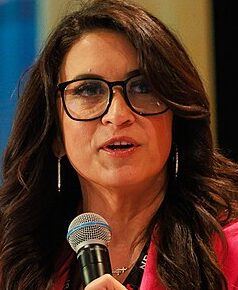 “We absolutely respect the role of journalists who come to cover the NAHJ convention, and we do not require reporters to pay to do their jobs,” Elivir said in an email to Journal-isms.
“The distinction is between covering the convention as a journalist and participating in it as an attendee. When someone wants to attend our sessions, take part in the programming, and benefit from the professional development opportunities we offer, we ask them to register as a professional attendee.
“We want to welcome the media and make it possible for them to do their jobs while also recognizing the value of the programming and opportunities we work so hard to provide for our members and attendees.”
Online voting for NAHJ members takes place Nov. 2-13. This is the first year a sitting president can seek reelection consecutively. Members approved for updated bylaws in 2024.
In 2024, NAHJ announced that press credentials for its convention would be honored for only one day. After the one day, members of the press must pay full registration costs to report on the four- or five-day conference. For NAHJ, that could be up to $599 more, plus extra for special events.
Only two people applied for press credentials that year — this columnist and a representative of a local station that had an anchor on one of its panels, Andrew Sherry, who managed public relations for NAHJ at the time. Journal-isms did not attend the 2025 or 2026 conferences.
 As reported last week, Chavez said the policy has been tweaked, with outside journalists now having to report which parts of the convention they would be covering. “The requirement now is that instead of NAHJ providing blanket access to the whole conference, journalists planning to cover specific parts of the conference, regardless of beat, must fill out the press access form and specify what they want to cover on a specific day,” he said.
“The press pass does not limit accredited journalists to attending only the specified event that day nor covering only the specified topic. As we work to have notable conferences each year, journalists who want to cover multiple aspects or events of the conference are invited to submit credential requests for each day they plan to cover.
“Without specific coverage plans and subsequent published stories about the requested conference dates, any journalist, regardless of beat, is invited to register and attend the conference in its entirety.”
Elivir, 53, told Journalisms that Chavez, 31, “called me on August 14 and told me I was the first person he wanted to share his decision with. He explained why he wanted to run, and I told him that competition is always healthy. I respect Julio-Cesar and his decision to run.
“We served on the same board, and while we share a love for NAHJ and a commitment to its mission, we each bring our own experiences, perspectives, and ideas to the table.
“For me, this is deeply personal. NAHJ guided and supported me when I didn’t speak English, under the leadership of Veronica Villafañe, and here NAHJ I found great mentors who helped me along the way. NAHJ means a great deal to me, and I’ve put my heart and soul into this organization to continue serving our members.
“As president, I’ve worked hard to strengthen our finances, work with transparency, grow our members’ engagement, and create more opportunities for our members. I’m proud of what we’ve accomplished together, but I also know there is still work to do.”
Elivir, who left her longtime anchor job at KVEA, Telemundo 52 in Los Angeles, now freelances for Telemundo stations.
She directs NAHJ members to her campaign website.
View this post on Instagram
If no image is visible, please consider using another browser.
Meet LIA, the AI-Generated Latina Newscaster
Entravision has introduced LIA, short for Latina Inteligencia Artificial, as part of the team for AHORA, its new Spanish-language news streaming service, Anna Ortega reported Tuesday for Hip Latina. “In a video published to YouTube on September 22, newscaster Jorge Viera introduces viewers to LIA, who says:
“ ‘I want to be absolutely clear with our audience. I am an AI-created newscaster. I’m not a person, and I’m not a journalist… Every word I say is selected, written, discussed, revised, and approved by Entravision’s editorial team,’ LIA told viewers. ‘I cannot replace the work of a journalist. I cannot go out into the field, earn a source’s trust, press an official, witness events in a community, or make editorial decisions. That responsibility belongs to journalists like you and the human team behind every piece of information I present.’
“Entravision’s goal is for LIA to deliver real-time information — including weather updates, explainers, data visualizations and election results — not to replace Latina journalists. According to the AI personality, Entravision’s Caroline Vázquez and LeaAnna Hernandez, along with the editorial team, direct her.
“The decision has drawn criticism across social media, with users calling LIA a threat to Latina journalists. Given that Latinas in journalism generally have to work twice as hard to earn their place in the industry, many see LIA as a slap in the face to real Latina journalists. Others believe the technology could help Latina journalists tell more of our community’s stories. . . .”
Your Barry Bingham Sr. Award Choice Is Due by Oct. 30
Beginning in 1990, the Association of Opinion Journalists, formerly the National Conference of Editorial Writers, annually granted a Barry Bingham Sr. Fellowship — actually an award — “in recognition of an educator’s outstanding efforts to encourage minority students in the field of journalism.”
AOJ merged in 2016 into the American Society of News Editors, which continued the tradition until its successor organization, the News Leaders Association, dissolved in 2024.
 Now the award is under Journal-isms’ stewardship, and last year we presented the honor to Mia Moody, Ph.D., (pictured) two-term chair of the Department of Journalism, Public Relations & New Media at Baylor University and a fearless diversity advocate. She was also the incoming president of the Association for Education in Journalism and Mass Communication, at a time when the headwinds against diversity, equity and inclusion by the Trump administration and some local and state governments were fierce.
In fact, the University of North Texas denied 11 professors funding for memberships to professional organizations it says violate the state’s DEI ban — a move some faculty members describe as unjustified and warn could undercut their career development, the Dallas Morning News reported.
Now it’s your chance to nominate someone whose convictions remain unshaken, even if going about the diversity work quietly. The deadline is Oct. 30.
Short Takes
- The Pentagon has named one of its own public affairs officials to run the publication Stars and Stripes, and he will keep his Pentagon job while doing it,” Adam Gramegna reported Tuesday for military.com. “This places a single official inside both the office that shapes the military’s message, and the newsroom charged with covering it independently. Christian Devine, an executive director and principal adviser in the Pentagon’s public affairs office, was appointed acting publisher by chief Pentagon spokesperson Sean Parnell. . . .The appointment comes less than two months after the Pentagon dismissed editor-in-chief Erik Slavin and Middle East reporter Lara Korte for what it called insubordination following a CBS interview about the department’s purported pressure on the publication.They then fired publisher Max Lederer Jr., who according to court records had declined a directive to deliver their termination notices.”
 “The 2026 James Madison Award recipient for service to the First Amendment is Rufus Friday (pictured), executive director of the Center for Integrity in News Reporting,” the School of Journalism and Media in the University of Kentucky College of Communication and Information and its Scripps Howard First Amendment Center announced Thursday. “Friday also serves as chairman of the Stars and Stripes publisher’s national advisory board, where he has emerged as a leading voice in defending the First Amendment and press freedom nationwide. Prior to this role, as president and publisher of the Lexington (Ky,) Herald-Leader.”
- “The number of books dropped from school reading lists and public library shelves is the highest since the organization, PEN America, started keeping track,” Native America Calling reported. “Fueled mainly by conservative pressure groups and elected leaders at the school board and state legislative levels, the challenges to books target what opponents consider obscenity and themes that are too mature for younger readers. But books by Native writers that cover issues like race, social justice, and historical accounts that go against more patriotic portrayals are also caught up in the attempts to control what people can read. . . .”
- “That I‘m part native is no surprise.“ Roy S. Johnson wrote for al.com on Native American Day. “As an African American growing up in Oklahoma — ‘Indian territory’ before statehood — it was pretty much a given. In the 1830s, about 60,000 of my indigenous kin were forcibly marched there from the states in the southeast after colonizers pilfered their cotton-fertile land, often buying it for a pittance, with some indigenous chiefs complicit in the evil. . . .”
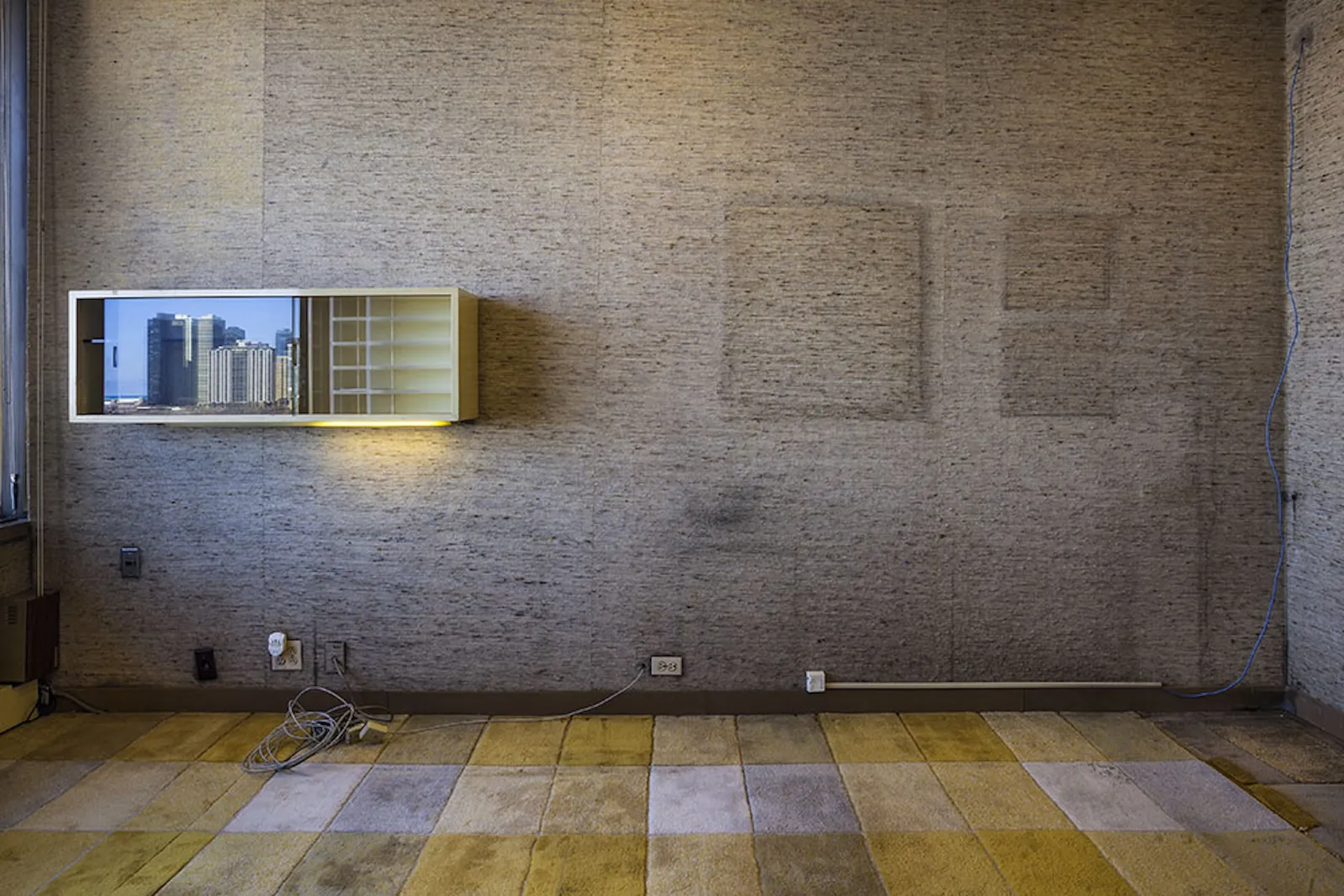
(Credit: Barbara Karant)
- “820 Ebony/Jet: Visions of the Johnson Publishing Company, an American Icon, a new book by the photographer Barbara Karant . . . features new and archival photos of the building along with a foreword by Deborah Willis and essays by Cheryl Finley, E James West and Carla Williams, among others,” Diana Budds reported Tuesday for Wallpaper.
- “While many Somali Minnesotans admit there are problems with some disaffected young men, they’re speaking out against exaggerations, racism and stereotypes,” Laura Yuen and Rachel Hutton wrote Oct. 11 for the Minnesota Star-Tribune. “Here’s what six Somali Minnesotans said about how they’re reacting to the recent events and how their community is being portrayed. . . . “
- “Right-wing media’s racist attacks and ethnic slurs directed at Indians, other South Asians, and South Asian Americans have surged over the past year, in part fueled by conservative infighting over the H-1B visa program and a handful of viral posts, Sage Hodil and Ben Van Bloem reported Oct.9 for Media Matters.
‘Diddy’ Transferred to Smaller Prison
Oct. 16, 2026
Officials Deny Reports of Fight with Drug Lord
Cuban Journo Leader Says Jailers Planted Knife on Him
Homepage photo: Federal Correctional Institution [FCI] Allenwood Low (Credit: U.S. Bureau of Prisons)
View this post on Instagram
An inmate says of Allenwood, “Truly grateful for the opportunity to step inside USP (Federal Prison) Allenwood and share with these men how fitness can be more than just a workout — it can be a pathway to change.” (Credit: Instagram)
If no image is visible, please consider changng browsers.
Officials Deny Reports of Fight with Drug Lord
Without giving a reason and denying that Sean “Diddy” Combs got into a prison fight with the Jamaican drug lord known as ‘Dudus,” the U.S. Bureau of Prisons Friday moved Combs from its Fort Dix, N.J., facility to a smaller low-security one in Allenwood, Pa.
“For privacy, safety, and security reasons, we do not discuss the conditions of confinement for any individual in our custody, including reasons for transfer,” a bureau spokesperson said.
As Janelle Griffith reported Friday for People, “The move comes just weeks after NBC News reported Combs had contraband items, including a cellphone and alcohol. The report even alleged other inmates would give Combs massages.
“Following the report, Combs was placed in solitary confinement and his release date was pushed back. Combs, 56, is scheduled to be released March 2, 2028.
“Combs was treated at a hospital over the weekend following what a source described to PEOPLE as a prison fight with a convicted drug lord, an account the Federal Bureau of Prisons has disputed. TMZ initially reported that Combs had been hospitalized with a head injury, later adding the fight allegedly began because other Combs’ reputed prison perks got other inmates in trouble.”
“TMZ broke the story … Diddy was taken out of Fort Dix FCI early Saturday morning by ambulance to receive emergency medical treatment for a head injury. Multiple sources inside Fort Dix told us he sustained that injury during a clash with fellow inmate Christopher ‘Dudus’ Coke,” TMZ reported.
Griffith also wrote,” ‘We appreciate the Bureau of Prisons taking the safety and security of Sean and everyone involved seriously,’ Combs spokesperson Juda Engelmayer said. ‘His transfer from one low-security facility to another is an important distinction, and while we cannot speak to the BOP’s specific reasons for the move, it is consistent with a decision made with safety and security in mind. We are grateful for the attention being given to his well-being and hope he can continue serving his time without unnecessary disruption.’ ”
TMZ reported Friday, “Although the BOP didn’t give a reason for the transfer, Diddy had racked up a bunch of violations while he was a prisoner at Fort Dix. TMZ broke the story … Diddy was written up by prison staff multiple times for phone violations and getting into fights. As a result, he was twice sent to the Special Housing Unit for rule-breaking inmates.
“That said, it would seem Diddy is not being transferred because he’s a problem inmate. If that were the case, you’d think he would be transferred to a higher security prison, but Allenwood has the same level of security as Fort Dix. Therefore, it’s smelling like this may involve Diddy’s security behind bars.
“Fort Dix has 4,000 inmates, and Allenwood has 1,000. Presumably that means it’ll be easier for guards to keep an eye on/protect Diddy.
“Our sources say Diddy lost 41 days of good time credit, which can help inmates get released early, along with 400 days of commissary privileges. NBC News also reported Diddy allegedly had a contraband cellphone with nude photos, alcohol, massages, and fancy meals.”
Michael R. Sisak added for the Associated Press, “In April, the 2nd U.S. Circuit Court of Appeals heard arguments in Combs’ bid to overturn his conviction and sentence, which his lawyers argued was too harsh. The court has yet to rule.”
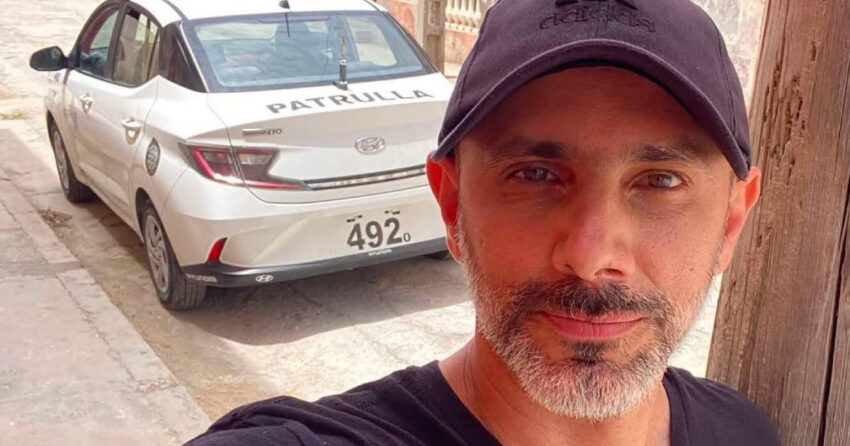
Pierre Manigault, president of the Inter American Press Association, said, “The detention of Henry Constantín (pictured) constitutes another serious episode of harassment against the independent press in Cuba. An accusation of ‘disobedience’ cannot be turned into a tool to intimidate and silence a journalist.” (Credit: © Facebook/La Hora de Cuba)
Cuban Journo Leader Says Jailers Planted Knife on Him
(Oct. 17 update: Cuban Observatory of Human Rights files a formal complaint with the Camagüey Prosecutor’s Office for serious irregularities against Henry Constantín [CiberCuba] )
“The independent journalist Henry Constantín Ferreiro, director of La Hora de Cuba, reported on Thursday that he will be placed in a punishment cell for at least 15 days in the maximum-security prison Kilo 7 in Camagüey, after prison officials claimed to have found a knife among his belongings,” the Spain-based CiberCuba reported Thursday.
“Constantín suspects that the blade was deliberately placed in his cell to justify a new sanction against him.
“According to The Hour of Cuba, the journalist conveyed what happened through a phone call made around 10:00 AM on this October 15.
“During a search, prison officials allegedly found a knife in the pocket of one of the personal belongings. According to the account, it was said to be a homemade weapon, similar to those crafted by some inmates within the penitentiary.
“The journalist suspects that the object was introduced the night before. ‘They went directly to the exact spot where he supposedly kept the weapon,’ the independent media outlet added. . . .
“The outlet also wrote, ‘Constantín’s case has drawn condemnation from press freedom advocacy organizations and international calls for his release.
“Reporters Without Borders (RSF) demanded his immediate release and documented that this is, at a minimum, the nineteenth detention of the journalist related to his reporting work.
“The Inter American Press Association (IAPA), an organization where Constantín holds the regional vice presidency for Cuba on its Commission on Press Freedom and Information, has also condemned his imprisonment.
“From the United States, the Donald Trump administration demanded his release through the Assistant Secretary of State for Western Hemisphere Affairs, Juan Pablo Segura.
“Also, Cuban writers, journalists, artists, and communicators participated in an audiovisual campaign calling for their release under the slogan ‘Informing is not a crime.’ . . .”
Google Chrome may be required to see the English translation of the items below:
- ADN Cuba: [Rapper] Maykel Osorbo is handcuffed and forced to cut his hair during a prison search (Oct. 13)
- ADN Cuba: Bolivian president calls for democracy in Cuba: “People are suffering” (Sept. 23)
- Diario De Cuba: Cuban organizations urge the world not to support the regime’s resolution against the embargo (Oct. 15)
- René Gómez Manzano, CubaNet: The embargo and the responsibilities that Havana is evading (Oct. 15)
- Claudia Padrón Cueto, CubaNet: Expelled without knowing where: the Cubans that Russia sends to Uzbekistan (Oct. 13)
- Yaima Pardo, Marti Noticias: They denounce lack of medical care, malnutrition and deaths in Cuban prisons during September (Oct. 14)
- Karla Pérez, ADN Cuba: Sexual violence as torture: this is how State Security operates inside Cuban prisons (Aug. 4)
- Juan Carlos Espinosa, El Pais, Spain: Up to 10 years in prison for criticizing Cuba’s government on social media: How the Castro regime punishes dissent
- Yolanda Huerga, Marti Noticias: Journalist Yunia Figueredo is being threatened with having her youngest daughter’s surgery prevented.
- Nora Gámez Torres, Miami Herald: U.S. becomes main fuel supplier to Cuba amid surge in exports to private sector (Oct. 12)
- Prisoners Defenders: Prisoners Defenders suffers a targeted cyberattack minutes after publishing its monthly report on political prisoners in Cuba (Oct. 15)
- Prisoners Defenders: From Public Prayer to Prison: Cuba Ends September With 1,351 Political Prisoners (Oct. 15)
