

White House Spokesman Responds With Vitriol
ICE Defies Judge, Denies Reporter Bail
Davidson Says Killing That Column Was Last Straw
Media Outline Negative Effects of ‘Beautiful Bill’
Too Much Made of N.Y. Mayoral Hopeful’s Racial ID?
Texas Floods Claim David Lawrence Granddaughters
‘Dr. K’ Dies at 70, Edited Tri-State Defender
Fearless Caribbean Journalist Rickey Singh Dies at 88
[btnsx id=”5768″]
Donations are tax-deductible.
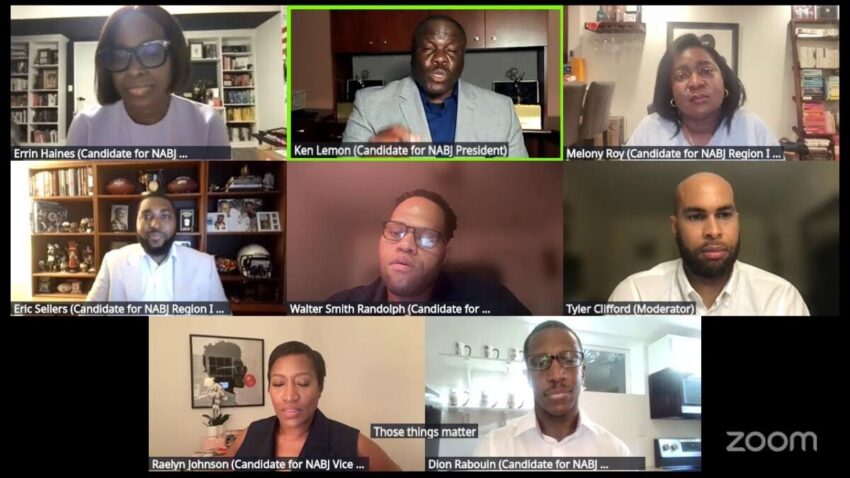
At the National Association of Black Journalists’ candidates forum last Wednesday, all three presidential hopefuls said that the U.S. presidential candidates should be invited to speak to NABJ, but challengers Errin Haines and Dion Rabouin disagreed with how the invitations to Republican Donald Trump and Democrat Kamala Harris were executed last year. Incumbent Ken Lemon said NABJ was dealing with time constraints. On Wednesday, seven non-presidential candidates are to be at the final NABJ-sponsored forum before the Aug. 6-10 convention. (Watch the video here.)
White House Spokesman Responds With Vitriol
The National Association of Black Journalists is not inviting President Trump to its convention next month, prompting a vitriolic response from a White House spokesman who characterized the NABJ decision as “petty and unprofessional antics.”
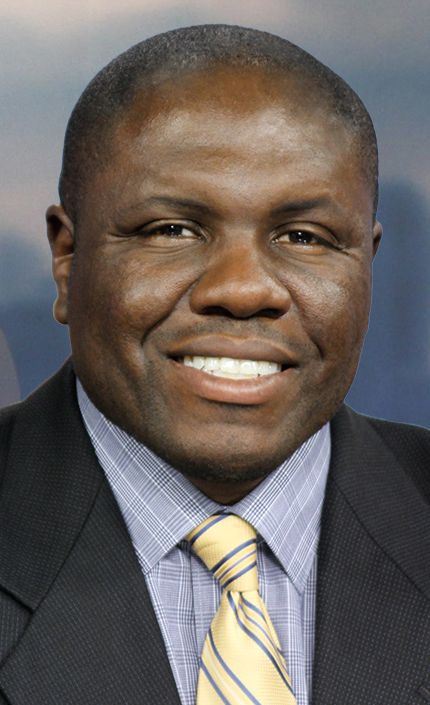 NABJ President Ken Lemon (pictured) told April Ryan of BlackPressUSA, “At this point, there is not a reason to invite President Trump this year.” Last year was a hard-fought presidential campaign year, where “journalists had the opportunity to vet the candidate. I don’t see the need to do that this time around.”
Separately, Lemon messaged Journal-isms, without elaboration, that he and Marc Morial, the CEO of the National Urban League “have talked recently about possible engagements.” In May, Morial asked NABJ and the National Newspaper Publishers Association to join his Demand Diversity coalition to counter Trump’s anti-diversity crusade, but there had been no public response to Morial from NABJ or NNPA.
NABJ received considerable blowback last August when Trump, as the Republican presidential candidate, was crass and insulting as he was questioned by three Black journalists at NABJ’s Chicago convention. His Democratic opponent, then-Vice President Kamala Harris, took questions from a panel the following month in Philadelphia.
 NABJ has maintained that as journalists, members should have the opportunity to question all candidates for president. Over the years, it has extended the same principle to sitting presidents, even though most did not accept the invitation, as former NABJ president Herbert Lowe (pictured) outlined last year for the Poynter Institute.
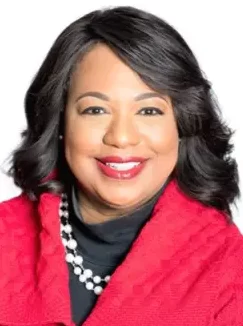 However, it has not been clear whether those invitations were extended every year or only when the president was seeking re-election. “I may be mistaken,” messaged Condace Pressley (pictured), NABJ president from 2001 to 2003. “Rarely has a sitting president addressed our membership outside of a campaign cycle.”
Other Black groups do not see the same professional obligation to hear or question the president or candidate.
The NAACP announced last month that Trump would not be invited to its convention, either. “This administration does not respect the Constitution or the rule of law,” CEO Derrick Johnson said in a statement. “It would be a waste of our time and energy to give a platform to fascism, which would be unacceptable.”
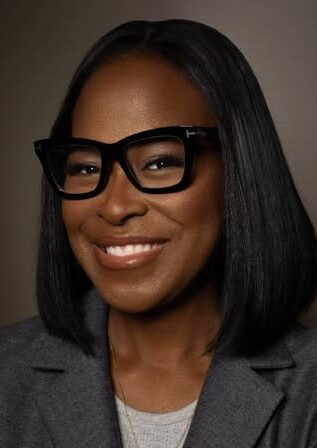 Lemon’s two challengers, Errin Haines (pictured) and Dion Rabouin, told Ryan they agreed with not inviting Trump. “He did damage to Black journalists and to Black America,” said Haines, an editor-at-large at the 19th. “The way that interview was executed was not the opportunity for our membership that it was for him as a candidate.”
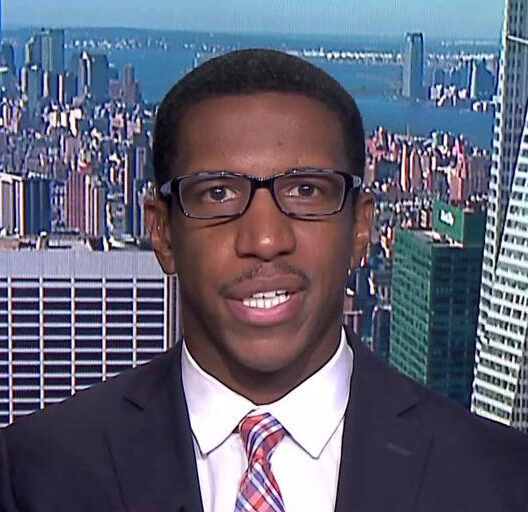 Rabouin (pictured), a financial markets journalist with his own business, messaged Journal-isms, “President Trump has gone after Black Americans and Black journalists and has specifically attacked NABJ’s mission with his explicit efforts to dismantle diversity, equity and inclusion initiatives across the country. Based on his last appearance at NABJ, there is no reason to expect that he will speak to our members in an honest and forthright manner.
“I applaud NABJ’s decision not to invite Trump to our convention, joining in solidarity with civil rights organizations representing Black Americans.”
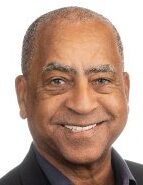 There are other reasons for not wanting Trump at the Cleveland gathering. Bob Butler, (pictured) NABJ president from 2013 to 2015, noted to Journal-isms, “If he were to be there it would take the focus away from NABJ’s 50th anniversary celebration.” Pressley agreed.
Lowe, NABJ president from 2003 to -2005, also agreed with Butler on that point and added, “If trouble comes, you handle it. You don’t always have to look for trouble.” If other groups aren’t inviting Trump, journalists or not, “I don’t understand why NABJ should be held to a different standard.”
The White House Tuesday confirmed this quote from Harrison Fields, principal deputy press secretary, to Ryan:
“The National Association of Black Journalists (NABJ) is doing a disservice to its audience by engaging in petty and unprofessional antics, intent on making itself more relevant rather than prioritizing informed, balanced, and objective reporting, Black Americans rejected this level of bias and the Democrat talking points promoted by the NABJ, as demonstrated by the significant support for President Trump among Black voters.”
Nationally, about 8 in 10 Black voters supported Harris over Trump, according to an Associated Press analysis.
View this post on Instagram
If image is not visible, please consider changing browsers.
ICE Defies Judge, Denies Reporter Bail
Atlanta-based Spanish-language reporter Mario Guevara was denied bail by Immigration and Customs Enforcement (ICE) on Monday and listed as “Non Releasable” even though a judge July 1 ruled that Guevara could be released on a $7,500 bond, according to a copy of the denial reviewed by the Committee to Protect Journalists, the press-freedom group said Monday.
“At around 4:30 p.m. local time on Monday, Floyd County jail officials told CPJ that Guevara had been taken by ICE from the Floyd County Jail in Rome, Georgia, though they said they did not know where he was being taken.
“Telemundo Atlanta reported on Monday morning that the activist group Indivisible had scheduled a protest for 6 p.m. that day at the jail.
“ ‘We are dismayed that immigration officials have decided to ignore a federal immigration court order last week granting bail to journalist Mario Guevara,’ said CPJ U.S., Canada and Caribbean Program Coordinator Katherine Jacobsen. ‘Guevara is currently the only jailed journalist in the United States who was arrested in relation to his work. Immigration authorities must respect the law and release him on bail instead of bouncing him from one jurisdiction to another.
“The journalist, who was initially arrested while covering a June 14 ‘ No Kings’ protest in the Atlanta metro area and charged with three misdemeanors, which local officials declined to prosecute due to insufficient evidence. A local judge ordered Guevara to be released on bond, but he remained in custody after ICE opened a detainer against him.”
A chilling video of Turkish student Rumeysa Öztürk’s March 25 arrest showed a swarm of officers encircling her near her Somerville, Mass., home as she shrieked in fear, sparking national outrage. She had co-authored an op-ed at Tufts University critical of Israel. Joe Davidson’s column on the incident was spiked. He writes, “Killing that column was a death blow to my life as a Washington Post columnist.” (Credit: WBZ, Boston/YouTube)
Davidson Says Killing That Column Was Last Straw
Washington Post columnist Joe Davidson (pictured below) announced June 27 that he was leaving his column behind (scroll down) after writing about the federal workforce for The Washington Post for 17 years.
“I’m leaving because of a policy restricting the level of opinion and commentary in news section articles,” Davidson told readers. “While the policy can be justified journalistically, its rigorous enforcement represents a significant reduction in the latitude I’ve enjoyed since I began writing the Federal Diary, now the Federal Insider, in 2008, three years after I joined The Post.”
On Tuesday, Davidson provided more detail in a Facebook posting, headlined, “Quitting The Washington Post — or did it quit me?”
Here is the text:
“Washington Post Columnist.
“What a great title in the world of journalism.
“But it’s not worth keeping at any cost.
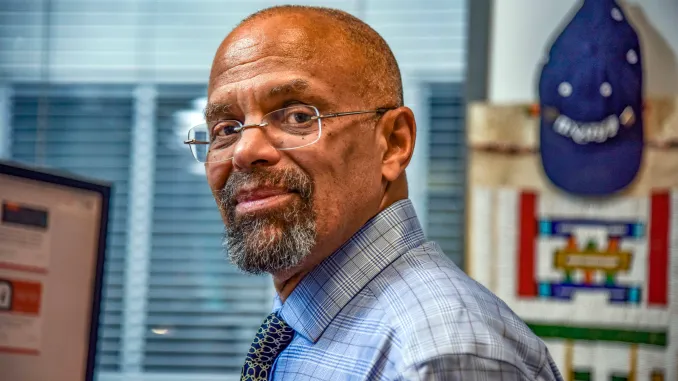 “For me, the cost became too great when a Federal Insider column I wrote was killed because it was deemed too opinionated under an unwritten and inconsistently enforced policy, which I had not heard of previously. My resignation, after 20 years with The Post, took effect this month.
“While the policy prohibiting opinion and commentary in News section articles can be justified journalistically, it is a departure from longstanding Post practice and mandated a change in my role that I chose not to accept. Some readers who commented on my final column skewered Post owner Jeff Bezos. I have no reason to believe he was
directly involved in my situation, but it would be naïve to ignore the context.
“Starting before the November presidential election, Bezos’s policies and activities have projected the image of a Donald Trump supplicant. The result – fleeing journalists, plummeting morale and disappearing subscriptions. Since October, when Bezos blocked publication of a planned Post endorsement of Kamala Harris for president, the
departure of Post talent has been shocking and included five former editors directly above me in the newsroom’s hierarchy. Nonetheless, Post coverage of Trump remains strong. Yet the policy against opinion in News section columns means less critical scrutiny of Trump — a result coinciding with Bezos’s unseemly and well-document
coziness with the president.
“Blocking my column because it was too opinionated was a shock. I’ve authored many pieces over my 17 years writing the Federal Diary (renamed the Federal Insider in 2016), that were at least if not more opinionated as the now dead one. In that piece, I argued that “one hallmark of President Donald Trump’s first three, turbulent months in
office is his widespread, ominous attack on thought, belief and speech.”
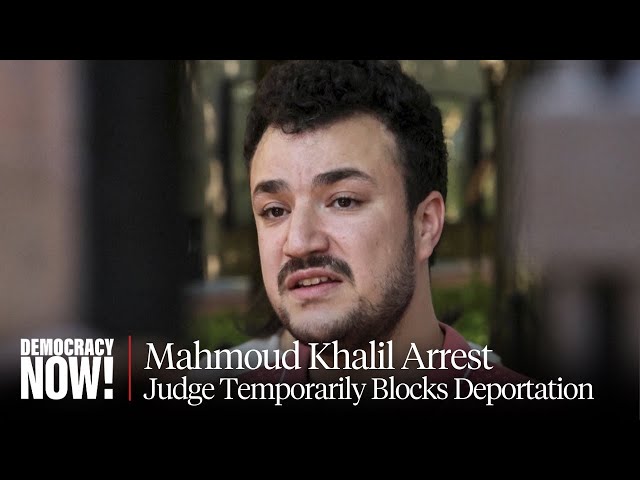 “The piece contained specific examples, including Secretary of State Marco Rubio’s alarming memo supporting deportation of Columbia University pro-Palestinian activist Mahmoud Khalil. Rubio said Khalil could be expelled for ‘expected beliefs…that are otherwise lawful.’ What immigrants might believe in the future now can make them federal law enforcement targets.
“Another far-reaching example I cited is Trump’s aggressive attack on speech promoting diversity, equity and inclusion (DEI). His executive order commanded federal agencies to ‘excise references to DEI and DEIA [‘A’ for accessibility] principles, under whatever name they may appear’.’ Also, Tufts University student Rumeysa Ozturk, of Turkey, was abducted off the street by masked officers because she co-wrote an op-ed critical of Israel. It was a terrifying sight, caught on video, which previously would have seemed more applicable to George Orwell’s dystopian and cautionary tale against totalitarianism and thought police in is novel ‘1984.’ This is America in 2025.
“Killing that column was a death blow to my life as a Washington Post columnist. But I wrote two more articles to see if I could cope with the restrictions. That’s when I learned just how severe the policy is. In my next piece, I was not allowed to describe a potential pay raise for federal employees as ‘well-deserved’ because of Post policy.
“As a columnist, I can’t live with that level of constraint. A column without commentary made me a columnist without a column. I also was troubled by significant inconsistencies in the implementation of the policy. During this period, The Post allowed stronger, opinionated language by other staffers, including the words ‘viciousness,’ ”cruelty’ and’ ‘meanness’ to describe Trump’s actions.
“I’m gone from The Post, but only as a journalist. Many people understandably have canceled subscriptions to protest Bezos’s actions that have damaged the news organization’s integrity. I still subscribe, and read and support the enduring fine work of Post journalists in the newspaper and digitally.
“When Bezos bought The Post, he provided needed money, energy and direction. The Post continues to produce first rate journalism now, despite his morale-busting actions.”
- Benjamin Lindsay, The Wrap: Washington Post CEO Encourages Staffers to Resign if They Don’t ‘Feel Aligned’ With Its Reinvention (July 9)
At the Essence Festival in New Orleans over the Fourth of July holiday, reported above by KRIV-TV in Houston, known as Fox 26, civil rights leaders held a news conference, pictured below, to describe the cost of the “Big, Beautiful Bill” to communities of color. Marc Morial of the National Urban League is at the lectern. (Credit: YouTube; WLNO New Orleans)
Media Outline Negative Effects of ‘Beautiful Bill’
The justifiably honored Capital B News was just one of the media organizations sounding the alarm on the deleterious effects on communities of color of President Trump’s just-signed “Big Beautiful Bill.”
Trump’s “nearly 900-page piece of legislation that he calls his ‘big, beautiful bill’ will likely have major ramifications for Black Americans and other marginalized communities,“ Brandon Tensley wrote for Capital B on Tuesday.
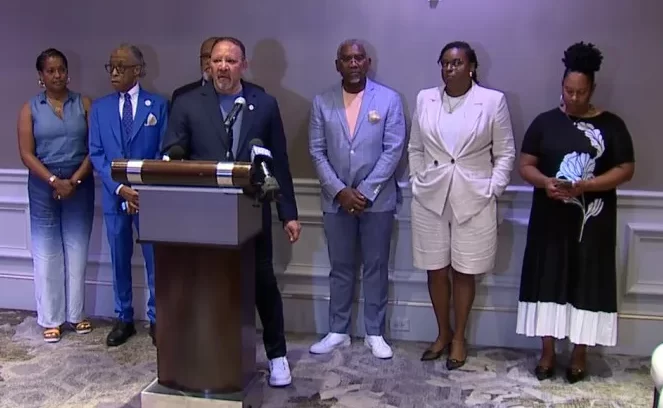 “Among other things, the legislation guts Medicaid, slashes funding for the Supplemental Nutrition Assistance Program, and limits access to federal student loans — outcomes that will disproportionately burden Black Americans, who rely on these services at higher rates. . . .
“Lenwood V. Long Sr., the chief executive officer of an organization focusing on Black economic well-being, argued in a recent essay that Trump’s attempt to curtail government programs mirrors the efforts of some of his predecessors, including Ronald Reagan and Richard Nixon.
“Long wrote that their domestic policy agendas ‘left urban, predominately Black communities susceptible to prolonged underinvestment and discrimination’ and sought to ‘sway public opinion and justify the gutting of public assistance programs.’
“Here’s what Trump’s domestic policy agenda could mean for Black Americans, when key provisions of the legislation are expected to go into effect, and how Black political leaders have responded. . . . “
Tensley singled out Medicaid, food assistance and student loans and clean energy.
- Perry Bacon Jr., Washington Post: The Big Beautiful Bill is being enacted in an ugly way
- Stacy Brown, BlackPressUSA: Trump’s ‘Big Ugly Bill’ Puts Millions of Lives at Risk
- Clarence Page, Chicago Tribune: Old ‘welfare queen’ legends haunt Donald Trump’s budget plan
- Juan Williams, The Hill: Trump’s megabill will hurt the health of his own voters
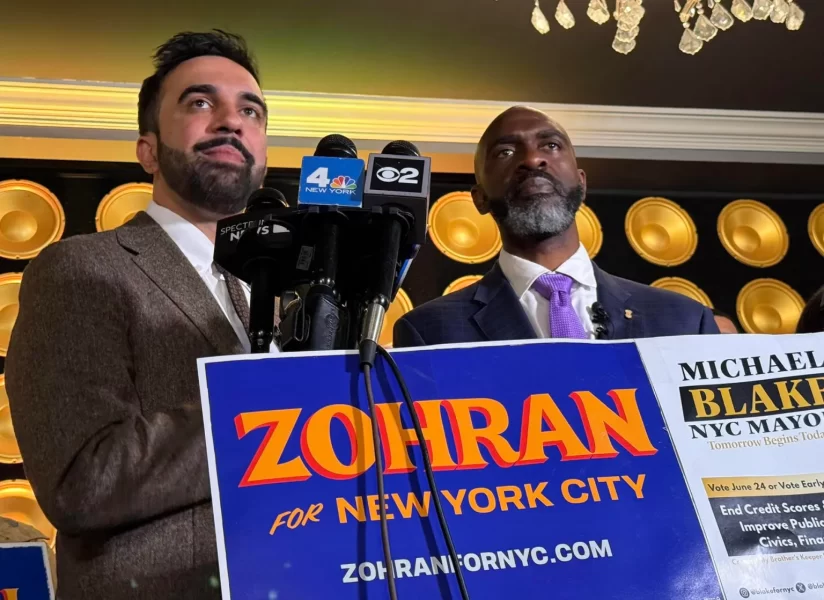
Mayoral candidates Assemblymember Zohran Mamdani, left, and former Assemblymember Michael Blake, right. (Credit: Raven Robinson/New York Amsterdam News)
Too Much Made of N.Y. Mayoral Hopeful’s Racial ID?
“On Thursday, the New York Times published an article about Zohran Mamdani, the New York mayoral candidate, that relied on documents stolen in a hack of Columbia University’s computer systems,“ Liam Scott reported Saturday for Columbia Journalism Review. “Since then, the piece has sparked an uproar over sourcing, newsworthiness, and race.
“The article reported that in 2009, as part of a college application to Columbia, Mamdani had checked boxes indicating that he was both ‘Asian’ and ‘Black or African American.
“Mamdani, who is of Indian descent, was born in Uganda and lived in South Africa before moving to the United States when he was seven years old. He told the Times that he selected those boxes because the available options did not reflect the complexity of his background. (Mamdani was not admitted to the school.) The story, which was written by two reporters from the Metro desk and a freelancer who normally covers health, was overseen by a newsroom in transition: the longtime Metro editor, Nestor Ramos, is in the process of taking over the National desk.
“The focus on Mamdani’s racial heritage and self-identification soon sparked an intense debate online. Many commenters suggested that the story failed to rise to the level of a scoop and instead treated a mundane matter of personal identification as a scandal. (‘I don’t have a problem with how he self-identifies,’ Curtis Sliwa, the Republican candidate for mayor running against Mamdani, told Fox News on Friday.)
“Among journalists, the story also raised significant ethical concerns. As initially published, the article indicated that the hacked materials had been provided, under the condition of anonymity, by an intermediary known on Substack and X as Crémieux, who was described only as ‘an academic and an opponent of affirmative action.’ But there’s more to that source: as The Guardian reported in March, Crémieux is the social media alias of Jordan Lasker, a promoter of white supremacist views. The Times updated its article to note that Crémieux ‘writes often about IQ and race.’ . . .”
- Zeeshan Aleem, MSNBC: I know exactly what the vicious racist attacks on Zohran Mamdani are meant to do
- Maya King, Jeffery C. Mays and Shane Goldmacher, New York Times: Mamdani Triumphed Without a Majority of Black Voters. Where Does That Leave Them?
- Max Tani, Semafor: Times pushed ahead to avoid being scooped on Mamdani Columbia story

From left: Hanna and Rebecca Lawrence, the 8-year-old Camp Mystic campers who died in the massive flooding in Texas. (Courtesy David Lawrence Jr.)
Texas Floods Claim David Lawrence Granddaughters
The twin granddaughters of David Lawrence Jr., a diversity advocate during his time as newspaper publisher and industry leader, are among the dozens killed during massive flooding in Central Texas this weekend, he confirmed Sunday, David Goodhue reported Monday for the Miami Herald.
“The girls, both 8 years old, and their 14-year-old sister attended Camp Mystic in Kerr County, an area where dozens of people died after the Guadalupe River swelled with rainwater and flooded the Texas Hill Country early Friday morning.
“ ‘It has been an unimaginable time for all of us. Hanna and Rebecca gave their parents John and Lacy and sister Harper, and all in our family, so much joy,’ Lawrence said in a statement to the Herald. ‘They and that joy can never be forgotten.’ “
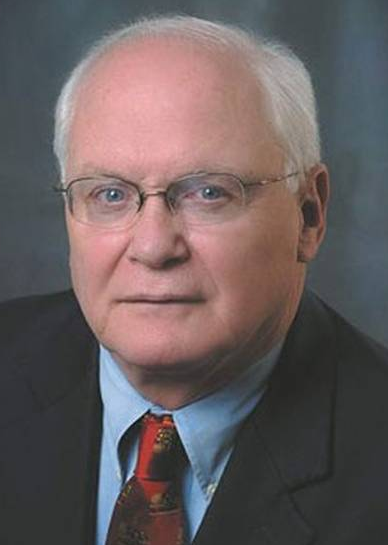 Lawrence (pictured) is the board chair and founder of The Children’s Movement of Florida and was publisher of the Herald from 1989 to 1999. He was also president of the old American Society of Newspaper Editors, where he advocated for diversity and received the 2004 Robert McGruder diversity award from Kent State University.
He was also publisher and executive editor of the Detroit Free Press and editor of the Charlotte Observer.
“In Kerr County, 68 people have been confirmed dead, including 40 adults and 28 children Leitha said,” Goodhue reported.
“Many of the victims were among the 750 people staying at the all-girls Christian Camp Mystic, located along the banks of the Guadalupe when the floodwaters rushed in. The camp’s director, Richard Eastland, also died, according to Texas Public Radio.”
Among the outpourings of sympathy was a letter to the editor of the Herald from Shabbir Motorwala, founding member of the Coalition of South Florida Muslim Organizations.
“The tragic loss of his beloved grandchildren in the recent Texas flash flood is a sorrow no words can truly capture,” Motorwala wrote. “Lawrence has spent decades championing the needs of our youngest and most vulnerable. Today, we stand with him in his own moment of vulnerability and grief.”

‘Dr. K’ Dies at 70, Edited Tri-State Defender
“The death of Karanja A. Ajanaku this week hits particularly hard,” Jon W. Sparks wrote for Memphis Magazine.
The Tri-State Defender said Tuesday he was known as “Dr. K,” and the Commercial Appeal said he was 70.
“A deeply respected journalist, he was a reporter at The Commercial Appeal for many years and later was associate publisher and executive editor at The New Tri-State Defender until his retirement in 2023,” Sparks continued. “In his final Facebook post last month, he announced that liver cancer had put him back in the hospital, ‘with the conversation now including hospice aid. To my support team, be at peace! I am!’
“It was very much who he was to treat his illness as a journey and to be forthright and thoughtful about it while sustaining himself and his many friends with an outlook of affirmation. The tributes from his many friends and colleagues have been reflecting the impact he had not only as a first-rate journalist, but as an exemplar of wisdom and compassion.”
The magazine reprinted a story about Ajanaku that originally appeared in its March 2018 issue

Guyana-born regional journalist Rickey Singh, via Wesley Gibbings and courtesy of his daughter, Donna Ramsammy.
Fearless Caribbean Journalist Rickey Singh Dies, 88
“Rickey had been ailing for some time (stroke, heart disease) and he was 88,” Wesley Gibbings, the noted Trinidad-based Caribbean journalist, editor, and poet, messaged Journal-isms. “He was a primary reason why I entered the field of [journalism.]. He was Guyanese but after being expelled lived in Trinidad and Barbados (from where he was also expelled).”
Emma Lewis reported Monday for Global Voices, “Singh was an extraordinary figure in regional journalism, during often turbulent times at home and abroad. His career spanned over five decades, during which he reported on several momentous events. Although slight in stature, his incisive reports, interviews and columns packed a strong punch.
“The Trinidad and Tobago Guardian, describing Singh’s ‘journalistic journey’ as being ‘marked by courage, tenacity, and a flair for uncovering the untold,’ recounted some of Singh’s dramatic personal experiences while on the job, including’ “’narrowly escaping a lynching while on assignment in Buxton, [surviving] an encounter with a notorious ‘Death Squad’ in Georgetown’s Botanical Gardens, and even a near-fatal poisoning incident at work’ . . .”
The funeral service is to take place on Tuesday, July 16, at The People’s Cathedral in Barbados, his family announced on Monday, Sheri-kae McLeod reported for the Caribbean National Weekly.
[btnsx id=”5768″]
To subscribe at no cost, please send an email to journal-isms+subscribe@groups.io and say who you are.
Facebook users: “Like” “Richard Prince’s Journal-isms” on Facebook.
Follow Richard Prince on Twitter @princeeditor
Richard Prince’s Journal-isms originates from Washington. It began in print before most of us knew what the internet was, and it would like to be referred to as a “column.” Any views expressed in the column are those of the person or organization quoted and not those of any other entity. Send tips, comments and concerns to Richard Prince at journal-isms+owner@
View previous columns (after Feb. 13, 2016).
View previous columns (before Feb. 13, 2016)
- “Black Journalists Will Figure in Jimmy Carter’s Legacy” on Sirius XM’s “Urban View Mornings.” (video) (Jan. 3, 2025)
- Diversity’s Greatest Hits, 2018 (Jan. 4, 2019)
- Book Notes: Is Taking a Knee Really All That? (Dec. 20, 2018)
- Book Notes: Challenging ’45’ and Proudly Telling the Story (Dec. 18, 2018)
- Book Notes: Get Down With the Legends! (Dec. 11, 2018)
- Journalist Richard Prince w/Joe Madison (Sirius XM, April 18, 2018) (podcast)
- Richard Prince (journalist) (Wikipedia entry)
- February 2018 Podcast: Richard “Dick” Prince on the need for newsroom diversity (Gabriel Greschler, Student Press Law Center, Feb. 26, 2018)
- Diversity’s Greatest Hits, 2017 — Where Will They Take Us in the Year Ahead?
- An advocate for diversity in the media is still pressing for representation, (Courtland Milloy, Washington Post, Nov. 28, 2017)
- Morgan Global Journalism Review: Journal-isms Journeys On (Aug. 31, 2017)
- Journal-isms’ Richard Prince Wants Your Ideas (FishbowlDC, Feb. 26, 2016)
Richard Prince with Charlayne Hunter-Gault, “PBS NewsHour,” “What stagnant diversity means for America’s newsrooms” (Dec. 15, 2015)
- Book Notes: Journalists Follow Their Passions
- Book Notes: Journalists Who Rocked Their World
