
Venezuelan Had Asylum Request Pending
Cuba Moves to Outlaw Independent Journalism
Citing DEI Ban, School Won’t Fund Professional Memberships
Nieman Foundation Appoints First Curator of Color
Latinos to Soon Form Majority of Chicago Police Force
Guild’s New Pittsburgh Paper Says It Wants Diversity
Proud Boys: ‘Supremacist’ but Not ‘Nationalist’?
She Calls It ‘Mamdani Derangement Syndrome’
Short Takes: Baltimore Sun V. Gov Wes Moore; Pope Leo XIV’s roots; Mumia Abu-Jamal; ’60 Minutes’ and Trevor Phillips; Peru’s Gustavo Gorriti; Oprah Winfrey’s South African school for girils’; Toxic Chemicals in Synthetic Braiding Hair; NAHJ’s Dunia Elvir; Bangladesh journos charged with crimes against humanity
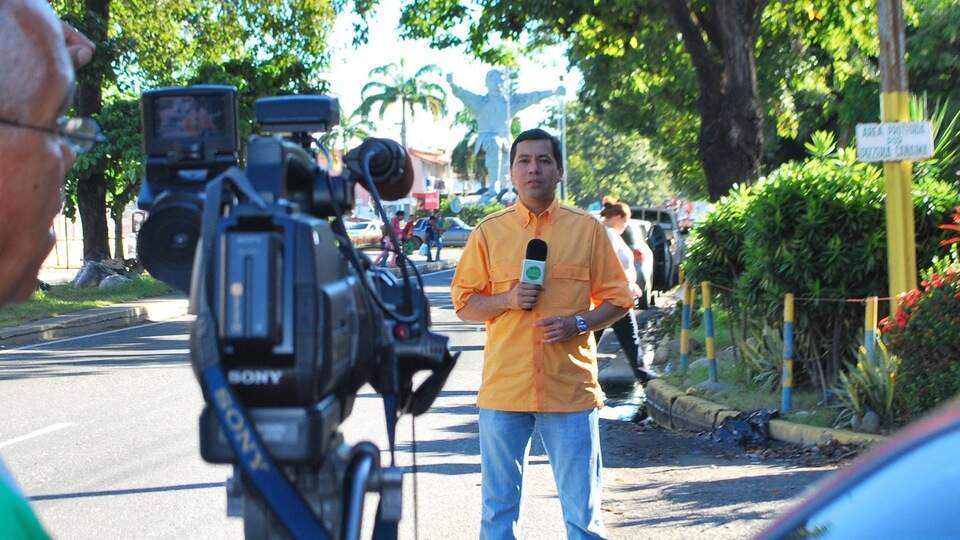
Homepage photo: Venezuelan journalist Wilmer Roberto Solano Dávila (Credit: Roberto Solano’s family)
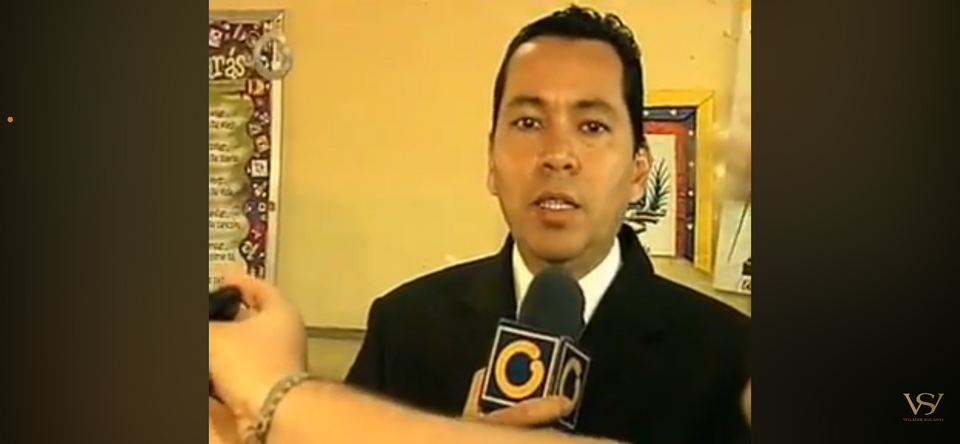
Wilmer Roberto Solano Dávila was driving through Haulover Beach, near Miami, when U.S. Customs and Border Protection agents stopped him. (Responsible Note/Courtesy)
Venezuelan Had Asylum Request Pending
A Venezuelan journalist seeking asylum was detained by U.S. Customs and Border Protection agents in Miami Beach during a vehicle stop in which, according to relatives, he had not committed any traffic violation and showed his valid documentation, Sonia Osorio reported Wednesday for El Nuevo Herald, the Spanish-language publication of the Miami Herald.
The arrest of Wilmer Roberto Solano Dávila, 59, follows the March arrest of Colombian journalist Estefany Rodriguez by ICE agents in Nashville, and last year’s detention of Salvadoran journalist Mario Guevara as he was reporting on a “No Kings” protest in the Atlanta area.
Rodriguez was released after spending 16 days in federal detention, but Guevara was deported back to El Salvador.
“For many Venezuelan journalists living in exile, Solano’s case has become more than an individual immigration proceeding,” Alicia Civita wrote Friday for Latin Times. “Supporters say it underscores the uncertainty faced by reporters who fled political repression, rebuilt their lives in the United States and now find themselves navigating a rapidly changing immigration landscape while waiting for protection claims to be resolved.
“In recent days, fellow reporters, media organizations and supporters have circulated appeals on social media seeking donations to finance Solano’s legal representation, arguing that the case has become emblematic of growing anxiety among asylum seekers facing increasingly aggressive immigration enforcement. Several Venezuelan journalists have urged colleagues and members of the diaspora to contribute to his defense while calling for due process in immigration proceedings.”
“This is the story of ALL VENEZUELANS!” wrote one of the 7,700 on Instagram who had called up a posting on the case by Friday. “I see Trump as a modern-day Nebuchadnezzar,” wrote another. “Seeing what many Venezuelans are going through, I can’t help but think of the exile of Judah. It reminds me of a people far from their land, facing uncertainty, but trusting that God is still in control and has a purpose for their future.”
Solano “was driving through Haulover Beach at 4:40 p.m. when he was stopped by Customs and Border Protection (CBP) officers. He was working as a ride-hailing driver,” Osorio reported for El Nuevo Herald.
“Ramón Muchacho, former mayor of the Chacao municipality in Venezuela (2013-2017) and a friend of Solano’s family, said that the journalist was taken to the CBP headquarters in Dania Beach, Broward, and informed that he would later be transferred to the Immigration and Customs Enforcement (ICE) processing center in Krome, in Miami-Dade County.
“He also had an immigration court hearing scheduled for August 26, he told the Nuevo Herald.
“According to Muchacho, with whom Solano worked as a journalist in Venezuela, a patrol signaled him to stop. Shortly before being arrested, he sent a message to his wife to let her know that CBP agents were detaining him.
“He stated that the family has no knowledge that Solano, who worked at the Venezuelan channel Globovisión, had committed any traffic violation or was involved in any situation that would justify the arrest.
” ‘It was at 4:40 in the afternoon, it wasn’t at two in the morning leaving a nightclub or anything like that,’ he stated, insisting that, as far as they know, the journalist was simply driving.
“The former mayor, who is also in exile in the US, indicated that their hypothesis is that the agents identified the vehicle through its license plate.
“He explained that they have been told that the authorities can cross-reference license plate information with the immigration status of the car owner, although he clarified that he has no evidence to confirm that this was the reason for the arrest.
“He also recounted that, once detained, Solano, former director in Venezuela of the Social Responsibility news portal Nota Responsable, explained to the agents that he had a pending asylum application.
“According to his account, the officers told him that the case had been in process for many years, that it could still take another decade, and that, in their opinion, he was in an irregular immigration status.
“The Department of Homeland Security (DHS) confirmed that CBP detained Solano on July 26 and said he does not have a status that allows him to remain in the United States. . . .
“[The department] also reported that he will remain in custody pending the resolution of ‘his deportation proceedings.’
“ ‘To be clear: a work permit or a pending application does not grant legal status in the United States’ [the department] told the Miami Herald in an email.
“The DHS also urged all undocumented immigrants to take control of their departure through the CBP Home app and reminded them that the government is offering $2,600 and a free flight to those who ‘self-deport now.’ ”
- Jem Bartholomew, Columbia Journalism Review: A Venezuelan Journalist Detained in Miami (Aug. 3)
- Christopher Cann, USA Today: New rule represents ‘massive shift’ in key immigration policy
- Jana Cholakovska and Gavin Schweiger, NJ.com: A network of cameras is quietly watching every car in N.J. Here’s what it knows about you.
- Carlos De Loera, De Los/Los Angeles Times: Venezuelan journalist Wilmer Solano Dávila detained by CBP in Miami
- Ann Duan, Seattle Times: WA driver data still used in ICE arrests, UW report shows (Aug. 3)
- Efecto Cocuyo: Delcy Rodríguez on the cover of Time: “She went from being an ally of Maduro to a representative of Trump”
- Efecto Cocuyo: Luz Mely Reyes wins the María Moors Cabot Prize 2026
- Todd Karpovich, Baltimore Sun: Johns Hopkins researcher released after being detained by ICE at BWI
- Ruben Navarrette, Creators Syndicate: Support for ICE Melts as Agents Find Themselves in Hot Seat Over Racial Slurs
Cuba Moves to Outlaw Independent Journalism
The Cuban Observatory for Freedom of Expression (OCLE) Friday demanded the repeal of provisions of a new government decree “that prevent non-state economic actors from practicing journalism and manage media, news agencies, publishers, broadcasters, libraries and other spaces intended for the circulation of information and ideas in Cuba,” Carlos Alejandro Rodríguez reported for the Miami-based CubaNet.
“This regulation closes — not conditions, but closes — access for any person or non-state entity to the channels through which freedom of expression and of the press are currently exercised in Cuba,” the Cuban Institute for Freedom of Expression and the Press (ICLEP) said Friday.
The organization specifically requested the removal of restrictions published Tuesday in the Official Gazette and scheduled to take effect Aug. 4. It also claimed legal recognition of journalism, publishing, broadcasting, library activity and independent artistic creation as lawful activities, “without mediation or mandatory state representation.
“Decree 160, signed by the Prime Minister, Manuel Marrero Cruz, establishes a new classification of economic activities banned or conditioned for private companies, SMEs, [small and medium-sized private micro-companies], non-agricultural cooperatives and self-employed workers. . . .
“Among them is the publication of newspapers, books and magazines, as well as the operation of publishers and publishing houses. Paragraph 34 expressly classifies them as an ‘unauthorized activity to non-state economic actors,’ without establishing a licensing or authorization mechanism for their private exercise.
“The ban also achieves radio broadcasting and television programming and broadcasting. The rule provides that public information and radio spectrum are under state rectory and only enable certain technical and production services by the authorities to authorise it. For the OCLE, this scheme admits private participation in auxiliary tasks, but reserves the State the control of the channels and of what finally reaches the audiences. . . .”
Cuba is already considered one of the world’s most restrictive countries for freedom of expression.
It ranks 165 among 180 countries around the world on Reporters Without Borders’ Press Freedom Index.
“The government continues to repress and punish virtually all forms of dissent and public criticism, says Human Rights Watch.
However, The New York Times reported Monday that its reporters “Jack Nicas and Alex Pena spent a week in Cuba on the first journalism visas granted to New York Times staff in nearly eight years.”
And USA Today reported last month that it “spoke to more than a dozen people who have had personal dealings with Rodríguez Castro,” the 42‑year‑old grandson of former Cuban president Raúl Castro. “Many of them spoke on the condition of anonymity because their exchanges were private or they are not authorized to speak on the record.”
- Committee to Protect Journalists: CPJ calls on Cuban government to free media from state control
- Marti News: OCLE condemns new decree for strengthening state control over the press and culture in Cuba
- Lasy Rosabal, ICLEP: State security threatens independent journalist José Antonio López Piña with imprisonment and exile.
In 2023, the boards of the Association for Education in Journalism and Mass Communication and the Association of Schools of Journalism and Mass Communication (ASJMC), issued a statement of support for diversity. (Credit: AEJMC)
Citing DEI Ban, School Won’t Fund Professional Memberships
Some faculty members describe the moves as unjustified and warn they could undercut their career development,” Surjadi wrote.
AEJMC describes itself as a nonprofit, educational association of journalism and mass communication educators, students and media professionals. It has more than 2,000 members and is planning its 109th annual conference August 5-8 in New Orleans.
In 2023, the boards of AEJMC and the Association of Schools of Journalism and Mass Communication (ASJMC), issued a statement of support for “minoritized and marginalized administrators and faculty in their efforts to lead universities in addressing their inclusive excellence goals, in the recruitment and retention of faculty from minoritized groups, and in the development of strategies that will further efforts and investments related to inclusive excellence.”
 “UNT’s chief compliance officer Clay Simmons described the affected groups as expecting members to engage in diversity, equity and inclusion efforts based on their mission statements, codes of ethics and awards and scholarships, according to emails between Simmons and professors obtained by The Dallas Morning News, Surjadi continued.
“He cited Texas’ 2024 state law that bans public universities from having DEI offices on campuses or contracting with third parties to operate them.”
“ ‘This expectation of members is a duty of a DEI office as described in the statute, runs counter to state law and is not permitted in university programs,’ Simmons wrote. ‘Therefore, the university may not enter into a contract … via purchasing a membership for faculty in that organization.’
“Representatives from UNT did not make Simmons available for an interview.
“Some professors believe the law does not require UNT to deny the funding requests. They say the mission of professional organizations do not mirror those of DEI offices.
“ ‘UNT seems to be overcomplying in the way they interpret the law,’ said Samuel Spencer, an assistant professor of psychology whose funding request for the Society for a Science of Clinical Psychology was denied. ‘To have any chance of using UNT funds to pay for membership in any professional society within psychology just seems bleak. It seems like that avenue for furthering our professional development is going to be completely cut off.’ . . .”
In its annual “State of Black America” report released Thursday, the National Urban League said the American Dream is further away than at any point since the Civil Rights Movement, grimly describing Black Americans’ economic and political prospects as having worsened due to policy changes from President Donald Trump’s administration, the Associated Press reported.
- Mira Bhakta, The Hill: Corporate boardroom diversity sinks to lowest in more than a decade: Analysis
- Miranda Green, Columbia Journalism Review: How a Network of Pink-Slime News Sites and Conservative Activists Went After Campus DEI
- Meryl Kornfield, Washington Post: An unwritten federal policy is blocking workers’ discrimination claims – The EEOC has quietly told administrative judges to not consider class action lawsuits, sources say.
- Jamie Stengle, Associated Press: Scouting America drops diversity initiatives from event after pressure from the Pentagon
The Nieman Foundation for Journalism held a Q&A session last Dec. 4 to describe what it’s like to spend a year as a Nieman Fellow at Harvard University. Current Nieman Fellows and Interim Curator Henry Chu discuss the application process, fellowship experience and how to prepare a strong application. (Credit: YouTube)
Nieman Foundation Appoints First Curator of Color
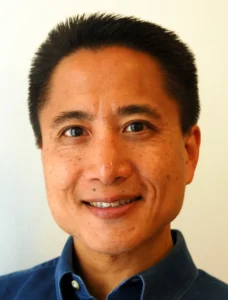 The Nieman Foundation, which bestows the prestigious Nieman Fellowship for mid-career journalists, Wednesday named Henry Chu, a longtime journalist for the Los Angeles Times who has been acting in the role, as its first curator of color since the foundation’s creation in 1938.
The appointment puts journalists of color at the helm of the three most prominent such programs: Dawn Garcia is director at John S. Knight Journalism Fellowships at Stanford, and Lynette Clemetson leads the Wallace House Center for Journalists at the University of Michigan.
“As a Nieman Fellow myself, I know firsthand the important role the Nieman Foundation plays in bolstering journalism, and I’m thrilled to be the new curator – and the first person of color in the role, to boot,” Chu messaged Journal-isms. “I got my start in journalism through a program designed to encourage people of color to enter the field. That was a long time ago, but there’s still a ways to go before many news organizations are truly reflective of the communities they cover and serve.”
Chu has been a board member of the Asian American Journalists Association and was referring to the METPRO program at the Los Angeles Times, a companywide diversity initiative created in 1984 by the Tribune Co., which then owned the Times.
Chu went on to become a bureau chief for the Times in Beijing, Brazil, South Asia and London, as well as international editor for Variety, deputy news editor at the LA. Times and, starting in July 2024, deputy and then interim curator at Nieman.
In a 2001 interview with the “PBS NewsHour,” Margaret Warner asked Chu if being Chinese American was an advantage in covering China.
“Being Chinese I think has been a great help,” Chu replied. “It’s a kind of camouflage in a way. I can blend into the woodwork much more than, say, you could if you were to come out and try to do a story. I mentioned going to Tibet. That’s one area where being ethnic Chinese was not a help. I think people looked at me a bit more suspiciously and thought perhaps I was a spy for the Chinese government because I’m ethnic Chinese. But for the most part, it’s allowed me, I think, to have a certain . . . and, as I said, blend into the woodwork in places where a Western Caucasian reporter would immediately stand out.”
Of the journalism fellowship programs, which are designed to give mid-career journalists a break, the Nieman, with its Harvard University connection, is considered to have the most “juice.”
In addition to a stipend of $87,500 paid over a nine-month period to cover living costs, fellows receive some financial support for child care and health insurance.
“Since 1938, the Nieman Foundation has brought more than 1,700 journalists from 100 countries to Harvard for a year of study,” Uy B. Pham and Risha Sinha explained in the Harvvard Crimson. “As curator, Chu will oversee the selection and mentoring of Nieman fellows as well as the foundation’s three publications — Nieman Lab, Nieman Reports, and Nieman Storyboard.”
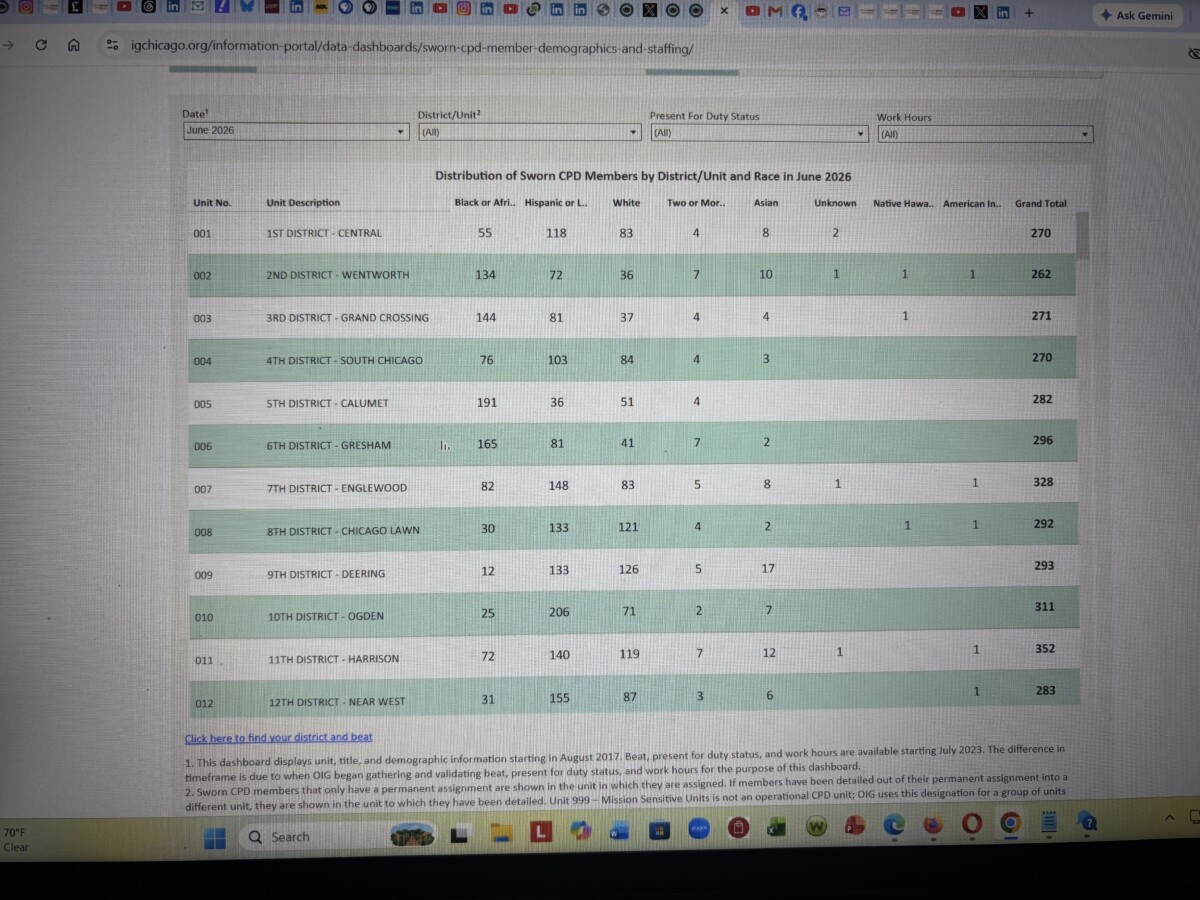
Chart shows demographic data stored in Chicago Police Department databases and Chicago Integrated Personnel and Payroll Systems (CHIPPS), the city’s human resources information system. (Screenshot; Chicago Office of Inspector General.)
Latinos to Soon Form Majority of Chicago Police Force
“In the coming months, for the first time in the 191-year history of the Chicago Police Department, white officers will no longer be the largest racial group in the department’s rank-and-file,” Sam Charles reported Monday for the Chicago Tribune.
“Data from the city’s Office of Inspector General shows that likely before the end of 2026, Latino officers will overtake white officers as the plurality in the department.”
The Tribune likely reached its conclusion after reading the Office of the Inspector General’s most recent “demogaphics dashboard,” updated in June. The relevant Chicago Tribune journalists could not be reached for comment.
Charles reported, “For many, the literal changing face of the department will take it further from the ingrained imagery of its past, when the sons of immigrants from Ireland and other points in Europe may have been the first to come to mind. In short, this is not Richard J. Daley’s CPD.
“The shift in the department’s workforce largely mirrors the shifting demographics of the city overall, according to Dick Simpson, professor emeritus at the University of Illinois Chicago and a former Chicago alderman.
“ ‘Since the city’s founding back in the 1830s, as soon as they had a police force in the decades that followed, there was always a majority — and usually a very strong majority — of white police officers,’ Simpson told the Tribune. ‘It is now a much larger Latino population than we’ve ever had in Chicago’s history and, over time, that begins to affect the composition of city employees.’
“ ‘As the racial population has changed,’ he said, ‘we’ve become a multicultural city.’
“As of June 2026, CPD employed 4,403 white officers, a sharp decline from the 6,217 on payroll in August 2017. The number of Latino officers, meanwhile, has increased by more than 40 percent since then, now totaling 4,158, records show.
“There are about 2,300 Black CPD officers, approximately 20 percent of the department, and that figure has largely held steady over the last decade. . . . ”
Guild’s New Pittsburgh Paper Says It Wants Diversity
 There might not have been any bylines from journalists of color in the first edition of the Pittsburgh Progress, a news organization forged by a team of union journalists and community members, but that will change, says Helen Fallon, Point Park University professor emerita and one of the worker founding members.
The Pittsburgh Progress describes itself as “a cooperative news organization, owned and democratically run by its workers and members. It was formed in the weeks and months after owners of the Pittsburgh Post-Gazette announced on Jan. 7, 2026, their intention to close the newspaper. This move by the PG came just weeks after unionized workers there had won a strike lasting more than three years.
“Those workers and their community supporters initially formed the organization Pittsburgh Alliance for People-Empowered Reporting, or PAPER, with a mandate to research the creation of a daily news outlet more deserving of Pittsburgh. PAPER quickly resolved that any new publication would, unlike the Block-owned Post-Gazette, respect its employees and address the concerns of all working-class people in the region. The publication would serve as an essential and sustainable source of communication and connection in the Pittsburgh region.”
The Post-Gazette had a sometimes-fraught relationship with the Black community and Black journalists.
in 2020, Andrew Conte wrote for the alternative NextPittsburgh: “Pittsburgh already has so few Black journalists, and many who are here say they feel mistreated, left out and stuck in dead-end careers.”
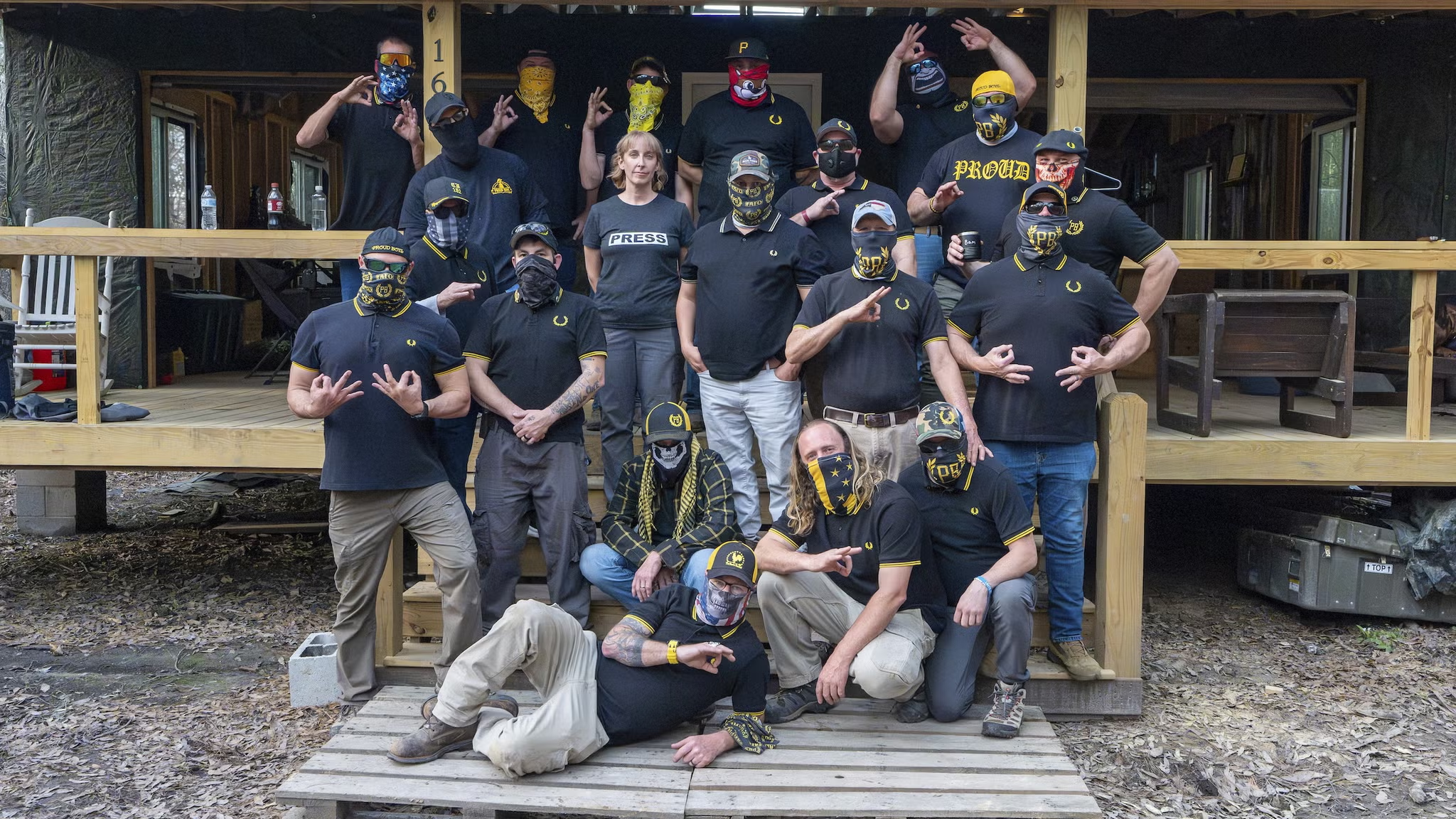
“I said I wanted to take pictures, that I’d be bringing cameras out, and they agreed to that as long as I didn’t take pictures of any of their faces, which I agreed to,” Jen Golbeck, a University of Maryland professor, says of her weekend in the North Carolina backwoods with the Proud Boys. “So there is this contradiction there, right? They call themselves proud, but they don’t want to be identified.” (Credit: Esquire magazine.)
Proud Boys: ‘Supremacist’ but Not ‘Nationalist’?
Jen Golbeck, a University of Maryland professor whose research focuses on social media and online extremism, spent a weekend with the Cape Fear chapter of the Proud Boys in the North Carolina backwoods. She wrote about the experience in Esquire.
In a conversation with Amna Nawaz of the “PBS News Hour” (video), Golbeck explained how the group sees itself as white supremacist but not white nationalist.
Nawaz: “Tell me more about the line of thinking as you learned in your time with them, because this is a group that they debuted in a far right media outlet that’s led by an avowed white nationalist, right?
“They have fought in a very violent way with Black Lives Matter marchers and protesters, and that they describe themselves to you as anti-racist. How do those two things line up?”
Golbeck: “They definitely don’t mean anti-racist in the way that people on the left would think of that term.
They don’t see themselves as white nationalists, and there are plenty of members of the Proud Boys, including in the chapter I visited, who are not white. In the Cape Fear Proud Boys, I met a man who goes by Skoden. He’s a Native American.
“I asked him, ‘Do you consider yourself white?’ And he’s — he was a little offended at the question. Absolutely not. Enrique Tarrio, who is the chairman of the national chapter and was one of the people who got a sadistic conspiracy charge for January 6, is of Black Cuban descent.
“So they’re not white nationalists in the way that some other groups are. They’re not racist in the way that you would see like from the Klan or from some very far right groups. At the same time, they’re pushing an agenda that a lot of us would see as white supremacist, sort of keeping in place the policies that have led to white domination. . . .”
New York’s smiling socialist Mayor Zohran Mamdani had one of those weeks last week, writes @MattHennesseyhttps://t.co/Mc5SjCwxNS
— Free Expression (@WSJFreeEx) July 29, 2026
If no image appears, please consider changing browsers.
She Calls It ‘Mamdani Derangement Syndrome’
“On Monday, the Wall Street Journal published an opinion piece by Matthew Hennessey arguing that Zohran Mamdani, the mayor of New York, has enabled or signaled tolerance for anti-Semitism, despite his repeated condemnations of anti-Semitic hate,” Susie Banikarim wrote Friday for the “Laurels and Darts” column in Columbia Journalism Review. “It was — unfortunately, predictably — laden with a casual Islamophobia that I, as a Middle Eastern American, have come to expect. Hennessey calls Mamdani a ‘zealot’ and describes him as ‘a rabble-rouser in a kaffiyeh.’
“But what was most shocking was the appalling image that accompanied the essay: a photograph of a man holding an obviously doctored cut-out of Mamdani’s head with a green Hamas headband emblazoned with meaningless markings meant to imitate Arabic script. It’s difficult to imagine that the Journal would be comfortable publishing such overtly racist tropes about almost any other minority group.
“Anna Bahr, Mamdani’s director of communications, responded to the picture on X, writing that she spoke with Paul Gigot, the Journal’s editorial page editor, about ‘the incredibly Islamophobic image printed alongside this opinion piece. His take: ‘I don’t see it as racist.’ ”
The piece also failed to make a distinction between “socialism” and “democratic socialism.” Mamdani subscribes to the latter.
- Emily R. Condon, USA Today: Democratic Socialists of America propose radical overhaul of US govt (Aug. 2)
Short Takes
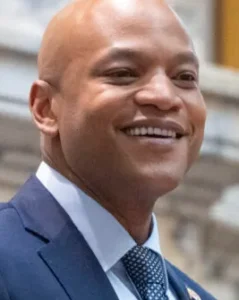 David D. Smith, owner of The Baltimore Sun, has filed a lawsuit against Maryland Gov. Wes Moore (pictured), claiming the governor defamed him and portrayed him in a false light by misrepresenting his alleged comments about President Donald Trump and suggesting he had ties to convicted sex offender Jeffrey Epstein,” Bridget Byrne reported Friday for the Sun. “The 12-page lawsuit filed Friday in Anne Arundel County Circuit Court stems from Moore’s June 16 appearance on MS NOW’s ‘The Weeknight,’ during which the governor discussed Smith’s ownership of The Sun . . . Moore’s spokesman discredited the allegations Friday night.”
- Since his election last year, Pope Leo XIV sidestepped one of the most unexpected questions to emerge from his historic election: Is the first American pope also Black?” Joseph Williams wrote Thursday for Word In Black. “Now. . . Speaking to NBC News, the pontiff said his mother’s family included both enslaved people and slaveholders — a striking admission from a pope who had previously declined to publicly discuss genealogical research tracing his ancestry to New Orleans’ historic Creole community. . . .”
 “As he approaches the 45th anniversary of his incarceration in December, the Black radical writer and prisoner Mumia Abu-Jamal (pictured) is taking his claim that he has been subjected to arbitrary imprisonment for a crime that he did not commit to a new tribunal: the United Nations in Geneva. On Tuesday Abu-Jamal, 72, lodged a petition with the UN’s working group on arbitrary detention, a body within the Human Rights Council.” Randy LoBasso wrote for Philadelphia Weekly in 2013, “Depending on who you ask, Abu-Jamal is one of two things: He’s either a psychotic murderer who killed a Philadelphia police officer in cold blood and deserves nothing more than a cold poison-packed needle to the brachial artery, or he’s the former president of Philadelphia Association of Black Journalists who spent his free years as a radical, uncovering police brutality and corruption inside City Hall, only to be framed for the murder [of] one of Philly’s finest by the same police and City Hall bureaucrats who needed to shut him up.”
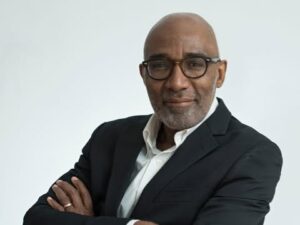 “Ross Douthat, the conservative New York Times columnist, will join CBS News’ ‘60 Minutes,’ along with author Sebastian Junger, new CBS News correspondent Trevor Phillips (pictured) and filmmaker Gianna Toboni, the Paramount Skydance news division announced Tuesday, a move that will remake the look and feel of the venerable newsmagazine at a time when it has been under intense scrutiny,” Brian Steinberg reported Tuesday for Variety. “Norah O’Donnell, a familiar face to CBS News viewers, will also take up more duties with the program, according to Nick Bilton, the series’ new executive producer, who offered details in a memo to staffers.” More on Phillips here.
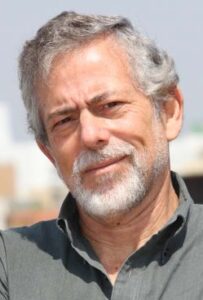 Journalism and press freedom groups worldwide are rallying around Gustavo Gorriti (pictured), a Peruvian investigative journalist who is being threatened with prosecution for exposing corruption in his country. Gorriti, who is based in Lima, is currently a Knight Press Freedom Fellow, participating in a program administered by the Journalism Protection Initiative at the Craig Newmark Graduate School of Journalism at CUNY. The program “provides support for exceptional journalists from around the world who are facing threats and persecution.” Gorriti is accused of bribery, influence peddling and obstruction of justice on the grounds that he allegedly offered media favors in exchange for influencing decisions by the Prosecutor’s Office, according to the Committee to Protect Journalists. Goriti’s IDL-Reporteros “revealed the massive transnational bribery networks, illicit campaign financing, and rigged public contracts between [the construction company] Odebrecht and the Peruvian government in the series Car Wash/White Collars, which won the Global Shining Light Awards in 2019.”
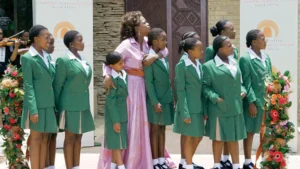 “The South Africa school that Oprah Winfrey opened nearly two decades ago will be closing and transitioning its operations back to local officials while Winfrey focuses on an ‘expanded’ scholarship program for girls there, she announced this week,” Adam Carlson and Eileen Finan reported Wednesday for People. ” ‘The dream was never simply to build a school. It was to invest in the limitless potential of young women,’ Winfrey, 72, said in a statement on Wednesday, July 29, announcing that the Oprah Winfrey Leadership Academy of Girls will end operations in its current form at the end of 2027.”
- “Behind the Byline: Black Iowa News interns discuss their July cover story by Dana James
- Sarah Mays and Gretchen Lembcke Peña collaborated on a story for the July edition of the Black Iowa Newspaper about the toxic chemicals present in synthetic braiding hair used by and marketed to Black consumers. Mays interviewed students from Iowa State University. Lembcke Peña interviewed Elissia Franklin, Ph.D, a research scientist, about Franklin’s work on the study. The toxic chemicals in the hair products were a topic at the “Race and Health” session of the Journal-isms Roundtable in July. (video)
If no image is visible, please consider changing browsers.
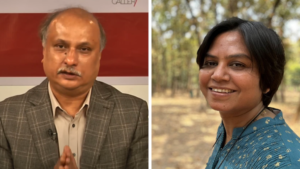 “Bangladeshi authorities should immediately drop the charges of crimes against humanity against journalists Farzana Rupa (right) and Mozammel Babu and release them without delay,” the Committee to Protect Journalists declared Monday. “Prosecutors at Bangladesh’s International Crimes Tribunal (ICT) on Monday submitted a formal charge sheet naming the two journalists and 39 other people — including former Prime Minister Sheikh Hasina — in a case linked to a May 2013 crackdown on a rally by Islamist group Hefajat-e-Islam at Shapla Chattar, in which 58 people are alleged to have been killed. . . . ICT Chief Prosecutor Md Aminul Islam told the media that Rupa, acting on Babu’s instructions, produced a documentary about the crackdown for Ekattor TV that falsely claimed no one was killed at Shapla Chattar. . . If found guilty, Rupa and Babu could face the death penalty because the ICT, a domestic war crime tribunal, does not have sentencing guidelines for specific offenses. . . .”
