
Recalling Stephanie Stokes Oliver, Diane Weathers
Rana Cash, Formerly in Charlotte, Lands in Daytona Beach
War in Persian Gulf Also Targets Iranian Media
Cuban Thrown in Jail Over a Facebook Post
. . . A Plan to Restore a Free Press to Cuba
Nolan Wells Case Resonating in Unexpected Ways
Stephanie Stokes Oliver: A Remembrance
Short Takes: Indigenous Journalists Association; ABC vs. FCC; Jason McCourty; reporting reveals anti-Islamic sentiment; Keith L. Alexander; dozing off on air; Mc Nelly Torres; Liz Walker; Vietnamese journalist sentenced; Ethiopian editor abducted and office raided; Mexican reporters charging for coverage; Australia’s Aboriginal and Torres Strait Islander people; Burkina Faso’s attacks on journalists.
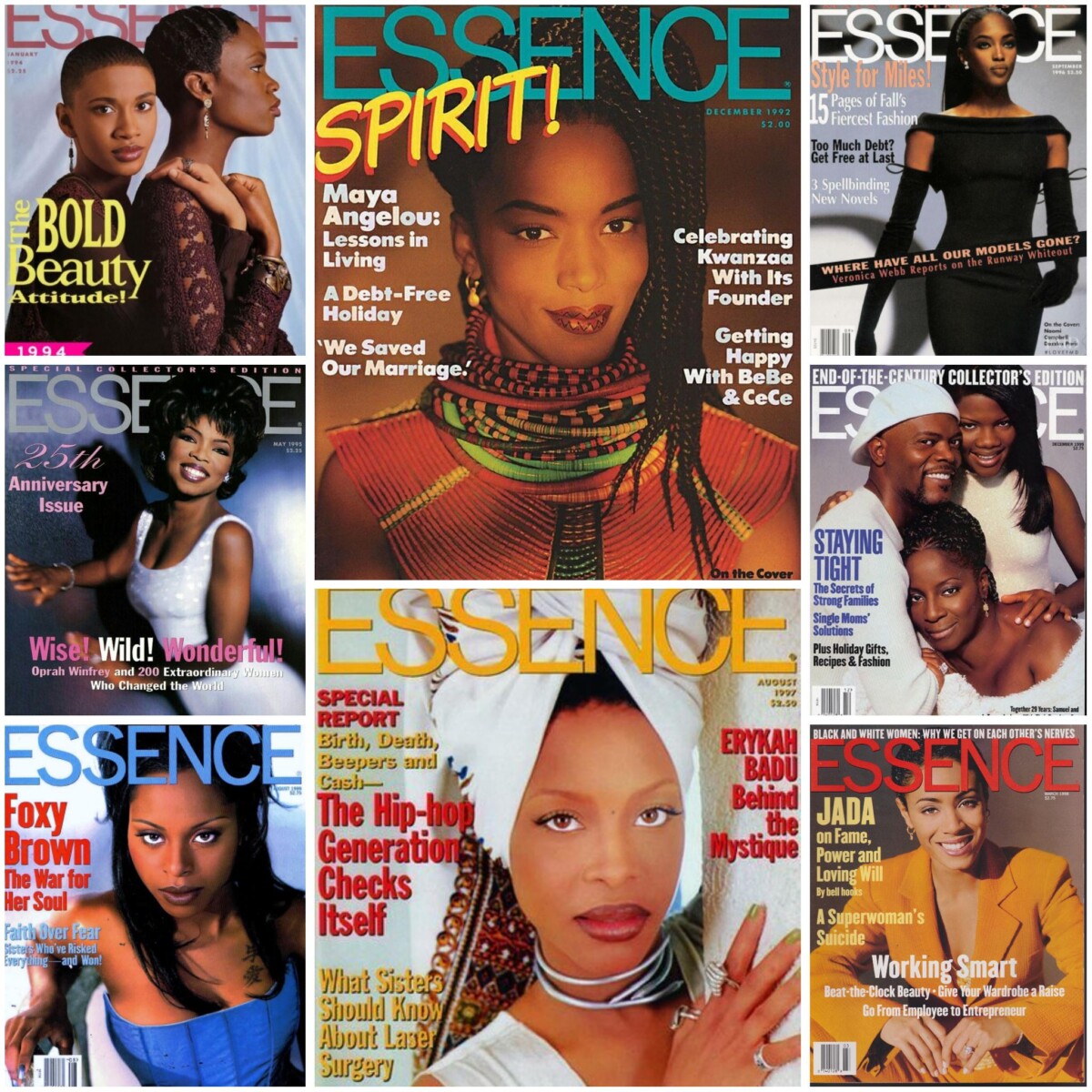
Homepage photo: Essence magazine covers from the 1990s. (Credit: The Afternoon Standard)
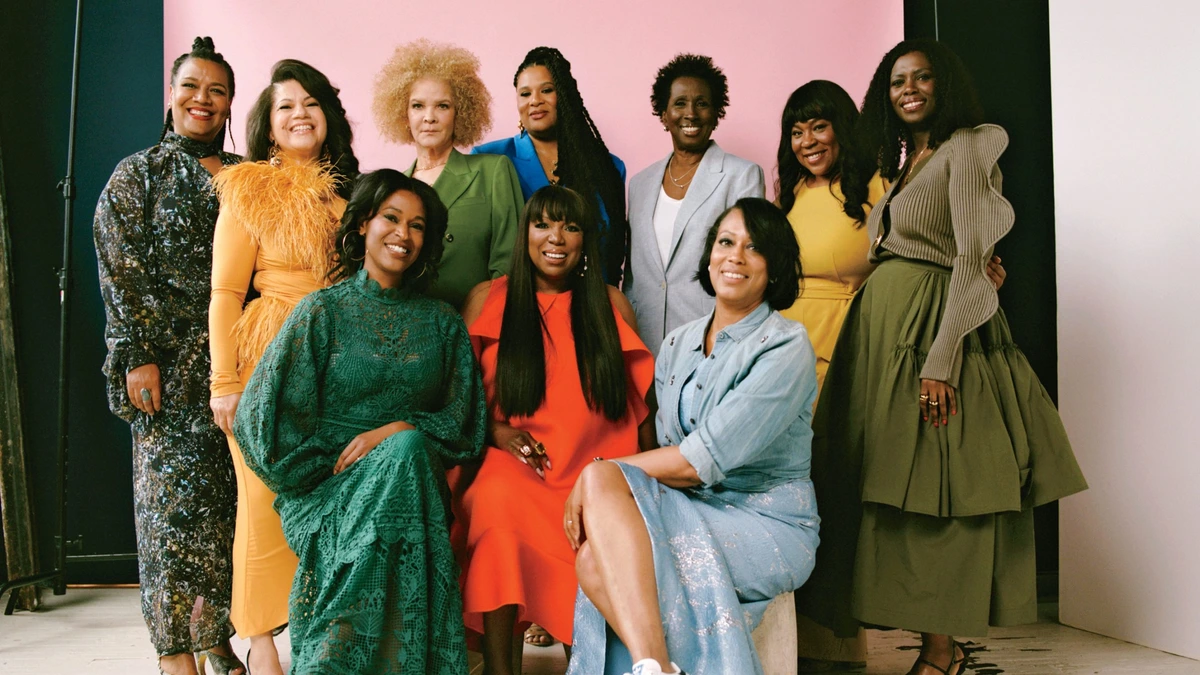
Essence featured some of its beauty editors over the years in its July/August 2025 issue, celebrating the magazine’s 55th anniversary. (Credit: Myles Loftin)
Recalling Stephanie Stokes Oliver, Diane Weathers
 Stephanie Stokes Oliver and Diane Weathers, two editors of Essence magazine during the 1990s and early 2000s, died in July without benefit of full-fledged obituaries in the media, but colleagues have taken to social media and the internet to give them their props in the way they know best.
Weathers, 76, editor of the magazine from 2001 to 2005, died July 8 at her home in the Washington suburb of Silver Spring, Md. The cause of death has not been determined, her brother, Ronald Weathers, told Journal-isms on Monday.
Oliver, a top editor at several magazine publications, Essence included, died two days later, on July 10, in her Seattle hometown due to complications following a long illness. She was 74.
“I was just dancing and celebrating with my friend Reggie Oliver at his surprise 80th birthday celebration,” Harriette Cole wrote July 30 for the Root. “His wife, Stephanie Stokes Oliver, former executive editor at Essence, had not made the trip to East Hampton from Seattle, WA, as she was under the weather. All indications were that she would be okay.
“Fast forward a few weeks, when I learned Stephanie had died. No. This woman — this sweet, smart, thoughtful, intellectual soul sister — was gone. The person who gave me a chance when I started my career, who hired me to work with her in the Contemporary Living Department at the beacon of culture for Black women, had left the planet. No. Of course people have to leave, but Steph? She had lived her best life, building a stellar career at Essence, retiring with her husband to Anguilla to start a new chapter, and moving back to Seattle to care for her mother, Miss Josephine, who outlived her at age 101. She was forever. No?”
During her 16 years at Essence, when the magazine reached the milestone circulation of 1 million, Oliver rose to West Coast editor, and to the second-in-command position of editor of the magazine. In 2004, she was asked to assist in the merger of initially Black-owned Essence Communications with Time Inc., returning to the company for the second time, as editor-in-chief of Essence.com.
Audrey Edwards, who preceded Oliver as Essence editor, has more at the end of this posting.
Weathers, a Journal-isms supporter who was married for a time to Ronald Smothers, former reporter for The New York Times and Washington Post who died in April, was editor when Essence launched its “Take Back the Music” campaign.
That effort was launched to raise awareness of “the degrading ways in which Black women are portrayed and spoken about in popular media, particularly in popular urban music and music.”
One of her Weathers’ first initiatives was a series called “War on Girls,” about young Black girls and their challenges, an issue particularly important to Weathers because she had an 11-year-old. Another was “Our Bodies, Ourselves,” which discussed health issues. It “became very intimate” as she discussed her own weight challenges with readers, Michelle Ebanks, president of Essence Communications Partners, said. “I don’t know another editor who was so transparent.”
Weathers “taught me to have a passion for the arts,” Cori Murray, an entertainment editor under Weathers, wrote on Instagram. “Under her leadership, I hit some pretty sharp learning curves as I found my rhythm as a writer and editor. One vivid memory — and in hindsight a pivotal lesson in covering culture for a national audience — she vehemently insisted I think beyond what the cool kids were into because ‘not everyone is in Brooklyn.’ She was right.
“I reluctantly went on a journey of discovering the otherness Diane spoke about or what she regularly scribbled as line edits on my copy. She recommended artists, writers, genres, musicians, curators and exhibits I should know intimately. She pushed me to think bigger. She introduced me to new voices, new experiences. She threw open a window to [a] world that I’ve since leaped through, enjoying the discoveries being curious brings.”
When she stepped down, Keith Kelly wrote in the New York Post, “She’s had a stormy tenure, with at least a half dozen top editors heading to the exits in the past year.”
But Weathers told an interviewer, ”I’m leaving for personal and professional reasons. I’m going through some things with my family and I really need more time to focus on them. I don’t have the energy to really put the attention that I need into the magazine. I need to focus on family issues.”
Ebanks told Journal-isms at the time, “Women need this type of professional flexibility given the often competing demands of work and family — no matter the timing.”
Weathers told Target Market News, “I’m proudest of the quality of the magazine. I think it has never been better, I’m proud of our campaigns, The War on Girls, Saving Our Sons and now Take Back The Music. And I’m proud of our numbers — our newsstand sales are up at a time when many women’s magazines have been suffering on the newsstands.”
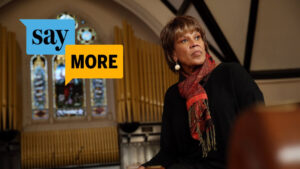
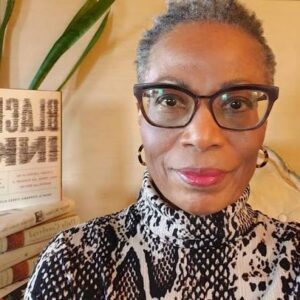 Stokes Oliver (pictured) and Weathers also held positions at other publications. Weathers wrote on LinkedIn, “I am not a ‘content’ provider, but rather a former magazine journalist who over decades, had mastered a variety [of] best practices at leading news, print and digital journalism.” She spent more than eight years at Newsweek and “refined my writer’s voice as a feature writer at Black Enterprise and Essence Magazines.”
Edwards details some of Stokes Oliver’s other work later in this posting.
In addition to Stokes-Oliver and Weathers, colleagues are mourning another Essence alum, Dion E. Clarke, who died July 13 after a battle with pancreatic cancer. He was 72.
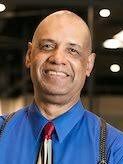
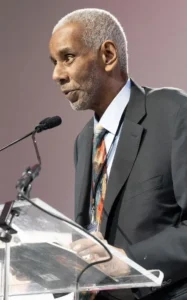 Clarke (pictured) “was on the sales team at Essence in the late ’90s,” Cole wrote. “He worked alongside Clarence Smith and Barbara Britton, hustling hard to convince brands to invest in a company that celebrated Black women.
“Even though Essence was the top Black magazine then, one million subscribers strong, it was still hard as hell to attract companies that remained incredulous that Black folk wielded so much economic power.
“As an alum, Dion set his sights on the Harlem Fine Arts Show (HFAS) 19 years ago, turning a business that started at the Puck Building in NYC into a traveling art show featuring Black fine artists. Dion loved Black people and believed at his core that our creativity, energy, and dedication were immeasurably valuable. He died four days before HFAS in the Hamptons opened its doors.”
Rana Cash, Formerly in Charlotte, Lands in Daytona Beach
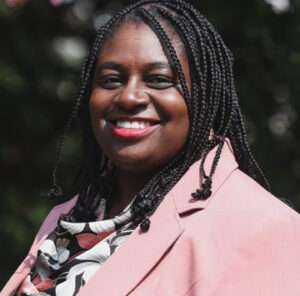 “A native Florida journalist is returning to her roots as executive editor of the Daytona Beach News-Journal and Deputy Region Editor for Investigations & Enterprise at the USA TODAY Network-Florida,” the News-Journal reported Monday.
“Rana Cash (pictured), most recently executive editor of The Charlotte Observer, took the helm of the News-Journal on Monday. Cash led the Observer newsroom’s Pulitzer finalist coverage of Hurricane Helene in 2025.
“A native of Sanford, Florida, who has owned a DeBary home for 20 years, Cash is well familiar with Daytona and the surrounding communities.
“ ‘This is a homecoming,’ Cash said. ‘It gives me a foundation to come in and get started and press the gas right away. I know the people, I know the culture, I know the weather. I want to learn what’s on the minds of people now, what’s important and what they need, but I don’t want to come in with any assumptions.’ . . . ”
Cash, the Observer’s first Black top editor since its 1886 founding, resigned effective May 1.
While the Daytona Beach paper is smaller, it is part of the USA Today Co., formerly Gannett. With 310 total papers, including USA Today, it is the largest newspaper group in the country and provides opportunities for corporate advancement.
The Observer is owned by Chatham Asset Management, a New Jersey-based hedge fund. Chatham acquired the parent McClatchy Co. out of bankruptcy in July 2020.
If no image is visible, please consider changing browsers
War in Persian Gulf Also Targets Iranian Media
“President Donald Trump has casually boasted about the destruction of Iran’s infrastructure during the U.S.-Israeli war, including bridges, desalination plants, and major industries relied on by civilians, Kourosh Ziabari reported Monday for Truthout, which describes itself as ” a nonprofit news organization dedicated to providing independent reporting and commentary on a diverse range of social justice issues.”.
“Among those attacks on infrastructure, but less reported on by the international press, has been the targeting of Iranian media.
“Iran’s newsrooms, broadcasting studios, publishing houses, and adjacent businesses such as bookstores and pulp and paper companies have suffered serious damage due to the U.S.-Israeli military campaign. Already facing fragile labor protections and significant restrictions on free speech, journalists in Iran are now enduring even worse working conditions.”
Ziabari also wrote, “Ironically, the 39-day bombing campaign that ended with a brief ceasefire on April 8 and a short-lived memorandum of understanding on June 17 didn’t spare the pocket-size foreign press corps based in Tehran, demonstrating the ways in which military campaigns can disrupt the free flow of information.
“In the most high-profile case, the office of Qatar’s Al Araby TV in Tehran’s Heravi neighborhood was hit in Israeli airstrikes on March 29 that cut live broadcast, caused extensive damage to the building, and injured 10 people, according to the Iranian Red Crescent Society. Journalists familiar with the case told Truthout they believe the TV bureau was deliberately targeted. . . .”‘
Cuban Thrown in Jail Over a Facebook Post
 ”When Jesús Gabriel Pérez Menocal (pictured) returned temporarily to Cuba on August 3, 2022, his intention was to visit his family and then return to El Salvador, the country where he had lived since 2019, had married, and started a family. However, he was never able to return,
“The Cuban, originally from Sagua la Grande, in the province of Villa Clara, has been imprisoned since August 26, 2022. According to what he denounced during a telephone conversation on Sunday, July 26, his arrest and subsequent conviction were a reprisal for having created a Facebook page dedicated to disseminating news about Cuba.
“The website, called ‘Sagua la Grande Noticias,’ covered important events in that city in Villa Clara province. Pérez Menocal believes that this news project was the origin of the surveillance and pressure he began to experience shortly after arriving on the island.
“Just a week after returning, he received a summons from State Security. Upon arriving, he was intimidated by agent Raiko Pérez Mazorra and an unidentified lieutenant colonel regarding the content of his website. According to his account, they accused him of being an ‘imperialist payroll agent,’ spreading fake news, and threatening the country’s stability. After the meeting concluded, they allowed him to leave.”
The report came days after the Committee to Protect Journalists added its voice to the disappointment “that the Cuban government has not seen it fit to include independent media on its new list of professional activities freed from state control among economic reforms, according to news reports.”
If no image is visible, please consider changing browsers
Translation: “The hostility of communism towards journalism has been brutal. We are particularly human rights activists — any journalist is a human rights activist — because we reflect what a criminal government does not want to show. That is, in Cuba, state crimes are committed and we are reflecting them.
“But our role is not merely in the general sense of defending the right to freedom of the press, but it is, truly, to reflect and denounce the tragedies that the criminal communist regime produces for this country. And that is why this regime hates us, it hates us, because we have a voice, because we are heard and seen.”
“Boris González Arenas considers that independent Cuban journalism will be decisive in dismantling the information monopoly and building a plural press when Cuba moves to democracy.”
. . . A Plan to Restore a Free Press to Cuba
“The monopoly on information has been a cornerstone of the Cuban regime’s political and social control for more than six decades,” Camila Acosta wrote Saturday for the Miami-based CubaNet. “Therefore, the emergence and expansion of independent journalism has not only represented a professional challenge, but also an act of resistance against repression and forced exile.
“In a context where the transition to democracy seems to be an emerging scenario, many are wondering how to dismantle the propaganda structure of the Communist Party of Cuba (PCC), what will be the fate of the current state media and what would be the necessary pillars to guarantee a free press ecosystem in a future democratic Cuba.
“To address these questions, we spoke with Boris González Arenas, an art historian, film director, and prominent journalist and activist who has documented Cuban reality for over 15 years at the cost of constant repression. Boris began his career in independent journalism before social media existed, in an era marked by blogs and extremely restricted internet access. . . .”
- Adam Entous, New York Times: C.I.A. Sets Up Secret Cuba Task Force as Trump Pressures Havana
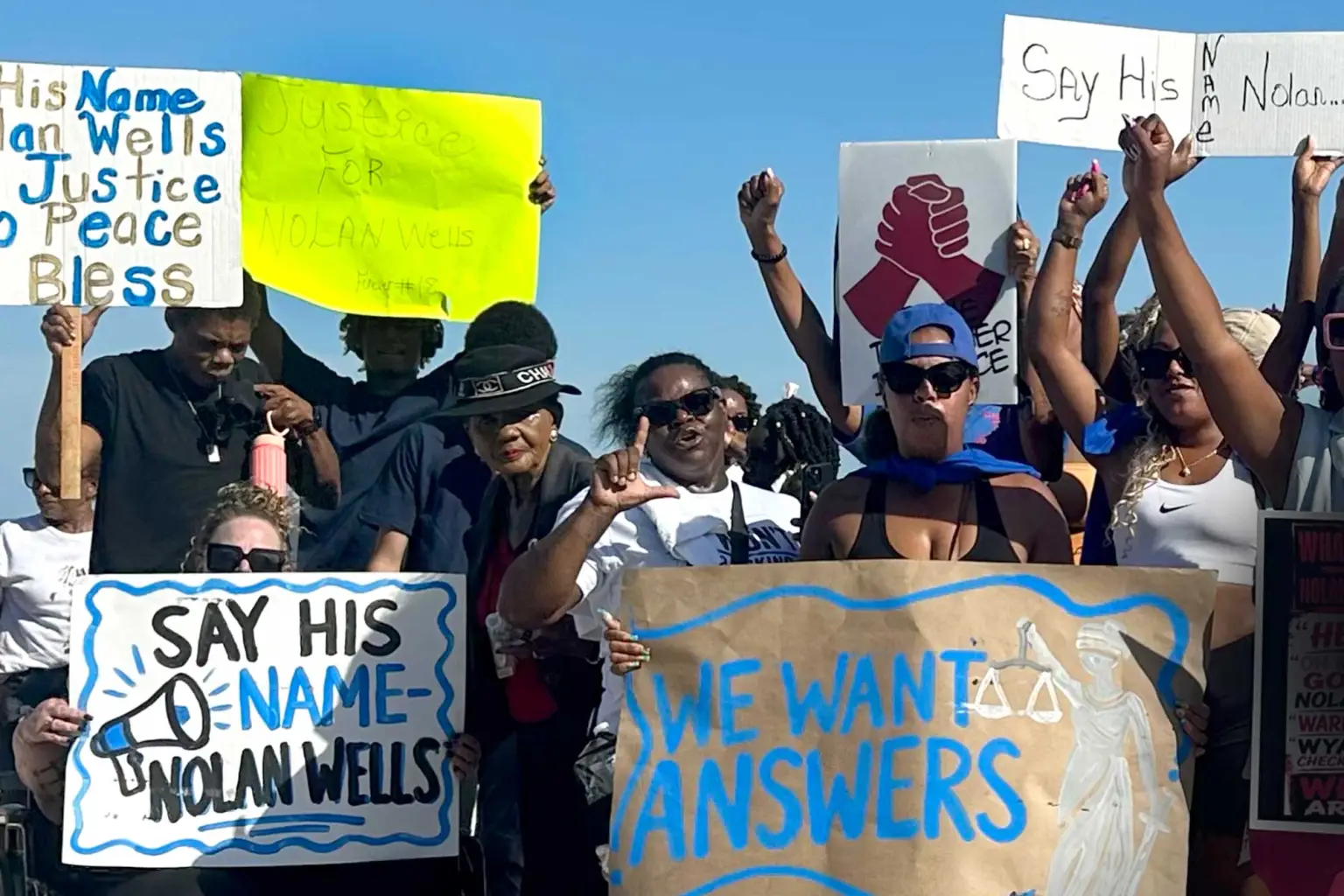
Participants raise their fists in the air at a Walk for Nolan Wells at Jones Park in Gulfport, Miss., on July 26. (Credit: Amy Schafer/Mississippi Free Press)
Nolan Wells Case Resonating in Unexpected Ways
The story of Nolan Wells, the 18-year-old Black youth who disappeared on Horn Island in Mississippi after celebrating July 4 with his white friends, and two days later was found dead, is resonating with some Black journalists in unexpected ways.
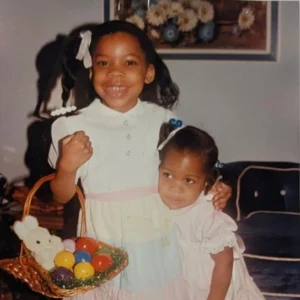 “Deidre was 10 when she found out one of her teachers was a klansman,” Danielle Belton, former top editor at The Root and Huff Post, wrote Tuesday for Huff Post with her sister, (pictured, during childhood.)
“It was 1991, and she was in the fifth grade at a school in Florissant, Missouri, a suburb of St. Louis. She was standing in line in the hallway, waiting to enter her next class, when she overheard her social studies teacher talking to her English teacher about how he had a Ku Klux Klan meeting he was excited to attend that week.”
The sisters also wrote, “Yet another Black child who was unsafe when with their white friends. Deidre, now 45 and the mother of a 14-year-old Black boy, never wanted her son to be the ‘lonely only’ and feel the confusion or lack of safety she once felt, and she chose to send him to public schools that were more racially mixed.
“And yet, she can’t help but still be afraid. Because there’s only so much you can control as a Black parent. There’s only so much you can control as a Black American of any age. . . .”
 For NOLA.com, columnist Will Sutton wrote July 21, “If you think race doesn’t matter, consider why this became an international story. Why? Because race matters.
“As I watched the Nolan Wells service online, I was pleased to see Black and White mourners.
“If you’ve never been the only one, you don’t know how that feels. If you’ve never been the only Black person in a group, you don’t know how it feels. If you’ve never been the only Black friend, you don’t know how it feels.
“Nearly everybody who knows me knows I’m a proud Black man. I am proud of my ethnicity and my race. I’m also proud to be an American.
“This is why some of us go to all- or mostly-Black high schools and universities. It’s why some of us join Black fraternities and social clubs. It’s why some of us join Black nature, ski and snow groups. Anything can happen, but it feels safe. . . .”
 And in the Los Angeles Times, columnist LZ Granderson wrote July 10, “The South is still the South.
“As someone who spent a number of summers visiting family not far from the river where Emmett Till was found murdered in 1955, I know the meaning of this phrase has not changed much over the years. I was visiting a few decades after Till’s death, but my parents were sure to give me that warning before each trip from our home in Michigan.
“And while I know that over the past 50 years, changes in federal and state laws have led to seismic shifts in the culture of the Deep South, the historic facts about life for Black people in that [part] of the country still challenge our trust in the justice system as we wait for details about the death of a young Black man.
“We do not need to comb through black-and-white photographs from the civil rights movement to remind us of the ugliness of racial animus in the American South. As the (Mississippian) author William Faulkner wrote: ‘The past is never dead. It’s not even past.’ ”
Short Takes

The Indigenous Journalists Association Wednesday announced the result of its elections for the IJA board of directors: Graham Lee Brewer (Cherokee Nation) and a former president, won a one-year term running through 2027. Sunnie Clahchischiligi (Diné), Melissa Greene-Blye (Miami Tribe of Oklahoma) and Joseph Lee (Aquinnah Wampanoag) were re-elected to three-year terms running through 2029. The board re-elected Clahchischiligi president.
- An ABC commercial blitz — and a call to action — has generated more than 153,500 comments filed with the Federal Communications Commission over the agency’s early license review of the network’s eight owned-and-operated TV stations, including ABC 7 Chicago, Robert Channick reported Wednesday for the Chicago Tribune. “More than 96% of the comments have been supportive of the Disney-owned network’s bid to retain its station licenses, according to an analysis conducted on behalf of ABC.” As thedesk.net has reported, “In April, the FCC ordered Disney to renew the broadcast licenses of its eight TV stations early after determining the company’s responses to its months-long probe into its purported use of DEI programs in hiring and promotional practices to be unsatisfactory.”
 “ESPN has found its Ryan Clark replacement on ‘Monday Night Football,’ Erich Richter reported Monday for the New York Post. “The Worldwide Leader announced it has tapped Jason McCourty (pictured) to take over on ‘Monday Night Countdown.’ Formerly of ‘Good Morning Football,’ McCourty left NFL Network when the show relocated to the West Coast in 2024, which also led to the exit of Peter Schrager. . . .”
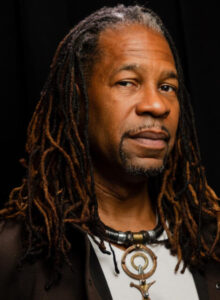
 “Last August, President Donald Trump ordered 800 National Guard troops into Washington in an effort to reduce crime in the nation’s capital,” Keith L. Alexander (pictured), who formerly covered courts for the Washington Post, wrote Monday for Bloomberg Law. “Federal officers were also dispatched to other cities including Minneapolis and Memphis. . . . In the weeks that followed, federal prosecutors in Washington flooded the US district court with 27 cases charging people with assaults on federal officers, legally classified as 18 USC 111 charges, which can carry years in prison. But a Bloomberg Law review found that only three of those cases resulted in felony convictions, all through plea deals. Prosecutors ultimately dismissed 18 of the 27. Just one went to a trial. And after that first wave of 111 charges, federal prosecutors in DC didn’t file another one for almost five months. . . .”
 “A local morning anchor in Tennessee is ironically making news for unintentionally dozing off during a live on-air segment,“ Saman Shafiq reported Wednesday for USA Today. “Dominique Dillon (pictured), a Memphis-based reporter at Fox 13, quietly rested her eyes for a few seconds during the July 29 episode of ‘Good Morning Memphis,’ earning her the title of ‘Sleeping Beauty’ from co-anchor Ernie Freeman. . . . The anchor said her snooze was the result of single-handedly managing two babies the night before, as her husband worked a double shift. Dillon is mom to 2-year-old Dakota and 8-month-old Delilah, born Dec. 2, 2025.”
- “Seven months ago, Joe Tomlinson, our general assignment reporter, and I started digging into the Broken Arrow City Council’s 4-1 vote to deny the Islamic Society of Tulsa’s application to build a mosque,” Haley Samsel wrote in an email Wednesday for the Tulsa (Okla.) Flyer. “What followed was one of the most intensive investigations our newsroom has undertaken. What our reporting revealed was striking: Two Broken Arrow city councilors who voted against the mosque proposal had privately agreed with anti-Islamic sentiment expressed in their inboxes — even as they publicly said their sights were solely focused on land use concerns. . . .”
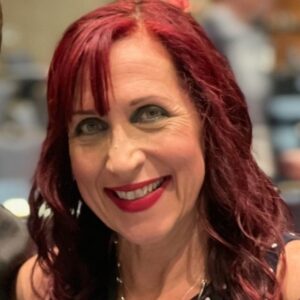 “Last week, I began my new role as interim editor at Investigate Midwest, Mc Nelly Torres, veteran investigative reporter and Substack columnist, announced on social media. “I’m thrilled to be working on an investigative nonprofit with such an important mission and focus on big agribusiness and institutions. This type of coverage is more important than ever. I built a nonprofit in Florida years ago and I’d always been a big supporter of this work and I will be urging folks here to support nonprofit newsrooms. Corporate media is broken. . . .”
 “Liz Walker (pictured, by Craig F. Walker/Boston Globe) made her mark in Boston as the first Black woman to co-anchor a TV newscast. But now, her impact is much deeper,‘ Anna Kusmer wrote for the Boston Globe, posted Feb. 12 but still online. “Leaving the TV host chair, Walker became the pastor of Roxbury Presbyterian Church, a historic church in Boston. There, she launched a group project called ‘Can We Talk,’ which mixes the community power of church with the power of talking.’ . . . Walker said, ‘I do believe that I hit a wall of journalism because you sit there behind the camera and you’re watching this scene go on and this woman’s talking about gang rape and you’re thinking — And telling the story is huge! This is important. But remember, Hurricane Katrina hit, and when Katrina hit, people were waving white flags on rooftops that were covered with water and people were begging for help. And it seemed a little odd that TV cameras were just shooting that when I’m actually asking you to save my life. At some point there, the needs are beyond that idea of some objective and removed storyteller.”
- The Committee to Protect Journalists Tuesday called on Vietnamese authorities to end their harassment of journalist Doan Bao Chau after a Hanoi court sentenced him in absentia to seven years in prison over social media posts critical of the government. On Aug. 3, “the Hanoi People’s Court convicted Chau under Article 117 of Vietnam’s Penal Code, which criminalizes ‘producing, possessing, distributing, or disseminating information deemed to oppose the state,’ according to news reports, CPJ said. “The court also ordered Chau to serve five years of probation following completion of his sentence.” Chau is in exile in Canada.

- “JAKENN Publishing PLC, publisher of Addis Standard tri-lingual publications, says its Editor-in-Chief, Yonas Kedir, was abducted, physically assaulted and held for approximately 24 hours by security personnel, followed by a raid on the publication’s offices and a forced eviction notice issued against its premises,” Ethiopia’s Addis Standard reported Thursday. “The company said the developments came while it was already engaged in legal proceedings challenging the Ethiopian Media Authority’s decision to revoke Addis Standard’s online media registration certificate. The revocation of the registration certificate has previously drawn concern from press freedom organizations and international partners, who have called for protections for independent journalism in Ethiopia. This marks the second time in as many months that a senior member of the publication has been abducted by state security and intelligence agents.”
- First Nations journalists and media leaders have told a parliamentary inquiry negative and often inaccurate reporting of Aboriginal and Torres Strait Islander people continues to fuel racism, influence public policy and make it harder for Indigenous voices and success stories to be heard,” Dan Butler reported Thursday for Australia’s NITV. “Successful community-led solutions were often ignored they said, reinforcing harmful stereotypes and creating an environment where misinformation flourishes. . . .”
- “Reporters earning less than the minimum wage in Oaxaca and Veracruz accept payments for coverage, blurring the line between journalism and paid promotion,” César López Linares reported July 29 for LatAm Journalism Review. “Journalist Quetzalli Vázquez has witnessed a scene that is becoming increasingly common at the coffee shop: Reporters arrive early in the morning to wait for citizens who want to make a public complaint. In exchange for publishing a story — mainly through social media accounts — they charge a fee. They generally charge between 200 and 500 pesos — about $12 to $29. . . .”
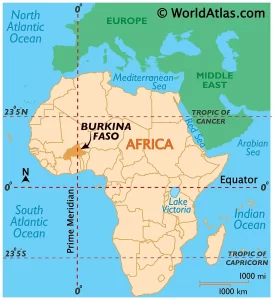 “An online militia linked to Burkina Faso’s ruling junta is carrying out coordinated attacks against journalists and others who criticise the military dictatorship, combining pro-regime propaganda and disinformation with cyber harassment,” Reporters Without Borders reported July 23. Among its recent targets is Yousra Elbagir, the British-Sudanese reporter for Sky News. This Reporters Without Borders (RSF) investigation reveals how the Rapid Communication Intervention Battalion (BIR-C) operates and the actors lurking behind it — including Burkina Faso’s defence minister. . . . ”
Stephanie Stokes Oliver: A Remembrance
By Audrey Edwards (pictured)
 The journalism and publishing industry lost a quiet but powerful force with the death of Stephanie Stokes Oliver, 74, on July 10 due to complications following a long illness.
Oliver, a top editor at several magazine publications, began her storied career as a college guest editor for Glamour magazine back in the early seventies when young Black college women aspiring for magazine careers were rarely selected for one of the industry’s most prized early recognitions.
An HBCU graduate of Howard University in 1974, Oliver began her professional magazine career at Conde Nast publications as a “roving editor” working in the departments of the company’s many publications, including Glamour, giving her an education in all facets of magazine publishing.
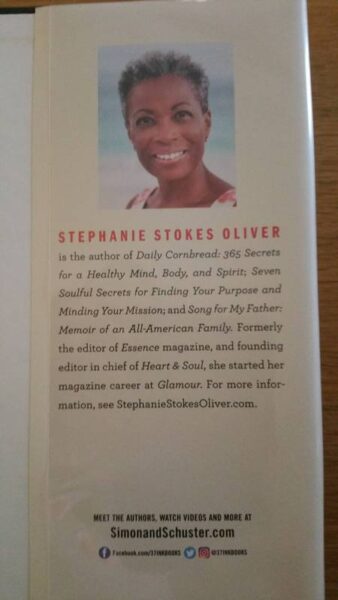 In 1977, Oliver joined Essence magazine as contemporary living editor and later became its West Coast editor when she and her husband Reginald Oliver moved back to her native Seattle.
Essence Editor-in-Chief Susan L. Taylor asked Oliver to return to Essence as editor in 1987, the second-in-command position to the editor-in-chief. When the renowned health publisher Rodale Press decided to launch Heart & Soul, the first magazine geared to covering the health issues of African Americans, it hired Oliver away from Essence in 1994 to be the publication’s founding editor-in-chief.
Oliver would hire and develop a stable of health writers that included the highly respected medical writer Harriet A. Washington, a prize-winning and best-selling author of books on Black health. Heart & Soul was nominated for a Best New Magazine Award by Folio magazine, a magazine industry publication. In 1998 Oliver formed SSO Media, an international consulting firm that specialized in book, magazine and digital publishing.
Oliver’s own magazine career dovetailed with a successful career as a book author. “Daily Cornbread,” her first book, published in 1999 by Doubleday, was a clever spin on the “Daily Word “book meditations published by Unity Publishing. “Daily Cornbread,” however, gave daily affirmations specific to Black women for leading a balanced life. Oliver’s other books include “Seven Soulful Secrets,” “Song for My Father,” and “Black Ink”. She was working on a book about the magazine industry at the time of her death.
In 1999, Oliver relocated from the East Coast with her husband to the tiny Caribbean island of Anguilla, where they had long dreamed of retiring. Yet Oliver continued her magazine career, serving as VP of Publishing at Unity Publications, the first person of color named to head the company’s important division of books related to spiritual and personal development.
She would divide her time between living in Unity Village, Missouri, Unity’s headquarters, and
her island home of Anguilla.
In short order, Oliver became a literary force on her adopted island, helping to launch the celebrated Anguilla Literary Fest, an annual gathering of some of the most important authors, agents and publishers, who ran panels and workshops and how-to lectures for aspiring writers.
Oliver’s invaluable contacts and good relationships in the media community were able to attract
such literary stars to the festival as novelists Alice Walker, Colin Channer and Benilde Little;
the mystery writer Valerie Wilson Wesley, her husband, screenwriter Richard Wesley, Dan
Brown, author of the best-selling “The DaVinci Code”, and Dawn Davis, VP and senior editor at
Simon & Schuster.
The passing of Oliver represents a great personal loss to me, her Pacific Northwest homegirl. I met Stephanie at Essence, having no idea that we grew up about 30 miles from one another — she in Seattle, me in Tacoma. We were not just Essence colleagues, but the dearest of girlfriends. I cancelled my much-anticipated trip to the 50th anniversary celebration of the National Association of Black Journalists in Cleveland last year to go to Seattle instead to see Steph. I knew she had been ailing, and my journalistic instincts told me to just go check on her.
So glad I did.
Audrey Edwards is a former executive editor and editor of Essence magazine.
