
Exploring Partnerships, Other Ways to Carry Forward
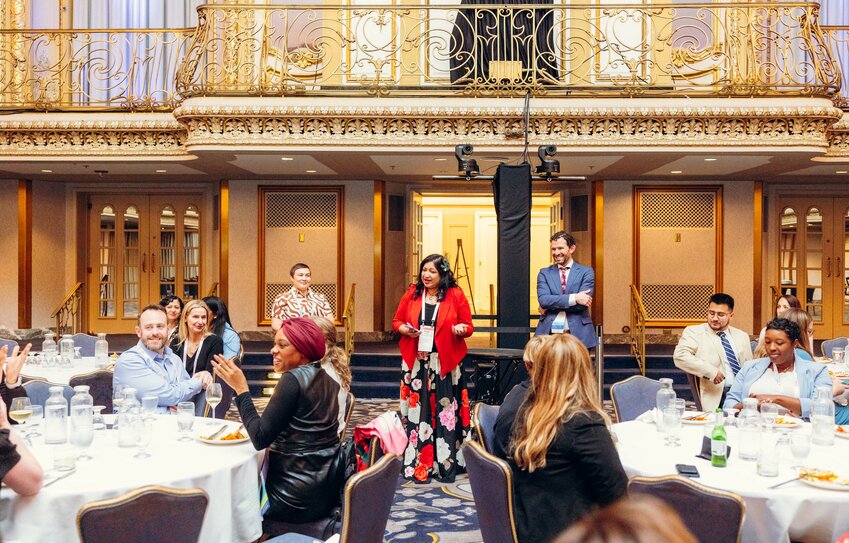
Homepage photo: Editor & Publisher published this photo of Niketa Patel, Online News Association executive director and CEO (center, in red) thanking ONA’s staff and board members at the 2026 conference in Chicago. (Credit: Joe Mac Creative)
View this post on Instagram
If no image is visible, please consider changing browsers.
Exploring Partnerships, Other Ways to Carry Forward
The Online News Association, created in 1999 as journalists began to grasp the full potential of the internet, is in financial trouble, canceling next year’s annual conference and laying off staff, executive director Niketa Patel announced Tuesday.
“Before the pandemic, the annual conference was ONA’s biggest source of revenue, and together with grants, it sustained the organization,” Patel, who assumed her post last year, said in statement. “This is no longer true. The costs of large convenings have climbed sharply while professional development and sponsorship budgets have shrunk. We worked to diversify our revenue, but the Board and I have reached the point where we must decide what ONA can continue and what it must pause.
“This month, ONA’s long-time staff will leave the organization. Over many years, they carried this community, one conference, one program and one conversation at a time. I am grateful to them beyond what I can easily express here. I will continue to lead ONA as CEO and Executive Director, working with the Board of Directors, led by Andrew Fitzgerald, as we chart the path forward for the organization.
“The Women’s Leadership Accelerator will continue on as one of ONA’s signature programs, and a call for the 2027 class will open early in the new year. Our online resources and the ONA Weekly newsletter will also continue.
“The Board and I remain committed to ONA’s mission. We are exploring partnerships and other ways to carry this work forward and to bring our community together again. We will continue to update you over time. . . . “
When Journal-isms canvassed the journalism organizations last year, ONA had 1,885 members, according to spokesperson Karolle Rabarison. Investigative Reporters & Editors was the largest, followed by the National Association of Black Journalists, the National Association of Hispanic Journalists, the Society of Professional Journalists, the Asian American Journalists Association and ONA.
“At ONA26 in Chicago, there was a sense of optimism and energy that filled the conference rooms. In the hotel’s public spaces, attendees spotted familiar faces and names on lanyards, running toward one another for embraces,” Gretchen Peck wrote in May for Editor & Publisher.

“Part of ONA’s mission is to bring members together both virtually and in person — to network, learn from one another, collaborate, innovate and feel a sense of community,” Editor & Publisher said. . . . Attendees learned from sessions about AI, content creation, adaptive leadership, copyright law, fundraising and audience engagement.” (Credit: Joe Mac Creative)
“In the hotel’s public spaces, attendees spotted familiar faces and names on lanyards, running toward one another for embraces. ‘We call that the ONA squeal,’ Patel said. ‘Every year at the annual conference, we also have 400+ new attendees. That’s incredible to me, that new people are discovering the organization, realizing the impact and the value of ONA membership.’ . . .
“The conference comprised sessions on AI and data journalism, the content creator economy, audience engagement, adaptive leadership, social video, funding for sustainability and special projects, technology and product, legal risks and copyright law, and reporting from autocratic societies around the world.”
Peck also wrote, “Diversity is what makes ONA unique, Patel suggested — members span age ranges and generations; they are ethnically diverse; they’re at different stages in their careers, work in different roles and across platforms, nonprofits, independent media, public media and legacy media.
“With this broad and diverse membership in mind, ONA delivers virtual learning, professional development and networking events. It administers the AI in Journalism Initiative, the Women’s Leadership Accelerator program, a Digital Women Leaders mentorship program, an HBCU Digital Media Fellowship, and the MJ Bear Fellowship for journalists under 30, named in honor of an ONA founding member.”
One of Patel’s first stops after her appointment last year was the Journal-isms Roundtable.
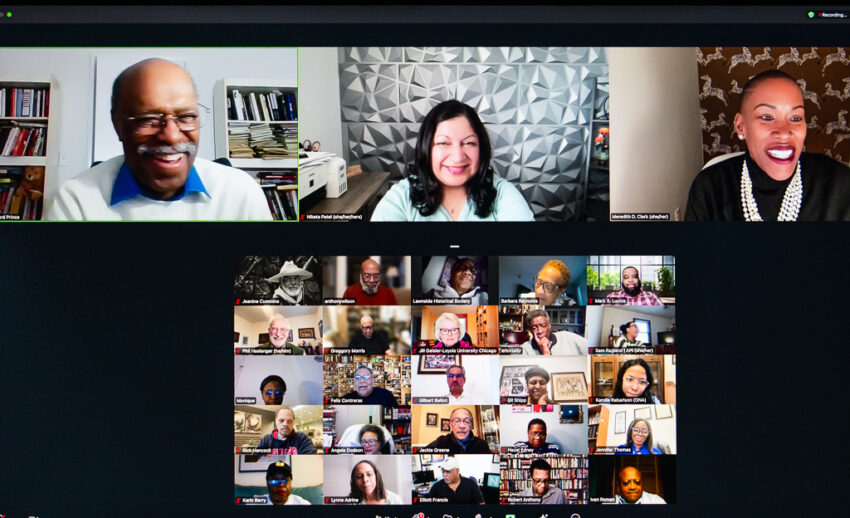
Niketa Patel (top, center) at March 24, 2025, Journal-isms Roundtable by Zoom. (Credit: Jeanine L. Cummins)
“We have big plans for ONA,” she said then. “I’m going to obviously be easing into the role very slowly, but making sure that we have the best programs out there, that we’re really thinking about challenges, but turning challenges that we’re facing in this moment, right? . . . AI, you know, there are a lot of different headwinds in terms of the business side of things. . . .
“I’m all about turning challenges into opportunities. And so that is kind of my mindset coming into this role. And I think that as an industry, we have so many opportunities to make sure that journalists are seen and heard, protected and cared for.”
NABJ Settles With Spurned Executive Director
Nov. 8, 2026
. . . Maida C. Odom, Pioneering Philly Journo, Educator
Despite Victories, Work Remains on Protecting Press
Marshall Project Sues for ICE Detention Database
Houston Broadcaster Launches AI Version of Herself
Texas Anchor Felt ‘Ready’ to Shed Wig for Locs
‘GMA’s’ Janai Norman Relocates to South Africa
Cuba Detains 3 Independent Journalists in One Week
Updated Nov. 9
In a video conversation two months ago, Elise Durham said, ” I filed a lawsuit and I got quiet and I got angry and then I got hurt,” and then she started her new company. (Credit: YouTube)
Elise Durham Wanted $614,000 Plus Other Costs
Elise Durham, whose selection by the previous president of the National Association of Black Journalists to be NABJ’s executive director was nullified once new leaders took office, has settled a breach-of-contract lawsuit with NABJ, which says it is not disclosing the amount of the settlement.
Durham had sought $613,987 in severance, plus other costs, according to court documents. Asked “Are there plans to disclose to the membership how much this settlement is costing the organization?” NABJ President Errin Haines replied, “No, we are not discussing the details of the settlement agreement.” It was also not clear whether some or all of it would be covered by insurance.
“NABJ is satisfied to have reached a resolution in this matter following a difficult chapter for our organization,”Haines said in a message Friday to members. “As we navigate the challenges and opportunities facing our profession, our focus remains on advancing our mission and serving our members. We wish Ms. Durham well in her future endeavors.”
On June 30, Haines announced the formation of an Executive Director Search Committee and the next steps in the search process. Proposals for an executive search firm to help guide the recruitment and selection were due July 21. The target start date for the new executive director was Dec. 1.
Durham messaged Journal-isms from Georgia, “I am not permitted to talk about the settlement,” but added, “I’ve launched The Creative Exchange and I am leading communications for Governor-elect Keisha Lance Bottoms’ transition. I could not be more excited about what lies ahead.”
Two months ago, in a video conversation on “From Sisterhood to Sabotage: When Your Workplace Bully Looks Like You,” Durham spoke about the anguish she said she had suffered:
“So let me tell you about something that just happened to me,” Durham said. “I left my big job because in this climate, I felt like I really wanted to do something that mattered, but it was a big job,” She was assistant general manager of marketing, communications, and public affairs for Hartsfield-Jackson Atlanta International Airport, the world”s busiest.
“So it had to be something like what I’m about to tell you for me to leave. I interviewed for and was named the next executive director for the National Association of Black Journalists.
“I have been an NABJ member for 30-odd years and I just thought, this is amazing. At this time in my career, I can take everything that I learned and know and really pour into this industry that I love so much, this organization that raised me. Well, two weeks before I was supposed to start, the contract was rescinded. I did not see that coming. They have some internal issues and that’s what led to that.
“It had really nothing to do with me, but it had everything to do with me. So I am in a legal situation with that because I did sign a three year employment contract and I did resign my job.
“And then I got angry, right? I didn’t understand it. Anybody that knows me knows that I live and breathe NABJ. I didn’t understand. So I filed a lawsuit and I got quiet and I got angry and then I got hurt and then I birthed the pivot series because as I watched my industry implode and the attacks on my industry, I realized and seeing all of these corporate mergers and corporate takeovers of media organizations and media organizations acquiescing to this administration’s pressure, long-term journalists were getting booted for no reason. Contracts not being renewed, people being laid off, mergers causing a collapse in job opportunity.”
The pivot series refers to a two-night series during the summer’s NABJ convention, in which attendees were reminded, “as Black people, we don’t panic, we pivot.”
Durham continued, “And I thought, we need a real honest place to talk about what’s happening. There are 600,000 Black women who are unemployed right now, 600,000. And the idea that I’m one of them because of my own people, they didn’t think about that.”
The legal action, filed in U.S. District Court in Greenbelt, Md., was the first time the organization, which commemorated its 50th anniversary last year, faced such a lawsuit.
The NABJ board, under new president Haines, voted in an unpublicized meeting to rescind the contract with Durham, despite an assertion from its attorney of record, subsequently dismissed, that such a move could leave it open to lawsuits charging breach of contract, defamation of character, and perhaps a hefty financial penalty.
Questioning by members at an hours-long meeting at the NABJ convention in Cleveland revealed that key members of NABJ, such as board treasurer Jasmine Styles and financial manager Nathaniel Chambers, were kept out of the loop when then-president Ken Lemon, just days before he was defeated in a bid for re-election, signed a contract with Durham to become NABJ’s next executive director.
Lemon acknowledged then that the full board of directors did not vote on the contract.
Durham has been communications director for Atlanta mayors Bottoms and Andre Dickens. She added Saturday in discussing her new role with now-governor-elect Bottoms, “To have a front-row seat to history, and the opportunity to help shape the next chapter for Georgia, is both humbling and deeply rewarding. I believe that life has a way of placing us exactly where we are meant to be, even when the journey takes an unexpected turn.
“I am grateful for where I am, the work before me and the very bright future ahead.”
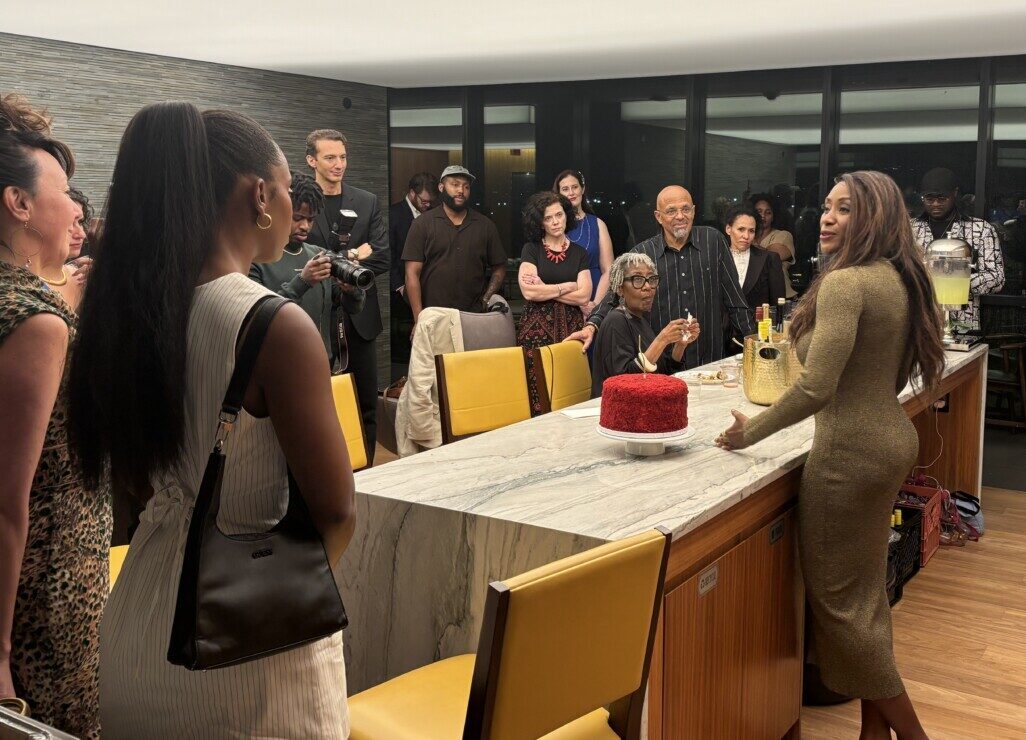 At a delayed 40th birthday party and “victory celebration” on Oct. 16, Karen Attiah said she planned to go back to the newspaper because her employer was more than just those in the “C-suites,” but friends and colleagues. (Credit: Richard Prince)
Karen Attiah Decides Not to Rejoin Washington Post
Karen Attiah has decided not to return to the Washington Post, two months after arbitrator ruled that the Post ‘did not have good and sufficient cause’ to terminate her and its labor agreement.
“I have decided not to return to what The Washington Post has become,” Attiah wrote in a Substack post on Sunday. “I have accepted a settlement with the Post and will move forward with my life and career.
“As excruciating as this battle has been, it was one worth fighting. I am deeply grateful to everyone who supported me throughout this fight and helped me celebrate the victory. I am also indebted to the readers who have continued to believe in my work and who still believe in the power of journalism.”
Just last month, at an Oct. 16 delayed birthday party and “victory celebration,” Attiah said she planned to go back to the newspaper because her employer was more than just those in the “C-suites,” but friends and colleague. She was founding editor of the Global Opinions section, where she worked directly as Jamal Khashoggi’s editor for two years before he was brutally murdered by Saudi regime agents.
However, Natalie Korach reported Sunday night for the Status newspaper, “Attiah will not rejoin The Post in any capacity, though part of the settlement includes back pay ordered by the arbitrator, the union, Washington-Baltimore News Guild, “told me. The remaining settlement terms were not disclosed.
“ ‘There was still a chance to go back as of Thursday,’ Attiah told Status of her decision. ‘I think I just didn’t feel safe returning and that I would be protected. It’s not just a job. It’s also about whether I could be able to do the journalism that I not only wanted to do, but that I think the readers deserved.’
“Attiah also mused about whether Democrats’ electoral romp on Tuesday would prompt a cultural shift at the paper. “There’s always going to be a part of me that wonders, especially after seeing the midterm election results, about the alternative path if I could have done it,’ she added.”
Attiah said in a Substack post in June, “Beginning July 20th, I’ll be bringing back Race, Media, and International Affairs 101 and 102 to the public for a seven-week online course.”
She messaged Journal-isms on Monday, “Not teaching at the moment. For now I’m just going to take some time for myself, for book writing… and martial arts. :)”
“I loved my work,” Attiah wrote in Sunday’s Substack post.
“In the aftermath of the Charlie Kirk killing, I did my job as an opinion writer; I offered commentary about America’s gun violence problem, especially its propensity to give grace and absolution to white men who espouse hatred and violence.
“For that, the Washington Post wrongfully fired me over email the very next day, without a conversation. The Post accused me of gross misconduct and labeled me a threat to my colleagues.” [Added Nov. 9]
- Democracy Defenders Fund: Karen Attiah Secures Landmark First Amendment Victory in Wrongful Termination Case Against The Washington Post (Aug. 24)
Passages
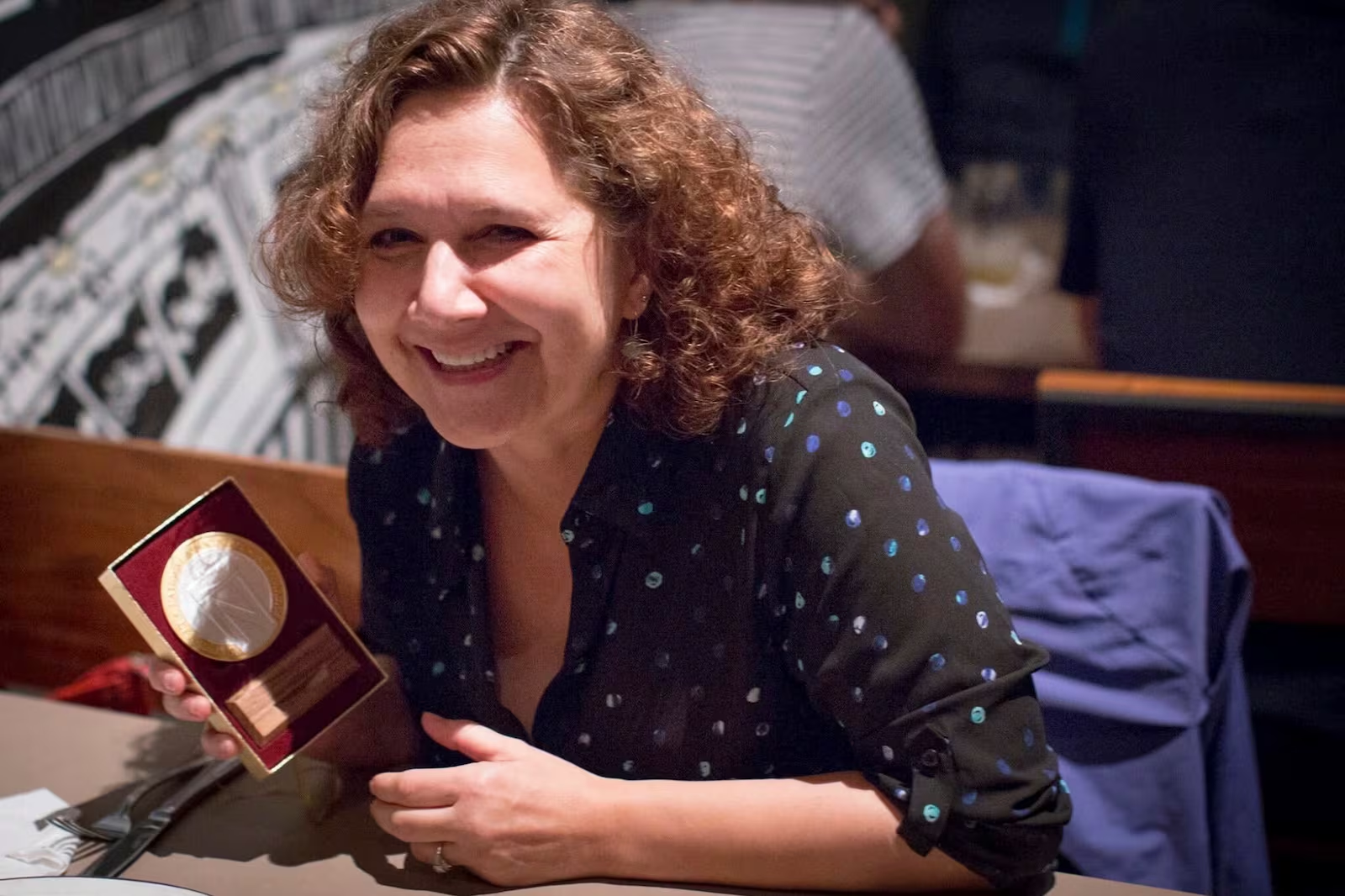
Former Chalkbeat story editor Mónica Rhor accepting an Ñ Award from the National Association of Hispanic Journalists at a convention in Miami in 2018. (Courtesy Marie de Jesus)
. . . Monica Rhor Loses Battle With Brain Cancer
“On a hot June day in 2010, a fresh-out-of-college Jason Gonzales worked up the nerve to approach the person seated alone at a desk in a hotel conference room in Denver,” Eric Gorski and Emiliana Sandova reported Friday for the education publication Chalkbeat.
“This was the popup student newsroom at the annual convening of the National Association of Hispanic Journalists, where experienced pros mentor journalists of the future and students report on news of the conference — and Mónica Rhor was running the show.
“As Gonzales soon found out, Rhor, then between reporting roles at The Associated Press and the Houston Chronicle, was not the least bit intimidating. Rather, she was soft-spoken, a careful listener, a bit stoic, mindful of her words, patient, and, above all, kind.
“ ‘I was a little scared of her, which is crazy to think about now,’ said Gonzales, a Chalkbeat Colorado reporter who was thrilled when Rhor joined the Chalkbeat staff in 2021 as a story editor. ‘She would look around the room and say, “Look at the people next to you. They all look like you, and you are not going to find this in journalism, and it’s going to be lonely sometimes as a person of color. But you always have this family around you.’
“Chalkbeat lost a beloved colleague and friend when Elizabeth Mónica Rhor Samaniego died Nov. 1 after a relatively brief battle with an aggressive form of brain cancer. She left a legacy of stories she told and shaped, careers she nurtured, students she lifted up, and two daughters who have brighter futures because of her. She was 65. . . .”
Rhor had announced the diagnosis Sept. 1 on Facebook. “I have some news to share. About a month ago, I was diagnosed with glioblastoma – an inoperable brain tumor. I am in the middle of a course of radiation and chemo,” she wrote.
“The girls and I are holding strong and will need your prayers as we navigate this time. I want to thank all my friends and family who have been supporting us on this tough road. We are all taking it one day at a time.
“We are thinking of you all and sending love.”
In 1976, Marcia Ann Gillespie shared her vision of empowerment on Buffalo Toronto Public Media. (Credit: YouTube)
. . . Marcia Ann Gillespie, Essence Friend, Inspiration
“Marcia Ann Gillespie was my dear friend for 40 years, but long before that, she was my inspiration,“ Donna L. Blackwell wrote Nov. 4 for Ms. Magazine.
“She is rightly remembered as an influential political and social critic, a women’s and civil rights advocate, and the provocative editor-in-chief of Essence and Ms. magazines. To me, Marcia was all of that and — as she would say — a bag of chips.”
Gillespie died Oct. 31 at 82. Edward Lewis, Essence co-founder, told Journal-isms he did not know the cause of death, and none has been reported, but other colleagues said she had been wheelchair bound for at least a year.
Blackwell continued, “In 1970, when Marcia joined Essence magazine as managing editor, I was an undergraduate at the University of Missouri in Columbia. “At the time, Black students were an unwelcome bit of chocolate in a very large vat of vanilla. In response, we organized the Legion of Black Collegians. Our goal was to compel the university to hire Black faculty, introduce courses addressing the historical and contemporary lives and concerns of Black people, and confront the racism and bigotry we frequently experienced from both teachers and fellow students.
“Our cause was righteous in both principle and practice. Yet, we believed our efforts should be devoted primarily to elevating Black men. Despite historical and contemporary evidence to the contrary, we assumed that Black women were less oppressed and exploited and should take a back seat, supporting the movement to expand men’s rights. Our initiatives did not include encouraging women to become leaders, pursue nontraditional careers, or demand equal pay and reproductive rights. We raised our fists, marched and chanted, but many of us had not yet learned how to apply ‘I’m Black and I’m Proud’ to ourselves as women.
“Then came Marcia Ann Gillespie and Essence magazine.
“Her editorials inspired me and my female friends. Through her writing, she helped me recognize the larger social, political, economic and cultural forces that kept my tongue tied, my posture slumped and fueled my frustration with society’s expectations of how people like me should look and behave. She gave me the language and perspective to understand the cruel and demeaning stereotypes, laws, beliefs and customs that shaped our lives — and continue to do so. . . .”
- Alyssa Curtis, WWL Louisiana: Essence Fest and New Orleans clash over payments and contract (Oct. 30)
- Ida Harris, Black Enterprise: Marcia Ann Gillespie foretold her legacy at the 2017 Women of Power Summit (Nov. 2)
- Okla Jones, Essence: Marcia Ann Gillespie, Former Editor-In-Chief Of ESSENCE, Dies At 82 (Oct. 31)
- Marquita Pool-Eckert, Ms. Magazine: The Marcia Ann Gillespie I Remember: A 60-Year Friendship Forged at the Dawn of Two Journalism Careers
- Journal-isms: Remembering Essence Editors From the Heyday (Aug. 6)
- Blake Paterson, Perdio Street: Essence Fest eyes Houston, Atlanta for 2027 as talks with New Orleans stall (Oct. 26)
Houston Broadcaster Launches AI Version of Herself
“Former CW39 Houston anchor Sharron Melton is returning to the news business, this time with an AI-generated version of herself,” Ariana Garcia reported Friday for the Houston Chronicle.
“On Friday, more than two months after leaving the station, Melton announced the launch of Vocal Wish News, a weekday morning newscast debuting 6 a.m. Nov. 9.
“‘ ‘It’s my voice. It’s me, all of it, and there’s a little AI component that’s attached to it,’ Melton said in a video announcement.
“According to the Vocal Wish News website, the program will feature Melton’s AI-generated likeness clearly labeled, with sources displayed on screen so viewers can verify the reporting. Episodes will be available on YouTube, Instagram and TikTok. . . .”
Texas Anchor Felt ‘Ready’ to Shed Wig for Locs
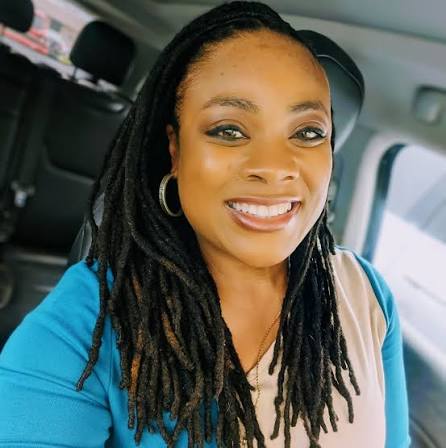
“KSAT’s Japhanie Gray is sharing her hair journey in hopes of inspiring other women who have faced criticism for their appearance in TV news and other industries,” Annasofia Scheve reported Wednesday for the San Antonio Express-News.
“In a candid Facebook post Wednesday, the morning anchor said she recently decided to stop wearing a wig and show her natural locs on camera.
“Beyond the time and effort needed to maintain her locs, Gray said she and other TV journalists have faced harsh judgment about their hair, weight, makeup and speech from viewers and managers.
” ‘It’s no secret that throughout history in this crazy news industry, the subjective view of what professionalism should ‘look’ like has been extremely critical of women from all backgrounds and cultures,’ she wrote.
“Black women’s hair is more than twice as likely to be perceived as unprofessional as the hair of women who are not Black, according to the 2023 CROWN Workplace Research Study. The study found that nearly half of Black women have felt pressured to change their hair from curly to straight for job interviews and headshots.
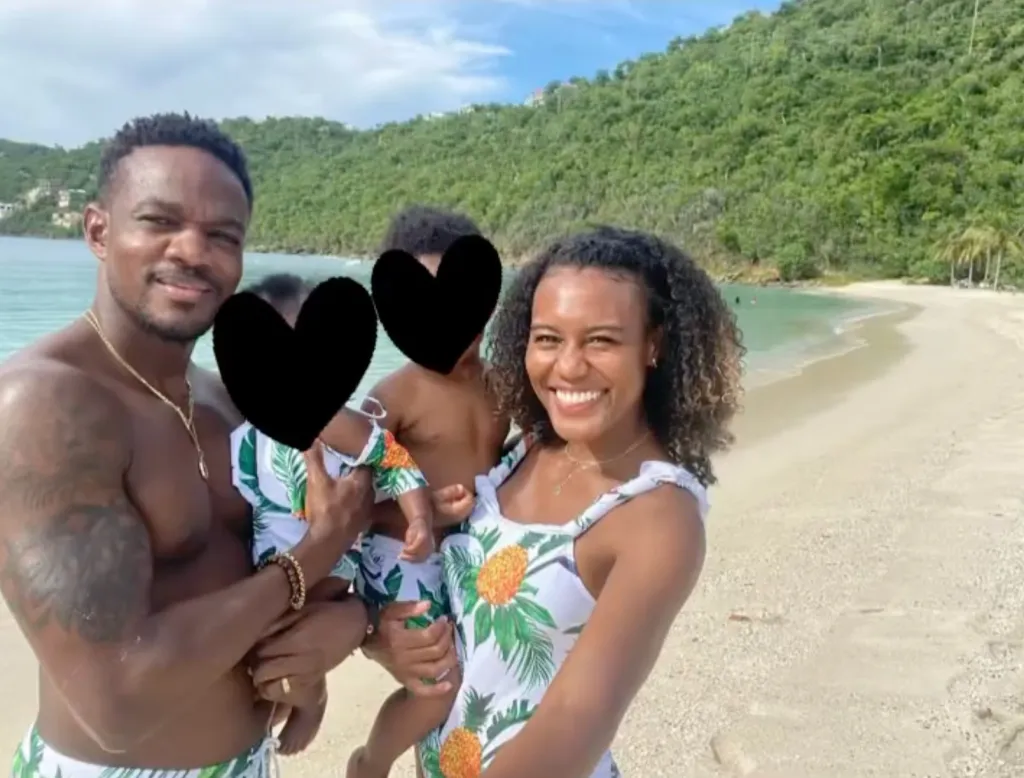
Janai Norman, husband Eli and children. (Credit: Janai Norman/Instagram)
‘GMA’s’ Janai Norman Relocates to South Africa
“GOOD Morning America’s Janai Norman has moved to South Africa as she announced her family is ‘taking a break’ from the United States,” Jessica Finn reported Friday for the U.S. Sun.
“On Friday, Janai posted several stories to Instagram about her tome’s release as she pivoted to the surprising revelation about her family‘s new home.
“ ‘Less than two months out from publication, forcing myself to post daily for 60 days and make use of stories.
“ ‘On that note, pre-orders are really important. Have you ordered yours?,’ she wrote in one story posted to the platform.
“She then pivoted in her next story, writing, ‘And speaking of breaking, have I mentioned my family is taking a break from the U.S.?, ‘over a street speckled with thin palm trees that appeared to be clustered together, overlooking what appeared to be a waterline meeting a blue horizon. . . . ”
“The newswoman is married to her husband, Eli; the pair share three children.
“Janai got booted from GMA back in April without much warning.” [Added Nov. 9]
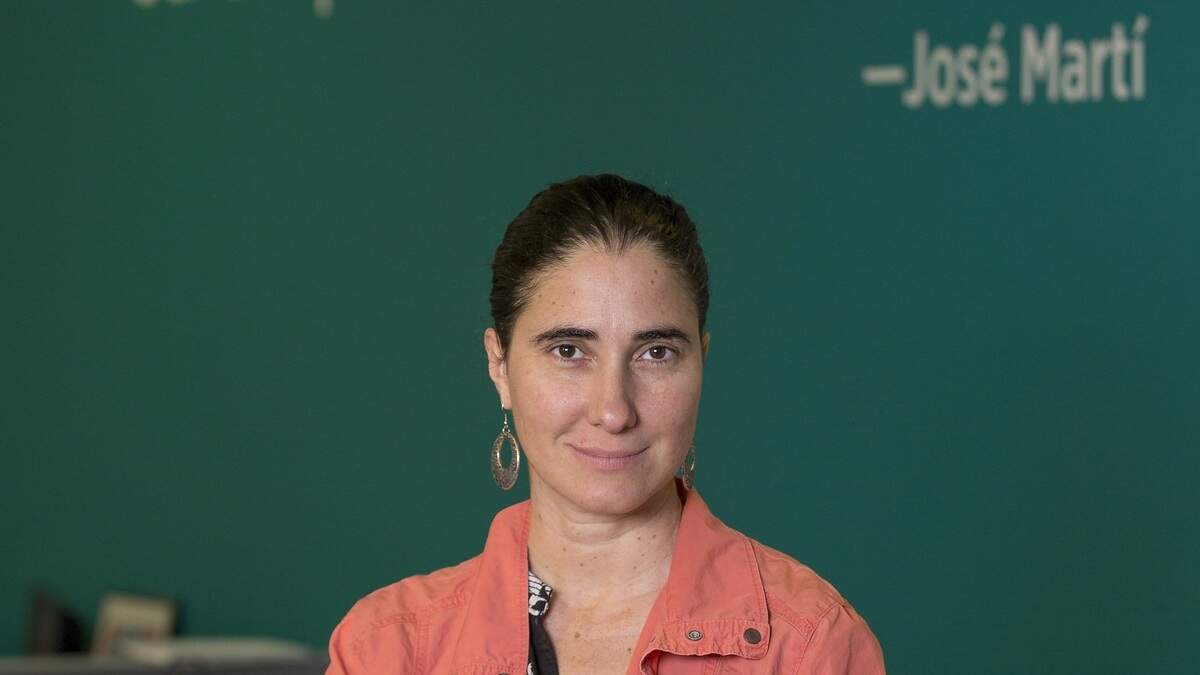
Cuba Detains 3 Independent Journalists in One Week
“Cuban State Security agents detained Yoani Sánchez, the award-winning founder and director of the independent news outlet 14ymedio, in Havana on Thursday morning amid the latest government crackdown on independent journalists,” Nora Gamez Torres reported Thursday for the Miami Herald .
“She was released several hours later. It was the third detention of an independent journalist in the Cuban capital this week.
Coverage in the rest of the English-language U.S. news media has been sparse.
Cubalex, which defines its mission as “to defend and promote human rights, access to justice and the rule of law in Cuba,” reported, “The arrests of independent journalists Camila Acosta, Adelth Bonne Gamboa, and Yoani Sánchez marked a new escalation of repression against the independent press in Cuba this week. The actions were accompanied by police surveillance, interrogations, violence, threats, and restrictions on freedom of movement.
Telemundo reports in Spanish on the arrest of journalist Camila Acosta. (Credit: YouTube)
“Added to this scenario were police summonses against members of independent audiovisual projects, such as Fuera de la Caja, and surveillance of journalist Boris González Arenas, in a context of operations aimed at preventing journalists and communicators from participating in activities organized by foreign diplomatic representations.
“These events are not isolated incidents. Records from the Cubalex Monitoring team for 2026 show that the Cuban repressive apparatus maintains a sustained pattern of harassment against a core group of independent journalists and media workers, but has increased the intensity of the measures used against some of them.”
CiberCuba, another outlet, summarized, “On Monday, Adelth Bonne Gamboa, a contributor to CubaNet , was detained in the Havana neighborhood of Santos Suárez. He reported that officers confiscated his work equipment and fined him 3,000 Cuban pesos under Decree-Law 370.
“The next day, Camila Acosta, a reporter for CubaNet and correspondent for the Spanish newspaper ABC , was handcuffed and taken to a police station while on her way to a veterinary appointment with her cat.
“The journalist spent several hours in a cell before being released. She later reported further threats of prosecution for having filmed an officer who was preventing her from leaving her home.
“Henry Constantín, meanwhile, has been imprisoned since September in the Kilo 7 maximum security prison in Camagüey, accused of ‘disobedience’.
“In mid-October, he was sent to solitary confinement after a search in which a knife was found that the journalist suspects was deliberately planted on him.”
Julio Antonio Rojas, who reports from Havana for Journal-isms, messaged, “Right now, the Cuban regime knows that the main pillar of the opposition is independent journalism; its military repressive apparatus is currently seeking ways to silence its leading voices.
“You can be certain that, among opposition parties and human rights movements on the island, the top priority for the regime to silence is independent journalism — along with its contributors and their information channels. Given these arrests and threats, I believe they are setting the stage to imprison us all, or at least the most prominent among us.”
Juan Pablo Segura, U.S. assistant secretary for Western Hemisphere affairs, tweeted Thursday, “Cuban journalist Yoani Sánchez’s arrest this morning is part of the Cuban regime’s continued campaign to crush the independent press. From detaining Adel Bonne and Camila Acosta this week to imprisoning Henry Constantín, the Cuban regime shows its cowardice as it relies on arbitrary arrests because it fears the truth. #LibertadYa.”
- Rosa Muñoz Lima, Deutsche Welle: Cuba: fewer and fewer independent journalists and more repression (Nov. 9)
