
‘Soul Patrol’ on Screens in More Than 110 Theaters
Reposting for Veterans Day:
‘Remember the War Correspondents of Color,’
‘World War I’s Black Journalists Had to Fight Their Own Government,’
and ‘Back in Print: What Black WWII Reporters Wrote’
Also: ‘Race and the Military’ Journal-isms Roundtable video (April 2026)
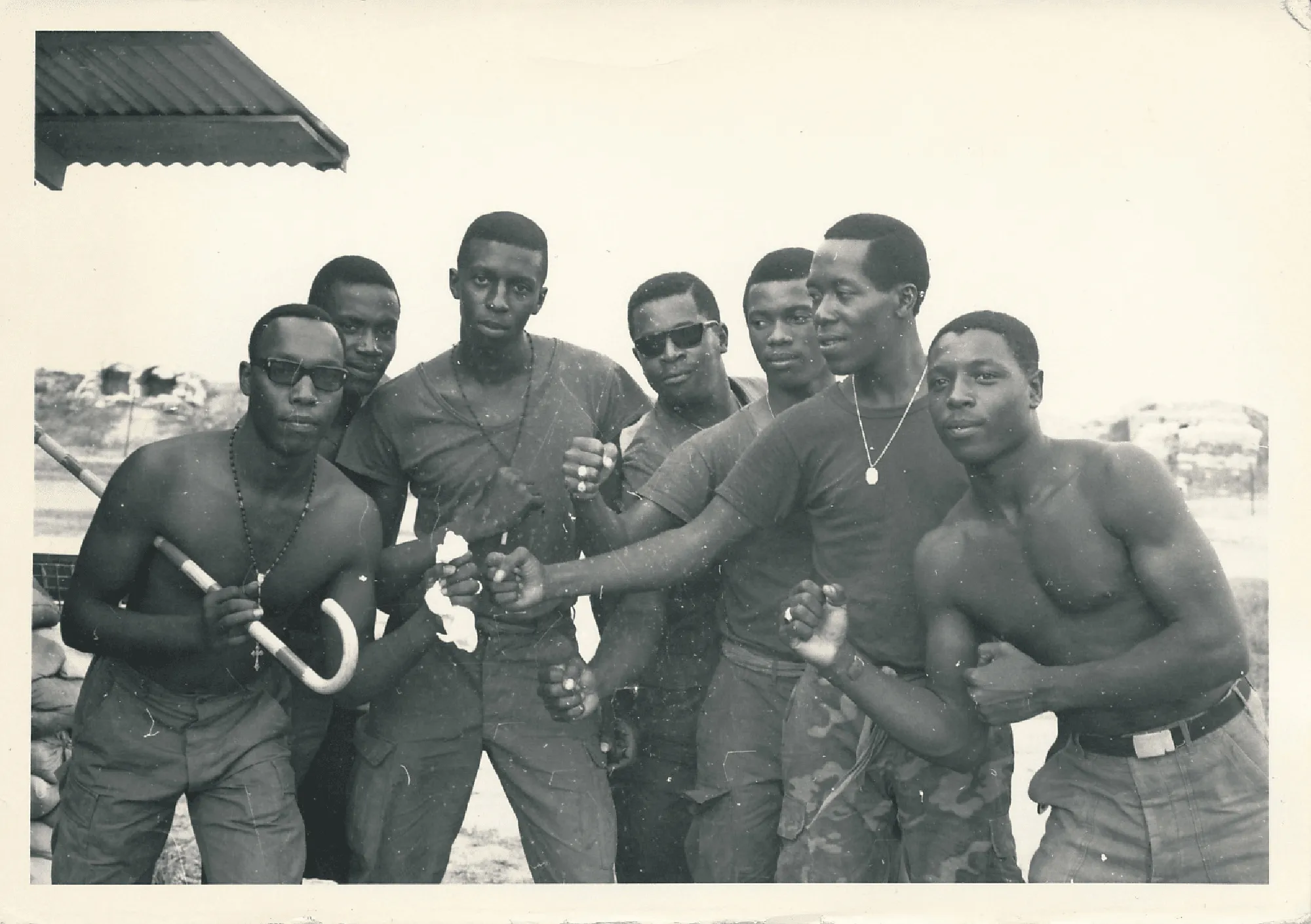
Homepage photo: Scan of an archival photo taken by the Soul Patrol in Vietnam.
‘Soul Patrol’ on Screens in More Than 110 Theaters
When the new documentary “Soul Patrol'” was screened in Washington before an audience of veterans in June, director Jason M. Harper said the Black Vietnam vets in his film preferred to be greeted with “welcome home” when they returned, rather than “thank you for your service.”
Today, Veterans Day, we get to find out why, as the film screens in more than 110 theaters with additional screenings planned throughout November. The film opened theatrically Nov. 6 in New York.
“Welcome home.” Not only was much of the country hostile to returning veterans, but racism was alive and well among Americans at home and in the military ranks abroad, including in Vietnam.
“According to journalists Wallace Terry and Zalin Grant by 1968, racial incidents in Danang, Cam Ranh Bay, Dong Tam, Saigon, and Bien Hoa happened on an ‘almost daily basis’ and had become ‘commonplace,’ Wikipedia tells us.
“Similar reports came from official channels with there being at least 33 incidents of racial violence in the two months between December 1969 and January 1970. In 1970 there were 1,060 reported cases of violent racial conflict.[3] Racial incidents also affected the Navy and Air Force. Following [Martin Luther] King’s death race riots and conflicts occurred at Long Binh jail and Camp Lejeune.
“The former was the worst race riot in the U.S. Army’s history and the latter garnered national attention due to 44 African-American soldiers being arrested but no white soldiers. It also inspired an investigation and creation of a committee to study racial bias and African American militancy in the armed forces.[5] Grant once claimed that the ‘biggest threat’ to the U.S. military was ‘race riots, not the Vietcong.’[3]”
Despite that, as “Soul Patrol” shows us, in this unit, the Black troops had each other.
View this post on Instagram
If no image appears, please consider changing to a different browser.
Craig D. Lindsey explains on rogerebert.com: “Winner of the Directing Award for U.S. Documentary at this year’s U.S. Sundance Film Festival, ‘Patrol’ adapts vet Ed Emanuel’s 2003 memoir of the same name. In both the book and the movie, Emanuel recalls his time in Company F, 51st Infantry, a unit of long-range reconnaissance patrolmen (or LRPPs, pronounced ‘lurps,’ for short) who went on suicide missions by sneaking behind enemy lines. Emanuel was part of an all-Black crew —’ the first spec op team in the Vietnam War,’ as one member puts it.
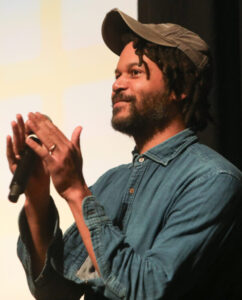 “Emanuel and director J.M. Harper (pictured) (who tackled rap music in the 2024 doc ‘As We Speak’) round up the surviving members of the Patrol, first bringing them together for a hotel banquet before having them talk about their experiences on camera. Harper shoots the banquet scenes in dark, static shots with the men in silhouette, practically shrouding these forgotten soldiers in the darkness they lived in during the war — and took back home with them.”
“Harper moves between the reunion, scenes reenacted by actors and original Super 8 footage, much of it shot by the men themselves during their tour,” adds Kansas City’s The Voice. “The footage lets viewers see the soldiers as young men through their own cameras. In the reunion interviews, the veterans reflect on what it meant to serve in a unit whose nickname, ‘Soul Patrol,’ could feel like a badge of belonging to some and a racial label to others.”
As Lindsey explains, “It’s still very rare to see stories of Vietnam War veterans of color played out on the big screen. When we do, like in Allen & Albert Hughes’ ‘Dead Presidents’ or Spike Lee’s ‘Da 5 Bloods,’ it’s tied to a heist storyline, with disgruntled grunts going on one last mission to get compensation for the hell they went through at home and abroad. There’s no gold or money at the end of ‘Soul Patrol.’ But there are men, finally telling a treasure trove of war stories before they’ve fully completed their mission on Earth.”
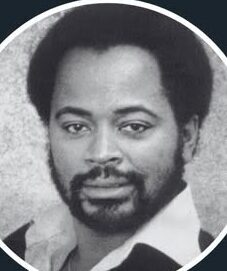 In 1971, Black journalist and Air Force veteran George B. Davis (pictured) wrote a novel about Vietnam, “Coming Home,” also the title of a 1978 film starring Jon Voight. Davis sued the filmmakers in federal court, alleging they had infringed the copyright of his novel and changed two of the three main characters, Air Force pilots, from Black to white. But Davis lost the case.
 At a Journal-isms Roundtable in April on race and the military, journalist Jesse W. Lewis Jr. (pictured) recalled his series on Black GIs in Vietnam.
“I got to Vietnam for the [Washington] Post in December ’66 and came back in mid-late April ’67,” he said at the Roundtable. “And while I was there, I mean, I had two assignments. One was to back up Ward Just, who was the bureau chief. “But I collected information for four and a half months on the role of the Black GI in Vietnam. Just as an aside, I was virtually ignored by the all-white press corps.
“They asked me, ‘What are you doing talking to Black people, or Black soldiers, all the time? I said, ‘I just feel more comfortable.’
“But the irony is that when my series was published, all of them came running to me and asked for my carbon paper, my copies, which in the old days were called blacks. There wasn’t anything to do with race, it’s just that was the color of the carbon paper. “And they wanted to see what I had written.”
Today’s authors might have it easier. In April, the National Book Foundation announced that Wil Haygood’s “The War Within a War: The Black Struggle in Vietnam and at Home” made its longlist for the National Book Awards; the winners are be announced Nov. 18.
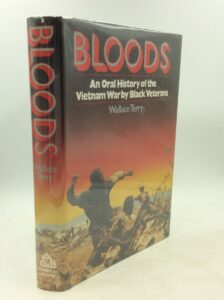 The most well-known work about Blacks in Vietnam was the 1984 oral history “Bloods,” by journalist Wallace Terry, then at Time magazine. It became a best-seller, but Terry said his proposals had been turned down 120 times by publishers, leading to more than a decade of anger and frustration.
Terry’s biographer, Ray Boomhower, writes in his new “Wallace Terry: A Reporter’s Journey from Selma to Saigon to Bloods,” “Of all the services, the [Marine] Corps has the fewest black officers and the biggest racial problem, Terry remembered. “He knew he had a long job ahead of him when a Marine officer, hearing Terry was writing a book about race problems in the armed forces, told him, ‘It will be a short book, ’cause we treat everybody like niggers.’ “
“And in February 1972 Motown’s Black Forum label released the approximately fifty-minute album ‘Guess Who’s Coming Home,’ which featured narration by Terry and liner notes written by [Julian] Bond,” the civil rights activist and state legislator
“ ‘The album is real. Every voice. Every sound. Every sweat. Every swear. Every plea. Every promise,’ Bond wrote. ‘Black soldiers, trained in the violent arts of guerilla warfare as no blacks before, are coming home, determined to bring the war with them if America doesn’t change her racist ways and give them the democracy they were sent to defend.’
“Reviewing the album for The Washington Post, George Davis praised it for keeping what Black soldiers felt about the war ‘vividly alive.’ If the Vietnam War did fade from memory, he added, Terry’s record would remind people about ‘the 177 kinds of things that fill the reservoir of anger and frustration in black communities, and that seethe there below the surface.’ ”
To be sure, “Soul Patrol” gives vent to a range of emotions — and evokes them.
“ ‘Soul Patrol’ admirably never tries to sum up the full experience of what Vietnam was, rather just trying to sum up what it was for these men,” Wilson Chapman wrote for indiewire. “In the film’s closing stretch, it turns its attention to the men’s difficult experiences returning home from the war, with a candor and a vulnerability that’s hard not to tear up from.”
The film also displays the variety of Black motivations.
“ ‘Black people in the U.S. and around the world have different relationships with what it means to be patriotic,’ Harper explains,” Zac Ntim wrote for Deadline. “ ‘Sometimes that means speaking out against what politicians or the U.S. military are doing, as we see today. Sometimes it means going to fight, like the Airborne did when they parachuted into France to push the Nazis out. Ultimately, that was the legacy these guys had bought into, regardless.”
Peter Bradshaw, the Guardian: Soul Patrol review – heartstopping story of the US army’s first Black special ops team at work in Vietnam
Ryan Thomas LaBee, military.com: ‘Soul Patrol’ Film About Black Vietnam War Soldiers Expands to 110 Theaters for Veterans Day
Sheri Linden, Hollywood Reporter: ‘Soul Patrol’ Review: A Distinctive and Moving Addition to the History of the Vietnam War (Jan. 25)
Beatrice Loayza, New York Times: ‘Soul Patrol’ Review: A Veteran’s Past Continues to Haunt Him
Gina McIntyre, Sundance: “Soul Patrol” Pays Moving Tribute to Elite Squad of Black Vietnam War Veterans
Reposting for Veterans Day:
‘Remember the War Correspondents of Color,’
‘World War I’s Black Journalists Had to Fight Their Own Government,’
and ‘Back in Print: What Black WWII Reporters Wrote’
Also: ‘Race and the Military’ Journal-isms Roundtable video (April 2026)
Homepage photo: Top row, from left: Ollie Stewart, Vincent Tubbs. Bottom, from left: Herbert Frisby, Art Carter, Elizabeth M. Phillips, Max Johnson, Francis Yancey.
https://www.journal-isms.com/remember-the-war-correspondents-of-color/ World War I’s Black Journalists Had to Fight Their Own Government Any Armistice Day Didn’t Last Long https://www.journal-isms.com/world-war-is-black-journalists-had-to-fight-their-own-government/ |
 Back in Print: What Black WWII Reporters Wrote
27 Were Sent; Covered Every U.S. Theater of the War
‘Race and the Military’ — Journal-isms Roundtable
From Rev.com’s AI: KEY INSIGHTS AND TAKEAWAYS:
- People of color have been essential to U.S. military success since the Revolutionary War, yet their contributions are systematically minimized or erased
- Current administration’s diversity rollbacks represent historical regression, not innovation
- Military service represents complex intersection of patriotism, economic opportunity, and potential exploitation for minority communities
- The 250th anniversary provides strategic opportunity to counter historical revisionism through documentation and public education
- Stars and Stripes restrictions exemplify broader authoritarian threats to independent military journalism
- Veterans’ anti-war perspectives are often suppressed in favor of simplistic pro-military narratives
- Military integration has been one of America’s rare diversity success stories, making current rollbacks particularly damaging
- Asian American military contributions, particularly Filipino veterans, represent largely unknown history of service and betrayal
- The Supreme Court’s military academy exemption from affirmative action bans recognizes diversity as national security necessity
- Journalists and historians have responsibility to preserve and amplify suppressed military histories of people of color
