
Milton Coleman at the Journal-isms Roundtable, Sept. 12, 2017, at Howard University’s Blackburn Center. He is flanked by journalists Jackie Greene and Fred Sweets. (Credit: Sharon Farmer/sfphotoworks) Narrative: < http://bit.ly/2xEknMp >.
Roundtable Attendees Note Tireless Advocacy, Mentorship
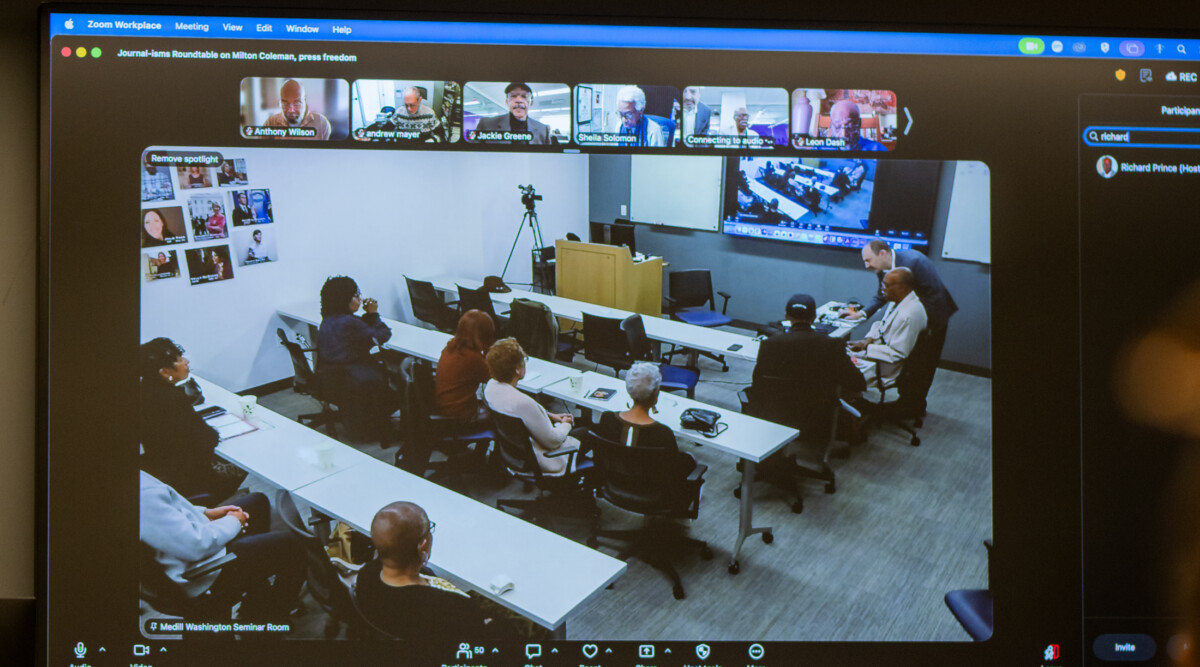
As of midday Nov. 16, some 222 people had viewed the YouTube recording of the Journal-isms Roundtable tribute. (Credit: YouTube.)
Milton Coleman, who said that as a journalist his goal was to lift up the kind of people he grew up with in his Black Milwaukee neighborhood, died at 79 on Oct. 30, 2026, at the Washington Hospital Center “after navigating a growing series of health challenges in the last few years,” as his son, Sekou Coleman, announced on Facebook.
At the Washington Post, where Coleman worked from 1976 to 2012, he was the first Black journalist to appear on its masthead. He became one of the highest-ranking Black newspaper editors in the mainstream media, as well as an industry leader, heading the American Society of Newspaper Editors as well as the Inter American Press Association, which comprises publishers of newspapers in the Americas. He prided himself on having learned Spanish. As an editor, he was known for making good stories better.
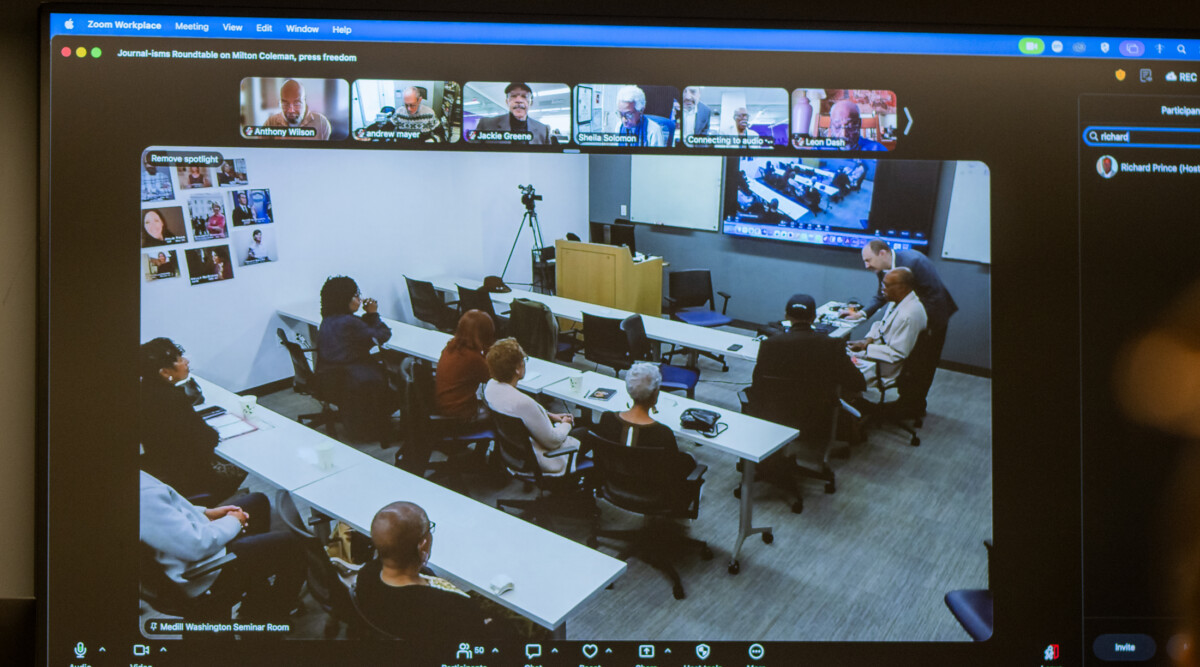
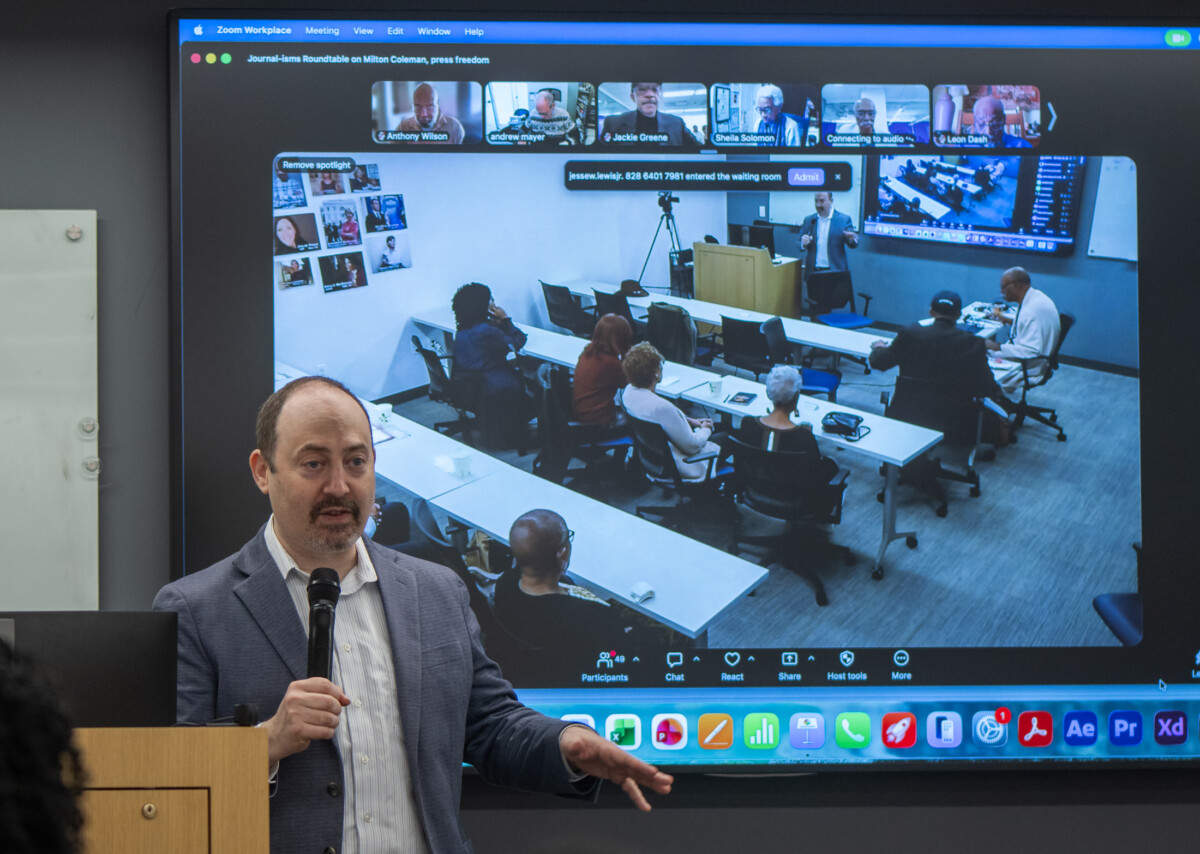
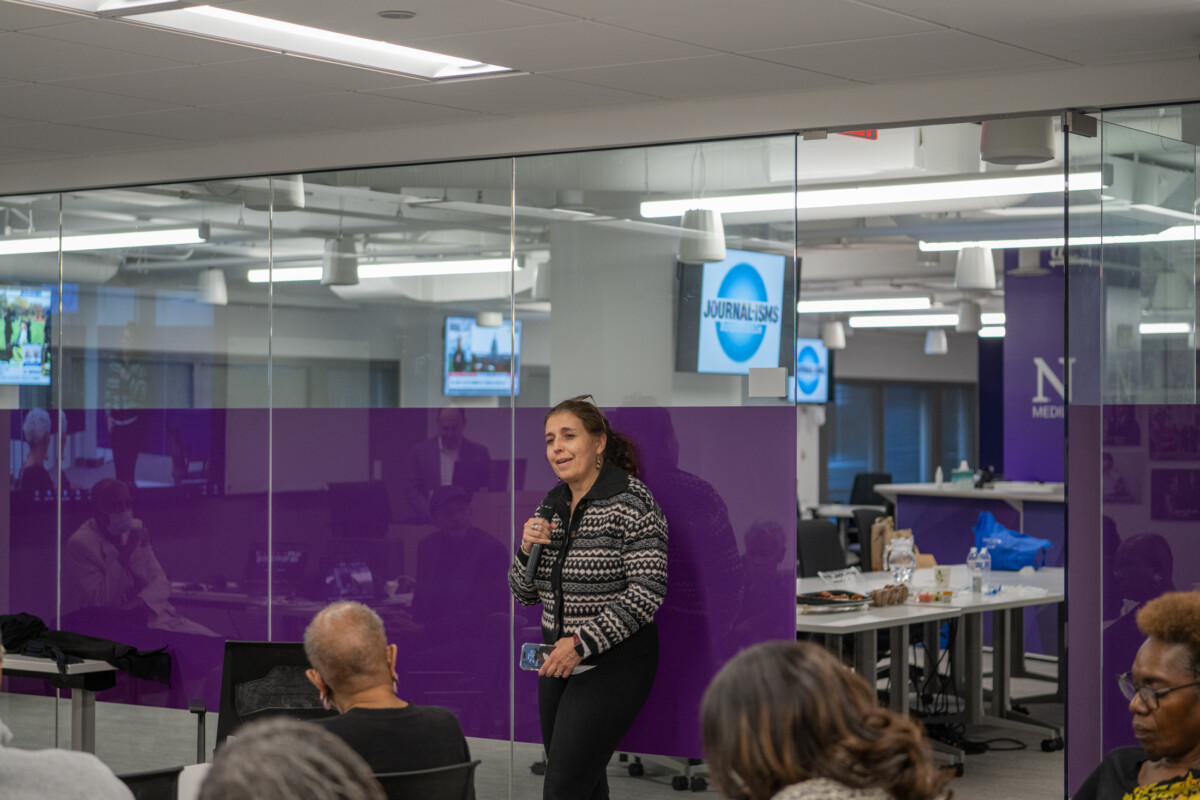
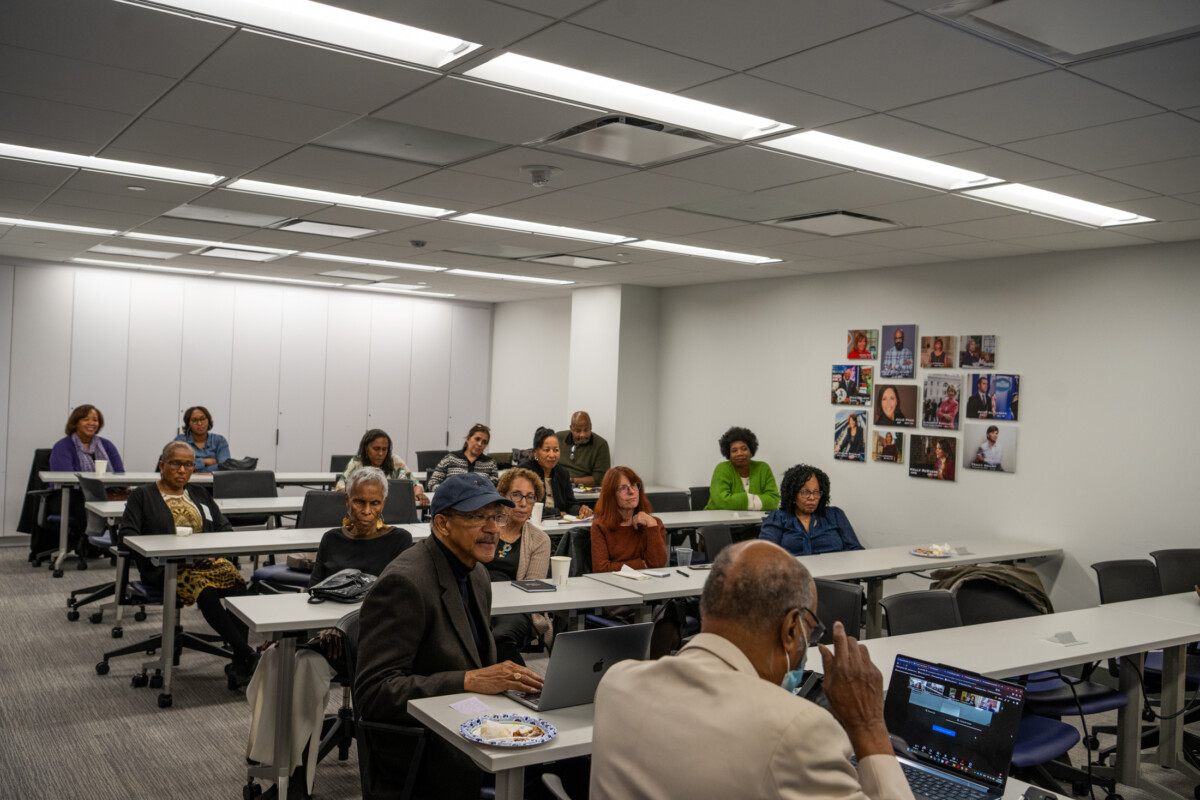
On the Sunday afternoon of Nov. 8, friends and colleagues gathered at the Journal-isms Roundtable in tribute. Fifty-eight were present, with 18 at the Washington campus of the Medill School of Northwestern University and 40 online via Zoom. As of midday of Nov. 16, some 222 had watched the YouTube recording.
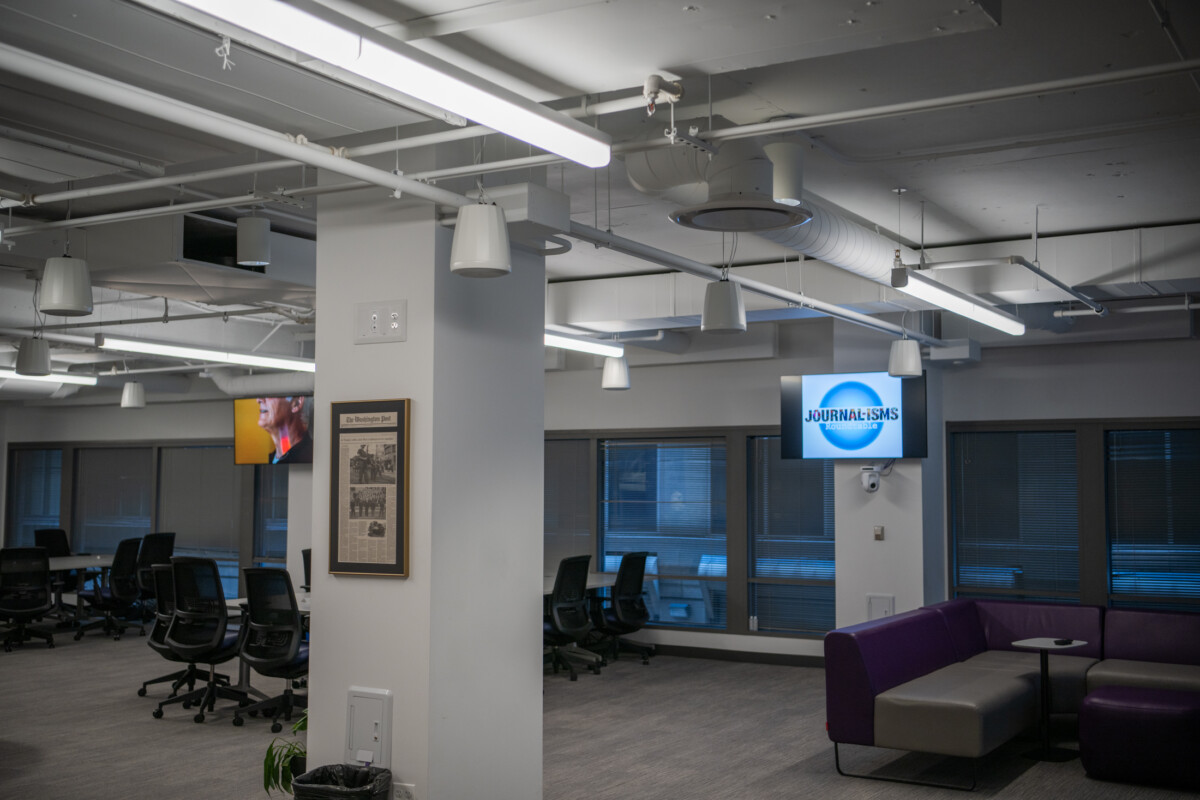
Here is a photographic record of the Roundtable, by Jeanine L. Cummins.
Summaries of the Roundtable, from rev.com AI:
This roundtable, held on Nov. 8, 2026, at the Medill Washington program, honored the life and legacy of Milton Coleman, a trailblazing journalist and diversity advocate who served as a reporter and editor at the Washington Post from 1976 onward. Coleman, part of the third generation of Black journalists at the paper, rose from City Hall reporter to city editor and eventually to the masthead, where he championed newsroom diversity and mentored countless journalists of color.
“]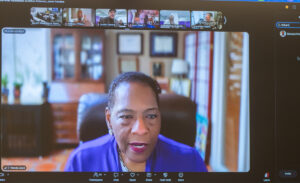
Wanda Lloyd
[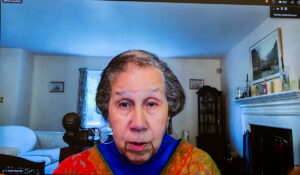
Bobbi Bowman
Colleagues and mentees shared personal remembrances highlighting Coleman’s strategic leadership, his commitment to expanding representation in journalism, and his tireless advocacy for underrepresented communities. Bobbi Bowman recalled how Coleman created new beats reflecting the region’s growing diversity and learned Spanish to better connect with Latino communities.
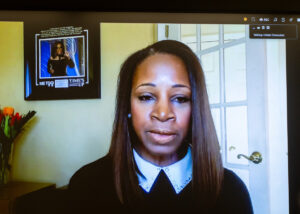
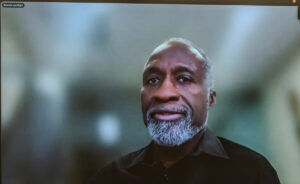
Greg Moore described how a single phone call from Coleman early in his career elevated his standing in the Cleveland newsroom and sparked a decades-long mentorship. Cristal Williams Chancellor and Caesar Andrews emphasized Coleman’s diplomatic leadership during international press delegations and his dedication to teaching journalism’s history, particularly the Black press’s role in American democracy.
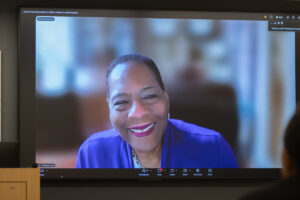
Wanda Lloyd, who organized the tribute from Coleman’s colleagues in the informal “Kitchen Cabinet” of news diversity advocates, detailed Coleman’s pivotal 1986 survey of Black journalists at the Post, which documented systemic barriers and spurred institutional reforms.
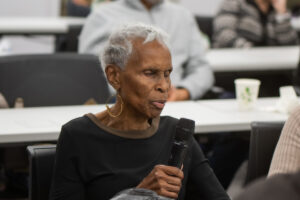
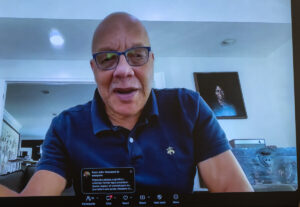
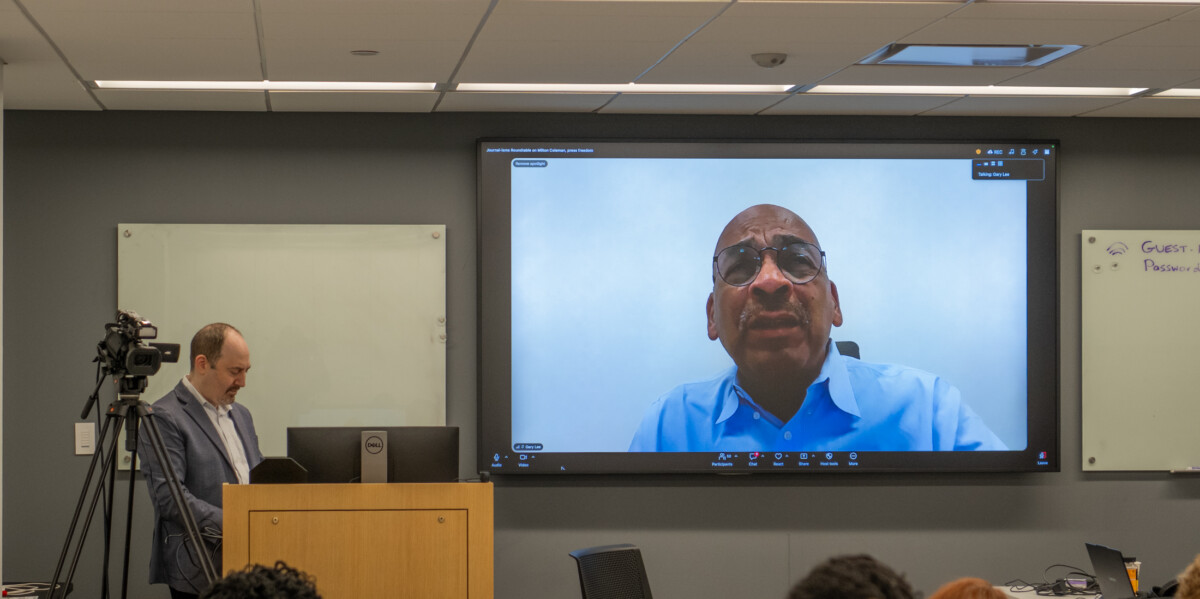
Others, including Dorothy Gilliam, Eugene Robinson, Gary Lee and Jill Geisler, remembered his integrity, generosity, and unwavering support for colleagues navigating a challenging industry.
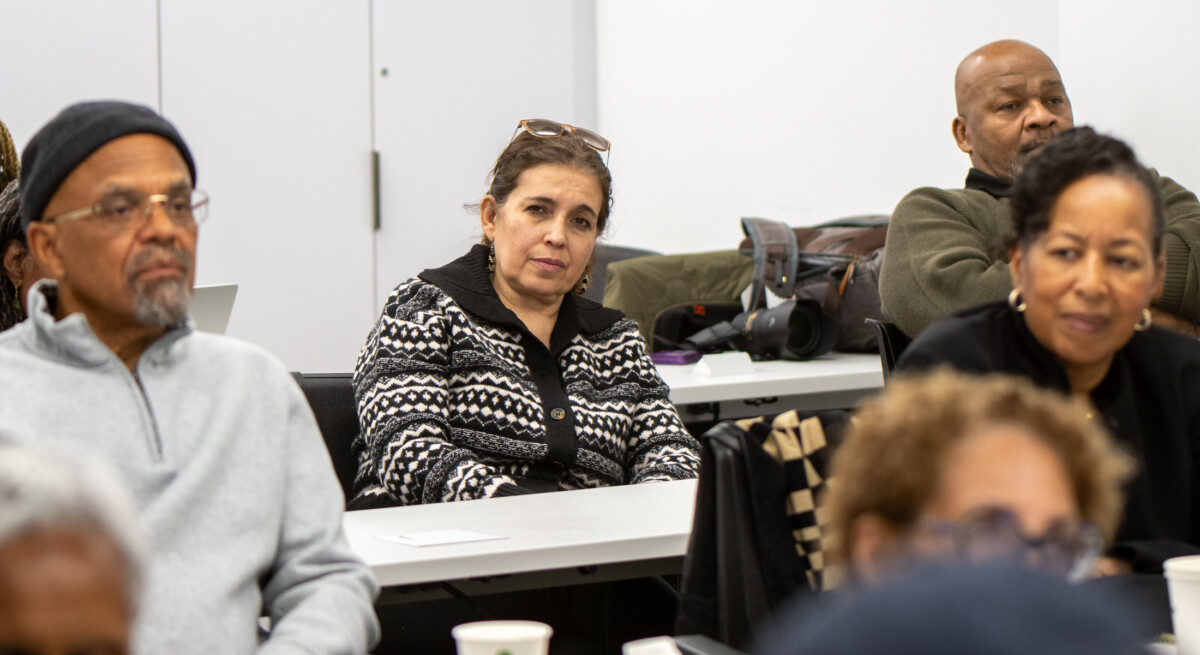
DeNeen Brown, joining from Africa, spoke of Coleman’s recent work on the “Printing Hate” project examining racist violence against the Black press, while Marcela Sanchez-Bender highlighted his advocacy for Latino journalists.
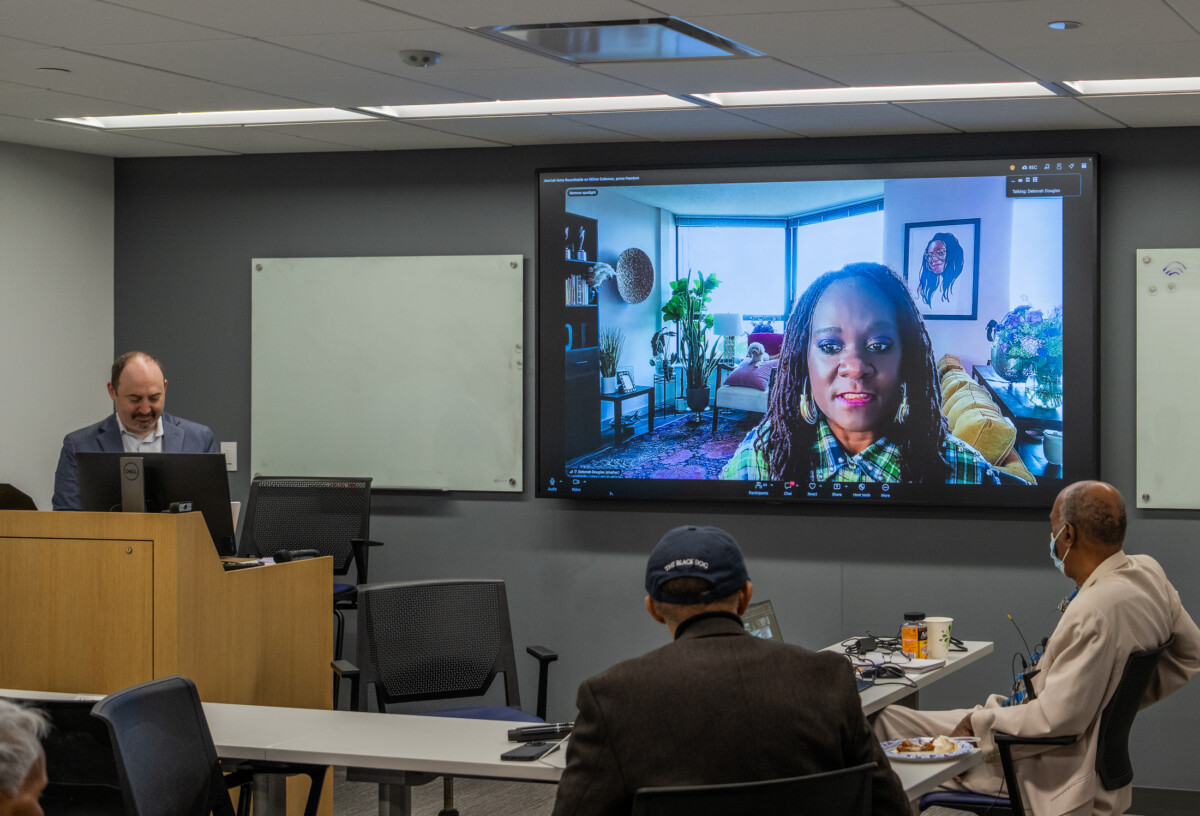
Deborah Douglas introduced a survey to assess field conditions since January 2025 and solicited amplification of resources supporting a free press.
The latter portion of the roundtable addressed contemporary press freedom threats, with Richard Prince noting pending litigation and legislative efforts to protect journalism. [For more on that, see: https://www.journal-isms.com/nabj-settles-with-rejected-executive-director/#despite-victories-work-remains-on-protecting-press ]
In addition [numbers refer to location on the video]:
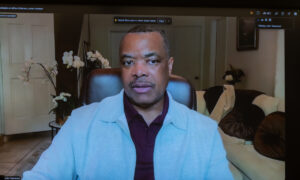
John Yearwood said that he didn’t know Coleman at The Washington Post but got to know him through IAPA (the Inter-American Press Association) [34:00]. Yearwood stated that Coleman was deeply and highly respected at IAPA for his work on behalf of journalists across Latin America and the Caribbean [34:00] [34:28]. He noted that Coleman became chairman and president of IAPA, and that his work in Latin America “really made a difference” [34:28]. Yearwood mentioned that as a young editor at the Miami Herald involved with IAPA, he looked up to Coleman and was proud of his accomplishments [34:28].
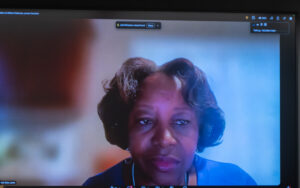
Yanick Rice Lamb, a professor of journalism at Howard University and former chair when Coleman taught there, shared a student evaluation of Coleman from Rate My Professors [35:11]. The student gave Coleman a five-star rating and wrote: “Milton is a real Howard gem. He’s honestly the best journalism professor I’ve had during my time at Howard. As a former Washington Post editor, he knows the business and trains you to report and write like a real journalist. He challenges your thoughts and beliefs and supports you throughout your reporting process. You have to give your all with him” [35:29] [35:43]. Rice Lamb noted that she was grateful to have Coleman at Howard not only in the classroom but for programs like Howard’s “Reporting While Black” series [35:11].
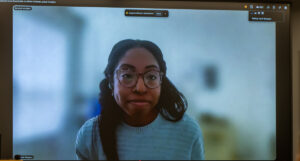
April Simpson spoke about meeting Coleman after his career at the Post when he was ombudsman at the Corporation for Public Broadcasting, while she was covering public media for Current [36:07]. They met at Busboys and Poets in Takoma Park, where Coleman reviewed her clips and told her exactly what kinds of stories she needed to do to advance her career [36:07] [36:29]. She followed his advice and was able to move on, and he continued mentoring her as recently as a couple of weeks before his death, when she called him for career advice [36:29].
Simpson shared a story about sending Coleman a grocery delivery via Instacart as a thank you for his mentorship [36:50]. She received an annoyed voicemail in return telling her, “Don’t ever do that again” [37:08].
When they spoke, he explained that while he appreciated the gesture, he wanted to be able to speak without “a whiff of impropriety” if an editor ever called him for a reference about her [37:08]. Simpson laughed recalling this, noting that Coleman was generous with his time but also “a person of integrity and strong ethics” who never wanted anything in return but for her to do her best work [37:08] [37:25]. He also advised her to be “incredibly selfish” to ensure work allowed her to live the life she wanted outside of it once she got married and started a family [37:25].
She said she came to the Washington Post through George Solomon, the sports editor, initially editing soccer coverage in both English and Spanish [1:00:08]. She later moved to the foreign desk and began writing a column on Latin American Affairs in both languages, at which point Coleman decided to support her and was “absolutely committed to making sure that I succeeded and that things went well for me and for the issues that I was covering” [1:00:25].
She noted that Coleman was beginning to learn Spanish at that time and was “always so happy to practice,” which she gave him credit for since “many people at that age don’t feel like they can learn another language, but he had no issues trying and he kept trying and he kept improving” [1:00:50].
Sanchez-Bender emphasized that Coleman did a lot for journalists, “not only African American, but a lot of Latinos,” and was involved with the Spanish-language El Tiempo Latino when it became part of the Washington Post, being “fully involved in that and very supportive” [1:01:12] [1:01:18] [1:01:19]. She concluded by stating she didn’t think many people in the newsroom were as committed to issues of Latino and minority journalists as he was, calling his loss “major” and offering condolences to his relatives [1:01:38].
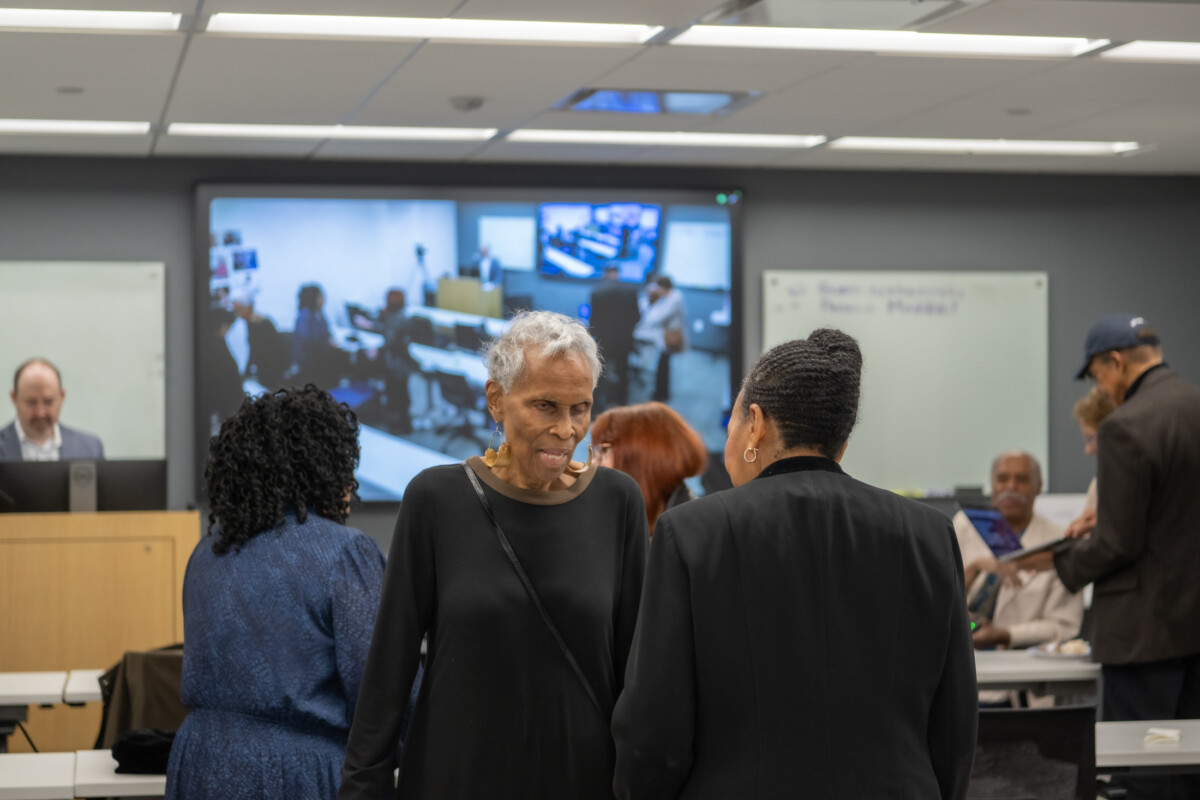
Dorothy Gilliam, shown here with lawyer Cynthia Robbins, shared that she was the first Black woman reporter at the Washington Post [38:53]. She recalled that whenever she wanted to go in a new direction, she could always get Coleman’s advice and support [38:53]. Gilliam specifically mentioned that when she wanted to start writing a column, Coleman’s support helped a great deal [39:40]. She noted that some people would criticize her columns by saying “All you ever write about is race,” and while Coleman sometimes thought the same thing, he would always try to back her up [39:40] [40:20].
Gilliam also highlighted Coleman’s work with Donald Graham, former Washington Post publisher, on a scholarship program that helped young people, particularly around Washington D.C., but also in other places, get opportunities for jobs and professions they otherwise wouldn’t have had [40:39]. She noted that Graham was a great admirer of Coleman, and that Coleman put the same intensive attention into this work as he did everything else [40:39] [41:52]. Gilliam concluded by saying it had been one of the joys of her life to have Coleman’s support, to have him challenge and disagree with her, but that in the end it was always a step forward, and she was sad about his loss but happy for the gigantic imprint he made on the press and on those who knew him [41:52] [42:34].
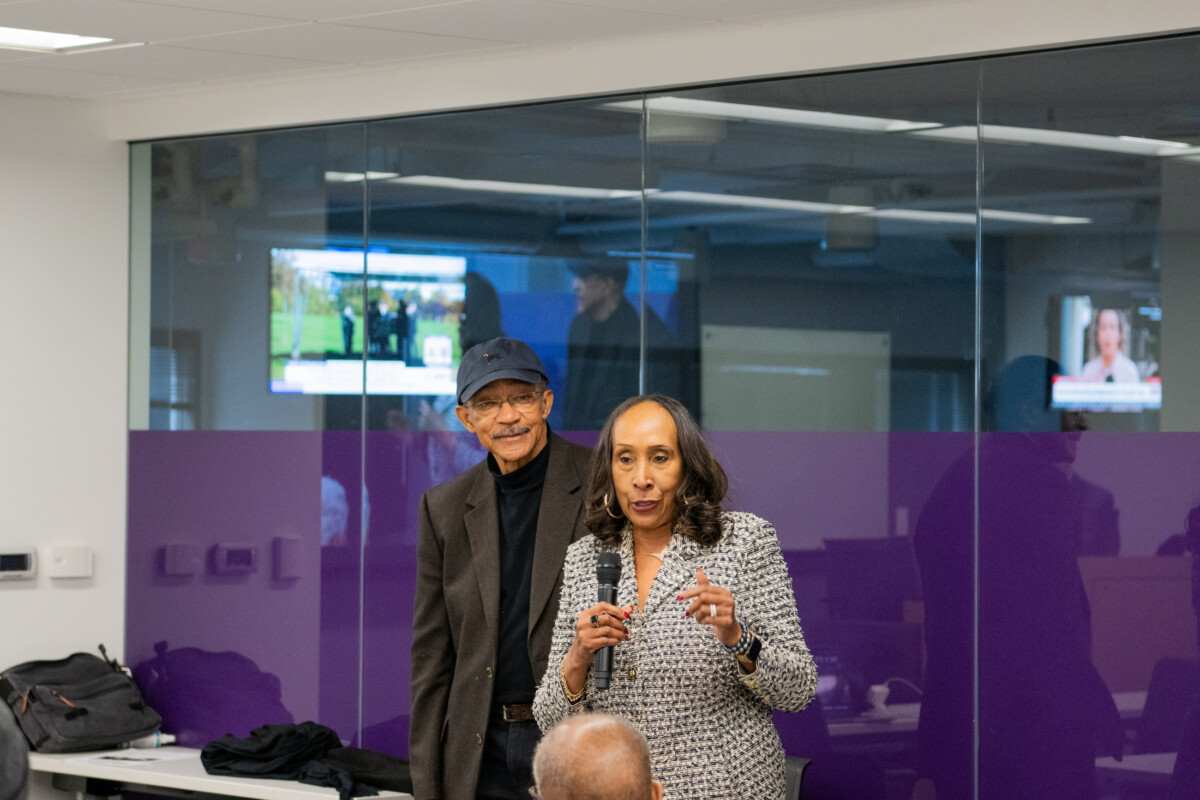
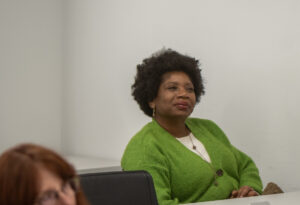
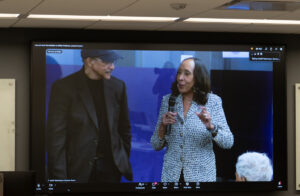
Sheila Brooks, Ph.D., shown with Jackie Greene, shared that she never worked with Coleman in a newsroom, as she was a television journalist while he was a newspaper journalist [53:05]. She met him 15 years after leaving television news, when she started her own business and needed to get a client’s story in the Washington Post [53:05]. Brooks and her staff pursued Coleman for a year to cover a story on education for D.C. Public Charter Schools, and he eventually assigned it to education reporter Marcia Greene, resulting in a full-page story in the Post [53:26]. She emphasized that Coleman “never gave up on anyone, not a journalist, not a mentee, and not a former working journalist,” noting that many journalism colleagues abandon those who leave day-to-day newsroom work, but he never did [54:00].
Others, some of whom were not in attendance, also contributed thoughts.
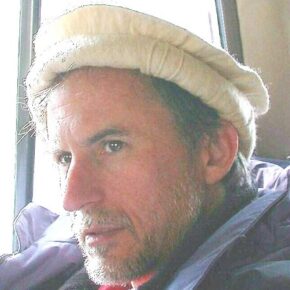 James Rupert: “Ohhh, my brother Richard! I wish I could make this gathering! … In my long introduction to newspaper journalism (as a solitary stringer in Morocco, Tunisia, India, Afghanistan), the learning came slowly — until The Post hired me and assigned me first to Mike Getler’s Foreign Desk and then to Milton Coleman’s Metro team (as the night cops reporter). THAT was my master’s degree! Milt’s brilliance, integrity and commitment to values spoke louder than any specific piece of advice or instruction that I can remember. And the first time I saw him working in the newsroom in his uniform as a Boy Scout leader, I understood how fully (and unsurprisingly) that commitment and those values infused every part of his life — and not just the bits of it that I was being privileged to share.
“I’m pretty sure Milt never remotely understood how big his impact was on me — and my guess is that if we multiply that hidden impact of his mentorship on so many hundreds of us over his career, its final measure is, well, immeasurable.
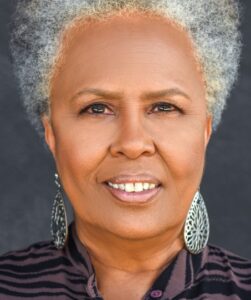 Patrice Gaines: Just FYI (and anybody else who wants to know cause it’s no secret), Milton saved my job. I had lied on my job application and said I did not have a criminal record. When they found out the truth, they were going to fire me, and he fought for me. The decision was then left up to Ben Bradlee, who announced they would keep me. Needless to say, I’ll never forget Milton.
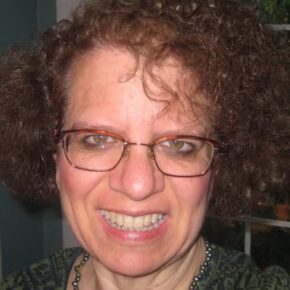 Amy Goldstein, another former Post colleague:
- It felt like a real old-home week, seeing former colleagues — e.g. Dorothy Gilliam — who I think of as intrinsic to The Post of my era but I hadn’t seen for a long time.
- It was sweet to hear anecdotes about Milton that reminded me of my own interactions with him, even though I wouldn’t say I was close enough to him to consider him an outright mentor. His humor, his standards, his push for diversity, his concern about ethics.
- Learning about ways that Milton supported our profession and individual journalists outside The Post newsroom — things that, as I heard them Sunday, seemed consistent with the Milton I knew but I’d never known of before.
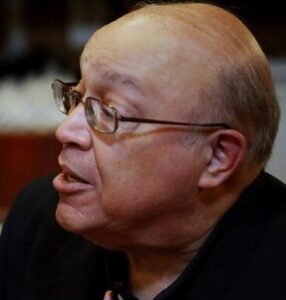 Adam Powell, on the abbreviated press freedom discussion:
Had a great anecdote about media access: When Morley Safer’s award-winning Cam Ne story ran on the CBS Evening News in 1965, I was the 4p-12m desk assistant in NY. President Johnson had gone ballistic, calling CBS CEO Bill Paley demanding Safer be fired, saying DoD would pull his credentials, etc. etc. etc.
What did Paley do? He called the newsroom and asked to speak to the editor on duty. I screened the call and told Pete Carlisi, the 4p-12m editor, that someone who said he was Bill Paley was on the phone. “That’s an inside line@” Carlsi snapped and picked it up. All I heard was: Yes, sir. Yes sir. Yes sir. Consider it done.”
“What did he want?” I asked. “Paley wants us to ask the CBS stations to run the Safer report in full (it ran more than three minutes) at the very start of the local newscasts at 10 and 11 pm.” Wow. Now that is how you respond to threats from politicians.
Years later, I had a similar run-in when I was VP/News at NPR and an influential member of Congress called me to demand we kill a story that was about to run on “All Things Considered.” I immediately thought of Paley and the 1965 Safer report. “Sir,” I replied, “please understand what I now have to do.” “Yes I knew you would see it my way.” “No, I have to go down the hall and make absolutely certain that story runs tonight.” “Son, don’t you know who I am?” And I invited him to come to 2025 M Street, or I would go to his office on the Hill, and we could have a friendly meeting. He hung up.
The story ran, of course, but I never told anyone in the newsroom why I had walked down the hall to move the story higher in the broadcast. And now neither Art Silverman, then exec producer of ATC, nor I can even remember what the story was. PS: Nobody ever called me again from the Hill.
Adam Clayton Powell III
Executive Director, USC Election Cybersecurity Initiative, and
Director, Washington Programs
USC Annenberg Center on Communication Leadership
More Photos
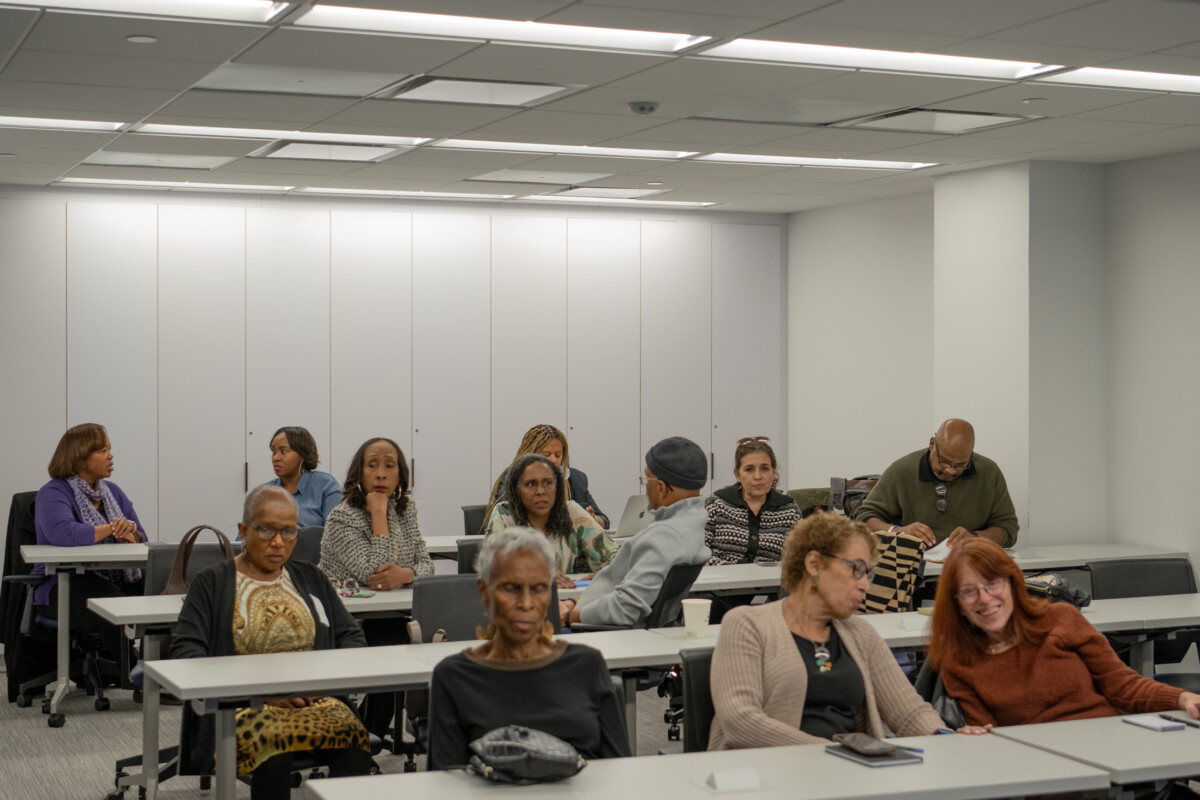
Jeanne Fox-Alston leans over to talk with Margot Williams
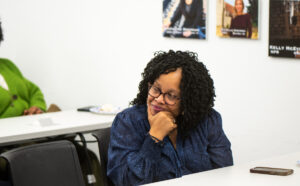
Marcia Davis, another former Washington Post colleague.
Jackie Greene, left, with Sheila Brooks, above and below.
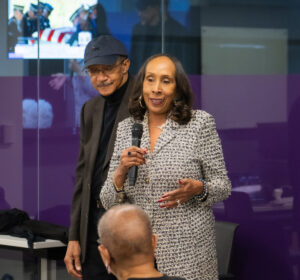
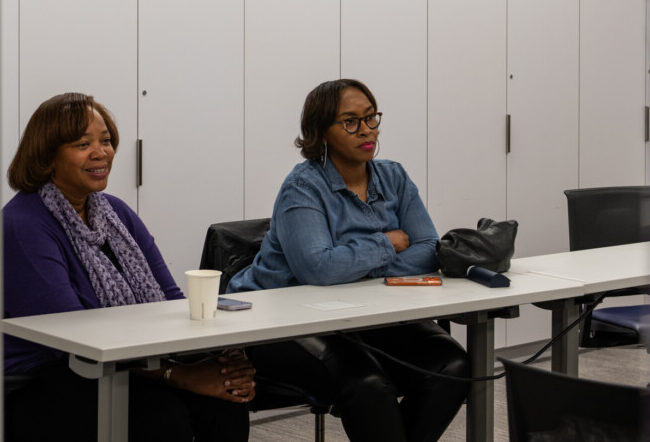
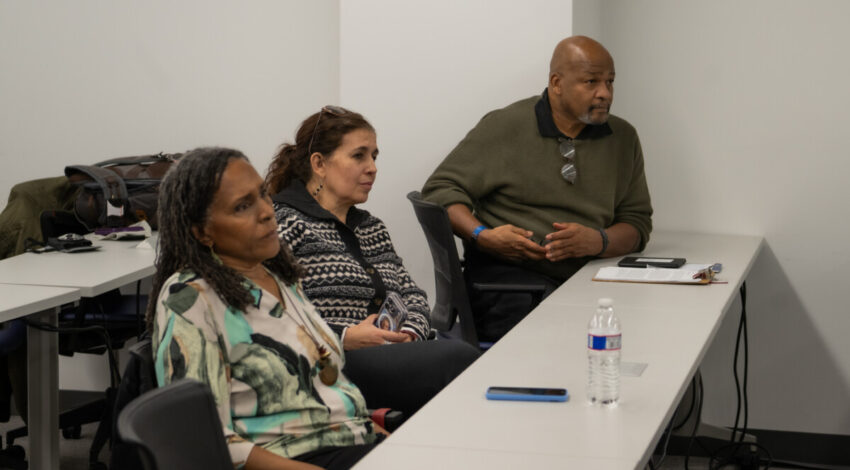
From left: Lynne Adrine, Marcela Sanchez-Bender and John C. Watson.

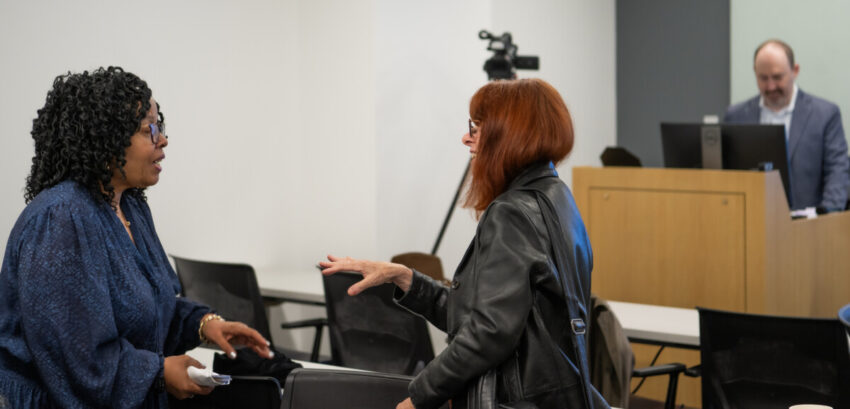
Sekou Coleman posted Friday on Facebook, “While we are still sorting the details, I can say that we are planning for late in the month of January at Peoples Congregational United Church of Christ in Washington, DC. We hope to confirm the actual date within the next few days. Instead of cards and flowers, we would like to encourage people to consider donations to charitable organizations that my father held in high regard and will announce those entities when we confirm details for the service.”
- Inter American Press Association: Milton Coleman, former IAPA president, leaves a legacy of commitment to journalism and press freedom (Nov. 2)
- Journal-isms: Milton Coleman Dies, Progeny of ‘the Projects’ (Nov. 1)
- Adam Nossiter, New York Times: The Washington Post’s First Black Masthead Editor Has Died (Nov. 8, updated Nov. 11)
- Harrison Smith, Washington Post: Milton Coleman, a barrier-breaking editor at The Post, dies at 79 (Nov. 1)
