

Astronaut Takes Cue From ‘Whitey on the Moon’:
Victor Glover is Pilot for Crew Making Lunar Orbit
ABC’s Janai Norman Goes Online to Explain Exit
Bob Law Dies; ‘Truth-Teller’ and Talk-Radio Activist
McCoy Cuts Staff at Newly Acquired Indy Station
Journalists Forced, Squeezed Into Metal Containers
Reversal: WaPo Editorial Board Opposes DEI Program
Journos Uncover Canadian Spying on Indigenous
. . . . UC Berkeley Links With Indigenous Journalists
Attiah, Fired by WaPo, to Be Honored by SPJ-D.C.
Short Takes: Ana Cabrera; University of Alabama magazines; Portland (Ore.) Skanner; Roy S. Johnson; Chuck Todd and J.A. Adande; multilingual newsroom for immigrants new to Maine; Supreme Court justices’ own immigration roots; Fox News’ soft-pedaling of inflammatory comments;
College newspapers’ ICE trackers; Philadelphia Tribune and Project 2025; Seattle’s Mary Kam; Sudeep Reddy; People magazine’s Temptations gaffe; W.E.B. Du Bois; China and Caribbean media; outrage and smiles from the “PBS News Hour.”
Homepage photo: Victor Glover in white flight suit, by NASA (2020)
Updated April 4.
The National Aeronautics and Space Administration (NASA) prepared this video about astronaut Victor Glover, one of the four astronauts who blasted off from Kennedy Space Center in Florida Wednesday. (Credit: NASA/YouTube)
Victor Glover is Pilot for Crew Making Lunar Orbit
“Once at a space conference I attended in Colorado Springs, NASA astronaut Victor Glover — the pilot of NASA’s upcoming Artemis 2 mission to the moon — said something that caused a bit of a stir,” Tariq Malik wrote Tuesday for Space.com, a niche publication that has highlighted an angle missing from most other coverage of the first African American chosen to orbit the moon.
“It was April 17, 2023, just two weeks after NASA had named Glover to the Artemis 2 crew, a lunar flight that will make him the first person of color ever to visit the moon. Glover was there at the Space Symposium conference with other astronauts to talk about, well, space.
“But he also told a group of reporters about his weekly tradition: Every Monday, he listens to ‘Whitey on the Moon’ on the way to work at NASA’s Johnson Space Center in Houston.”
“Whitey on the Moon” is a spoken-word poem by the late Gil Scott-Heron, “published and set to music in 1970. It recounts the challenges of doctor bills, taxes and high rent for Black Americans at a time when the U.S. was spending billions to send astronauts to the moon and beat the Soviet Union during the Cold War space race. You can read the full poem here,” Malik’s story continued.
” ‘It’s funny, because that Space Symposium caused me a lot of grief in the next months because people tried to quote me out of context,’ Glover told me in an interview last September. ‘And it ain’t about racism. It’s about the human condition.’ ”
Glover also “makes it a habit” to listen to Marvin Gaye’s “Make Me Wanna Holler,” also “from the white-dominated Apollo era,” Marcia Dunn added Tuesday for the Associated Press.
Of “Whitey on the Moon” (above) and “Makes Me Wanna Holler,” Victor Glover told the Associated Press, “I listen to those for perspective. It captures what we did well, what we did poorly.” (Credit: YouTube)
Glover, a U.S. Navy captain and astronaut from Pomona, Calif, who turns 50 on April 30, was one of four astronauts who blasted off from Kennedy Space Center in Florida Wednesday on a monumental 10-day mission to circumnavigate the moon.
The decision for astronauts to circle the moon without landing occurred is viewed as a “dress rehearsal” for an actual landing planned later.
“That song is a reminder that everybody wasn’t having a good time in 1968 when we launched the first Apollo missions. People were struggling,” Glover said of the Scott-Heron composition. “Some people were like, ‘These bills and these potholes, like my condition hasn’t been improved by NASA.'”
“He started listening to Scott-Heron’s song and poem as a way to keep a perspective that many people out there aren’t space-loving cheerleaders, and as a way to share that perspective with his colleagues,” Glover told Malik.
” ‘That song reminds me that, at that time, that community, which is very similar to the community I grew up in, they didn’t feel heard,’ Glover told me. ‘And so it’s a reminder to me that there are more perspectives and more stories out there than you’ll hear from the people cheering for NASA on a regular basis.’
“But those people? We work for them too.”
Scott-Heron’s poem begins:
A rat done bit my sister Nell.
(with Whitey on the moon)
Her face and arms began to swell.
(and Whitey’s on the moon)
“Space.com launched in New York City on July 20, 1999, the 30th anniversary of the Apollo 11 moon landing, with the goal of covering the latest discoveries and missions in space like never before,” the company explains.
“The company was originally founded by news anchor Lou Dobbs and Rich Zahradnick, with Zahradnik serving as our first President, a position later filled by Sally Ride — the first American woman in space. Apollo 11 commander Neil Armstrong, the first man to walk on the moon, was on the board of directors.”
- Brandon Caldwell, theGrio: As Victor Glover makes history with Artemis II moon mission, a look back at other notable Black astronauts
- Craig Fehrman, the Conversation: Astronaut Victor Glover is the latest in a long line of Black American explorers − including York, the enslaved man who played a key role in the Lewis and Clark expedition
- Miriam Fauzia, Dallas Morning News: For dad of Artemis II astronaut Victor Glover, son’s journey carries personal weight — Glover’s mission marks a new milestone — one his father watched from North Texas. (April 9)
- Noah Haggerty, Los Angeles Times: A SoCal native is set to pilot NASA’s lunar mission — and become the first Black person to reach the moon
- Stacy Liberatore, Daily Mail: Artemis II astronaut shares the Bible’s ‘greatest commandment’ before losing contact during Moon flyby (April 7)
- Katrina Miller, New York Times: Victor Glover, Artemis II’s Pilot, Will be the First Black Astronaut Around the Moon.
ABC’s Janai Norman Goes Online to Explain Exit
Janai Norman has broken her silence on her abrupt exit from “Good Morning America” after ABC decided not to renew her contract, Courtney Ciandella reported Friday for the US Sun.
 “The news anchor, 36, took to Instagram on Friday evening to speak about her sudden departure.” “Norman has been with ABC News since 2016 and joined ‘GMA Weekend’ as co-anchor in 2022.
“I hoped that we would have more time and it’s been hard on me that our time has been cut short,” Norman said in measured tones. ” have loved my job. It has been a joy to connect with my coworkers and with viewers to help keep you informed and entertained and to create this community. So it really breaks my heart that I don’t get to say goodbye. So sorry that I don’t get to say goodbye. It would have been fun,” she added after taking a deep breath.
“But I have these three young kids and I have worked weekends their whole lives. And so now, they get more of me. And that is worth everything. So, stay tuned. I’m sorry. I feel you. and thank you. To every single one of you who has reached out with such kind and validating words I have needed and I appreciate it.”
ABC’s decision was first reported Wednesday by Natalie Korach of the Status newsletter and attributed to “Multiple people familiar with the matter.” Korach wrote, “It is not clear who — if anyone — will replace her on the show, which is also used to farm potential talent for the flagship weekday edition of the show
Kui Mwai added Thursday for Blavity that “Norman’s tenure on GMA saw her embrace wearing her natural hair on TV — a decision she opened up about in a 2019 essay for ABC News.
“For nearly 30 years, I was conditioned by a standard of beauty that left me out. I was not included. TV, magazines, society — by omission — told me I was not beautiful, my hair needed to be bone straight, my eyes blue or green, my skin fair, and I didn’t make the cut,” she wrote.
“Norman explained that upon learning she was pregnant in 2017, she knew she ‘wanted my kid to grow up loving themselves exactly as they are,’ and the best way to encourage that was to ’embody that confidence and sense of self-worth in myself.’
“For the GMA Weekend anchor, that looked like ‘accepting my hair as it grows from my head.’
“That decision kick-started the #FreeTheCurls movement that encouraged other Black journalists to embrace their natural hair on camera.” (Added April 4)
Harlem Network News produced this salute and fundraiser for Bob Law in 2024 after Law suffered a stroke. (Credit: YouTube)
Bob Law Dies; ‘Truth-Teller’ and Talk-Radio Activist
Bob Law, a New York Black talk-radio host who went national and played a role in launching Jesse Jackson’s 1984 presidential campaign, had been a field secretary for the Student Non-Violent Coordinating Committee and was instrumental in the 1995 Million Man March, died Monday. He was 86 and died of end stage kidney disease, family spokesperson Eugene Carson told Journal-isms.
“He was a radio commentator who knew more about the subject than his invited guest, and he could elaborate on it extensively,” Herb Boyd wrote Thursday in the New York Amsterdam News. “That was his style, no matter the station or format, and for more than 50 years, he never bit his tongue and championed a host of issues that other broadcasters refused to touch.”
Fatiyn Muhammad, WBLS executive producer and radio host told Our Time Press, “The passing of Bob Law marks the transition of not just a man — but a movement, a messenger, and a mighty voice that spoke unapologetically for Black people, Black truth, and Black empowerment. Bob Law was more than a radio host — he was a pillar in Black Talk Radio, a fearless truth-teller, and a community soldier who understood that the microphone was not just a tool for conversation… but a weapon for liberation. As the longtime host of ‘Night Talk’ on WWRL Radio, Bob Law created a platform that became essential listening in the Black community. ‘Night Talk’ wasn’t just a show — it was a classroom, a battleground, and a sanctuary.”
Law began his career at WWRL in New York as a community affairs director before rising to program director and launching ‘Night Talk’ in 1981, which went into national syndication through the National Black Network and was considered the first nationally broadcast Black radio talk show in the country.
Student Minister Arthur Muhammad of Muhammad Mosque No. 7, told Our Time Press, “Bob Law is known mostly for his sultry, smooth captivating voice. But, what needs to be highlighted is his ability to organize our people around efforts that were in the news, but also efforts that did not make the news. He took issues that weren’t on the front page, or on the nightly news – but were issues of injustice, and he organized and rallied around these issues. The results of his clarion call – the marching, the rallying, the protesting–that made the front page news. Through his organizing of our people, he made the news, and he was the news.”
Boyd also wrote, “One of his most notable achievements as a community organizer was co-chairing the New York contingent of the historic Million Man March with Dr. Ron Daniels in 1995. Daniels, who spearheads the Institute of the Black World 21st Century, said of Law that ‘He had this unique style of posing a question and laying out solutions. I had the honor of hosting Night Talk before American Urban Radio Network decided to bring on the beloved Bev Smith. You can bet that in the ancestor realm, Bob will be organizing talks and Pan-African strategies.’
“He added that he was planning to have Bob on his show on WBAI, but didn’t hear back from him, noting that the fearless broadcaster was challenged by daily trips to dialysis.”
Services are scheduled for Friday, April 10, at 6 p.m. at Historic First Church of God in Christ, 221 Kingston Ave., Brooklyn, N.Y. 11213, with viewing 1 p.m. to 4 p.m. Thursday at Frank R. Bell Funeral Home, 536 Sterling Place, Brooklyn, N.Y. 11238 and a wake service at the funeral home at 4 p.m. Thursday. (Added April 4.)
- Damon K Jones, Black Westchester: The Life and Legacy of Bob Law and the Power of Independent Black Radio
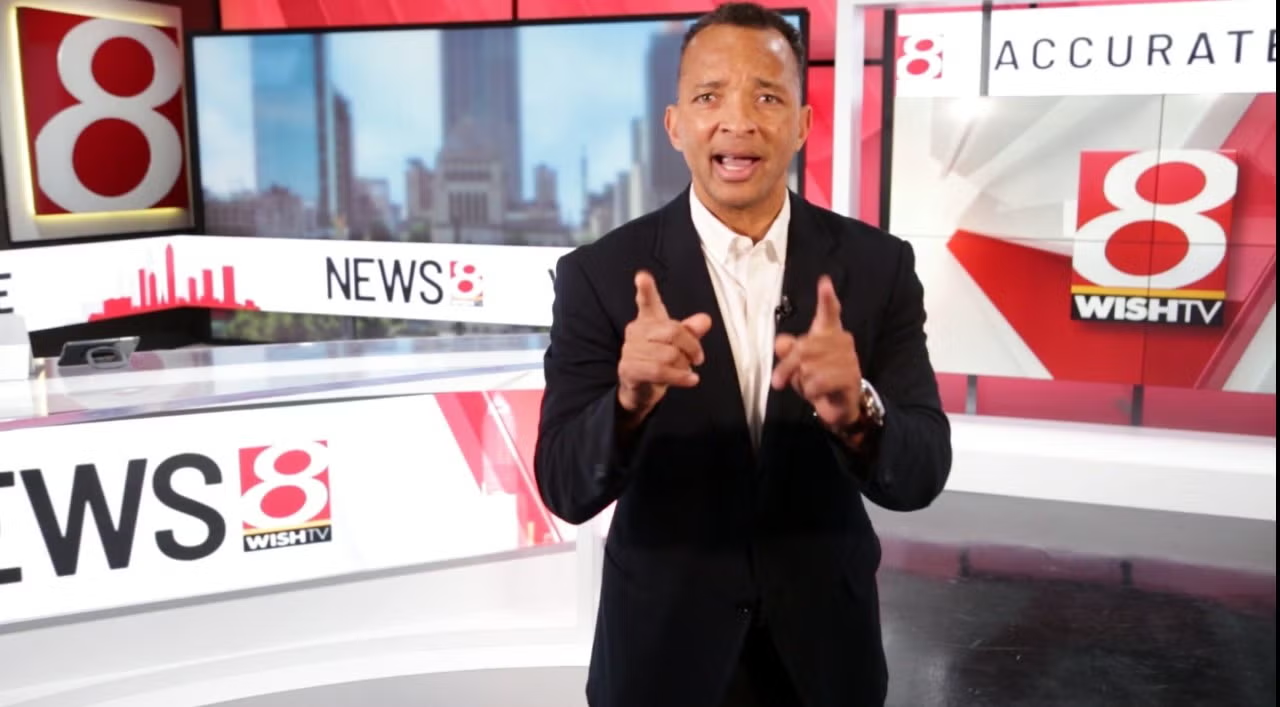
DuJuan McCoy’s acquisition of WRTV in Indianapolis has been applauded as a boost for Black ownership of broadcast stations.
McCoy Cuts Staff at Newly Acquired Indy Station
Circle City Broadcasting, led by DuJuan McCoy, now one of the most prominent African American television station owners, “laid off a significant portion of WRTV staff after completing its acquisition of the Indianapolis ABC affiliate from E.W. Scripps Co.,” Newscast Studio reported Wednesday.
“The cuts came the same day the local media company finalized the purchase, expanding its holdings to three television stations in the Indianapolis market, the company said in a statement.
“The move comes weeks after the Federal Communications Commission greenlit the acquisition, bucking a longstanding regulation meant to prevent local monopolies,” Heather Bushman added for the Indianapolis Star.
Newscast Studio added, “Several on-air staffers, including meteorologists Kyle Mounce and Todd Klaassen, anchor Nicole Griffin and community reporter Nico Pennisi, confirmed on social media that March 31 was their final day. Some employees described widespread job losses, though the company has not released official staffing figures.
“ ‘Despite the quick ending for us all this place gave me so much,’ Klaassen said in a Facebook post.
“ ‘While I’m smiling — it’s what I always do (nickname: Smiley) — I’m also hurting,’ he said. ‘I gave everything to my job: long nights, early mornings, holidays, covering too many tornado warnings (sorry if I interrupted your programming), and time away from my family.’
“Circle City said it offered positions to some WRTV employees and provided severance packages to others based on contract terms or tenure. Employees not immediately retained may apply for open roles through a standard hiring process, the company said.”
When McCoy reached another milestone in 2017, the National Association of Black-Owned Broadcasters noted, ” Today, even though constituting 14% of the total population, African Americans own only 12 full power commercial television stations out of the 1300 full power commercial television stations in the United States.”
- Kerwin Speight, Poynter Institute: A local TV newsroom disappeared overnight. It’s a warning sign for what’s next.
Journalists Forced, Squeezed Into Metal Containers
“A rebel group in eastern Congo has detained civilians, including two journalists, in metal shipping containers without light or ventilation, an advocacy group said,” Mark Banchereau of the Associated Press reports, in an egregious attack on journalists overshadowed by others elsewhere, including Tuesday’s abduction of American freelance reporter Shelly Kittleson in the center of Baghdad, and last Saturday’s killing of three Lebanese journalists in a targeted Israeli drone strike.
 In the Great Lakes area of Africa, “Journalists’ enemies take many forms,” Reporters Without Borders said this week in a special report. “Reporters are squeezed between armed violence, political pressure, economic suffocation and disinformation, all of which undermine the public’s right to reliable information in the long term.”
On the journalists held in metal containers, the press freedom group, known by the French acronym RSF, said “the Rwanda-backed M23, which controls parts of eastern Congo, used the containers in the city of Goma as makeshift detention cells under ‘inhumane’ and ‘degrading’ conditions.
“Using witness accounts, satellite imagery and photos collected in 2025, RSF said at least two journalists were among those detained in the containers, which were installed at the compound of the province’s legislative assembly in Goma. Witnesses’ identities have been withheld for security reasons.
“As many as 80 detainees at a time were placed inside a container, without light or ventilation and allowed out only once a day. Witnesses said they received minimal food, while some reported routine beatings. According to the testimonies, conditions were extreme — suffocating heat by day and cold at night — with deaths reported. Survivors were often held for weeks before being transferred to other locations.”
There have been no updates since the March 24 report.
Separately, the Inter-American Press Association Tuesday named “Eight Latin American countries with severe restrictions on freedom of expression.”
“The group of countries in the ‘No Freedom of Expression’ category — comprising Cuba, Venezuela, and Nicaragua — is followed by eight countries in the ‘High Restriction’ category: Ecuador, Bolivia, Peru, Honduras, Mexico, El Salvador, Cuba, and Haiti.”
From the Committee to Protect Journalists:
Also:
- Mohamed Atim, Sudan Tribune: Three years of silence: A Sudanese journalist’s journey from a digital dead zone (March 22)
- International Press Institute: The information frontline — Press freedom and the security crisis in the Sahel
- Bashir Mbuthia, Eastleigh Voice, Kenya: Abducted Ugandan journalist charged over fake news on First Lady’s death
- The Monitor, Uganda: Journalist abducted in Kampala after radio show
- Maurice Oniang’o, Columbia Journalism Review: Inside an East African Investigative Newsroom That Has Defied a Decade of Pressure (March 24)
- Reporters Without Borders: Cuba: Surveillance and restrictions on journalists intensify in the context of demonstrations over the energy crisis
- Carlos Alejandro Rodríguez, CubaNet: Mike Hammer: “I am impressed by the courage of independent journalists in Cuba”
Reversal: WaPo Editorial Board Opposes DEI Program
In a reversal of longstanding policy, the Washington Post editorial board, under owner Jeff Bezos choice Adam O’Neal, has come out against a diversity, equity and inclusion program.
 As the Monday editorial, “The government’s DEI complex lives on,” explains, “The Native Hawaiian Health Scholarship Program pays tuition and other expenses for students studying to work in the medical field, including as doctors, dentists, nurses or social workers. After their studies, recipients of the scholarship agree to work in underserved parts of Hawaii. Some members of Do No Harm want to participate in the program, but are excluded because of their race.”
The Post’s AI summary of the more than 700 comments shows the editorial has become yet another way the Post, which has hemorrhaged circulation after a Bezos-ordered rightward editorial turn followed by staff resignations, is turning off readers:
“The conversation explores strong criticism of the Washington Post’s editorial board, particularly regarding their stance on a scholarship program for Native Hawaiians. Participants express frustration over what they perceive as a right-wing shift in the editorial board’s views, accusing it of ignoring broader issues like systemic racism and the Trump administration’s policies.
“Many comments highlight the importance of diversity, equity, and inclusion (DEI) initiatives, arguing that the editorial fails to acknowledge the historical and cultural context of the scholarship program.
“There is a recurring sentiment that the editorial board lacks depth in its analysis and is out of touch with the needs of marginalized communities.”
Many complained that the editorial was ahistorical. Part of that history, a paper by Noelani Nasser for the University of California’s Law Constitutional Quarterly explains, is that “historical events in Hawai’i from 1778 to the twenty-first century . . . demonstrate the atrocities and injustices of American imperialism that prevented the Native Hawaiians from profiting from the islands’ rich lands in a period of immense economic growth, stemming largely from agricultural developments.
“As a result of Americans seizing the Hawaiian lands for their own economic benefit and their subsequent disregard for the plight of an entire indigenous culture and people, Native Hawaiians are left by the wayside. American imperialism systematically disregarded the value of this native group’s culture and history and now only calls for remembering Native Hawaiians when it serves the interests of furthering their imperial agenda.”
A newsroom manager with a Hawaiian background could have explained the history, one Post alum told colleagues. Replied another, “there is nothing wrong with editorial writers seeking context on issues. The point is that they had an expert right there and apparently were too lazy to talk to her.
“And they wouldn’t have had to say anything about the position they intended to take (and one would hope they didn’t land on a position without doing thorough research). All they had to say was, Tell us about the reasoning behind this Native Hawaiian Health Scholarship Program. Then, they could have addressed all the issues behind the program, rather than focusing on the narrow issue of whether Native Hawaiians benefit from Native Hawaiian health care providers. If they want to knock down the other arguments for the program, that’s fine, as long as they understand that they exist.”
O’Neal did not respond to a request for comment.
- Jessica Guynn, USA Today: Congressional Black Caucus scholarships discriminate, lawsuit alleges
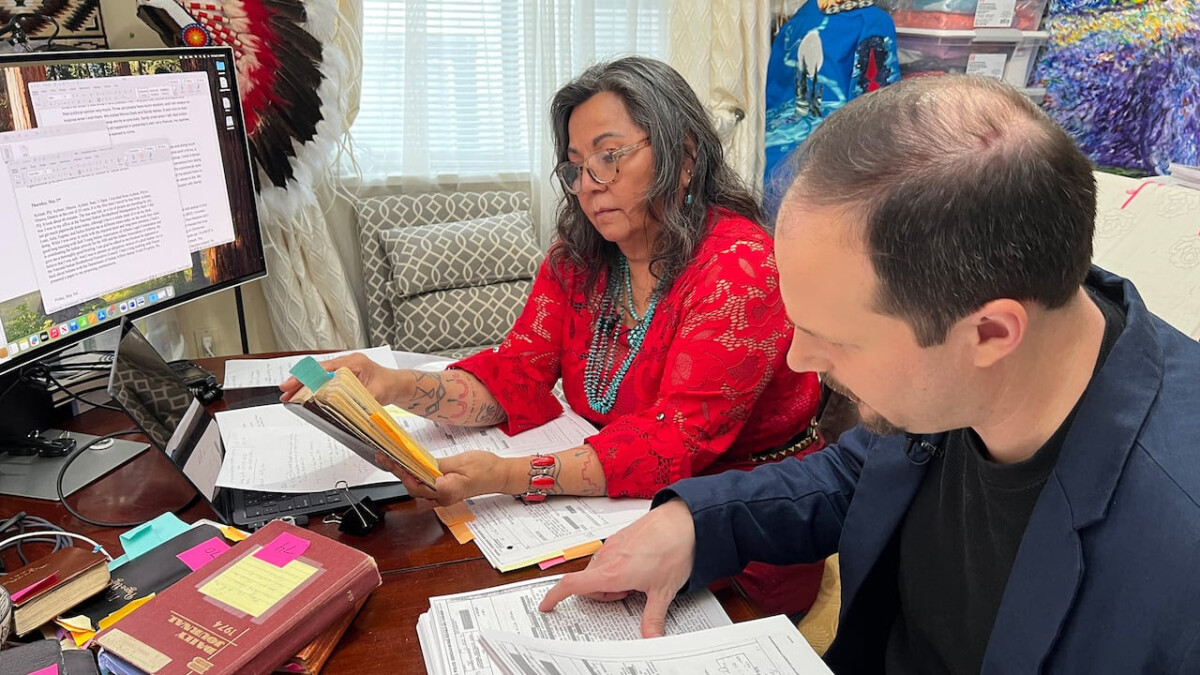 Doreen Manuel and Brett Forester, right, examine documents on the RCMP’s surveillance of Indigenous leaders during the 1970s. (Credit: Marnie Luke/CBC)
Journos Uncover Canadian Spying on Indigenous
“Today, we begin publishing a series of exclusive stories that expose a sweeping RCMP program of surveillance, disruption and infiltration of Indigenous organizations between 1968 and 1982,“ Brodie Fenlon reported March 24 for the Canadian Broadcasting Corp.
“Though long suspected by Indigenous leaders across Canada, the scope and scale of the spy program has remained hidden behind walls of government secrecy, until now.
“The dossier of these now-declassified documents is substantial, comprising 6,000 pages of surveillance reports conducted by what was then called the ‘Racial Intelligence Section’ of the RCMP’s Security Service.
“The scale of the operation is staggering: 150 police officers, with hundreds of Indigenous people and 30 Indigenous organizations under police watch, mostly during the 1970s. The RCMP used a range of methods, from paying informants, physical surveillance, covert filming and photography to tracking travel, monitoring media and assembling intelligence files.
“The documents corroborate for the first time that the RCMP used covert electronic surveillance and wiretaps to monitor the telephones of the offices of the National Indian Brotherhood (NIB) — now the Assembly of First Nations (AFN) — in Ottawa during the mid-’70s. . . .”
. . . . UC Berkeley Links With Indigenous Journalists
“Reporting on stories and issues impacting Native Nations and Indian Country often gets a critical piece wrong: the law. From tribal sovereignty and complex jurisdictional issues to water rights and child welfare, many of the issues affecting Native communities are rooted in legal frameworks that are frequently misunderstood or underreported because of those complexities,” UC Berkeley Law reported March 23.
“A new partnership between Berkeley Law’s Center for Indigenous Law & Justice and the Indigenous Journalists Association aims to change that. Formalized through a newly signed memorandum of understanding, the collaboration will equip journalists with the legal knowledge and culturally informed practices necessary to cover Native Nations with greater accuracy and context.
“Across Indian Country, issues such as Missing and Murdered Indigenous People, tribal jurisdiction, gaming, natural resource protection, and child welfare demand informed, accurate, and sustained national attention. Yet, coverage often lacks the legal grounding needed to explain how these complex frameworks operate in Indian Country — and why they matter. . . .”
- John Ahni Schert, IC Magazine: Indigenous news coverage is expanding globally. It’s about time.
Starting at 38:04 in this video, Karen Attiah discusses overcoming obstacles at The Washington Post and at Columbia University. The dominant theme of this discussion at Howard University of “Reporting While Back” was, by one analysis, that “Black journalists are experiencing a historic moment of liberation from corporate media constraints through digital platforms.” (Credit: YouTube)
Attiah, Fired by WaPo, to Be Honored by SPJ-D.C.
Karen Attiah, the Washington Post opinion writer fired in September for her social media posts about the assassination of Charlie Kirk, is doing just fine, thank you, with her social media site and a class on race, international affairs and media both far more popular than she expected.
And now the D.C. chapter of the Society of Professional Journalists is giving Attiah its Distinguished Service Award, honoring “a journalist whose work and or actions have made a positive difference on our craft and on society.”
 Also honored at the June 9 ceremony will be Hall of Fame honorees Seth Borenstein, a Washington-based national science writer for The Associated Press; Kevin Naff, editor and co-owner of the Washington Blade, and Cheryl W. Thompson (pictured), an award-winning investigative correspondent for National Public Radio, an associate professor of journalism at George Washington University, and author of the recently published “Forgotten Souls: The Search for the Lost Tuskegee Airmen.”
Attiah told Columbia University’s’ Spectator that on the day of the Kirk assassination in Utah, journalists had little information about the shooting of the right-wing activist, and her “instincts kicked in.” “In Bluesky posts made that day, Attiah wrote that political violence in America can be attributed to the ‘insistence that people perform care, empty goodness and absolution for white men who espouse hatred and violence.’
“According to The Post’s termination notice, attached to Ms. Attiah’s letter, the newspaper fired Ms. Attiah for posts on the social media app Bluesky that violated the company’s social media policies, saying they ‘harm the integrity’ of the organization,’ ” Benjamin Mullin reported at the time for the New York Times. “The organization’s policies and standards say that Post employees are expected to use social media responsibly and civilly, and to treat people with respect.” The News Guild has filed a grievance on Attiah’s behalf.
Attiah taught a course on race and journalism at her alma mater, Columbia University’s School of International and Public Affairs, in spring 2024. But in summer 2024, SIPA did not renew her course for the following spring -— the typical timeline for adjunct faculty at SIPA, who are appointed on a semesterly basis — which took her by surprise, the Spectator said.
Attiah told her “villian origin” stories about the Post and the university Thursday as part of a panel at Howard University Thursday, “Reporting While Black.”
“Villain origin story No 1,” she said. “Definitely Columbia University canceling my class on race and media was a huge one. So I was teaching — decided to teach the class that i never had when i was at Columbia University, which is explicitly to be able to talk about race and international affairs and media, and design the course — took three years to design this course and overenrolled, over oversubscribed, all of that.
“And after one term, they decided not to renew. So for those who follow me on social media, I was like F-that, I decided to, you know, say if anybody wants to take this course, would you sign up?
“And I would’ve been happy with 20 people, 30 people. I would. I love teaching, like I would teach under a tree if I could. It turned out 2,000 people responded and we ended up — I ended up selling out 500 spots in 48 hours and decided to teach on our own last summer and decided to do it again in the fall.
“So Columbia University, you know, turning that experience — turning cancellation into community, right? And so there’s that, and then, villain origin story No. 2, and I’ll be quick, is of course my illegal and unjust firing from the Washington Post in the aftermath of the Charlie Kirk situation . . . I told my own story about my own firing on Substack, which caught the attention of, you know, the world, Barack Obama, and now you know, I think I’m now at 52,000 subscribers on Substack. . . .
“Legally stay tuned. I’m fighting them. Yes.” (Added April 4)
Short Takes
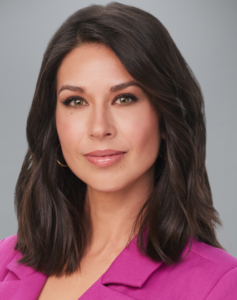 “Ana Cabrera, MS NOW’s 10 a.m. anchor, announced Wednesday she is leaving the news network amid a massive shakeup,” Ron Dicker reported March 19 for HuffPost. “She indicated the choice was her own in a video posted to X. ‘I’ve decided to make a change, and I am leaving MS NOW, she said. ‘Throughout my career, I’ve always sought the best opportunities to do this work and have the greatest impact while staying true to myself and my mission as a journalist. My goal has always been to educate and inform and shine light, to hold people in power accountable, people on all sides of the political aisle and non politicians as well, to be a government watchdog, to bring you compelling stories from across a broad range of news and to always seek the truth, following the facts wherever they lead. That’s what I’ve always done, and what I will continue to do.’ ”
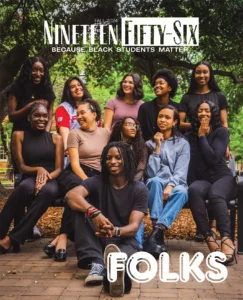 The Southern Poverty Law Center, the NAACP Legal Defense Fund, the ACLU of Alabama and Arnold & Porter Kaye Scholer law firm filed a lawsuit against the University of Alabama last week over the university’s decision to suspend indefinitely two student publications, Alice and Nineteen Fifty-Six, the Student Poverty Law Center reported Thursday. “ ‘They’re framing the existence of groups that have Black or female members and audiences, like these magazines, as discrimination,’ said Sam Boyd, a senior supervising attorney for the SPLC’s Democracy: Education and Youth litigation team. ‘What they’re actually doing is closing these magazines because they disfavor their viewpoints.’ ” The two student magazines have since raised enough money to publish independently under new names.
- Overshadowed by the February closing of the Richmond (Va.) Free Press was the shutting down of another longstanding Black newspaper, the Portland Skanner in Oregon. “Bernie V. Foster and his wife, Bobbie Dore’ Foster, founded the Skanner in 1975 to ‘challenge people to shape a better future’ and amplify the voices of underserved Black neighborhoods. The paper reported on racism in housing, health care and policing, addressed public policy and organized community events. Many young Black and allied journalists launched their careers there,” Stephen Magagnini reported for the Sacramento (Calif.) Observer.
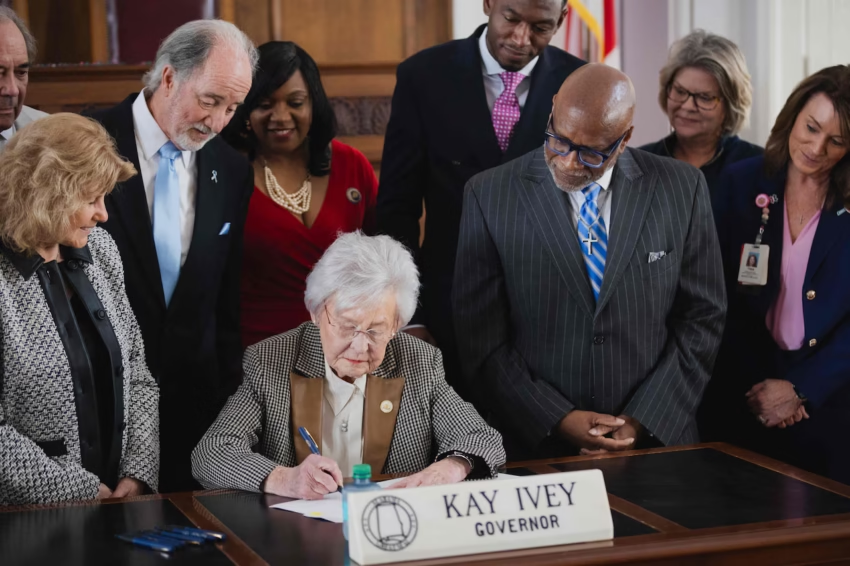
AL.com columnist Roy S. Johnson watches as Gov. Kay Ivey performs the ceremonial signing of the David McElhaney Roy S. Johnson Prostate Cancer Prevention bill Monday at the Old State House in the Alabama State Capitol, in Montgomery. (Credit: Will McLelland/AL.com)
- “Not embarrassing our name was the least of what was expected of my brother and me. We were raised to elevate it, to build atop a foundation laid by the sacrifices and successes of our parents, and generations of Johnsons and Rolands and Brookses and more,” Roy S. Johnson wrote Thursday for AL.com. “I thought of them Monday afternoon as I stood over Gov. Kay Ivey’s left shoulder inside the state Capitol in Montgomery. In Montgomery, Alabama. As I stood and watched her symbolically sign the David McElhaney and Roy S. Johnson Prostate Cancer Prevention Act into law. . . .” The new statute requires insurance companies to cover prostate cancer screening at no cost for men who are at high risk of the disease.
- “Chuck Todd and J.A. Adande are getting ready to turn the past into a business of their future,” Brian Steinberg reported Thursday for Variety. “The former host of NBC News’ ‘Meet the Press’ and the former NBA correspondent at ESPN have joined forces to launch ‘Dynastic,’ a new podcast that will analyze how sports teams build themselves into true franchises and influential case studies. . . .”
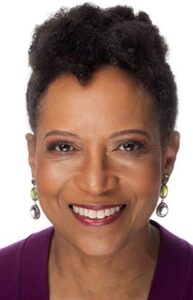 The National Federation of Press Women awarded Mary C. Curtis (pictured), columnist for Roll Call, first place in the “Web and Social Media – Podcast” category for “Equal Time with Mary C. Curtis: ‘Accidental activists: the local heroes who expose government secrecy.” Curtis also won in the “Writing > Columns > Personal opinion (bylined, not editorial)” category for “American individualism, but only for some Americans.”

- “
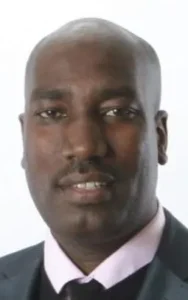 When Georges Budagu Makoko (pictured) arrived in Maine in 2002 after fleeing violence in Central Africa, he spoke five languages — but English wasn’t one of them,” Editor & Publisher said Friday in summarizing its story by Tandy Lau. “Finding housing, healthcare or even basic services in his new home proved frustrating and often confusing. Years later, those early struggles inspired him to launch Amjambo Africa, a multilingual newsroom dedicated to helping new Mainers navigate life in the United States while sharing the stories of immigrant communities too often overlooked.”
- As the Supreme Court prepared to hear arguments over birthright citizenship, “The New York Times scoured passenger ship manifests, census records, voter registration lists and naturalization petitions and interviewed scholars and genealogists in an effort to better understand the nine Americans who will decide the issue. The justices’ stories show how the nation’s changing laws and attitudes toward newcomers have guided waves of immigration, determining who is allowed to become a citizen and contribute to the American story,” Abbie VanSickle and Julie Tate wrote March 31 for the Times.
- “Remember Fox News’ obsession with Rev. Jeremiah Wright?” Natalie Korach asked in the Status newsletter of March 25. “Sean Hannity and others spent years playing clips of the reverend’s comments to the network’s audience, using them to suggest that Barack Obama was a radical leftist who despised America. So this week, when evangelical pastor Brooks Potteiger — a close spiritual advisor to Pete Hegseth — said on a podcast he prays God will kill Texas Democratic Senate candidate James Talarico and wants him ‘crucified with Christ,‘ we wondered: had Fox News covered the shocking remarks at all? According to a search of transcripts on SnapStream and its website, the answer is no. The network turned a blind eye to the stunning comments, even as Talarico made it a campaign issue in the high-profile race and hit back, writing in a statement: ‘Jesus loves. Christian Nationalism kills. You may pray for my death, Pastor, but I still love you. I love you more than you could ever hate me.’ It’s yet another example of Fox News’ overt bias.”
- “Student-run newspapers at multiple Chicago universities have launched real-time surveillance maps tracking and publishing movements of federal immigration enforcement officers, urging students to report Immigration and Customs Enforcement (ICE) sightings and arrests near campus,” Emily Sturge reported last fall for Campus Reform. Now, another student-run newspaper has joined them — The Dominican Star, Jennifer Flores, Reyna Valencia, and Bella Bercan reported March 25 for that Chicago-area student publication.
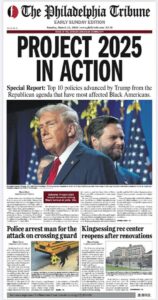 With more than 5,000 words, the Philadelphia Tribune reviewed “the 10 Project 2025 policy proposals that The Tribune identified in 2024 as most likely to affect Black Americans, along with the actions the Trump administration has taken to achieve those goals.” Sherry Stone reported in the Tribune’s March 21 analysis. Separately, Morgan State University’s Morgan Global Journalism Review published “America @ 250: A Black Retrospective.”
 For Mary Nam (pictured), “the connection she’s built with Seattle residents is something that will stay with her even after leaving KOMO on March 31,” Angela Lim reported March 26 for the Seattle Times. “The evening news anchor announced her upcoming departure from the station earlier this month. During her time at KOMO, Nam covered breaking news in the field and from the anchor desk, earning an Emmy award in 2024 and several other nominations throughout the years. She also helped create a warm, welcoming presence in her newsroom and increased efforts to report on communities with empathy, her colleagues said.” Nam spent 23 years at KOMO.
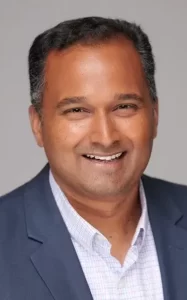 The National Press Foundation board of directors selected Sudeep Reddy (pictured) of MS NOW, formerly of Politico, as chair and Jon Sawyer of the Pulitzer Center on Crisis Reporting as its vice chair, the foundation announced Tuesday. “Reddy, Washington bureau chief for MS NOW, was previously vice chair and has served on the board since 2019.”
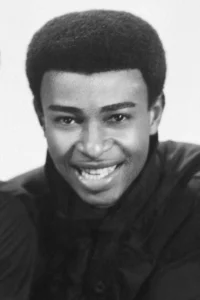 People magazine erroneously identified a photo of the Temptations’ Dennis Edwards (pictured) as fellow group member Paul Williams, and the singing group was described as a “band,” though the only instruments the members used were their voices. Spokespersons for People did not respond to a request for an explanation of the errors in the March 7 article, “What Happened to The Temptations Members? Inside Their Lives After the Original Band Split,” nor about the diversity among journalists at the publication. Contributors to the “Comments” section under the article noted the false identification, however.
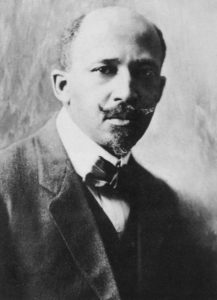 A new documentary, “W.E.B. Du Bois: Rebel With a Cause,” by Rita Coburn, “traces Du Bois’ transformation from scholar to activist — a shift that helped redefine Black sociology and the writing of history itself,” Ernie Suggs reported for the Atlanta Journal-Constitution. The Chicago-based Coburn was in Atlanta on Wednesday for a screening and conversation with Errin Haines, president of the National Association of Black Journalists. The event was hosted by the Tenth, an organization inspired by Du Bois’ (pictured) concept of the “Talented Tenth.” Coburn’s two-hour documentary premieres May 19 as part of PBS’ “American Masters” series. The film is narrated by actor Viola Davis and features readings of Du Bois’ work performed by Common, Jeffrey Wright and Courtney B. Vance, who recently completed a 75-hour audiobook of David Levering Lewis’ two-volume, Pulitzer Prize-winning biography of the scholar. Du Bois’ journalism credentials include editing the NAACP magazine The Crisis.
 “Over the past decade, China has significantly expanded its influence in the Caribbean, including within the media sectors of Grenada, Jamaica and Guyana,” Reporters Without Borders said Sunday. “Journalists in these countries report being invited on Chinese government-funded trips presented as training programs, while local newsrooms face pressure to publish ready-made opinion pieces and articles produced by Chinese authorities without editorial oversight. Reporters Without Borders (RSF) warns that China is one of the most repressive countries in the world for press freedom, and that such campaigns risk turning independent outlets into channels for foreign propaganda.”
- Two Africa-related pieces from the March 25 edition of the “PBS News Hour,” hosted that day by John Yang, should inspire, in turn, outrage and smiles.The first, “East African asylum seeker deported by U.S. to Equatorial Guinea,” has this description: “Since retaking office, the Trump administration has deported more than 675,000 people. Even though the administration alleges that it’s removing the worst of the worst, some fleeing political violence and some with strong asylum claims are getting swept up as well. William Brangham spoke with one of those individuals and her lawyer.”
- The second description, part of the program’s “Brief but Spectacular” series, reads, “Beka Ntsanwisi is working to empower older women in South Africa, where the average life expectancy is in the early to mid-60s. She started a soccer league with a mission to introduce women over 50 to the sport. Ntsanwisi shares her Brief But Spectacular take on empowering ‘soccer grannies.'” (“Short Takes” added April 4)
