
Reporters Finally Admitted, but Then . . .
U.N. Says Venezuela, Post-Invasion, Still Lags on Human Rights
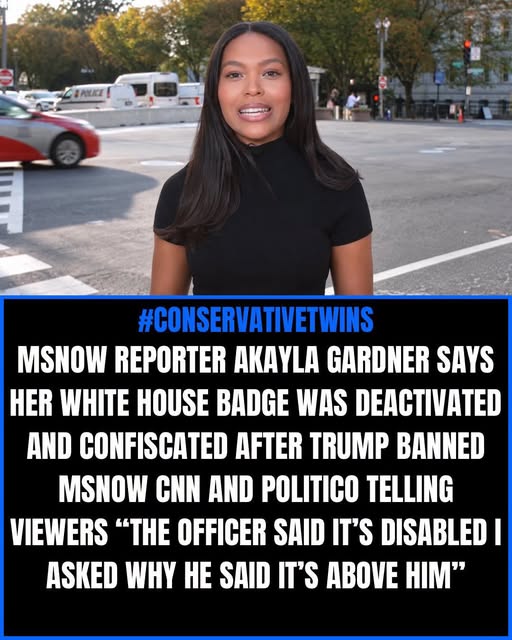
MS NOW”s Akayla Gardner, in a posting from Saturday.
Reporters Finally Admitted, but Then . . . .
“A federal judge ordered early Thursday that the White House immediately restore access for CNN, MS NOW and Politico, saying that President Donald Trump’s directive barring the three news outlets was most likely unconstitutional,” Gary Grumbach, Dareh Gregorian and Rudy Chinchilla reported overnight for NBC News.
But CNN, MS NOW and Politico filed an emergency request for a hearing Thursday morning after reporters were refused access to the White House despite a court order.
Eventually, “reporters for CNN, Politico and MS NOW were allowed to re-enter the White House grounds around noon on Thursday, the latest development in an ongoing standoff between President Trump and the press corps that covers him,” Michael Grynbaum reported for the New York Times.
He later added, “As of early Thursday afternoon, the TV pool remained suspended. The networks had previously indicated that they would not film the president until the White House not only restored CNN’s access, but also agreed that CNN could once again participate in the pool.
“The result, on Thursday, was a bizarre spectacle: a president hosting China’s top leader, Xi Jinping, for a pomp-filled summit at the White House, with Chinese state television on-hand but no American network airing any live footage.”
[However, MS NOW reported later, “Hours after regaining access, MS NOW White House reporter Laura Barrón-López was denied entry Thursday evening to the arrival ceremony on the portico ahead of the White House state dinner for Chinese President Xi Jinping. MS NOW had requested credentials for the event but never received a response. A CNN producer and correspondent were also denied access. When Barrón-López asked why she was being turned away, a White House staffer told her to ‘talk to Steven,’ seemingly referring to White House communications director Steven Cheung.”]
Earlier, “CNN reporter Betsy Klein and a photojournalist were denied access to the White House grounds despite multiple attempts, including one after 9:00 a.m. One CNN producer was able to enter the White House using their pass after 6:00 a.m. It was not immediately clear why the person had been able to access the building,” Holmes Lybrand, Brian Stelter, Katelyn Polantz, Alex Stambaugh, and Haven Orecchio-Egresitz reported for CNN.
Sydney Carruth and Fallon Gallagher wrote for MS NOW, “MS NOW White House reporter Laura Barrón-López and an MS NOW producer were denied access and had their passes confiscated when they first attempted to enter early Thursday, while another MS NOW producer was granted access (video). Politico said at least one of their reporters was blocked.”
Megan Messerly wrote for Politico, “A POLITICO reporter was denied access to the White House Thursday and his press credentials confiscated,” but did not name the reporter.
“Trump, he wrote, did not dispute that the outlets ‘did not receive notice and an opportunity to be heard before their hard passes were revoked.’
“The White House did not immediately respond to a request for overnight comment from NBC News.
“Trump had posted on social media before a Wednesday hearing in the case that he expected the ‘totally disloyal’ Kelly, whom he nominated to the bench during his first term, to rule against him — adding that ‘as usual, we’ll go for appeal.’
The National Association of Black Journalists, the National Association of Hispanic Journalists, the Asian American Journalists Association, the South Asian Journalists Association and NLGJA: The Association of LGBTQ+ Journalists have each condemned the exclusion of the three news organizations, but were not part of the court brief.
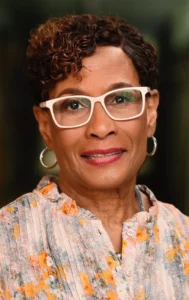 The National Newspaper Publishers Association, the trade group for Black- newspaper publishers, has been silent on the issue, but Frances Murphy Draper (pictured), publisher of the Afro-American in Baltimore, published a strongly worded opinion column Thursday.
“Black Americans have particular reason to care about who gets inside, who gets to ask questions and who gets to report back to the communities most affected by decisions made there,” Draper wrote under the headline, “White House press ban is a warning the Black Press cannot ignore.”
“For nearly 200 years, the Black Press has existed in part because we could not depend on others to tell our stories, ask our questions or challenge those in power on our behalf. Access has never been an abstract issue for us.” Draper also mentioned Trump’s insults of Black female reporters.
The friend-of-the-court filing did include the News Media Alliance, the organization of newspaper publishers; and many of the major news organizations and individual public media outlets, as well as the Intercept and the Center for Investigative Reporting.
“That list runs the ideological gamut, from Fox News to Vox Media, and includes every major television broadcast network, The Washington Post, The Associated Press, The Wall Street Journal and The New York Times, among others,” Ashley Ahn reported for Politico.
“They argued that the press ban threatens to deprive the public of timely, newsworthy information about the statements and actions of the president. The brief explains that the Constitution leaves the choice of how to report on the office of the presidency and other newsworthy public issues to the free press, ‘not to the whims of any administration.’ ”
Meanwhile, Natalie Korach reported for the Status newsletter that “In the wake of Donald Trump’s decision to ban CNN, MS NOW and POLITICO from the White House, the administration attempted to justify the move by pointing to six POLITICO stories it says ‘threatened national security and/or spread falsehoods.’
“But Status has learned that the anonymous source behind one of those stories was none other than Vice President JD Vance himself, speaking on a background call authorized by the White House. In June, Vance briefed reporters from several outlets on the Iran war talks, stating on a call there was an 80-85% chance of striking a deal to end the conflict, with the reporters agreeing to keep his identity confidential. Vance later defended the ban, saying this week, ‘POLITICO is as anti-Trump as Breitbart was anti-Obama or anti-Biden. ‘ ”
- Hermene Hartman, N’Digo: When the President Decides Who Gets to Report the News…
- Hermene Hartman, N’Digo: When the President Decides Who Gets to Report the News…
- Alex Weprin, Hollywood Reporter: Like, Subscribe and Govern: The White House Is Creating Its Own Media Ecosystem
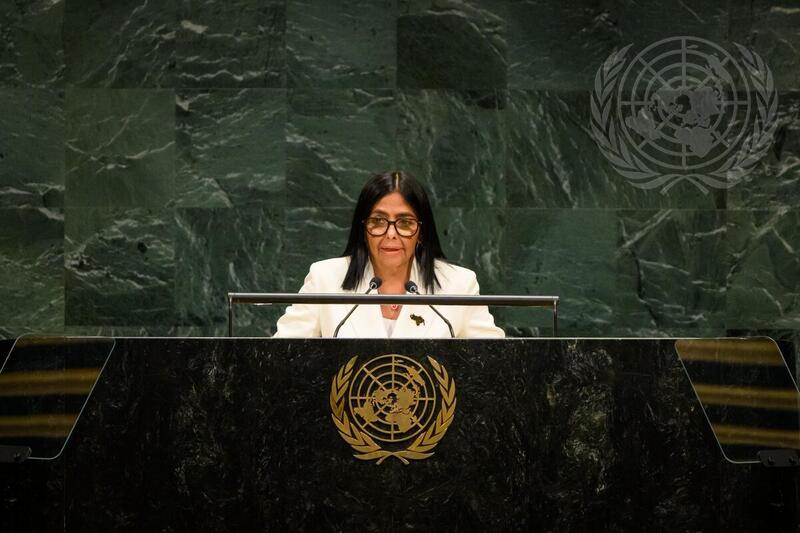
Acting Venezuelan President Delcy Rodríguez addresses the General Assembly Wednesday. She took over in the country after the U.S. military’s raid in January that captured Nicolás Maduro and brought him to New York to face drug-trafficking charges. (Credit: Loey Felipe/United Nations)
U.N. Says Venezuela, Post-Invasion, Still Lags on Human Rights
“Today, Venezuela is being reborn,” Acting President Delcy Rodríguez said Wednesday in addressing the United Nations General Assembly for the first time since she came to power.
But a U.N. fact-fnding mission reported last week that “despite limited improvements in the human rights situation in Venezuela, the state institutions responsible for repression, gross human rights violations and crimes against humanity remain intact.. . . . Journalists and other civil society actors continue to be obstructed in their daily work.”
Rodríguez took over in Venezuela after the U.S. military’s raid in January that captured Nicolás Maduro and brought him to New York to face drug-trafficking charges.
Reporters WIthout Borders, with six partner organisations, submittied a joint assessment of “the dire conditions for journalism and freedom of expression seen in the past four years.” It said in August, “restrictions on access to information and the blocking of media outlets and digital platforms have contributed to the expansion of information deserts across the country, affecting more than half of Venezuela’s population.”
The U.N. High Commissioner for Human Rights reported Sept 16 on its “most comprehensive analysis to date of years of serious human rights abuses committed by pro-Government civilian armed groups known as ‘colectivos,’ ” or organized civilian community groups, “and the links of those groups to the State.”
It concluded, “The Mission observed a significant decline in long-term detentions and related enforced disappearances following the US military attack of 3 January 2026 and the apprehension of then-President Nicolás Maduro. In the period that followed, authorities released hundreds of people detained for political reasons and allowed somewhat greater space for protests, public gatherings and civil society participation.
“However, these changes have not been accompanied by the institutional reforms required to ensure a meaningful and sustained improvement in the human rights situation. Numerous laws used to criminalize dissent remain in force, and the country’s extensive intelligence services and security forces retain essentially the same structures, policies and practices.
“No steps have been taken to disarm or dismantle the colectivos, who have been the source of pervasive intimidation and violence at community level. Journalists and other civil society actors continue to be obstructed in their daily work. At least 19 officials previously identified by the Mission for their involvement in gross violations remain in, or have been reassigned to, key positions, while impunity for past human rights violations and crimes persists. . . . ”
- Efecto Cocuyo, Venezuela: NGOs confirm new releases of political prisoners
- National Union of Press Workers (SNTP), Venezuela: Media outlets, journalists, and NGOs demand the dismantling of the censorship apparatus in Venezuela. (Aug. 31)
The Difference a Black Journalist Can Make
Sept. 21, 2026
Panelists Add: Especially With a Black-Owned Outlet
N.Y. Times Puerto Ricans Tolerated ‘the Nonsense’
Paramount Clears Last Big Hurdle to Acquire WB-Discovery
Former Hip-Hop Magazine Editor Admits to Lying
Hannah-Jones Piece on Daughter’s Schooling Goes Viral
Campaign Ends, but Press-Freedom Fight to Continue
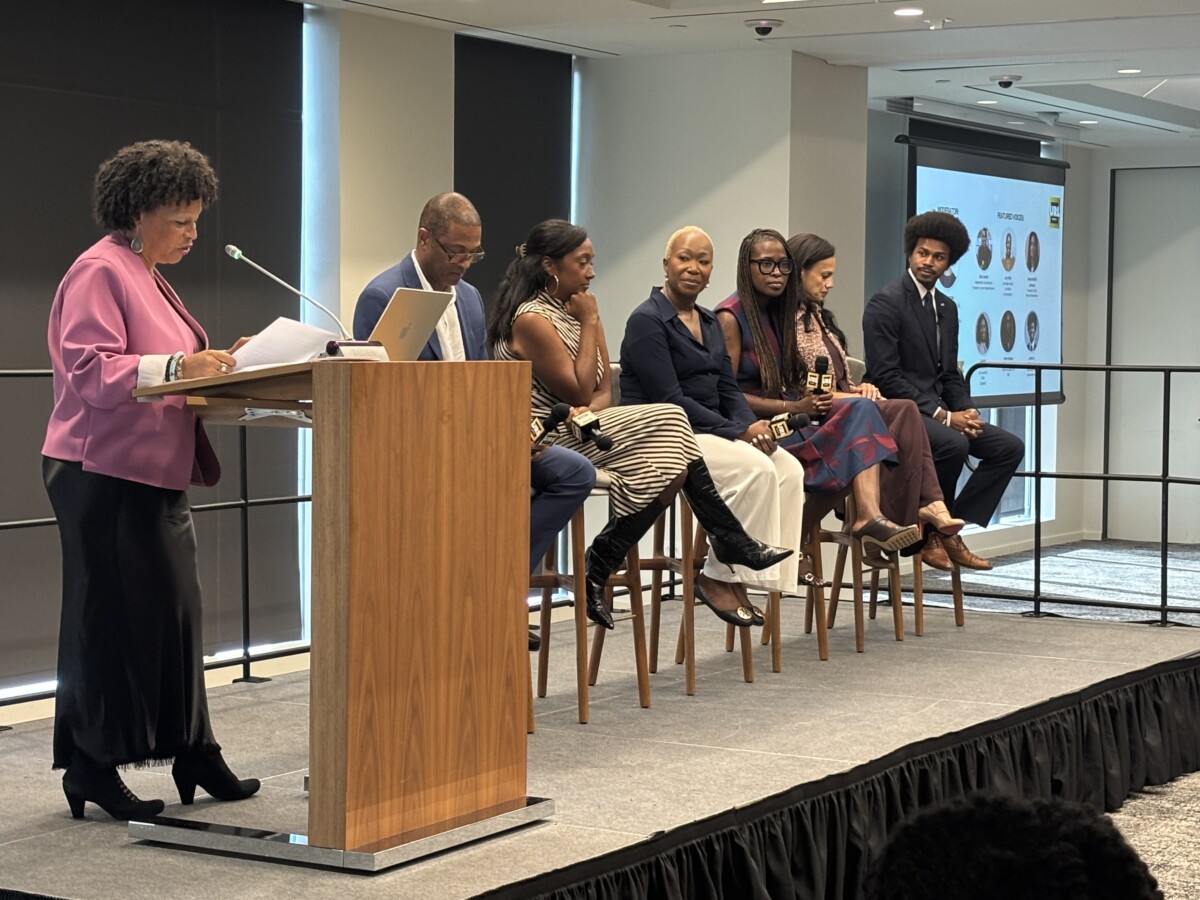
From left, moderator Sara Lomax; Don Lemon, host, “The Don Lemon Show”; Lauren Williams, co-founder and CEO, Capital B; Joy Reid, host, “The Joy Reid Show”; Errin Haines, president of the National Association of Black Journalists and editor-at-large and co-founder of The 19th; Alexis McGill Johnson, president and CEO of Planned Parenthood; and Justin Pearson, Tennessee state representative. The session was televised on C-SPAN3 (video). (Credit: Richard Prince)
Panelists Add: Especially With a Black-Owned Outlet
“So,” said Lauren Williams, co-founder and CEO of the Black-owned news site Capital B, “probably 70 percent of what we cover is not something that . . . journalists would be able to get covered in mainstream media.”
By the time Williams made that statement during a panel discussion Thursday during the week of the annual Washington gathering of the Congressional Black Caucus Foundation Legislative Conference, it was not surprising.
Now-independent journalists Don Lemon and Joy Reid, Errin Haines, president of the National Association of Black Journalists, Williams and Sara Lomax, president of URL Media, the discussion convener, were already enumerating ways in which the mainstream media had fallen short in covering issues of concern to Black news consumers, from voting rights to Roe v. Wade, to the spate of Black people found hanged, to the concerns of overlooked rural and Southern Black voters.
They updated the decades-long arguments for diversity at the tables of news-decision makers, and did so as the nation prepares to celebrate the 200th anniversary next year of the Black press.
Participants were sure to note that the survival of Black-owned media, including the emerging outlets run by former mainstream journalists such as Reid, formerly of MSNBC, and Lemon, a CNN veteran, depends on support from Black consumers.
Reid was blunt in outlining what she saw as a lack of accurate analysis of racial issues by mainstream media, a phrase Lemon amended to “white media.”
“Race is so undercover that people miss things that should be fairly obvious,” Reid said. “There was an immediate reaction in 2022 where, for the first time, white women with college degrees voted narrowly majority D. That was the first midterm where that actually happened, where you saw white women, at least a portion of them with college degrees, flip. And that is why that 2022 midterm was a blue wave. What the right did, which is what they do, which the D side doesn’t do, is that they began to immediately target that very same voter cohort to pull them back on side, to get them back on side by 2024.
“And they did the work to do that. Because in this country, if you actually cover the country from a point of view of its racial history coming out of enslavement . . . for white Americans, your interest is racial hierarchy.
“Your interest is making sure that your white sons get into the colleges they want, get the jobs they want with no competition from non-white people, particularly Black people. And so when we say white people are voting against their interests, it’s because the mainstream and corporate media misunderstand what white Americans’ interests actually are. White supremacy is the primary interest and motivation. And it makes sense, right? If a country’s been built to advantage you and advantage your children, it is in your interest to maintain that advantage, even if you call yourself a moderate or a liberal.
“And your real interest was getting rid of DEI, which they didn’t even realize mainly benefited white women. They thought Black. They thought DEI meant Black people are taking your jobs and taking your son’s opportunities and taking away your son’s opportunity to get to Harvard. It was Charlie Kirk saying, well, there’s those Black pilots in there who don’t even know how to fly. They’re just in the cockpit because they’re Black. It should be your son in that cockpit. It should be your son at Harvard and your daughter at Harvard.”
Said Haines, NABJ president, “That’s what this is about. Who gets to tell the story? Who gets to control the narrative? . . . The National Association of Black Journalists was founded in 1975 by 44 bold founders who knew that representation in media mattered, but they also knew that ownership and independence mattered. It’s not enough to just have a seat at the table. It’s about who gets to decide what happens at that table. And so, literally in our founding documents, we have that NABJ is supposed to fight for Black media entrepreneurship to help expand Black media, independent Black media.”
She mentioned a newly announced partnership with the National Business League.
Haines also said, “We’re 40-ish days out from the midterm elections. They’re talking about voting rights, covering it like it’s some kind of horse race.
” ‘Oh, what happened in the courts today?’ Yes, that’s absolutely important. You need to know what’s happening in the courts. But who is out here talking to Black voters about what this means for them and how they are planning to respond in this moment? What I hear from Black voters is that they are absolutely energized and motivated to make their voices heard in this moment. They want to know how they can do that. But who is talking to Black voters? If it is not us, who is going to do that right now?”
When Lomax asked Lemon what stories he can now do that he couldn’t at CNN, one mention went to the case of Nolan Wells, the Black teenager who disappeared off the Mississippi coast while out with white friends.
“I wouldn’t have been able to tell the Nolan Wells story in a fulsome way, focusing on a family, a mother who has lost her kid, instead of on the kids who are out there saying, ‘well, people are being mean to us on the internet,’ Lemon said, as just one example. ” ‘And so we want to sue’. And it’s like, come on. You have a grieving mom who –. So that story. They would not have covered.”
“I think that’s the perspective that Black media really was able to provide that no one else could,” Haines replied.
There was more: Reid remembered being in Texas covering five women filing a lawsuit over Roe v. Wade “because their lives were physically threatened by the overturning of Roe and the maladministration of that state when it came to women’s reproductive health.
“All five women were white.
“Meanwhile, the woman who ran the pink house, the clinic that actually was sued to cause the Dobbs ruling to go into effect, the last abortion clinic operating in the state of Mississippi was run by a Black woman. And that Black woman was the last person standing between white women, rural women, all Mississippi women, and death. . . . So we had to intentionally make sure that that conversation included Black women.”
Williams, a veteran of Vox, the Root and Mother Jones, said, “Something that we invest heavily in at Capital B is coverage of rural Black communities. These are places that mainstream media has never really fully cared about or covered. When you think about the coverage that Black people get, it is in big population centers. It is coded as urban. When you think about the way that mainstream media talks about rural people, that is so clearly coded as white and conservative. There are so many rural Black folk. . . .
“The investment that we’ve made in covering that region has been incredibly important. And some of our biggest stories are about rural Black towns where there’s like a thousand people, but where things are happening in total darkness and nobody would know that these kind of wild, racist things are still happening if we weren’t telling that story. Those places don’t have local news at all. And national reporters aren’t going there until we do the story and then they go there.”
Lemon made perhaps the most cogent point. “Instead of seeing our people as stories, we see them as human beings.”
- Asian American Journalists Association: AAJA strongly opposes the Equal Employment Opportunity Commission’s proposal to eliminate the annual EEO-1 reporting requirement for employers (Aug. 24)
- Matt Brown, Associated Press: Voting groups sound alarm on funding shortfalls that they say could affect midterm turnout
- Matt Brown, Associated Press: Black Caucus launches effort to boost voting among Black, rural and young voters in midterms
- Mary C. Curtis, Roll Call: In American politics, has racism become a feature, not a bug?
- Angela Dennis, Tennessee Lookout: Pearson put Tennessee front and center at forum during Congressional Black Caucus week
- Gerren Keith Gaynor, theGrio: Justin J. Pearson says Democrats must put Black and working-class voters at the center — not treat them as ‘ornaments’
- Jacksonville Free Press: NO NETWORK, NO PROBLEM: Black Journalists Build Their Own After Network Firings
- Josh Jamerson, Wall Street Journal: I Went Home to Detroit to See What Voters Want From the Midterms
- Clarence Page, Chicago Tribune: Don’t let the war on woke lull us all to sleep
- Terry Tang, Associated Press: Under Trump, census eyes sweeping plan to omit immigrants, race data (Sept. 10)
- Corey Williams and Kristin M. Hall: Associated Press: Cases of Black people found hanged in the US South are a reminder of nation’s lynching history
- Joseph Williams, Word In Black: The Fight for the Black Vote Is Already Underway
- Natalie Williams, HuffPost: Black Mothers Are Running Out Of Places To Tell Our Sons They’re Safe (Sept. 3)
N.Y. Times Puerto Ricans Tolerated ‘the Nonsense’
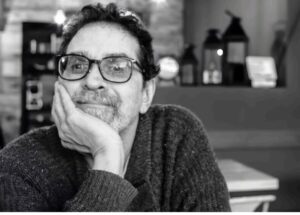
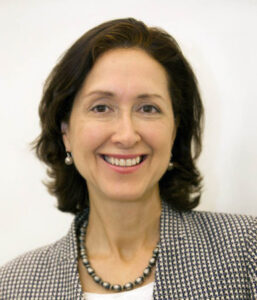 The passing last week of Mireya Navarro (pictured), social justice journalist whose career included 28 years at The New York Times, prompted this Facebook post from fellow Times alum David Gonzalez (pictured, below, by Edwin Pagán), who worked at the paper from 1990 to 2024:
 “Somebody asked me if Mireya Navarro was the first Puerto Rican woman at The New York Times, since maybe it would increase her chances of having made a significant contribution or accomplishment, as per revised criteria for staff obits.
“Well, since you asked:
“Al Narvaez was likely the first Puerto Rican at the paper. David Vidal, Bori-Dominican was second.
“Luisita Torregrosa was the first Puerto Rican woman and a back fielder on Forn (or National?)
“Evelyn Nieves was both the first Nuyorican woman on Metro AND the first marquee columnist with ‘Our Towns.’
“Mia arrived a few month before I did.
“Johnny Sotomayor was the first Puerto Rican staff fotog. Angel Franco was second.
“The fact that I can freaking name them should show you how far behind the paper was on hiring. Mia came onboard soon after Metro realized they had no native Spanish speakers when they scrambled to cover the Happyland fire in the BX which claimed the lives of 80+ Honduran immigrants. (They had sidelined Al Narvaez so much he studied Theology part time in Newark Buro, was ordained an Episcopal priest and left the paper).
“What gets me about these discussions about who was the first is it adds yet another bar to clear. ‘Even in death they make you jump through hoops,’ my Dominican sister Carolina Gonzalez said, in what could easily pass for a Rev Pedro line.
“If they want to rank people on being first, then they need to address the total nonsense we had to tolerate.
“1) We want minority journalists, but qualified ones.
“2) We couldn’t find any who were comfortable writing in English. (Actually uttered by a NYT AME in the 80’s).
“3) Are you a Hispanic first or a journalist?
“4) You took a job away from a white man.
“There are more, but you get my point.
“Fact is looking for firsts is hardly a flex: like how many qualified people did you skip?
“TBH, looking for firsts devalues the many accomplishments of people like Mia. It’s like an asterisk in the record books. They really don’t know us. Ya tu sabes. [You know how it is.]
“But of course I have no idea if they’re running an obit on Mia, but fingers crossed.”
Postscript, from Journal-isms in 2016: “Angel Franco says his most memorable day in 30 years as a New York Times staff photographer was his first: ‘A colleague that worked in the darkroom said to me because of you a white man can’t afford to feed his family,’ Franco told Journal-isms Monday by email. ‘But there have been many positive moments in my career at the Times. . . .’ ”
And a Latina, responding to the post, said that indeed, she had been asked, “Are you Hispanic first or a journalist first?” a question that had also been asked of Black journalists about their ethnicity.
The New York Times did not respond to an inquiry about whether it plans an obituary of Navarro. However, this note was sent to the staff:
“We offer condolences to the family, friends and loved ones of our former colleague Mireya Navarro, known as Mia. She worked in the newsroom for over two decades, and her husband, James Sterngold, also a former Times reporter, shared the news that she passed away this week at home in Montclair, N.J.”
- Maynard Institute for Journalism Education: Remembering Mia Navarro, Graduate of the Summer Program for Minority Journalists, 1979.
Paramount Clears Last Big Hurdle to Acquire WB-Discovery
 “Paramount reached an agreement on Monday to resolve an antitrust lawsuit delaying its $111 billion acquisition of Warner Bros. Discovery, eliminating the last significant barrier to the creation of an entertainment and media colossus,” Benjamin Mullin, David McCabe, Shawn Hubler and Laurel Rosenhall reported Monday for the New York Times.
“A group of states, led by California’s attorney general, Rob Bonta, a Democrat, sued Paramount in July, arguing that an acquisition of Warner Bros. Discovery would concentrate too much power over cable TV and blockbuster films under one company.”
As one concession, the entertainment giant has agreed to establish a board to ensure the editorial independence of CNN and CBS News. According to the agreement, “The Editorial Independence Board shall be made up of five (5) established journalists (active or retired), each of whom shall have practiced journalism for a minimum of ten (10) years (including with credentials for at least three (3) years) (“Journalist”). (“Editorial Independence Board Members”). No more than two (2) Editorial Independence Board Members may be affiliated with the same political party. ”
However, Seth Stern, chief of advocacy for the Freedom of the Press Foundation, said in a statment, “A Paramount-appointed editorial independence board for CNN and CBS is worthless. The fish rots from the head, and this particular fish is headed by a compromised oligarch with a history of throwing journalists under the bus to advance his business interests.”
As recently as Aug. 24, the League of United Latin American Citizens was urging Bonta to continue his legal fight to block Paramount’s proposed $111-billion takeover, saying the blockbuster deal would crush Latino workers and small businesses that support Hollywood.
Also of concern has been the infusion of foreign capital.
“On September 18, the FCC approved an enormous infusion of foreign cash to finance the deal. The merged company will be 49.5% owned by foreign interests, including the sovereign wealth funds of Saudi Arabia, Qatar, and Abu Dhabi,” David Folkenflik reported for NPR. “And the agency ruled that it could go up to 100%. Paramount has promised that its stakes would consist of silent, non-voting shares.
“The idea that a major U.S. broadcast company or TV news outlet could have such a degree of foreign ownership was unthinkable in an earlier age, according to industry executives, outside analysts and former federal officials. . . . ”
Paramount also owns BET, which partners with the NAACP to present the annual NAACP Image Awards.
- Eric Deggans, Substack: My take on Paramount’s merger settlement: Money always wins (Sept. 22)
Former Hip-Hop Magazine Editor Admits to Lying
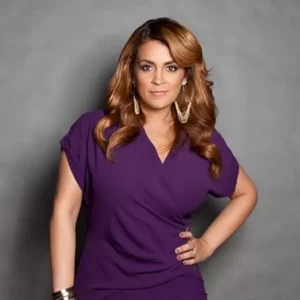 Kimberly Osorio, 52, (pictured) the former editor of The Source, admitted to making false statements about hiding the phone of Rashad Ruhani, 57, who helped the founder of the Queens Defenders organization of social workers, Lori Zeno, embezzle hundreds of thousands of dollars from the organization, Santul Nerkar reported Thursday for The New York Times.
“Their fraud was so outrageous and destructive that the Queens Defenders urged a federal judge to sentence them to prison, a highly unusual request from an organization in which attorneys tend to be philosophically opposed to incarceration. . . .
“According to court filings, Ms. Osorio started at The Source as a freelance writer in 1998, rising through the ranks before becoming the magazine’s first female editor in chief in 2002.
“Ms. Osorio was fired from the magazine in 2005, in what she said was retaliation for complaining about sexual harassment by the magazine’s owner. She sued the magazine for wrongful termination, sexual harassment and gender discrimination in Federal District Court in Manhattan, winning a nearly $8 million verdict in 2006. . . .”
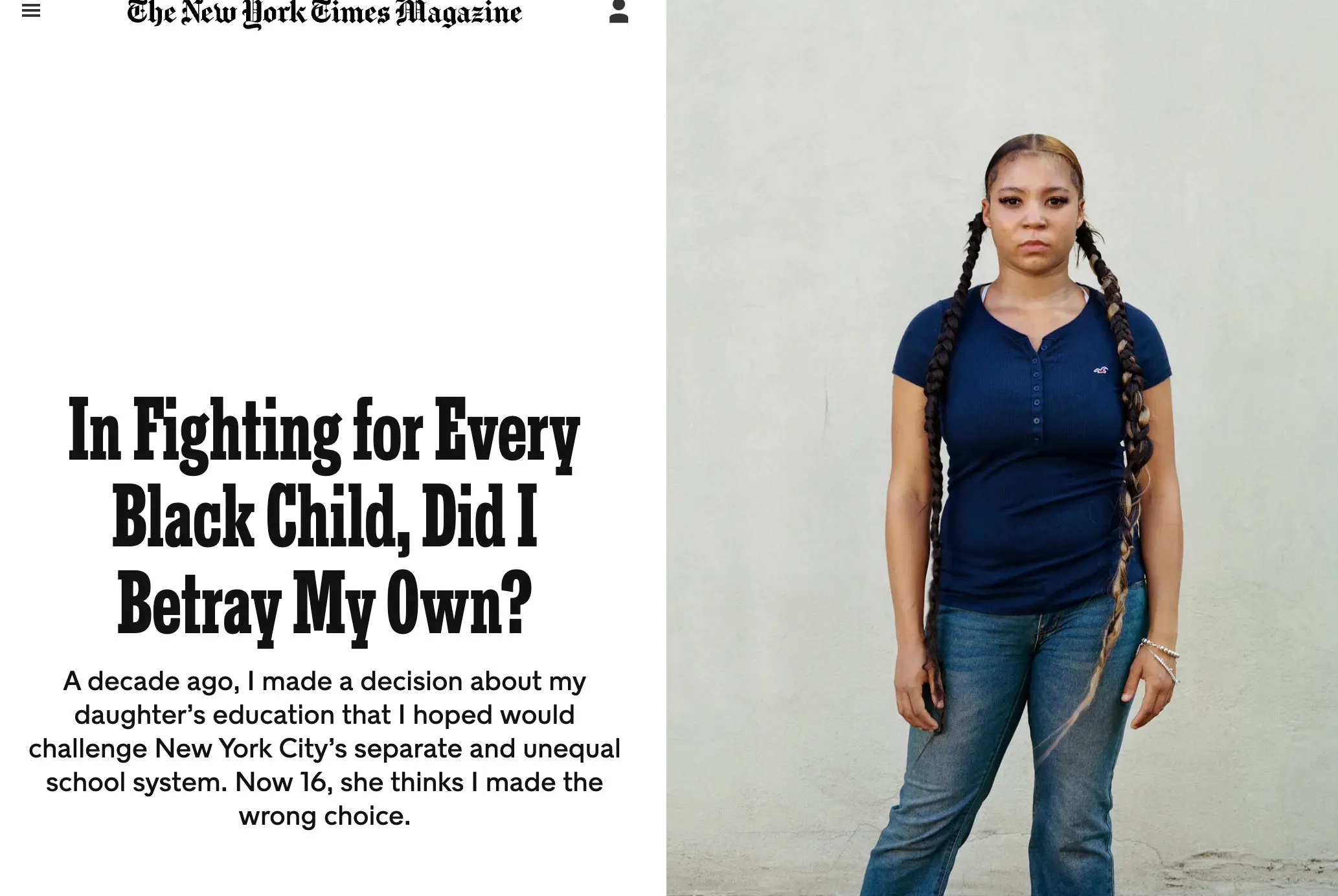
Hannah-Jones Piece on Daughter’s Schooling Goes Viral
“The acclaimed author and Pulitzer Prize winner’s candid account of educating her daughter in New York City public schools has sparked an intense conversation about race, privilege and parental responsibility,” Brandon Caldwell wrote Monday for theGrio.
“Nikole Hannah-Jones‘ personal essay about her daughter’s education, a decade-long follow-up to her original 2016 piece, quickly went viral over the weekend. Jones, the Pulitzer Prize-winning journalist behind ‘The 1619 Project,’ revealed she enrolled her daughter in one of New York City’s public schools that had been segregated by several existential factors, namely wealth, class and race under the guise of ‘school choice.’
“However, her daughter challenged her, asking why Jones and her husband couldn’t send her to better, well-funded schools if they had the means?
“The decision by Jones and her husband, Jones argued, was one of obligation to the community they belonged to. It’s a common topic of conversation in Black households across the country: If possible, do we send our child to the best schools where they will be academically challenged, or to the ones where their cultural and educational needs will be met? In some cities, that question determines where people live, what zoning loopholes they would break and more, all to pursue what they deem is ‘best’ for their child.
“Jones opted to send her daughter to certain schools up until high school, when she tested and was accepted to one of the hardest schools to get into. Still, toward the end of the piece, Jones admits that she felt her daughter ‘got cheated’ out of the education she deserved.
“Her daughter responded, ‘Sometimes I wish instead of always thinking about other kids, you would have thought about me. I never really got the education I wanted.’ . . . . ”
- Zak Cheney-Rice, New York: No One Can Fix School Segregation Alone (Sept. 23)
- Danyale Freeman, Ebony: Nikole Hannah-Jones and the Black Education Debate (Sept. 21)
- Michael Harriot, Contraband Camp: ‘The Article’ Blacksplained by Nikole Hannah-Jones (Sept. 23)
- Keturah Kendrick, MS NOW: Nikole Hannah-Jones’ New York school dilemma is shared by Black parents everywhere (Sept. 23)
- Adam B. Kushner, New York Times: Reality Bites
- Haniya P., theGrio: ‘I was not prepared’: Nikole Hannah-Jones on the backlash she received from Black communities for her NYT article (Sept. 24)
- Torrey Snow, Baltimore Sun: Nikole Hannah-Jones’ hard lesson on school choice (Sept. 23)
- Jenisha Watts, The Atlantic: Why I’m Sending My Black Son to Private School (Sept. 23)
“In one of the interviews, a daughter of one of the detained journalists shares how she has only been near her father once: when she was a baby and her mother took her to prison to introduce her to her detained father.” (Credit: YouTube)
Campaign Ends, but Press-Freedom Fight to Continue
“Today we concluded our #Eritrea16 social media,” wrote Muthoki Mumo, Africa program coordinator for the Committee to Protect Journalists, on Friday. The campaign marks the 25th anniversary of the shuttering of the privately owned press in Eritrea and the ongoing detention of at least 16 Eritrean journalists.
“I am writing to say thank you very much for your cooperation, and for ensuring that this story reached a wide community of individuals concerned with human rights and press freedom.
“We concluded the campaign today by publishing a video interview with several family members of those detained journalists. In one of the interviews, a daughter of one of the detained journalists shares how she has only been near her father once: when she was a baby and her mother took her to prison to introduce her to her detained father. The interviews are very powerful and they underscore why we must continue with this important struggle. I . . . .encourage you to watch and share.
“Further, you may have seen that the United States has lifted sanctions on Eritrea. This is very difficult news, coming as it does on the 25th anniversary of the shutdown of the Eritrean press. While this development is discouraging, I believe it is also a sign that we must not relent in this fight. Our Regional Director Angela Quintal issued a statement in response to this development.”
- Reporters Without Borders: “Silence is no longer an option”: 133 journalists from around the world mobilise for Dawit Isaak and his colleagues, arbitrarily detained in Eritrea for 25 years (Sept. 22)
