
FCC Chair, Stephen A. Smith, CBS, WaPo Called Out
Cuban Honoree Links Black Struggle, Press Freedom
Brent Staples Pays Tribute to Chuck Stone, Derrick Bell
In addition:
Morgan Olivia Norris, Student Journalist of the Year
Brandi S. Cummings, Journalist of Distinction
Beatrice Elizabeth Peterson, Journalist of the Year
46 News, Media Organizations Back Fort, Lemon
Short Takes: How Tennessee prosecutors use felony murder rules against Black children; Kansas City Call; mental health issues among Indigenous youth; increase in abusive litigation against journalists in Africa; Ethiopian journalists under pressure to plead guilty.
Homepage photo and NABJ convention photos by Richard Prince
NABJ Monitor reporter Tatiana Allen profiles Cuban journalist Abraham Jiménez Enoa, the 2026 recipient of the Percy Qoboza Foreign Journalist of the Year Award. Jiménez Enoa discusses the challenges foreign journalists can face when speaking out against their countries’ leaders and how his journey underscores the importance of a free press. The NABJ Monitor is part of the student projects.
If no image is visible, please consider changing browsers.
FCC Chair, Stephen A. Smith, CBS, WaPo Called Out
With President Errin Haines declaring that “the goal is not permanent condemnation — the goal is progress. But progress does not happen without pressure,” the National Association of Black Journalists bestowed its annual “Thumbs Down” award Saturday on five people and institutions — not the usual one or two — and included two Black recipients among them. They were:
- Brendan Carr, chair of the Federal Communications Commission.
- CBS.
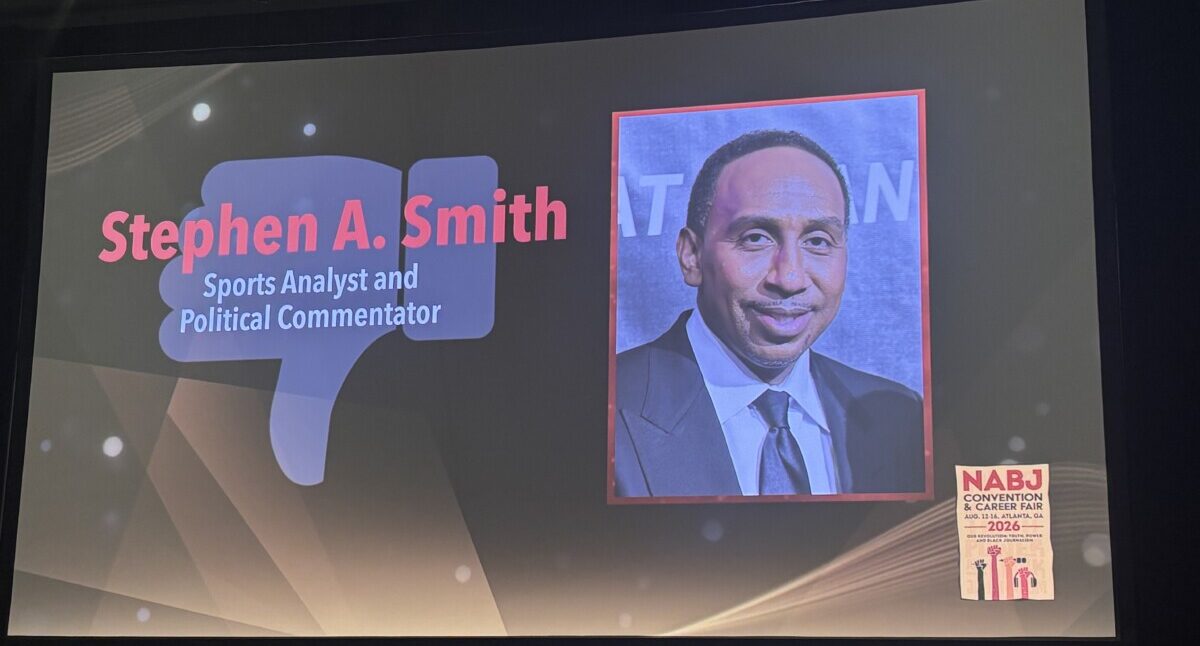
- Stephen A. Smith, ESPN sports analyst and political commentator and a Black journalist who has presented at NABJ conventions (video).
- DuJuan McCoy, owner, president and CEO of Circle City Broadcasting, and one of the few Black owners of local television stations.
- The Washington Post
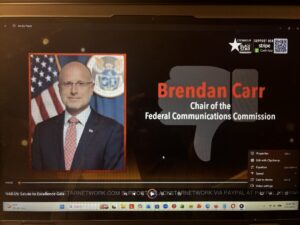 “Since assuming leadership of the FCC, Carr has repeatedly used the agency’s regulatory authority in ways that have raised serious concerns about press freedom and editorial independence,” according to NABJ.
“His actions have targeted news organizations through licensing scrutiny, while amplifying efforts to pressure media and communications companies to dismantle diversity, equity, and inclusion initiatives. Together, these actions have contributed to a chilling environment for independent journalism and threatened the diversity of voices essential to serving the public interest.”
 About CBS, the organization said:
“Under its current leadership, CBS eliminated its race and culture unit and implemented newsroom workforce reductions that disproportionately affected journalists of color. The company has also faced sustained internal disputes over editorial independence and newsroom decision-making. Taken together, these actions have diminished specialized coverage of underrepresented communities and raised significant concerns about the organization’s commitment to diverse journalism, editorial integrity, and public trust.”
 Smith “has established a recurring public pattern of disparaging commentary directed at prominent Black women across politics, sports, and media. (video) Such commentary reinforces harmful narratives, undermines the fair and respectful representation of Black women in public discourse, and stands in direct conflict with NABJ’s longstanding commitment to accurate, responsible, and inclusive portrayals of Black communities.”
“This is the epitome of Christmas arriving early,” Smith replied on X. “The @NABJ wants to call folks out, fine! You had your turn, now mine is coming. And make no mistake…. I’m coming. Let’s see who REALLY deserves a Thumbs Down award when it comes to the Black Community, after I say my peace! Remember @NABJ, you asked for it. I’ve shut my mouth for years. Now y’all started something.”
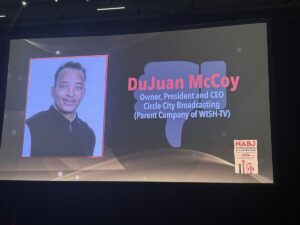 McCoy was included after allegations regarding the treatment of Black journalists under his leadership at Circle City Broadcasting/Wish TV, with concerns centered on workplace equity, newsroom culture, and professional accountability.
 The Washington Post “implemented layoffs and newsroom restructuring that disproportionately affected Black and other journalists of color, including reporters covering race, identity, extremism, protest movements, and other essential public interest beats. The reductions also weakened reporting capacity across opinion, international, local, and sports coverage.
“These decisions diminish newsroom diversity and subject matter expertise at a moment when robust, inclusive journalism is critical to public accountability and democratic understanding.”
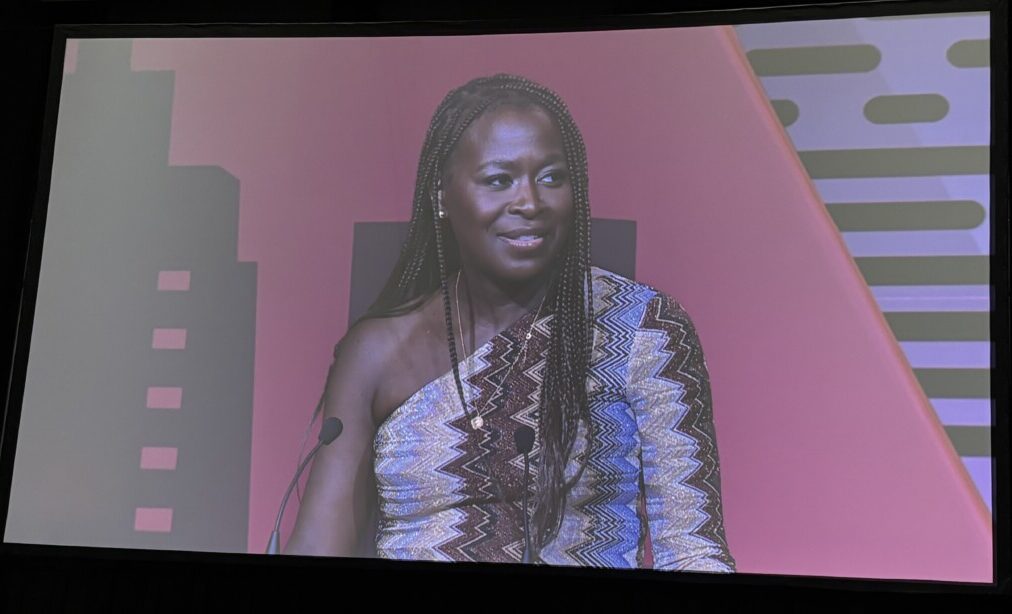
“To the journalists who do the work inside the institutions that we name tonight, I need y’all to hear me clearly,” NABJ President Errin Haines said. “This is not an indictment of you. It’s quite the opposite. So many of you are in the gap every single day. You are pushing for better coverage. You are the ones that are fighting for your colleagues. You are asking hard questions in editorial meetings. You are challenging the decisions that the public may never even know that you challenged. We see you. And so this award is also an invitation to you. Keep pushing. . . . “
Closing her remarks at the Salute to Excellence awards dinner at the association’s convention at Atlanta’s Marriot Marquis Hotel, Haines said, “We cannot spend an entire week talking about truth and power and then become timid when it is time to tell the truth to power. We cannot talk honestly about what is happening to journalism right now without talking honestly about who is making the decisions that are shaping journalism.” Some 4,302 people were registered, Nathaniel Chambers, interim executive director, said at Sunday’s board of directors meeting, second only to the 4,363 in Chicago in 2024.
Haines continued, “These things don’t just happen. Newsrooms don’t become less diverse by accident. Journalists do not simply find themselves without institutional support by accident. Press freedom does not erode by accident. Editorial standards do not bend themselves. People make decisions. Executives make decisions. Government officials make decisions. Companies make decisions. And if NABJ is going to be serious about defending Black journalists and defending journalism itself, then sometimes we have to say their names.
“And so tonight we did.”
Haines “especially” addressed “our corporate partners who are in this room. Partnership does not mean silence. Partnership does not mean that you write a check to NABJ and we surrender our voice. Partnership does not mean that you send hundreds of your employees to this convention and your company becomes exempt from accountability. In fact, I would argue the opposite because if we’re truly partners, we should be able to tell each other the truth. . . .
“So going forward, I really want us to think about this award, not simply as a verdict, but as a challenge. If we call you out, there should also be a path to doing better. If behavior changes, we should say so. If an institution listens, we should acknowledge it. If leadership engages with us seriously and makes meaningful changes, we should welcome that. Because the goal is not permanent condemnation. The goal is progress. But progress does not happen without pressure. There’s a lesson that Black journalists know well, and that is that institutions rarely change simply because change would be the right thing to do.”
By contrast, Outlier Media, celebrating its 10th year, a groundbreaking nonprofit newsroom designed to center and respond to Detroiters’ needs, won NABJ’s Best Practices Award.
“From texting important resources right to the phones of Detroit residents, to training and even paying people to become active members in local politics, this newsroom puts service at the center of all they do, filling the gap and responding to the needs of those around them,” co-host Terri J. Vaughn, an actor and director told the audience. Many watched the ceremony as it was streamed.
, Los Angeles Times: Stephen A. Smith doubles down on calling ICE shooting in Minneapolis ‘completely justified’ (Jan. 9)
When Stephen A. Smith Speaks, White Power Listens (Dec. 14, 2025)
Zack Cox, Boston Herald: Jaylen Brown unloads on Stephen A. Smith in profane rant: ‘F— Stephen A’ (May 18)
- Neel Dhanesha, Nieman Lab: NBC and CBS cuts hit race and culture verticals (Oct. 30, 2025)
Gerren Keith Gaynor, TheGrio: Stephen A. Smith praises Trump’s ‘absolutely positively brilliant politics’ (Dec. 4, 2025)
- Sean James, Mediaite: Don Lemon Accuses Stephen A. Smith of ‘Cozying Up to White People’ With Take on Minnesota ICE Shooting: ‘It’s Gotta Be for the Money’ (Jan.10)
- Journal-isms: FCC Vote on Ownership Called Bad for Diversity (Aug. 7)
- Journal-isms: Washington Post Ousts Its DEI Leader (April 30)
- Journal-sms: Journalists of Color in WaPo’s ‘Bloodbath’ (Feb. 4)
- Journal-isms: McCoy Cuts Staff at Newly Acquired Indy Station (April 2)
- Dominick Mastrangelo, The Hill: Stephen A. Smith to Tiger Woods: ‘What the hell are you doing getting behind the wheel of a car?’ (March 31)
- Carron J. Phillips, Substack: Stephen A. Smith, and the chronic irresponsibility in political commentary (Sept. 7, 2025)
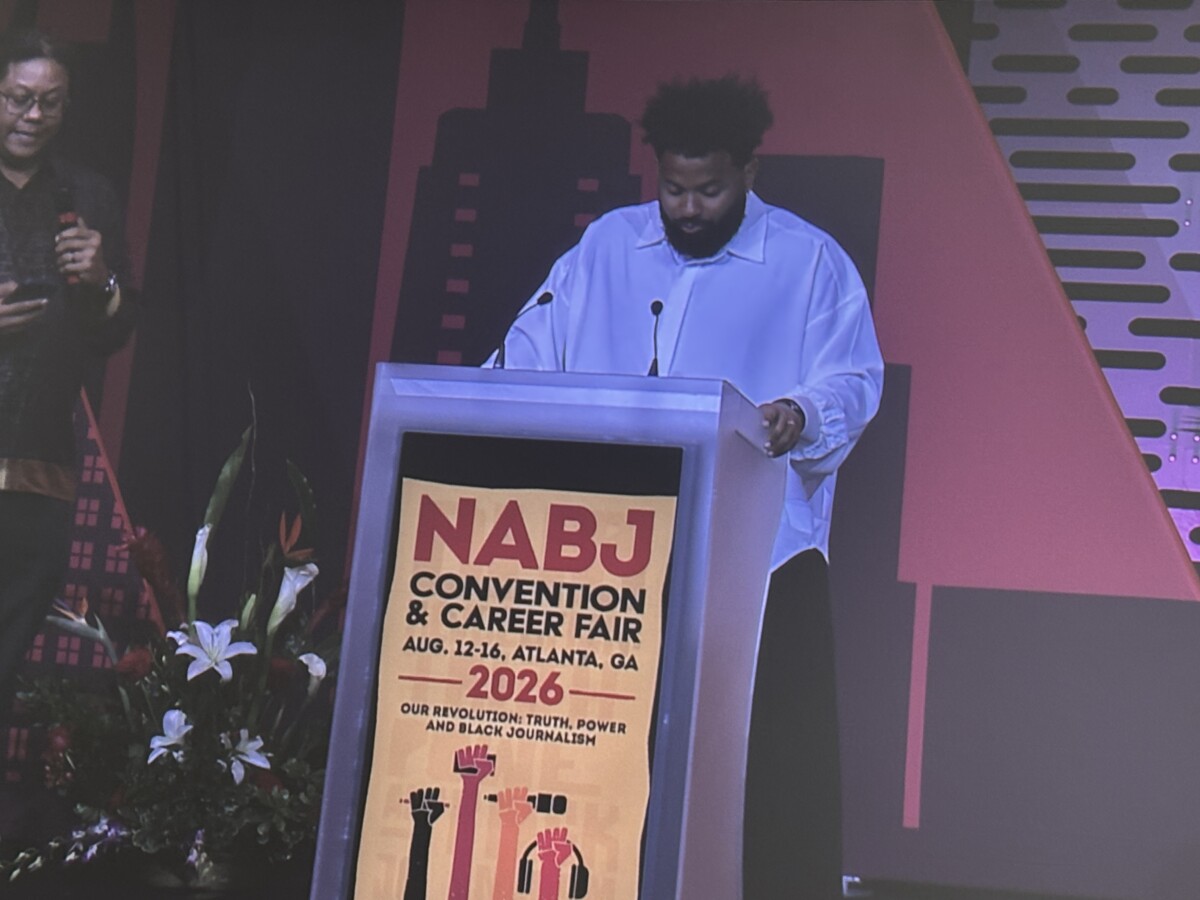
At left, Damaso Reyes, 2026 John S. Knight journalism fellow, and a former editor at large at the New York Amsterdam News, translates Abraham Jiménez Enoa’s remarks. Reyes has lived in Barcelona, Spain.
Cuban Honoree Links Black Struggle, Press Freedom
Abraham Jiménez Enoa, an honored Cuban journalist who fled to Spain to escape a dictatorial communist government, accepted NABJ’s Percy Qoboza award for a foreign journalist by declaring that “freedom of the press and the Black struggle occupy and share the exact same quality.”
“I have a speech prepared,” he began, “but I’d like to improvise for a few minutes because I’ve seen everybody else is talking very personally about their friends and family.
“It’s been four years since I got a call from the Cuban government, and they gave me a proposition. I could either go to jail or I could leave my home country. I took the latter choice and that’s why I’m here today. And that’s why none of my family or loved ones are here with me today. And the only reason that they’re not here is because I chose to be a journalist and to tell the truth. But after all of this happened and I’ve spent the last four and a half years in Barcelona, Spain, something amazing happened.
“I got to spend the last few days here with all of you in Atlanta. These last four years in exile have reawakened my Blackness within me.
“Being away from my family, my homeland has reawakened my connection to my culture, my history and my race.
“And spending the last few days here watching you, looking how you walk, how you act, how you pound each other, how you hug each other and love each other has been something really special. And people would see me and see me so happy, and maybe they thought I was a little crazy.
“Now I’ll get to the speech.
“Good evening. I accept this award on behalf of my skin, my country, my history, all of which I carry within me. I come from Cuba, an island where independent journalism is paid for with prison or exile.
“As a Black man, I know all too well what it means when power attempts to control your body, your space, and your voice. Exile displaces us, but it cannot uproot us. Percy Qoboza confronted apartheid with the truth. Today I pick up his torch, understanding that freedom of the press and the Black struggle occupy and share the exact same quality: the absolute refusal to be silenced.
“To the Cuban dictatorship, I remind you that Black rebellion runs deep in our veins. From slavery to exile, my people have always known how to break chains. You cast us out, but you do not shut us up.
“I dedicate this to my colleagues resisting on the island. We will keep riding with pride for Cuba, for the truth, for the unyielding dignity of our Blackness. Thank you very much.”
- David C. Adams and Frances Robles, New York Times: This Castro Is a Key Envoy to Trump. Could He Be Cuba’s Next Leader?
- Diario De Cuba: State Security raises harassment against independent journalist Niober García Fournier
- Diario de Cuba: The voice of connected Cuba: what two surveys reveal about discontent and the way out of the crisis
- National Association of Black Journalists Global Journalism Task Force, with Aurora Ellis, Rafael Peña, Liz Oliva Fernández, Romardo Lyons and Julio Antonio Rojas Portal: Black Journalists on Cuba’s Crisis (video)
- Prisoners Defenders: Repression in Cuba reaches a 13-year-old boy and turns exile into a condition for regaining freedom
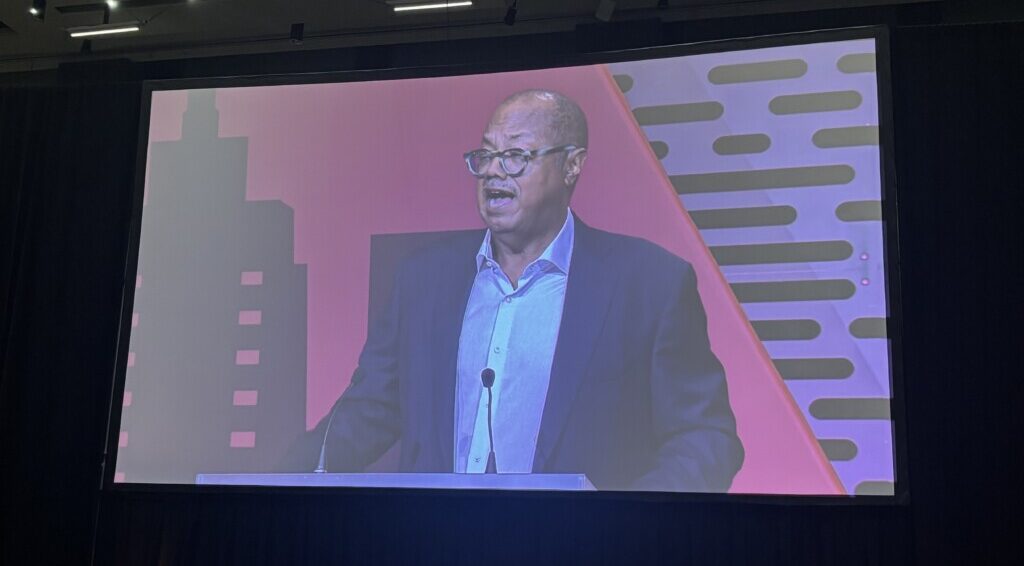
Staples Pays Tribute to Chuck Stone, Derrick Bell
Brent Staples, a member of the New York Times editorial board since 1990 and recipient of the Pulitzer Prize for editorial writing in 2019, accepted his Chuck Stone Lifetime Achievement Award with a tribute to Stone, columnist, editor and the first president of the National Association of Black Journalists; and Derrick Bell, first tenured Black professor at Harvard Law School and one who battled for equality.
“I received the Pulitzer Prize in 2019 for talking about racism with extraordinary moral clarity,” Staples said in an introductory clip. “I felt vindicated essentially for writing the story of my family and my people.”
“Good evening, y’all.” Staples began. “It is quite a responsibility to receive an award name for the first NABJ president, Chuck Stone, and one of the founders of NABJ.
“To understand the enormity of what Chuck accomplished, you have to understand what Philadelphia was like when Chuck became a columnist for the Daily News there in 1972, the first Black columnist. A few years before he arrived, a few friends and I were driving through downtown Philadelphia on Christmas looking at Christmas decorations and Lit Brothers department stores, Strawbridge & Clothier.
“It was one of the things you did in Philadelphia at Christmas. You sort of drove down looking at decorations. The police pulled us over for no other reason than we were Black. And they were pretty vociferous. They pulled the seats out of the car and put them on the sidewalk. They emptied out the trunk of the car. And when they could find no contraband, they turned to us and said, ‘These Black people, get out of Center City. You don’t belong here.’
 “It was their sort of basic fundamental apartheid statement of how they ran a significant American city. When Chuck (pictured) came there in 1972, he interposed himself between the police department and the Black community as a whole. He defended people against a kind of routine police abuse and maltreatment. It got to be up to a point where people who had warrants for their arrests in the city, Black people, they would surrender to Chuck rather than surrender directly to the police department because they felt that they’d had a better chance of surviving if he took them in. I think of that experience. I grew up in the area, but I think of that experience as the quintessential apartheid experience. ‘You don’t belong here.’
“In the recent years, I thought a lot about Chuck since I was notified of this award. And one of the things that happened to Chuck when he wrote these column after column after column, he was not timid. He was direct about calling racism by its rightful name.
“And some of his colleagues, white colleagues in journalism . . . accused Chuck of not being an objective journalist.
“And Chuck was operating under the point of view that racism was a fact of American life. He was operating, and oftentimes traditional media treats racism as a figment of the Black imagination, but Chuck was doing something different. In recent years, Chuck’s indictment of traditional media in America — and he indicted, he tied fire to Ben Bradlee at the Washington Post and other traditional institutions that perpetuated a kind of rhetoric, easy listening racist rhetoric that supported the process of condemning Black people to second class citizenship.
“In recent years, Chuck has been vindicated. If you notice in the last five years or so, there are a lot of newspapers in America that apologized for histories of racist coverage. That began around 2020. And that directly vindicated what Chuck had to say in 1970 or so. So Chuck was ahead of his time. He was brave. He took the consequences. He called it like he saw ’em and he lent his voice to a voiceless people. Now, in recent years, since the coming of the 47th president, we are facing an even more insidious kind of institutional racism than Chuck faced.
“As you notice, this presidency has established a practice, a setting about to re-segregate, actually re-segregate the government of the United States.
“Ejecting leaders, Black leaders from military posts, pointing out Black public servants, impugning their abilities and pushing them aside. They’ve developed an immigration policy that’s frankly, to me, reminiscent of South African apartheid, and continue to denigrate people who speak out against that.
“I regret to have to say that traditional media in the United States has not met this challenge (applause), has not met this challenge. One of my colleagues, Jamelle Bouie, recently wrote a column about the South African Elon Musk. And he went chapter and verse through all his easy listening eugenics and his racist policies. And Jamelle asked the question, he said, ‘Why are public institutions, including journalists, treating this as somehow a side issue?’ Don’t they understand this is the central point of all his policies, of his whole program?
“It is essentially an apartheid segregationist policy. Now I would say that if Jamelle were here, I would say what’s the answer to that is unfortunate. The answer is partly that many people in traditional journalism today believe some of the racist myths that are being spouted. So some of the people you work with believe that stuff. I’ve worked with people who believe that stuff. And so what this essentially shows is wherever I go, wherever I go, I’m often told not to do this, but wherever I go, I bring up the name Derrick Bell.
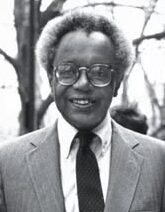 “The legal scholar Derrick Bell (pictured), who fought segregation in the South, told us in the mid-970s, and he upset lots of people by saying the following, he said, ‘Racism is an integral structure, permanent structure in American life. The battle against it will never be won,’ he said. Yet as Black people, our role is not to give up. It is to persevere and fight that struggle and live full lives in spite of it. And that, I have to tell you, if I got to say one thing tonight, it’s a legacy that Chuck left behind, legacy that Derrick left behind. And I, for one, am up for the fight. Thank you.”
In addition:
Morgan Olivia Norris, Student Journalist of the Year
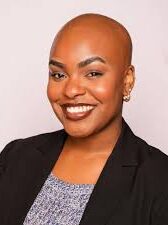
“Weeks before graduation, I lost all of my hair to alopecia. I hid for a while, but one day, contrary to what I wanted to happen, I grabbed my razor and the coconut oil and started just shaving off the rest. What is wrong with me? What am I doing? I FaceTimed Azeza Schuler at CBS New York, another journalist with alopecia. We cried together on the phone and I obeyed the spirit within me and walked out at my HBCU bald, honey. Okay. All right. And guys, I was also anti-masters. I applied as a plan B. So imagine my surprise when I got two full rides to NYU and Northwestern. . . .
“I say all this to say everyone in this room, thank you for being obedient to the call that God has on your life. Layoffs, unknown future. But you’re still here because you’re obedient. And for those who know that they should switch industries, do so. Ask what move God wants you to make. And if it’s to go, go.”
Brandi S. Cummings, Journalist of Distinction
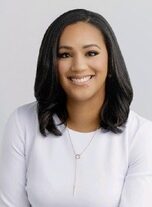 To Black women: “I thank you for being examples of excellence in action. I even thank the coworkers I don’t like because they make me sharper. They teach me lessons in patience and restraint. They remind me that not everything deserves my attention or my response.
“But I leave you tonight with this. To the reporter or anchor wondering if you belong, wondering if you’re making a difference while facing racism, sexism, and all the other isms that come along in and out of the newsroom. I see you. To the leader doing God’s work for our people. Giving everything to help others and wondering where the strong go when they’re tired, overworked, hurt, angry, scared, or worried. I see you. To the journalists trying to balance how the Black community sees you, how your colleagues treat you, and how your family and what your family needs from you. I see you. I am you.
“But tonight I say, keep going. Let’s continue to show up with intention over and over and over again. Let’s do this work with heart, even when no one’s watching. And let’s not forget to make room for someone else at the table. And sometimes get the hammer and the nails and build our own table if we have to.”
Beatrice Elizabeth Peterson, Journalist of the Year
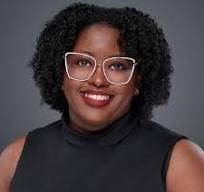 “Washington for me is not a deadline or a dateline. It is home. It is where I press t-shirts in my family’s shop in Southeast….
“My school, a small little institution in DC, had no journalism program, no student newspaper, but I started at the bottom watching, learning, working every desk I could. I kept working, I kept learning, and people kept taking chances on me. I want to thank my colleagues and leadership at ABC News and everyone who makes this work possible. From the producers, the editors, photographers, camera guys, crew, desk assistants, interns, security, hair and makeup. This award may carry one name, but journalism is never one person’s work. I showed up early. I stayed late. I heard no. I kept going. I took the long way, but it still got me here. And the work continues. To all of them and to all of you, I say thank you.”
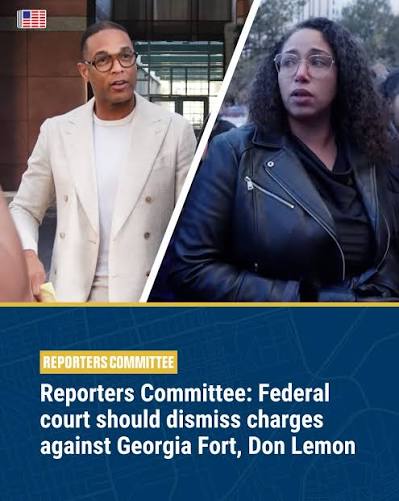
46 News, Media Organizations Back Fort, Lemon
Forty-six news and media organizations are urging a federal court in Minnesota to throw out indictments against independent journalists Georgia Fort and Don Lemon related to their coverage of an immigration enforcement protest at a St. Paul church earlier this year, the Reporters Committee for Freedom of the Press reported Wednesday.
“In a friend-of-the-court brief filed Wednesday in the U.S. District Court for the District of Minnesota, the Reporters Committee argues that federal prosecutors are misapplying two civil rights statutes to criminally charge the journalists for engaging in newsgathering activity.
“If the charges are upheld by the courts, the Reporters Committee argues, federal officials would gain a powerful tool to suppress news reporting in the public interest.”
The participating organizations are listed in the court brief.
“ ‘This is a case of clear government overreach, with the Justice Department attempting to deploy two highly potent civil rights laws to target journalists,’ said Reporters Committee President Bruce D. Brown. . . .
“In its brief in support of the journalists’ motions, the Reporters Committee argues that Fort and Lemon cannot be held criminally liable for violating the two statutes cited in the indictments because those statutes require a specific intent to deprive someone of a protected right.
“As the brief explains, journalists covering protest activity lack that mental state. The brief also emphasizes the harm that could result if the court accepts the government’s arguments, warning that prosecutors could use the laws to target journalists asking questions in public spaces — a First Amendment-protected activity that reporters engage in every day. . . .”
Short Takes
“MLK50: Justice Through Journalism spent a year collecting data on felony murder,” Rebecca Cadenhead reported July 27 for that project, whose work was a winner Saturday at the National Association of Black Journalists’ Salute to Excellence Awards. “We analyzed court records from hundreds of cases and conducted dozens of interviews with those incarcerated under the rule and their families, former defense attorneys and former prosecutors. Our work reveals, for the first time, how Tennessee prosecutors use the rule against the state’s children. While the law itself does not mention race, prosecutors almost exclusively use it to prosecute Black children. . . .”
 “Last week, in a column I wrote for The Kansas City Star, I announced that for the first time in its 107-year history, The Call did not publish, and that the paper’s future was unclear,” Mara Rose Williams wrote Wednesday for the Star. “Here’s the good news: [owner Jason] Joseph told me he has no intention of shutting down The Call altogether. . . . Joseph said that while he is committed to seeing The Call continue to publish for now, continuing to operate the paper is not a long-term goal. He is ready to sell it to the right buyer.”
- A $7,500 grant from the Solutions Journalism Network will be used “to support a team of student journalists covering mental health issues among Indigenous youth with a solutions-based focus,” the University of Kansas announced Tuesday. “ ‘Good Morning Indian Country’ will take part in this year’s Solutions Journalism Network Student Media Challenge. . . .”
- Abusive litigation known as SLAPPs (Strategic Litigation Against Public Participation) is “increasingly being used to intimidate and silence independent journalism and public interest reporting across Africa,” the International Press Institute said Friday, commending the African Commission on Human and Peoples’ Rights (ACHPR) for adopting a resolution on the issue.
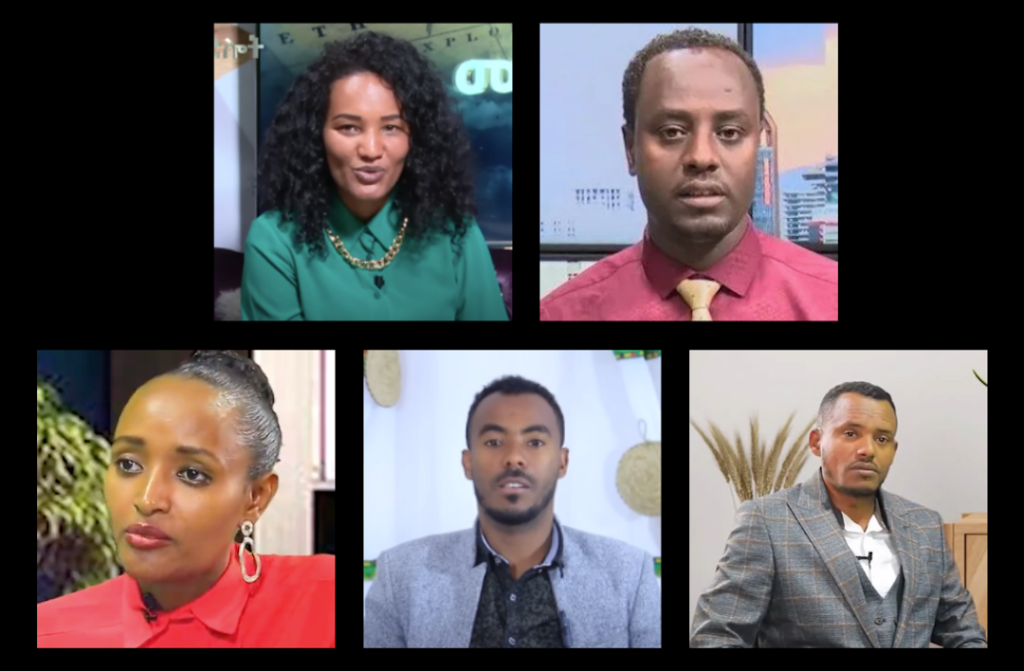
Clockwise from top left: Genet Asmamaw, Gobeze Sisay, Abay Zewdu, Dawit Begashaw and Meskerem Abera. (Images: Medlot Media/YouTube, Courtesy of Gobeze Sisay, Amara Media Center/YouTube, Arat Kilo Media/YouTube, Ethio Nikat Media/YouTube)
- The Committee to Protect Journalists Thursday called on Ethiopian authorities “to immediately release five journalists who have been in detention for three years awaiting trial, instead of pressuring them to admit to, and apologize for, taking part in a deadly insurgency in exchange for their freedom. Gobeze Sisay, Meskerem Abera, Genet Asmamaw, Dawit Begashaw, and Abay Zewdu have refused to write such apology letters, which they regard as ‘self-incriminating,’ their lawyer, Solomon Gezahagn, told CPJ. The five were detained in 2023 on terrorism charges in connection with their reporting on unrest in the Amhara region.”
