
Owner Jeff Bezos Punted on Diversity Issue
Report SCOTUS Decision as a Threat, Rights Leaders Say
Abroad, Journos’ Frustration Led to Clarity
Poynter Awards Stories on Poverty, ICE, Healthcare
Press Freedom Around the Globe Lowest in 25 Years
Short Takes: Westside Gazette’s Rev. Levi Henry, Jr.; Janis Ware and Atlanta Voice; diversity leads to higher salaries; IRE’s managers and editors of color cohort; cost to Memphis of Tyre Nichols lawsuit; Speedy Morman; Gayle King; Larry Madowo; arrested Cuban journalist; Argentinian president blocks reporters.
Homepage photo credit: Team WashPost/Facebook
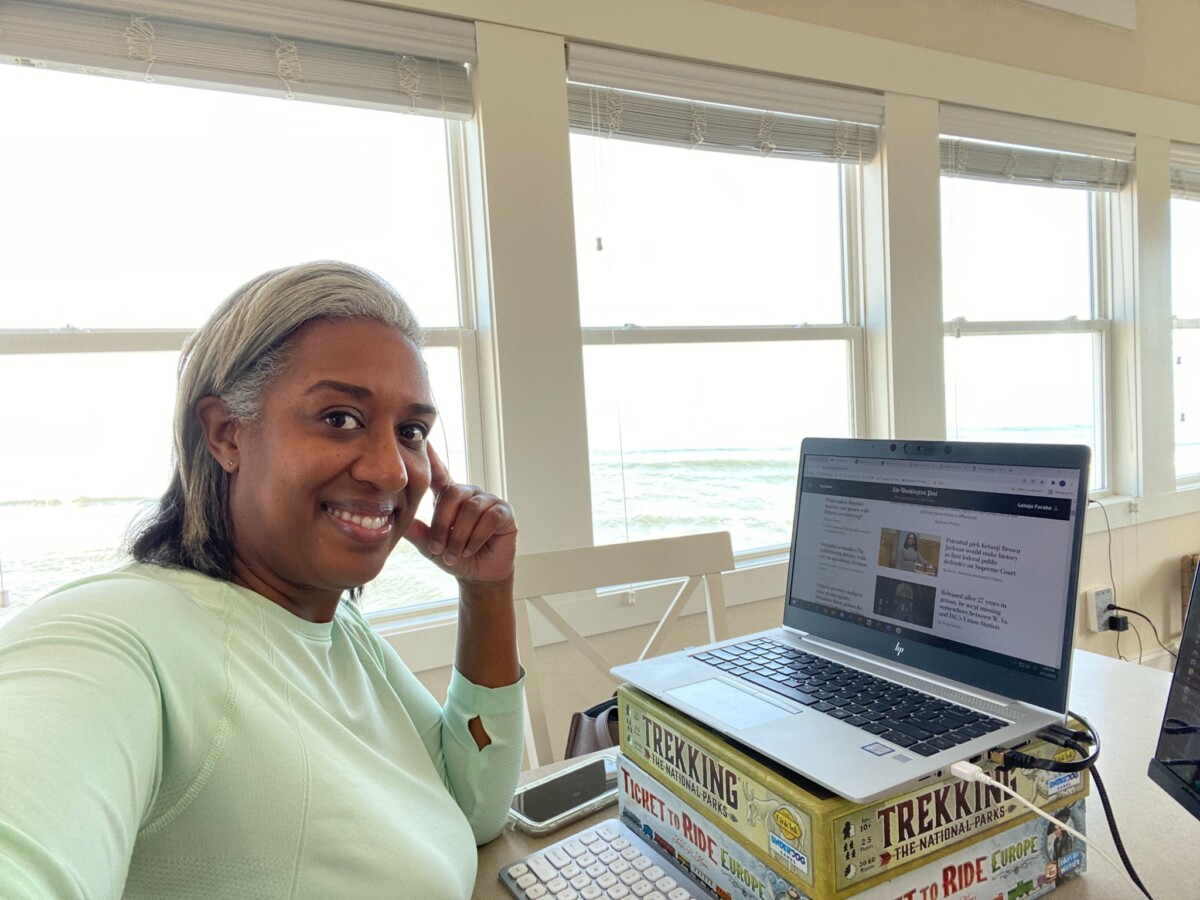
Lahaja Furaha, then at the Washington Post, participates in a 2021 panel discussion about the rise of diversity, equity and inclusion efforts in the newsroom. (Credit: YouTube)
Owner Jeff Bezos Punted on Diversity Issue
The Washington Post has eliminated the team responsible for overseeing diversity and inclusion at the newspaper as the newsroom’s diversity figures plummet and owner Jeff Bezos punts on the diversity issue, saying that addressing it will have to wait until after he “fixes” the Post, according to authoritative sources.
Lahaja Furaha, the paper’s the paper’s first companywide director of diversity and inclusion, had held the job since 2020.
“As the inaugural DEI [diversity, equity and inclusion] senior leader, I designed and implemented the first enterprise-wide Inclusivity and Equity strategy, leading a cultural workforce transformation across a 2,500-employee, multi-regional and dispersed workforce,” Furaha wrote on LinkedIn. “Built and executed the organization’s first comprehensive DEIB [diversity, equity, inclusion and belonging] roadmap, embedding inclusive leadership behaviors across talent, workforce planning, succession, and total rewards.”
She said she did so “while strengthening retention and preserving organizational capability during revenue contraction. I designed and built a sustainable state-of-the-art Inclusion Network program, expanding my team, leading six networks, 36 leaders and $100K in annual programming budget.”
However, the Post announced mass layoffs in February, offering severance packages to the roughly 350 staff members losing their jobs, according to Columbia Journalism Review. Data released by The Washington Post Guild shows that the Feb. 4 Post layoffs – affecting more than a third of its employees — fell heavily on union members of color,.
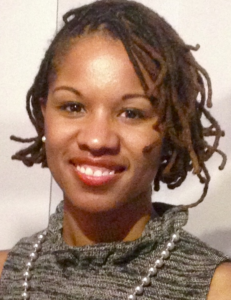 In 2020, then-Executive Editor Martin Baron announced that Krissah Thompson (pictured) would be the first Black woman to rise to managing editor, no longer a title given only to one person at a time.
The former Style section writer “will be in charge of ensuring significant, consistent progress on diversity and inclusiveness in everything we do – our coverage of race, ethnicity and identity as well as improved recruitment, retention and career advancement for journalists of color,” Baron said in his 2020 statement. “She will have the strong backing of the newsroom’s senior leadership in that highest-priority effort. She will require the support of everyone.”
 In December, the current executive editor, Matt Murray (pictured), who consistently praised Thompson, announced that she would become editor of WP Ventures, whose “goal is to explore how The Washington Post can effectively grow our reach, revenue and relevance with new audiences in a rapidly changing media landscape.” But in July, that project changed focus, and Thompson left the paper.
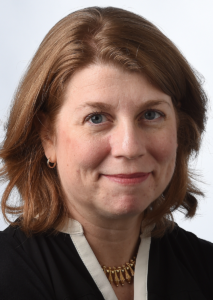 The diversity portfolio then went to Liz Seymour (pictured) as part of her duties as a managing editor. Seymour announced Tuesday that this would be her last week at the Post, “where I am retiring after 27 years.” Diversity plummeted during her tenure, with no more than 10 or so Black reporters remaining in the newsroom, according to estimates.
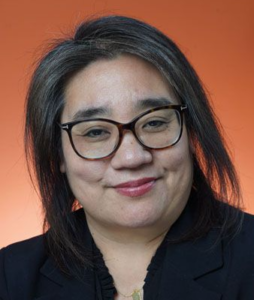 Neither Seymour nor Post spokespeople have responded to questions about the diversity numbers, although Kimi Yoshino (pictured), founding Baltimore Banner editor-in-chief and an Asian American, joined the Post as a managing editor last July.
Also in July, Murray acknowledged to the National Association of Black Journalists, “It is certainly true that in the current voluntary separation program, we are losing several valuable Black colleagues, including senior editors. We all regret the departure of these smart and valued colleagues, and we wish them continued success.
“We also remain deeply committed to fostering diversity around The Post, where we are ardently engaged in the work of restructuring and reinvigorating the institution. We all agree that there is undoubtedly work to do on this front throughout the newsroom — and that has been true even before the current departures.
“Among other things, we are launching a two-year internship program for young journalists of color. And I, along with several of my colleagues, will be attending NABJ’s 2025 Convention & Career Fair next week in Cleveland where we’ll be actively recruiting for many open roles. Of course, ultimately, we know we will be accountable for what we do to build The Post’s next chapter, not just what we say.”
Last month, Natalie Korach reported for the March 12 Status newsletter, Post owner “Jeff Bezos hosted a small group of Washington Post masthead editors and high-profile reporters at his Kalorama mansion in D.C., a rare moment of direct outreach from the billionaire owner, who has largely remained mum regarding the paper, including during the bruising layoffs executed last month.
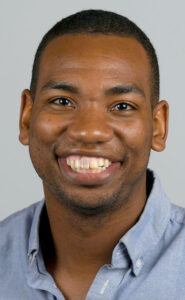 “The meeting included Nick Baumann, Natalie Allison, Emily Rauhala, Hannah Natanson, Drew Harwell, John Woodrow Cox, [and] Robert Samuels (pictured), among others, according to people familiar with the matter. Before entering, reporters were required to leave their phones outside — an unusual ask that underscored the sensitivity of the gathering, and perhaps, Bezos’ desire to keep the contents of it private. Status, however, has learned details about what was discussed, after speaking to a number of people close to the gathering.
“The meeting featured two working sessions with lunch served on Post-branded china, where the lucky few were able to press Bezos directly on everything from his relationship with Donald Trump to his commitment to the newspaper’s future.”
There, authoritative sources told Journal-isms, Samuels, a Black journalist, asked a question about diversity. Bezos essentially said the company needed to fix The Post first and then could get to it, a reaction said to have surprised those in the room. Samuels responded that one can’t fix The Post without improving diversity.
Korach also reported, “Two people said Bezos appeared confident in his and leadership’s ability to turn The Post’s business around and into a self-sustaining media company. A spokesperson for Bezos did not respond to multiple requests for comment.”
- Adriana Fraser, The Dig, Howard University: “Upon graduating in May, [Zoe] Cummings will return to the Washington Post this summer as a features reporter intern.”
- Jessica Guynn, USA Today: Blow the whistle, get paid. Insiders fuel DEI complaints under Trump
- Journal-isms: Reversal: WaPo Editorial Board Opposes DEI Program (scroll down) (April 2)
“Every American that cares about democracy, and what this country is today, and who embraces a vision of a multiracial American future, should understand that when you look at this in connection with other Supreme Court decisions, and the actions in the executive branch today, it’s part of an ongoing pattern,” said National Urban League CEO Marc Morial. (Credit: YouTube)
Report SCOTUS Decision as Threat, Rights Leaders Say
The news media should frame the Supreme Court’s Monday decision gutting a key portion of the Voting Rights Act in the broader context of a threat to democracy, as a throwback to the legalized white supremacy of earlier eras and as a development that affects all vulnerable Americans, not just Black people, civil rights leaders said Thursday.
The executive director of the ACLU of Louisiana, Alanah H Odoms, made comparisons to United States v. Cruikshank, an 1876 landmark Supreme Court case from Louisiana that limited federal power to protect Black citizens during Reconstruction.
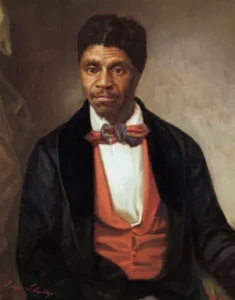 The Rev. Al Sharpton, founder of the National Action Network, referenced President Andrew Jackson, whose portrait was installed in the White House by President Trump. It was Jackson who appointed Justice Roger B. Taney, Sharpton noted. Taney delivered the infamous 1857 Dred Scott (pictured) decision, which said that African Americans “had no rights which the white man was bound to respect.”
“We claim to be the leading democracy on this globe, and yet less than 60 percent of eligible voters are actually participating,” Derrick Johnson, president and CEO of the NAACP, told more than 800 people watching a midday online media briefing. (The number tripled as more called up the video later in the day.)
“Which brings a sharp question, are we truly a democracy? I hope members of the press see this for what it is, report it how it should be reported, and not capitulate as if it’s a tennis match of ‘us versus them.’ No, it’s us for democracy.”
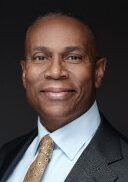 Said Todd A. Cox (pictured) of the Legal Defense Fund, which filed a brief in the case, “it should be framed as a decision that impacts Black people, Latinx people, communities of color in general.
“Long before this decision, voters of all races have been at the heart of politicians’ desire to be elected. They place voters where they want, they put them in districts that . . . will elect them.
“That’s nothing new. What is new is that the Supreme Court has sanctioned that practice, which used to be unlawful, and allow it now to be a shield against accusations of discrimination.
“The more we feed into that by talking about this in partisan terms, by talking about it as a tennis match, we devolve and, frankly, diminish the importance of what is going on here. What is going on here is the elevation and the institutionalization of white supremacy.
“What is going on here is using race as a tool for some to achieve and hold on to power in the way this country has seen for centuries.
“And so, how I would characterize [it] and how it should be characterized is that way: This is about race.
“It is about the most vulnerable people in our communities, and it’s about people in power wanting to keep those vulnerable communities out of power. And we as civil rights leaders need to call it what it is, and not allow politicians to seize the day and talk about this only in terms of what benefits them as political parties.”
Mark Sherman reported Thursday for the Associated Press, “The Supreme Court on Wednesday hollowed out a landmark Civil Rights-era law that has increased minority representation in Congress and elsewhere, striking down a majority Black congressional district in Louisiana and opening the door for more redistricting across the country that could aid Republican efforts to control the House.
“In a 6-3 ruling, the court’s conservative majority found that the Louisiana district represented by Democrat Cleo Fields relied too heavily on race. Chief Justice John Roberts had described the 6th Congressional District as a ‘snake’ that stretches more than 200 miles (320 kilometers) to link parts of Shreveport, Alexandria, Lafayette and Baton Rouge. . . .”
Many news organizations did report the decision with context and gravity. “Supreme Court Strikes Down Louisiana Map, Another Blow to Voting Rights Act,” wrote The New York Times.
“Supreme Court hollows out a landmark law that had protected minority voting rights for 6 decades,” wrote the Chicago Tribune, over an Associated Press story.
But others were tame. “Supreme Court invalidates Louisiana congressional map over race,” the Miami Herald wrote over a story by CQ-Roll Call.
Participants in the media briefing said they planned to boost voter education and turnout efforts, though convener Marc Morial, CEO of the National Urban League, said at the outset, “We’re not going to telegraph to the world” what the groups’ post-ruling strategy would be.
However, more cooperation among the groups and more effective use of media, particularly in the case of Asian Americans, appeared to be among the favored approaches.
 John C. Yang (pictured), president and executive director of Asian Americans Advancing Justice, said, “our community has gone up from 0.5 percent in 1965, when the Voting Rights Act was passed, to about 7 percent of our population after the 2020 census.
“So, number one, it’s about educating, literally, around civics. And opportunities like this, around the Voting Rights decision, around birthright citizenship, around immigration more generally, is an opportunity for all of us to talk to our communities about what it means to be an American, and the responsibility, both our right to vote, but our responsibility to vote, and what that means for their everyday lives.
“The other thing that’s important in this moment for all of us, including the media, to think about, is how do I reach out and inform our citizenry about what is going on? For the Asian American community, that also means reaching out in language. Thirty-percent of our community is limited English proficient, so making sure we have media, making sure we have information in language so that they understand it in a very real way.”
The NAACP’s Johnson noted that the Voting Rights Act covered San Francisco “because of the long history of preventing Chinese and other Asian Americans from [being] fully engaged in our democracy.”
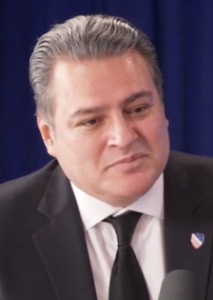 Latino leaders noted how their constituents were affected. Juan Proano (pictured), president of the League of United Latin American Citizens, known as LULAC, said, “In Texas, Latinos drove the population growth that earned the state two additional congressional seats. And Texas lawmakers responded by reducing the number of Latino-majority districts from eight to seven. Section 2 [of the Voting Rights Act] was the legal foundation LULAC used to fight these gerrymandered maps. Yesterday, that foundation was taken away from us, all of us.”
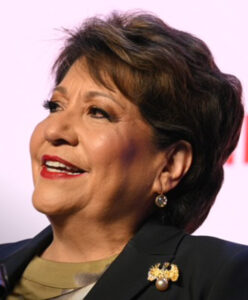 Proano said his group would be collaborating more with the UnidosUS organization, whose president, Janet Murguía (pictured), was also on the call.
Others were Kristen Clarke, general counsel for the NAACP and former U.S. assistant attorney general for civil rights; Melanie Campbell, president/CEO, National Coalition on Black Civic Participation; the Rev. Shavon Arline-Bradley, president and CEO of the National Council of Negro Women; Damon Hewitt, president and executive director of the Lawyers’ Committee for Civil Rights Under Law, Maya Wiley, president and CEO of the Leadership Conference on Civil and Human Rights; and Nick Brown, Washington state attorney general and chair of the Election Protection Voting Working Group for the Democratic attorneys general.
“I don’t think many people have a recollection of what this [country] looked like before the 1960s,” Morial said in concluding. “Where racial gerrymandering — some states had districts which were completely different in size. There was no regard to the voting rights of African Americans. . . .
“An assault of unprecedented proportions. . . . Those gains were about perfecting American democracy, which was broken, because it cut people out and did not include” everybody. “We need to see this in a broader context. . . .”
- Audra D. S. Burch, Emily Cochrane and Jamie Leventhal, New York Times: Why Is There a Voting Rights Act? A Timeline
- Sara Cline, Jack Brook and David A. Lieb, Associated Press: Louisiana congressional primaries are suspended as a result of the Supreme Court’s ruling
- Sherrilyn Ifill, Substack: SCOTUS Drops The Other Shoe on the Voting Rights Act
- Terry Tang, Associated Press: The Black Caucus is the ‘conscience of Congress.’ Supreme Court ruling has it bracing for a big hit
- Joseph Williams, Word in Black: SCOTUS Voting Rights decision is ‘almost as bad as it gets’ — Legal experts warn that the 6-3 decision, which all but invalidates the Voting Rights Act of 1965, could reshape representation for a generation.
View this post on Instagram
If no image appears, please consider using a different browser
Abroad, Journos’ Frustration Led to Clarity
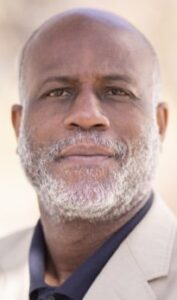 “The conversation was brief, almost deceptively so,” Garry Pierre-Pierre (pictured), founder of the Haitian Times in Brooklyn, N.Y., wrote April 24 for URL Media.
“In less than an hour, we opened a vein — probing what it means to be a Black journalist practicing our craft far from the Continent, navigating newsrooms where we are often both visible and unseen. That exchange took place last week at the International Journalism Festival in Perugia, Italy, a gathering that annually convenes the industry’s leading journalists, philanthropists and technologists amid the city’s medieval stonework and Renaissance architecture.
“But beneath the grandeur, something quieter and more troubling had unfolded. At least five proposed panels focused on Black journalists or issues central to our experience were rejected. . . .
“Out of that frustration came clarity. Sara Lomax, co-founder of URL Media, proposed that we create our own space — no gatekeepers, no permission slips. We called it Black Beyond Borders.
“What began as a workaround became a signal. Soon enough, the organizers folded it into the official program, and word traveled quickly through Perugia’s narrow streets and vaulted halls.
“Sara, unable to attend, sent a message that landed with force. This was not just about one panel. It was about erasure, about Black journalists being pushed out of newsrooms, about independent voices being targeted, about a broader attempt to diminish the role of Black media at a moment when it is most needed. “We are stronger together,” she reminded us. It was less a slogan than a survival strategy.
“The conversation itself unfolded in layers. Seada Nourhussen spoke of being the only Black editor-in-chief in the Netherlands, a singular presence in a national newsroom, carrying both the weight of representation and the isolation that comes with it. I shared our experience at The Haitian Times, being doxed and swatted after pushing back on [JD] Vance’s false claims about Haitians in Springfield, Ohio. Journalism, in that moment, felt less like a profession and more like standing in open water during a storm (no shelter, just endurance).
“Then came a moment that reframed everything. A journalist from the Middle East stood up and said their panels had also been rejected. They were upset, but had done nothing. ‘You Americans acted,’ he said. ‘That’s leadership.’ . . .”
“Where Then Shall We Go? | A Backyard Neighborhood for the Unhoused in New Haven” told the story of a family in one of New Haven’s poorest neighborhoods who opened up their backyard for unhoused people to live in, aspiring to create an alternative to the overburdened shelter system as homelessness surges across the state. (Credit: Connecticut Public/YouTube)
Poynter Awards Stories on Poverty, ICE, Healthcare
A Baltimore Banner story about how hard it is for students in the majority-Black Baltimore school system to get to school on the public bus system, a look by Ginger Thompson and Doris Burke of Pro Publica at how the healthcare system is preying on unsuspecting African Americans in Georgia, and the Chicago Tribune’s comprehensive coverage of ICE actions in the city were among winners Monday in the 2026 Poynter Journalism Prizes, Jennifer Orsi reported for the Poynter Institute.
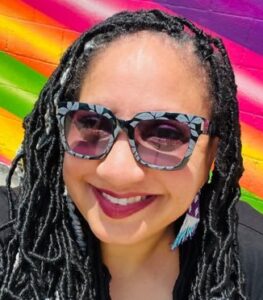 Sarah J. Glover (pictured), vice president of news and civic dialogue at WHYY in Philadelphia, won the Robert G. McGruder Award for Diversity Leadership. The judges said, “Sarah Glover is clearly a journalist who has established a strong presence in Philadelphia and a reputation built over decades of award-winning work. The work she has done at WHYY is quite impressive. The stories are strong and reflect her understanding of the city.”
Honored for “distinguished reporting on poverty were Ryan Caron King and Julianne Varacchi of Connecticut Public Television for Where Then Shall We Go?
“This documentary will stay with you,” the judges said. “Fresh idea, well executed, the filmmakers followed the story for two years, immersing themselves in the lives of their subjects. Their dedication to telling the story through the eyes of those affected allowed for nuance and complexity.”
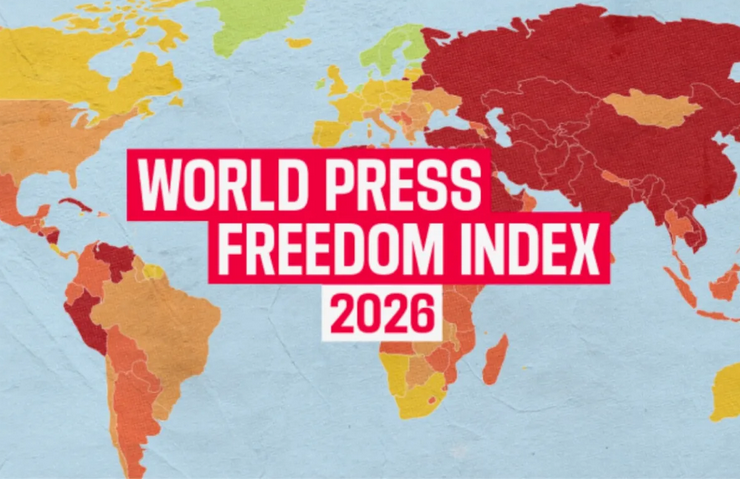
Press Freedom Around the Globe Lowest in 25 Years
“For the first time in the history of the Reporters Without Borders (RSF) World Press Freedom Index, over half of the world’s countries now fall into the ‘difficult’ or ‘very serious’ categories for press freedom. In 25 years, the average score of all 180 countries and territories surveyed in the Index has never been so low,” Reporters Without Borders said Thursday, as relayed by Editor & Publisher.
“Since 2001, the expansion of increasingly restrictive legal arsenals — particularly those linked to national security policies — has been steadily eroding the right to information, even in democratic countries. The Index’s legal indicator has declined the most over the past year, a clear sign that journalism is increasingly criminalised worldwide.
“In the Americas, the situation has evolved significantly, with the United States dropping seven places and several Latin American countries sliding deeper into a spiral of violence and repression.”
Where does your favorite country rank? View the survey here.
Short Takes
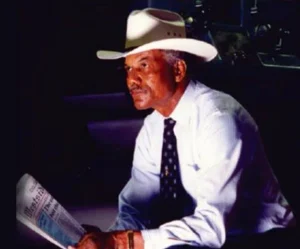 “Rev. Levi Henry, Jr., (pictured) publisher emeritus and founder of the Westside Gazette in Fort Lauderdale, died on April 7 at age 94,” the Florida Courier reported April 16. “More than five decades ago, when the stories of Black communities were too often overlooked, misrepresented, or ignored, Levi Henry, Jr. dared to create something different. He founded the Westside Gazette not just as a newspaper, but as a mission — a platform to inform, uplift and empower,’’ said his son, Bobby R. Henry, the publisher of the newspaper. Levi Henry Jr. was inducted into the Hall of Fame of the National Association of Black Journalists in 2022.
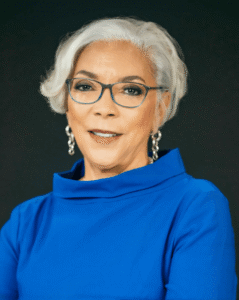 “After nearly 50 years with The Atlanta Voice, including more than three decades as publisher, Janis Ware is stepping back — passing leadership of the historic Black newspaper to the next generation. Her nephew Richard Dunn, the Voice’s current COO, and her niece Jazmine Brazier, the company’s development specialist, will now lead the outlet,” Haeven Gibbons reported April 22 for the Pivot Fund. “Ware’s experience offers clear guidance for community publishers,” Gibbons continued.
- “Racial diversity in higher education is associated with higher student salaries,“ Debanjan Mitra, Peter N. Golder and Mariya Topchy wrote Wednesday for Nature, reporting on studies of students who graduated from 141 business schools over 29 years and 200 law schools over 21 years. “Policies that promote racial diversity seem likely to enhance education and benefit society overall.”
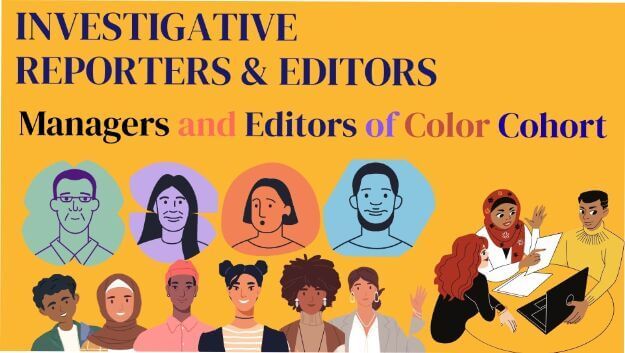
- “Investigative Reporters & Editors is forming a new community open to folks who are investigative editors or managers!,” the organization announced. “If you’d like to join the community, first step: apply to join the Journalists of Color Slack here. Then, head to the new channel: #investigative-managers-and-editors.”
- “The City of Memphis has spent at least $2.76 million in legal fees over the last three years defending itself in the ongoing civil lawsuit related toTyré Nichols’ death, records obtained by The Commercial Appeal through a public records request show,” Lucas Finton reported Tuesday for the Commercial Appeal. Nichols, a 29-year-old Black man, died in January 2023 three days after a brutal beating by Memphis police after a traffic stop.
 “On Monday (Apr. 27), Speedy Morman (pictured) announced his departure from Complex, closing the door on a 10-year stint with the publication, which he describes as an ‘incredible era,’ ” Haniyah P reported Tuesday for theGrio. “As he steps into this next chapter, Morman is joining a larger collective of Black journalists and media personalities leaving traditional media platforms to pursue more independent endeavors. Between media acquisitions, mass layoffs, and cultural changes, more and more journalists have been forced to find creative ways to do what they love.”
 As with the “CBS Evening News” with Tony Dokoupil, “The Gayle King-led ‘CBS Mornings’ is also struggling, signaling a network-wide public image problem under [CBS News Editor-in-Chief Bari] Weiss’ leadership,” Oliver Darcy reported Tuesday for his Status newsletter. “The show, which posted its worst ratings on record in the first quarter of 2026, saw its lowest-rated April on record in both total audience and the 25-54 demographic. According to the data obtained by Status, the show has now delivered four consecutive months under 1.8 million total viewers and under 300,000 in the 25–54 demo.”
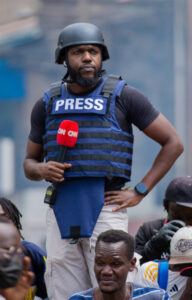 “In recent months, Larry Madowo (pictured), CNN’s Africa correspondent, has reported on a troubling trend: young men from countries including Kenya, Nigeria, and Uganda being recruited to Russia with promises of civilian work, only to find themselves fighting in Ukraine,” Maurice Oniang’o reported April 22 for Columbia Journalism Review. “Madowo’s reporting has exposed a pattern of deception and forced conscription, illustrating how Africans can be drawn into global power struggles that undermine their interests. Critics have accused Madowo of reinforcing Western stereotypes about the continent, particularly when he covers what some view as ‘negative’ stories, such as those involving conflict, political repression, and crisis. Madowo rejects that framing. His mandate, he said, is ‘to report Africa accurately, not always positively.’ Our conversation has been edited for length and clarity.’ . . .”
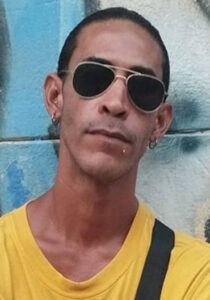 “The independent journalist and activist Ángel Cuza Alfonso was arrested this Thursday by agents of the Cuban State Security while he was with his young daughter at the corner of his house, according to a report shared on Facebook by activist Keilylli De La Mora Valle,” CiberCuba reported Thursday. “According to the video, the agents arrived in a vehicle and took Cuza into custody. During the arrest, there was a physical struggle, and the girl managed to grab one of the agents while trying to defend her father. . . . The detention on Thursday is part of a systematic pattern of the regime to carry out preventive arrests on the eve of politically sensitive dates.” Separately, Cubalex reported that protests against the government increased during March. They “increased not only in quantitative terms, but also in radicalization. In addition to the slogans in reference to the economic situation, others of a purely political type were frequent, which alluded to the change of regime and system (Freedom, Down with communism) and even, openly expressed that the sense of the protest went beyond the economic (We do not want electricity, we want freedom), contradicting the narrative used by the Cuban authorities.”
- In Argentina, “The president blocked accredited reporters from entering the government’s headquarters. He took to social media, in all caps, to insult the country’s news media as ‘filthy scum that claims to be journalists.’ He posted an AI-generated image that showed a local TV journalist in an orange prison jumpsuit,” Isabel Debre reported Monday for the Associated Press. “The president in question was not the one you might think. It was Argentina’s radical libertarian Javier Milei. . . .”
