
‘Journal’ Producer Led Two HBCU J-Schools
What Is Life Truly Like for Blacks in Cuba?
Gov’t Says It Is Combating Racism. Journo Says Don’t Be Naive
Richard Prince to Receive Parker Award for Media Coverage
Jin Ding Elected AAJA President (added June 27)
‘Influential Journalist, Educator, Civil Rights Advocate’
Feedback: Wayne Dawkins, John McClelland
Tony Brown narrates “20 years of historical footage and interviews on issues, events and personalities that shaped the African-American community and the nation.” (Credit: YouTube)
‘Journal’ Producer Led Two HBCU J-Schools
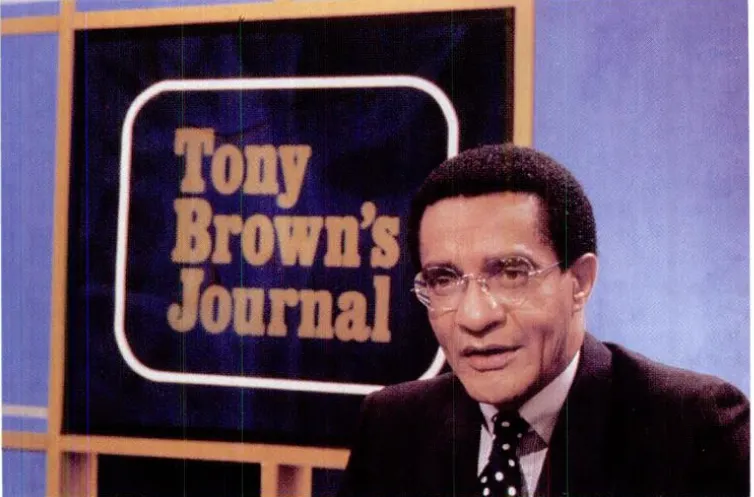
Tony Brown, legendary host and executive producer of television’s pioneering “Black Journal,” later “Tony Brown’s Journal,” and founding dean of the journalism school at Howard University, died June 17 at his home in Newport News, Va., his office announced Friday. He was 93 and died of coronary heart disease.
An obituary prepared by his office said “Tony Brown’s Journal” was the longest-running series in the history of the PBS network. “Black Journal” ran from 1968 until 2008, when it changed its name to “Tony Brown’s Journal.” The show was part of a wave of Black news and public affairs programs that followed the uprisings of the 1960s and the Kerner Commission’s [PDF] 1968 admonition that almost all media reporting on the Black community “reflects the biases, the paternalism, the indifference of white America.”
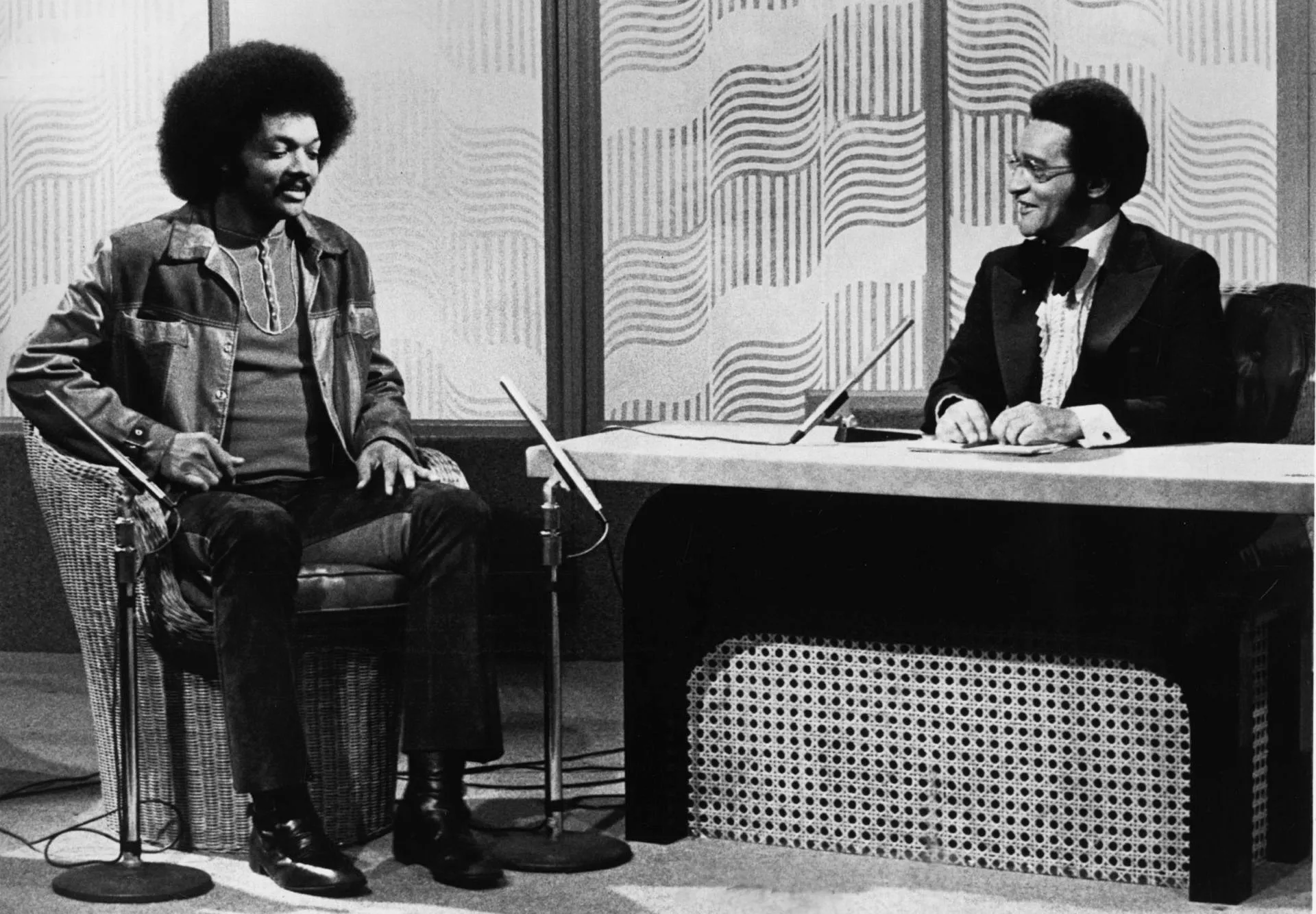
Jesse Jackson with “Black Journal” host Tony Brown, in 1976. (Credit: WNET)
When “Tony Brown’s Journal” was revived in 2018, the promotional material said, “For over 50 years, Brown has a pioneer among African-American broadcasters and educators. Never shying away from controversy, his program was one of the first to report nationally on the infamous ‘Tuskegee Experiments,’ (video) he shined a spotlight on the Tulsa Race Riots of 1921 and offered a platform for a galaxy of African-American luminaries.
“Brown has won numerous industry awards and served as Founding Dean of Howard University’s School of Communication and later Dean of Hampton University’s School of Journalism and Communications. . . . ”
A video of this journalist interviewing psychiatrist Francis Cress Welsing on Brown’s show in 1976 is still circulating on the internet. Hearing that, another journalism veteran exclaimed, “Every Black person I knew watched the Tony Brown show.”
Brown’s cremation is listed on the website of the Neptune Society of Virginia Beach, Va. The official obituary says, “No memorial or public service has been planned at this time.”
 It also says, “Brown was an influential television journalist, educator, and civil rights advocate whose groundbreaking work elevated Black voices in media and higher education for more than four decades. Widely regarded as a champion of truth, empowerment and opportunity, Brown dedicated his life to the principle of ‘self-help’ and the pursuit of excellence. . . .
“Activism was central to Brown’s work. In addition to maintaining a strong presence in community-oriented programming, he launched initiatives aimed at advancing economic and educational opportunities for African Americans. Called ‘Television’s Civil Rights Crusader’ in a cover story by Black Enterprise magazine, Brown also played a significant role in the civil rights movement.
“This self-help proponent coordinated a Detroit march in 1963, that featured Martin Luther King, Jr. and, according to Business Week magazine, drew an estimated 500,000, perhaps the largest civil rights march in America. It is also believed to be the first time Dr. King delivered his famous ‘I Have A Dream’ speech. USA Today selected Brown as one of the top five leaders to analyze the status of Black America. . . ”
Complete obituary at the end of this column.
- Doreen St. Félix, the New Yorker: Rewatching “Black Journal” Five Decades On (Aug. 24, 2020)
What Is Life Truly Like for Blacks in Cuba?
Gov’t Says It Is Combating Racism. Journo Says Don’t Be Naive
Prince to Receive Parker Award for Media Coverage
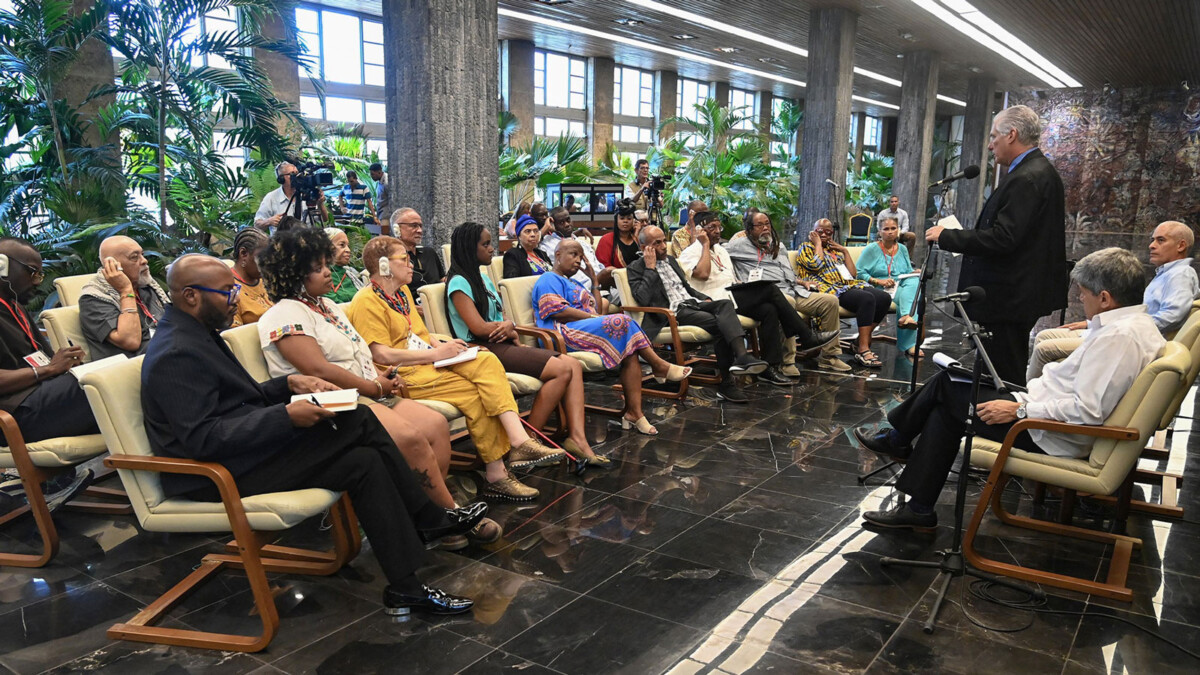
A listening session with Cuban President Miguel Díaz-Canel and fact-finding delegation members from the United States. The delegation leaders were asked whether they also reached out to Cubans in the opposition. (Courtesy of the Cuban president’s office.)
Gov’t Says It Is Combating Racism. Journo Says Don’t Be Naive
Under the headline “How Cuba recognizes Blackness through laws and science,” the New York Amsterdam News reported last week on conversations about racism in Cuba that took place during a “fact-finding” trip to the island that denounced the “genocidal embargo” by the United States even before the trip began.
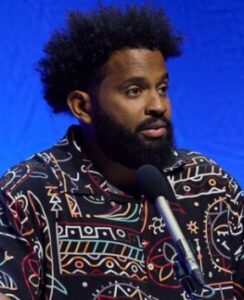 Abraham Jimenez Enoa (pictured), a Cuban journalist in exile who is this year’s winner of the National Association of Black Journalists Percy Qoboza Award for a foreign journalist, was shown the Amsterdam News report and declared, “This text is a perfect manual for how the Cuban regime uses institutional ‘whitewashing’ to sell the foreign press an idyllic reality that doesn’t exist. The correspondent completely swallows the official narrative in the ideal setting for deception: the Fidel Castro Center, a space designed precisely as a propaganda laboratory.”
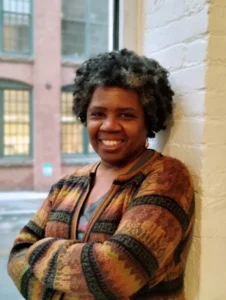 The trip to Cuba was conducted by the Institute of the Black World 21st Century and the Pan African Unity Dialogue, led by veteran activist Ron Daniels. The delegation of 24 included media figures such as Julianne Malveaux, political economist and columnist; Herb Boyd, senior writer, Amsterdam News; Denise Rolark Barnes, publisher, Washington Informer; Nisa Islam Muhammed, staff writer, the Final Call; Milton Allimadi, publisher, Black Star News/Crisis in Africa and Caribbean Task Force, and Karen Carrillo, senior staff writer, Amsterdam News (pictured).
Rep. Jonathan Jackson, D-Ill., spoke briefly at the press conference, and Cuban government representatives were in the front row. The leaders plan to recruit Black officials and organizations to their cause.
Among the group’s recommendations were that a “delegation of African American civil rights, human rights and legal experts and their Cuban counterparts [meet] for a dialogue on the state of racial discrimination in the U.S. and Cuba with the objective of sharing polices to eliminate racism in the U.S. and Cuba.”
While the focus of a June 9 news conference was on the traumatic living conditions on the island for which the United States was blamed and Cuban government culpability dismissed, questions about whether the relatives of political prisoners or opposition figures were interviewed were excised from the video of the meeting, without explanation.
Carrillo wrote, “The Cuban government says it is combating racism in a layered approach. Instead of just creating a single law or campaign, it has created constitutional guarantees; established anti-discrimination law; created a national data collection; and targeted social programs, cultural work, education, public memory, and international solidarity.”
Carrillo referenced Color Cubano, Cuba’s official National Program Against Racism and Racial Discrimination, implemented in 2021. “When it was approved by the Council of Ministers, it created a national commission of about 30 representatives from ministries, institutions, and organizations, and then mandated the Color Cubano Social Laboratory in Havana to see to its implementation.”
Anayansi Rodríguez Camejo, Cuba’s deputy minister of foreign affairs, “said the commission includes government bodies, academia, and civil society organizations, and that it identifies the specific places where Black and Afrodescendant Cubans still face unequal conditions,” Carrillo wrote.
Jimenez Enoa, asked by Journal-isms to comment on the piece, replied (his boldfacing):
“My interpretation, as a Cuban journalist who has lived and documented the reality of the island — and suffered the consequences of doing so — is radically different from the idyllic, naive, and deeply manipulated vision presented by reporter Karen Juanita Carrillo.
“This text is a perfect manual for how the Cuban regime uses institutional ‘whitewashing’ to sell the foreign press an idyllic reality that doesn’t exist. The correspondent completely swallows the official narrative in the ideal setting for deception: the Fidel Castro Center, a space designed precisely as a propaganda laboratory.
“Below, I share an extensive and compelling analysis of what this article omits and how systemic racism and oppression truly work in Cuba.
“1. The myth of the “Anti-racist Revolution” and the historical racism of Castroism
“The article quotes the deputy minister as saying that the 1959 Revolution ‘abolished’ racism by decree. That is the first major historical lie. What Castroism did in 1959 was not eradicate racism, but criminalize its public discussion. Under the totalitarian dogma of ‘national unity,’ declaring that racism existed in Cuba was labeled for decades as an act of ‘treason’ or counterrevolutionary division. By silencing the problem, they entrenched structural racism.
“From its origins in the Sierra Maestra, Castroism has been a process led by a white, upper-middle-class, patriarchal elite. Black and mixed-race Cubans were used as cannon fodder in the wars of intervention in Africa (Angola, Ethiopia) and in internal mobilizations, but real power was never transferred to them.”
The Journal-isms Roundtable discussed “Cuba: Victim, Villain or Both?” in December 2023. This column followed. (Credit: YouTube)
“2. The farce of representation: Blacks by statistics and “tokenism”
The deputy minister is selling the ‘Cuban Color’ program (opportunistically created in 2019) as a great achievement. The reality is that the presence of Black people in the current public sector is purely a statistical facade.
- “Before the 1990s and 2000s: Black people in high positions in the Communist Party of Cuba (PCC) could be counted on the fingers of one hand (Juan Almeida Fidel, Esteban Lazo).
- “The current strategy: Faced with international pressure and evident popular discontent, the regime implemented a quota policy. They place Black citizens in visible positions in the National Assembly or in secondary ministries to ‘sell’ diversity to the outside world. However, these officials lack real political power; they do not make macroeconomic decisions, nor do they control the military or intelligence apparatus (monopolized by GAESA [a reference to Grupo de Administración Empresarial S.A., a secretive, military-run business conglomerate controlled by the Cuban Revolutionary Armed Forces] and the unelected white elite). They are used as political pawns and institutional decoration.
3. “The geography of marginality and the university myth
“The article mentions very briefly that ‘the disadvantages continue to affect Black families,’ but it does not explain that this is a direct consequence of the state’s economic design.
- “Marginalized neighborhoods: Racism in Cuba is spatial and structural. The areas with the worst habitability rates, overcrowding, dilapidated buildings, and unsanitary conditions (such as Central Havana, San Miguel del Padrón, Guanabacoa, or the outlying neighborhoods of the eastern provinces) are overwhelmingly populated by Black and mixed-race Cubans.
- “The economic gap and remittances: When the regime dollarized the economy through stores selling goods in freely convertible currency (MLC), it condemned the Black population to extreme poverty. Historically, the Cuban diaspora that emigrated in the first waves and that sends remittances today is predominantly white. Black families do not receive dollars or euros from abroad, depending exclusively on state salaries in Cuban pesos that don’t even cover a week’s worth of basic food.
- “Minorities in universities: Although the deputy minister cheerfully asserts that ‘everyone has the right to university,’ higher education classrooms show an alarming shortage of Black students. The structural economic crisis forces young Afro-descendants to abandon their studies early to join the informal subsistence market or take precarious jobs. Actual access to universities is conditioned by economic privilege and, moreover, by ‘political suitability.’
“4. Intellectual and political discrimination
“Cuban racism is especially fierce against Black intellectuals who choose to think for themselves. The regime tolerates Black folk artists, athletes, or submissive musicians. But when a Black intellectual, activist, or independent journalist questions the power structures, the state’s response is absolute suppression.”
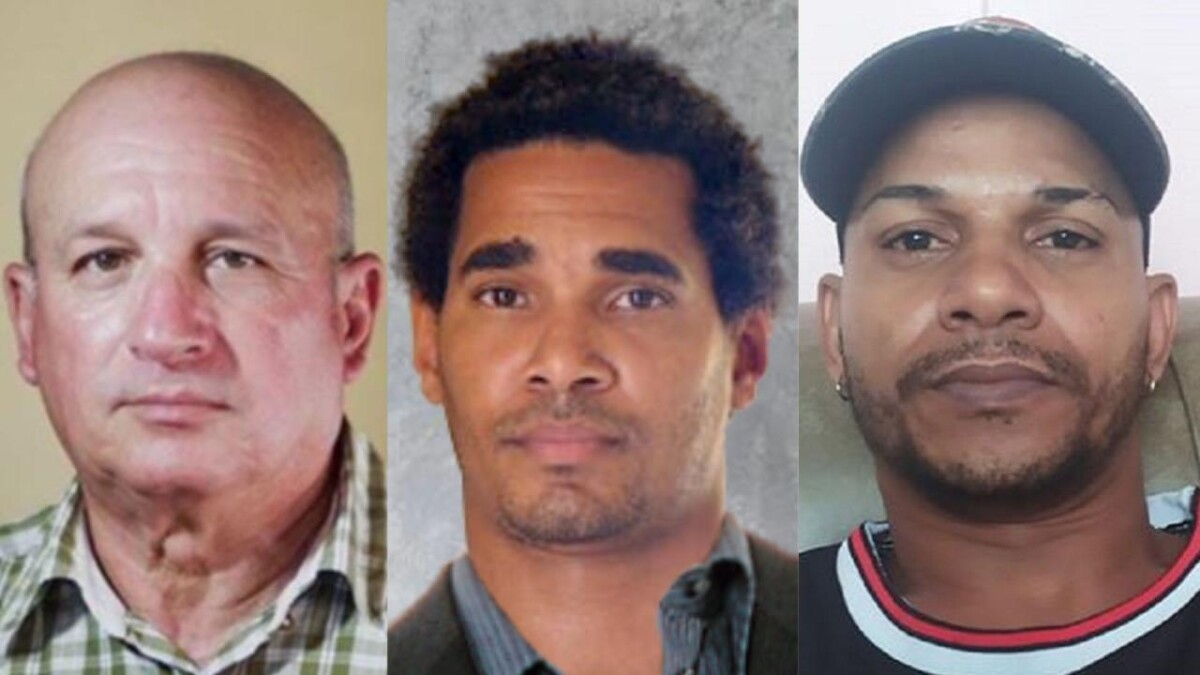 The National Endowment for Democracy (NED) announced Tuesday that Cuban opposition members Félix Navarro, left, Luis Manuel Otero Alcántara , and Maykel Castillo Pérez are among the winners of the 2026 Democracy Awards, a recognition that distinguishes individuals and organizations from different countries for their defense of fundamental freedoms against repressive regimes. (Credit: Collage Diario De Cuba.)
“Activists from the Citizens’ Committee for Racial Integration (CCIR) or the independent artistic movement (such as the San Isidro Movement) have been persecuted, imprisoned, or forced into exile. Black dissidents are doubly punished in Cuba: they are treated as ‘ingrates’ who supposedly owe their humanity to Fidel Castro’s Revolution. Institutional racism penalizes Afro-Cuban intellectual autonomy.
“5. The Fidel Castro Center: A dictatorial monument for image laundering
“It is highly telling that this interview took place at the Fidel Castro Ruz Center in Havana. This place is the crown jewel of the dictatorship’s propaganda machine.
- “The cost of the myth: In a country in ruins, where hospitals have no syringes or aspirin, where the population suffers daily blackouts of more than twelve hours and food shortages are chronic, the regime spent millions of dollars building this high-tech center.
- “Cult of personality: Although Cuban law theoretically prohibits monuments to Fidel to maintain a facade of “modesty,” this center is a giant ideological mausoleum dedicated to sanctifying the memory of a dictator who ruled the country with an iron fist for almost half a century without ever submitting to democratic elections.
- “How the deception works: The Fidel Castro Center is specifically designed to receive foreign delegations, left-wing intellectuals, and American journalists from African American media outlets (such as the Amsterdam News). The regime offers them a guided tour with touchscreens, holograms, and biased statistics. They exploit the legitimate historical awareness of foreign journalists regarding racism in the U.S. to convince them that Cuba is a ‘paradise of racial justice.’
“Conclusion: The complicity of naive journalism
“Journalists like Karen Juanita Carrillo visit the island under the strict control of the Ministry of Foreign Affairs (Minrex), stay in hotels controlled by the military, and interview high-ranking diplomats inside air-conditioned palaces. They don’t walk the streets of impoverished neighborhoods, they don’t speak with the families of political prisoners (many of them young Black people who took to the streets on July 11, 2021, to protest for freedom and food), and they don’t consult sources within the Cuban independent press.
“The ‘Cuban Color’ program is nothing more than a law on paper designed to cater to the international agenda and whitewash the human rights record of a dying military dictatorship. It is painful to see how international media outlets dedicated to racial justice lend themselves, whether through ideological bias or sheer ignorance, to amplifying the propaganda of a regime that oppresses, impoverishes, and silences its own Afro-Cuban population.”
- Milton Allimadi, Black Star News: When Doctors Cry: Cuba’s Agony Under Siege (May 31)
- Jafari S. Allen, Al Jazeera: The retaking of Cuba (June 8)
- Haki S. Ammi, Afro: US delegates witness Cuba’s struggles under blockade and sanctions (June 16)
- Associated Press: Mexico’s president seeks to restart oil shipments to Cuba as island’s crises deepen
- Eloy Viera Cañive, El Toque: Cuba to Move from State Enterprises to a Corporate Model
- Morgan Carpenter, Afro: Congressional Black Caucus members speak out against humanitarian crisis unfolding in Cuba (June 15)
- CiberCuba: Cubans react to the death of Ramiro Valdés, considered one of the architects of repression in Cuba
- Joseph Contreras, the Guardian: Living in fear of a knock at the door: the Cubans being deported under Trump (June 14)
- Cubalex: Manufacture of criminal cases, arrests and surveillance against independent journalists in Cuba (June 10)
- Claudia Padrón Cueto, CubaNet: Why did the residents of Guanabo protest today in front of the Government headquarters?
- Diario De Cuba: Paraguay joins the OAS in calling for democracy in Cuba
- Diario De Cuba: Expert: The stress experienced by Cubans today is equivalent to that of psychiatric patients and populations at war.
- Diario De Cuba: Cuba imported $24 million worth of fuel from the US in the first third of 2026 (June 11)
- Diario De Cuba: UN attributes increase in infant mortality in Cuba to U.S. sanctions (June 9)
- Abraham Jiménez Enoa, the Guardian: I launched Cuba’s first independent magazine. And that’s when my troubles began (June 4)
- Ground News: US sanctions five Cuban entities, Castro family member in latest pressure campaign, Rubio says
- International Center for Journalists: Cuban Exiled Journalist and War Reporter From Sudan Win 2026 ICFJ Knight Awards (June 18)
- Ana León, CubaNet: Down to the last drop: the destitution in which all Cubans live
- Iván León, CiberCuba: What happened to the Yankee enemy? The Cuban regime rewrites six decades of confrontation with the U.S.
- Julianne Malveaux, the Malveaux Monitor: The Cuba I Cannot Unsee (June 3)
- Marti News: Spanish Congress backs Liberation Agreement for democratic transition in Cuba (June 10)
- Raúl Medina Orama, El Toque: Cuban Regime Arrests another YouTuber (June 4)
- Organization of American States: General Secretariat Statement on the Expansion of Democratic and Civic Space in the Americas: Cuba, Nicaragua, and Venezuela
- María Luisa Paúl, Washington Post: ‘A powder keg about to explode’: Long marginalized Afro Cubans at forefront of island’s unrest (July 19, 2021)
- Karla Pérez, ADN Cuba: Cuban teenager Jonathan Muir released after 3 months in detention
- Karla Pérez, ADN Cuba: Tumors, cancer, malnutrition and tooth loss: this is how Cuban political prisoners are released (June 12, updated June 15)
- Karla Pérez, ADN Cuba: At least 332 repressive actions in Cuba in May, [Cuban Observatory of Human Rights] reports (June 8)
- Policy office (U.S. government): Cubans need a government that stops stealing their future (June 8)
- Prisoners Defenders: New record 1,281 political prisoners in Cuba after adding 28 new in May and registering another death in prison (June 11)
- Nii-Quartelai Quartey, Instagram/The Root: Afro-Cuban artists, cultural workers, and human rights defenders have been at the center of international concern over political prisoners in Cuba. (June 2)
- Andrea Rodríguez, Associated Press: Cuba pushes through sweeping free-market reforms in biggest economic shift since the revolution
- Carlos Alejandro Rodríguez, CubaNet: Starting in November, Cuba will have an armed “Migration Police” with the power to detain
- Carlos Alejandro Rodríguez, CubaNet: Arrests, surveillance and fabrication of charges: they denounce the wave of repression against journalists (June 10)
- Nora Gámez Torres, Miami Herald: Cuban leader Díaz-Canel announces sweeping economic reforms to fend off U.S. pressure (June 12)
- Alexander Ward and Vera Bergengruen, Wall Street Journal: U.S. Warns of Growing Russian and Chinese Spying in Cuba (May 22)
Prince to Receive Parker Award for Media Coverage
Veteran journalist Richard Prince, author of the “Journal-isms” column and CEO of Journal-isms Inc., will be recognized with this year’s Everett C. Parker Award, the United Church of Christ’s Media Justice Ministry announced Friday.
 The award is “given to an individual whose work embodies the principles and values of the public interest in telecommunications and the media.” Prince is being recognized “for decades of work holding the news industry accountable on questions of race and representation, from his early career as a member of The Washington Post’s Metro Seven to his founding of ‘Journal-isms,’ the column he created in 1991 that monitors and reports on diversity issues in the news media.”
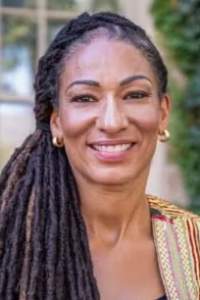 At the same event, Ruha Benjamin, Ph.D, (pictured) a leading scholar on race, technology, and justice, is to deliver the 2026 Everett C. Parker Ethics in Telecommunications Lecture.
Benjamin is the Alexander Stewart 1886 Professor of African American Studies at Princeton University and founding director of the Ida B. Wells JUST Data Lab. In 2024, she was named a MacArthur Fellow for illuminating how technology reflects and reproduces inequality and championing the role of imagination in social transformation.
The 44th Annual Everett C. Parker Ethics in Telecommunications Lecture and Awards Luncheon is to be held from 11 a.m. to 1 p.m. on Thursday, Sept. 10, at First Congregational United Church of Christ, 945 G Street NW, Washington, D.C. The event will be livestreamed.
For his acceptance speech, Prince said he is seeking examples of the importance of believing in oneself and having others believe in you and your work. You may contact him at <Jroundtable5 (a) gmail.com>.
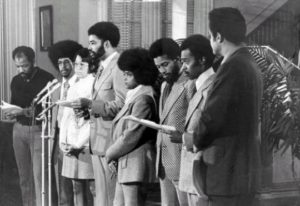 The ministry continued, “The Metro Seven (pictured) were a group of seven Black journalists who filed a landmark Equal Employment Opportunity Commission complaint against the Washington Post in 1972, challenging the newspaper’s discriminatory practices in assignments, salary, and promotions. It is believed to be the first complaint of its kind in the nation.
“For more than three decades, his column has been a watchdog on the intersection of news media, race, and society. Beginning as a feature of the NABJ Journal, it grew into an independent publication read widely across the journalism industry.
“As the Multicultural Media, Telecom and Internet Council has recognized, if it is important to people of color in the media, it is in ‘Journal-isms.’ Prince was inducted into the National Association of Black Journalists Hall of Fame in 2019 and the Society of Professional Journalists’ Washington Pro Chapter Hall of Fame (video) in 2025. He has also received the NABJ President’s Award and the Ida B. Wells Award (video.)
“Ticket information, sponsorship opportunities, livestream links, and additional details about the 44th Annual Parker Lecture can be found at https://uccmediajustice.org/Parker-lecture-2026.”
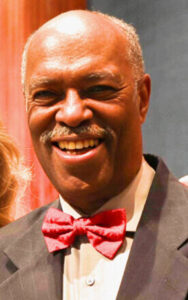
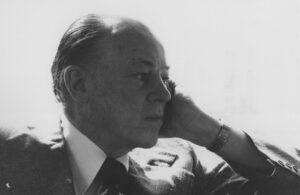 “The UCC Media Justice Ministry is the media justice arm of the United Church of Christ denomination, which includes about 4,600 congregations and more than 700,000 members. Rev. Dr. Parker (pictured) was inspired by the work of Dr. Martin Luther King Jr. to reform television coverage of the civil rights movement in the South. The advocacy of OC Inc., UCCMJM’s predecessor, resulted in the establishment of the right of all American citizens to participate before the FCC and the FCC being compelled to take away the broadcast license of the pro-segregationist television station WLBT-TV in Jackson, Miss., in 1969 for failing to serve the public interest.
“The Parker Lecture was created in 1982 to recognize the Rev. Dr. Parker’s pioneering work as an advocate for the public’s rights in broadcasting. The Parker Lecture is the only program of its kind in the United States that examines telecommunications in the digital age from an ethical perspective.”
- Journal-isms: ‘A Quiet Force Shaping Conversations on Race and Media’ (June 20) (scroll down)

Jin Ding waged a successful campaign.
Jin Ding Elected AAJA President
Added June 27:
Jin Ding, a freelance journalist formerly with the Center for Public Integrity, was elected president of the Asian American Journalists Association Saturday, it was announced during the AAJA convention in Minneapolis.
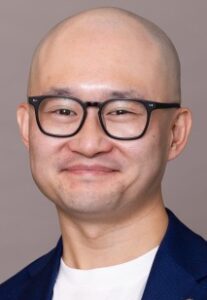 No vote total was given, but her opponent, Frank Bi (pictured), conceded in a post on LinkedIn. He is senior vice president of AAJA who was just laid off from the Star Tribune in Minneapolis “where he led digital transformation and built products for its audiences and newsroom,” according to a previous statement.
[On Monday, June 29, AAJA announced that Ding received 320 votes, or 61 percent, to 199 for Bi, or 38 percent. Four of the 523 votes cast were abstentions.]
Ding said she was running “to champion a more inclusive, innovative, and member-centered future for AAPI voices in media.”
She wrote during the campaign, “After stepping away from a newsroom executive role, I spent the past 1.5 years rethinking what kind of work — and life — I wanted to build. I took on consulting and advisory roles with independent news organizations, including a team in Pakistan, while continuing to support journalism communities through volunteer leadership with AAJA and the Chinese-language media world.
“That period also became a personal reset: recovering from burnout, reconnecting with purpose, and redefining success beyond traditional corporate paths. Through this journey, I found a clearer north star — dedicating my work to advancing press freedom, inclusion, and more community storytelling.
“I’m now building something new launching this summer, rooted in the belief that media can better serve communities, not just institutions. It has been one of the most challenging and rewarding chapters of my life so far — and this is only the beginning.”
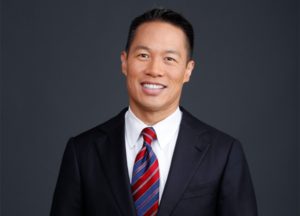 In an endorsement, cable news anchor RIchard Lui (pictured) wrote, “Jin will lead AAJA well. For years, she has built trust and collaboration across the organization, including with on-camera and broadcast members, chapters, and generations. She has handled some of AAJA’s most important sponsor negotiations with senior external leaders and brought steady executive presence to the work. She gets things done. As an AAJA lifetime member, I look forward to her presidency and what it will mean for our organization and journalism.”
The Asian American Journalists Association last year claimed “more than 1,500 members across the United States and Asia” on its website, placing it behind Investigative Reporters & Editors, the National Association of Black Journalists, the Society of Professional Journalists, the National Association of Hispanic Journalists and the Online News Association in membership.
Ding is an at-large representative on the national board and the Asia Chapter advisory board representative. She is “is a media entrepreneur and nonprofit leader with 17 years of experience in journalism, audience engagement, fundraising, and organizational strategy. She has held leadership roles at Initium Media, The Center for Public Integrity, The Associated Press, the International Women’s Media Foundation, and the Pulitzer Center,” according to her campaign statement.
Journal-isms is not atending the AAJA convention.
On May 28, Journal-isms asked each candidate whether the organization will continue its recent policy of requiring media reporters to pay as much as $725 registration fees to cover the convention for more than one day. The policy led Journal-isms to skip the convention last year, and the event received scant if any coverage. That outcome was repeated this year.
Bi did not respond; neither did the organization’s president, Nicole Dungca, or executive director, Naomi Tacuyan Underwood.
Ding replied on May 28, “First, I genuinely believe transparency is important for our community and for the journalism industry as a whole. Access to information is a key part of that transparency. And as someone running in a contested election, I deeply believe in the democratic process and the role media accountability plays — including within our own organization.
“While I’m not fully familiar with past AAJA practices or broader past industry norms around this issue, if this represents a policy change made in recent years, I would support reviewing it and having the board formally vote on future press access policies for AAJA.”
Asked June 12 whether she had come to a determination, Ding said, “Unfortunately, my position remains that this would require a policy review and a board vote before any decision can be made.”
In 2024, Ai Uchida, deputy director and director of operations, messaged, “I wanted to explain again that AAJA has a one-day media policy for approved press at our convention. That is how we have been doing it since post-COVID. We do it this way because we want the convention to be as accessible as possible to as many members as possible; as you may know, AAJA conventions have sold out the past two years. This is why we limit press passes to one day.”
- Randall Yip, As Am News: Mayor Her: “Unless you were telling our stories, we [are] invisible” (June 29)
- Randall Yip, As Am News: AsAmNews wins 2 reporting awards- meets with Hmong leaders (June 29)
In 2018, Tony Brown reflects on “20 years of historical footage and interviews on issues, events and personalities that shaped the African-American community and the nation.” (Credit: YouTube)
‘Influential Journalist, Educator, Civil Rights Advocate’
The lightly edited official obituary of Tony Brown, as reported by his office:
Tony Brown, host and executive producer of Tony Brown’s Journal, the longest-running series in the history of the PBS network, made his peaceful transition on June 17, 2026, at his home in Newport News, Virginia. He died of coronary heart disease.
Brown was an influential television journalist, educator, and civil rights advocate whose groundbreaking work elevated Black voices in media and higher education for more than four decades. Widely regarded as a champion of truth, empowerment and opportunity, Brown dedicated his life to the principle of “self-help” and the pursuit of excellence.
Tony Brown was also a prolific author, keynote speaker, and media entrepreneur. His work consistently emphasized empowerment through knowledge and accountability. He was the recipient of numerous honors—including Educator of the Year, Communicator of the Year and the Ambassador of Free Enterprise Award. Brown built a lasting legacy as a trailblazer in both media and academia.
Born William Anthony Brown in Charleston, West Virginia, Brown was a proud graduate of Garnet High School, an all-Black school that helped shape his life and the lives of many future leaders. His primary education at Garnet formed the foundation of a life devoted to learning, leadership and service. Brown carried those early lessons with him throughout his life. At Garnet he joined the track team and excelled in academics, especially English and drama. He performed in school plays and, shortly before graduating in 1951, performed segments of Shakespeare’s Julius Caesar on WGKV radio in Charleston.
After completing his military service in the U. S. Army from 1953 to 1955, Brown enrolled at Wayne State University in Detroit, where he studied sociology and psychology and earned a bachelor’s degree in 1959. Motivated by a deep concern for the effects of poverty on African American communities, he continued his education at Wayne State. He received a master’s degree in 1961 in Psychiatric Social Work. He briefly worked as a social worker deepening his understanding of people, communities and the challenges they face. Brown was also a devoted member of Alpha Phi Alpha Fraternity, joining a brotherhood known for scholarship, leadership and civic engagement.
In 1962, Brown turned to journalism, joining the Detroit Courier as a drama critic. He quickly rose to the position of editor, establishing himself as a prominent voice in the city’s media landscape. In 1968, he left the newspaper to pursue a career in public-affairs broadcasting at WTVS, Detroit’s public television station.
Over the next three decades, Brown became a pioneering figure in television programming focused on Black audiences and issues. At WTVS, he produced “Colored People’s Time,” the station’s first program specifically aimed at a Black audience, as well as “Free Play,” another community-centered show.
Tony Brown interviews William Greaves, first executive producer and co-host of “Black Journal,” so titled from 1968 to 1970. (Credit: YouTube)
Activism was central to Brown’s work. In addition to maintaining a strong presence in community-oriented programming, he launched initiatives aimed at advancing economic and educational opportunities for African Americans. Called “Television’s Civil Rights Crusader” in a cover story by Black Enterprise magazine, Brown also played a significant role in the civil rights movement. This self-help proponent coordinated a Detroit march in 1963, that featured Martin Luther King, Jr. and, according to Business Week magazine, drew an estimated 500,000, perhaps the largest civil rights march in America.
“It is also believed to be the first time Dr. King delivered his famous “I Have A Dream” speech. USA Today selected Brown as one of the top five leaders to analyze the status of Black America.
Best known as the longtime host and executive producer of the award-winning television program “Tony Brown’s Journal”, Brown became a central figure in American broadcasting history. In 1970, he was named executive producer and host of “Black Journal,” a New York-based public television program that had debuted two years earlier and aired nationally. The program combined commentary, documentaries and public-opinion segments.
Richard Prince joins Tony Brown in this 1976 interview of psychatrist Dr. Frances Cress Welsing. (Credit: YouTube)
Brown’s tenure at “Black Journal” was often controversial. His forthright criticism of the U.S. government’s impact on African American life, along with his uncompromising editorial style, drew criticism from both broadcasting circles and segments of the Black community. In 1973, the Corporation for Public Broadcasting announced it would withdraw funding for the program. The decision prompted protests from across the country, and “Black Journal” continued to air, albeit on a limited basis.
In 1977, Brown secured a sponsorship agreement with the Pepsi-Cola Company, relaunching the program as “Tony Brown’s Journal” and moving it to commercial television. The show returned to public television, where Brown hosted the nationally syndicated series for 40 years. The Emmy-nominated program became the longest-running series in the history of PBS and was ranked among the top 10 television shows of all time presenting positive Black images by the New York Daily News. “Tony Brown’s Journal” is an irreplaceable primary record of African American opinion and experience.
The TV series received the 1991 NAACP Image Award for “Outstanding News, Talk or Information Series/Special.” Even before Tony Brown retired the Emmy-nominated, award-winning series in 2008, it had become the longest-running series in the history of the PBS network and in 1979, it was, according to the A. C. Nielsen Company, “the #1-Rated Syndicated Talk/Educational National TV Series.”
Tony Brown’s influence extended far beyond the television screen. He was a passionate educator, he served as a professor at Central Washington University, Federal City College, Howard University and Hampton University.
Brown helped shape the next generation of journalists. In 1971, he founded the School of Communications at Howard University in Washington, D.C. and served as its dean until 1974. In 1980, he founded Black College Day, an effort to encourage students to consider HBCUs and preserve those important institutions for generations to come. The U.S. Congress officially designated the last Monday in September to honor that observance. He also founded the Council for the Economic Development of Black Americans, whose “Buy Freedom” campaign urged support for Black-owned businesses – even creating Freedom Dollars. To address the issue of drug addiction, he wrote and produced the film “The White Girl.”
In 2004 he returned to academia as the first dean of the Scripps Howard School of Journalism and Communications at Hampton University in Virginia, a position he held until 2009. In 2012, Brown was inducted into the Scripps Howard School of Journalism and Communications Hall of Fame in recognition of his leadership in transforming the school into one of the nation’s top journalism programs.
In addition to his television work, Brown hosted influential radio talk shows in New York (WLIB) and Chicago (WLS), connecting with listeners in a more personal way. Talkers, the prestigious radio trade magazine, named him one of the 100 most important radio talk show hosts in America. His contributions were further recognized with his 2002 induction into the National Academy of Television Arts & Sciences Silver Circle and as part of the National Association of Black Journalists’ 40th Anniversary Gala, NABJ was pleased to announce Tony Brown as one of its 2015-2016 Hall of Fame Inductees.

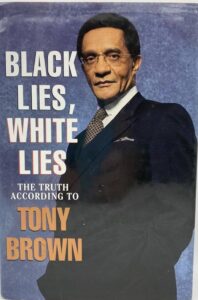
 Beyond writing a widely syndicated newspaper column, Brown was the author of several books, including “Black Lies, White Lies: The Truth According to Tony Brown” (1995), “Empower the People: A 7-Step Plan to Overthrow the Conspiracy That Is Stealing Your Money and Freedom” (1998), and “What Mama Taught Me: The Seven Core Values of Life (2003).”
Even after stepping away from “Tony Brown’s Journal” in 2008, Brown continued to share his work through an extensive archive (www.TonyBrownsJournal.com) available around the world, ensuring that the stories, interviews and history he preserved for more than 40 years would remain accessible for future generations. The archive contains original interviews, commentary, and documentary material capturing voices, movements, and perspectives that cannot be recreated today.
Because of its uniqueness and irreplaceability no modern production can reproduce the original subjects, timing, or authenticity embedded in these master recordings.
Tony Brown leaves behind a legacy and life defined by education, service and an unwavering belief in telling the truth. His influence will continue to resonate through the institutions he shaped, the voices he amplified, and the generations he inspired. Brown, in the community he called home in his later years, will be remembered not only for what he accomplished, but for the example he set.
Brown’s work as a broadcaster, educator and activist helped reshape how African American life and issues were represented in American media, opening doors for a generation of journalists and producers. His insistence on addressing racial inequality and economic empowerment left a lasting imprint on public discourse and on the institutions he helped build.
Despite his national recognition, those closest to him remember a man grounded in simple but powerful principles that guided both his professional work and his daily life. His personal mission statement: Diversity Through Excellence. His call to action: Self-Help. His motto: No Black Lies. No White Lies. Only the Truth.
No memorial or public service has been planned at this time.
Feedback
From Wayne Dawkins, ending his teaching tenure at Hampton Univesity:
I OFFER THIS ANECDOTE: In 2005, Brown hired a “dream team” of seven media industry practitioners, each averaging 22 years of professional experience. The new faculty included Columbia J-school alums Kissette Bundy, J-’87, and Wayne Dawkins, J-’80. Bundy, Dawkins, and Will Sutton, a Hampton U mass media arts alum and newspaper executive, were tasked by Brown to quickly raise the reporting and writing talent at Hampton.
“Break eggs and make omelet’s” was Brown’s charge to the trio.
Upgrades were also made to the curriculum. Classes in visual media, broadcast production, and news editing were resurrected or created.
Johnk McClelland, retired emeritus faculty, Roosevelt University
There is real benefit in believing in the good work that others do.
Richard Prince’s work for diversity in journalism has impressed me continually since we met at a State Department briefing in 2012. It was my first as editor of The Masthead for the National Conference of Editorial Writers, which became Association of Opinion Journalists.
We later discovered common interests, including a mutual acquaintance whom I had recruited to reporting in mostly white Chicago suburbs in 1970. That young Black man soon got drawn into the Washington Post’s demanding grind and burned out, unsupported. The Post Seven case (1972) showed how well-intended
affirmative action could go seriously awry.
Richard has kept at it, non-stop, even as AOJ faded to a remnant discussion list. But he still inspires us veterans and a new generation of people of good will who face seemingly endless difficulties — and opportunities.
