

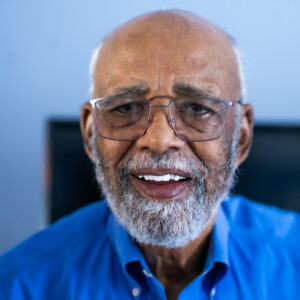
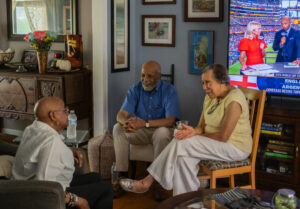
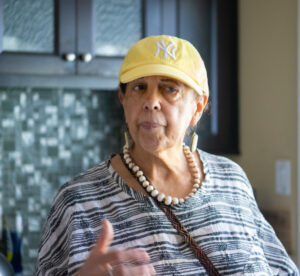
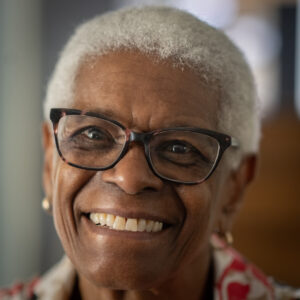
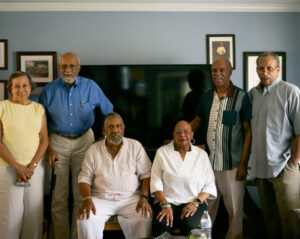
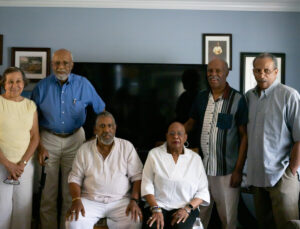
From left: Richard Prince, Jacqueline Trescott, Sandy Davis and Ivan Brandon
From Gemini AI:
The members of the “Metro Seven” . . . .went on to establish distinguished, decades-long careers as pioneering reporters, editors, media columnists, and academics. [1, 2, 3, 4]
The individual paths and achievements they forged across the media industry include:
Leon Dash
- Investigative Excellence: Remained at The Washington Post for a celebrated 27-year career, working across the special projects unit and the investigative desk. [1, 2]
- International Reporting: Served as the Post’s West Africa Bureau Chief and twice traveled to embed himself with Angolan guerrilla forces to report on their struggle. [1, 2]
- Pulitzer Prize Winner: Won the 1995 Pulitzer Prize for Explanatory Journalism for his profound eight-part series, “Rosa Lee’s Story,” detailing the generational cycle of poverty in urban America. [1, 2]
- Academia: Later transitioned to education, serving as a Professor of Journalism and African-American Studies at the University of Illinois at Urbana-Champaign. [1, 2]
Richard Prince
- Diversity Columnist: Developed into one of the country’s preeminent voices on media diversity through his long-running column, “Richard Prince’s Journal-isms,” which has rigorously tracked equity, representation, and hiring disparities since 1991.
- Editorial & News Leadership: Served as an editorial writer and columnist for the Democrat and Chronicle in Rochester, NY, and edited the investigative site The Public i for the Center for Public Integrity.
- Industry Advocacy: Chaired major media accountability efforts, including the Media Monitoring Committee of the National Association of Black Journalists (NABJ). He received the prestigious Ida B. Wells Award in 2013. [1, 2, 3]
Bobbi Bowman (LaBarbara A. Bowman)
- Newsroom Executive: Carved out a 40-year career as a reporter, publisher, and senior editor, rising to serve as the Assistant City Editor at The Washington Post and Managing Editor of the Utica Observer-Dispatch.
- Structural Reformer: Left a lasting institutional mark by serving as the Diversity Director for the American Society of News Editors (ASNE) from 1999 to 2009, where she actively tracked and fought to change the composition of American newsrooms.
- Recognition: Honored with the Ida B. Wells Award in 2009 for her exceptional efforts in diversifying news media coverage. [1, 2]
Ronald A. Taylor
- National Reporting: Despite being a probationary reporter at the time of the 1972 EEOC filing, Taylor built a highly reliable national reporting career. [1]
- Specialized Beats: Went on to work for major publications like U.S. News & World Report and The Washington Times, developing a deep expertise in environmental reporting, labor issues, and federal regulatory policy.
Penny Mickelbury
- Multi-Media Journalist: Continued her career in broadcast journalism, becoming a prominent news editor for Washington D.C.’s local television stations, including WTOP-TV and WJLA-TV.
- Literary Career: Successfully pivoted into the arts, becoming an acclaimed playwright and mystery novelist, authoring multiple celebrated detective book series featuring Black protagonists.
Ivan C. Brandon & Michael B. Hodge
- Institutional Stalwarts: Both Brandon and Hodge continued to dedicate their professional lives to rigorous print journalism and media communication. Hodge later transitioned into a career in corporate and institutional communications before passing away in 2017. [1, 2, 3, 4]
—————————–




150 views · 0 today
